


Georgian Cut Crystal Stemware
Georgian cut crystal stemware brings weight and brilliance to the table, offering heavy lead crystal drinking vessels shaped across the eighteenth and nineteenth centuries.
Georgian Cut Crystal Stemware
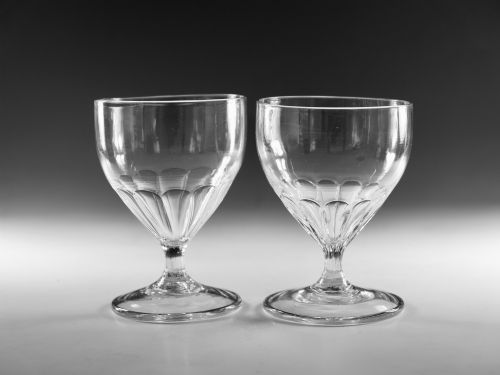
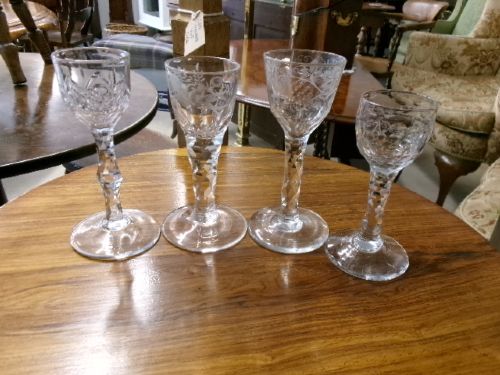
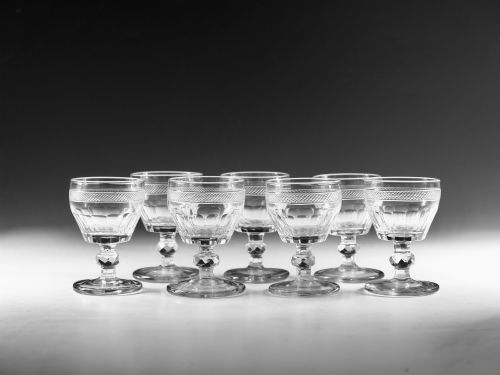
When you search for georgian cut crystal stemware, you examine heavy drinking vessels created during the eighteenth and nineteenth centuries, spanning periods from the eighteenth century through the Regency era. The forms found here include wine glasses, rummers, ale flutes, port glasses, sherry glasses, goblets, and jelly glasses.
Most pieces you meet on this page date from the Georgian and Regency eras, encompassing English and Irish origins. The selection ranges from faceted stem wine glasses to large table rummers and engraved jelly glasses, showing varied bowl shapes and foot bases.
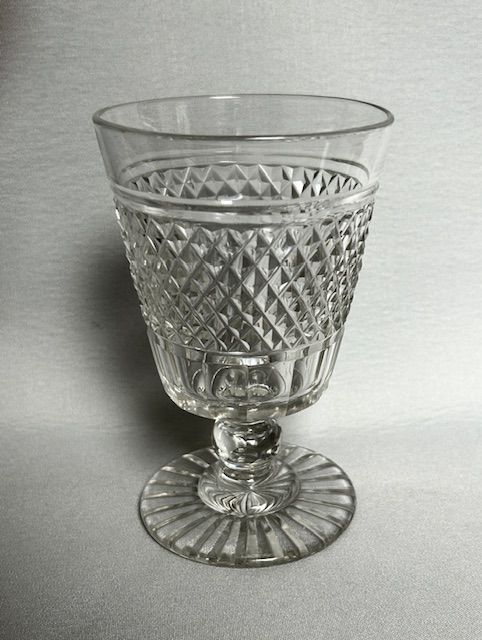
Makers and decorators like James Giles occasionally appear alongside standard production pieces, while Jacobite sympathy glasses provide specialised historical associations. The range covers simple faceted stems alongside elaborate hobnail cut bucket rummers.
Materials and construction
These items rely on heavy lead crystal, clear lead glass, and flint glass, which provide the high refractive index needed for sharp cutting. Craftsmen shaped the molten metal by blowing and manipulated the forms before applying cold-cutting techniques to create facets, hobnail patterns, and engraved details.
Object types recorded include wine glasses, rummers, ale flutes, port glasses, sherry glasses, goblets, and jelly glasses.
Assessing quality
Quality rests in the clarity of the lead glass and the crispness of the wheel-cut facets. Superior examples display sharp, clean lines in the cutting without rounding, and the metal possesses a bright, resonant ring and deep refractive sparkle.
Proportion and execution elevate certain items, such as deep hobnail cutting on a bucket rummer or precise engraving on an ale flute. The handling of the metal dictates the overall weight and balance in the hand.
James Giles
The Georgian Cut Crystal Stemware Glossary
- Lead crystal
- A heavy glass containing lead oxide, which increases brilliance and makes the material softer for cutting. This high-density glass forms the base of the best eighteenth-century drinking vessels.
- Facet cut
- A surface decorated with multiple flat, polished planes that reflect light. This technique characterises many eighteenth-century stems and bowls.
- Hobnail cut
- A raised, pointed pattern resembling the head of a hobnail, pressed or cut into the exterior. It creates a heavily textured surface common on Regency rummers.
- Rummer
- A large, sturdy drinking glass used for wine, ale, or punch. These heavy vessels typically sit on a short, thick stem and wide foot.
Georgian Cut Crystal Stemware: Frequently Asked Questions
What is georgian cut crystal stemware?
These pieces are heavy drinking glasses produced during the eighteenth and early nineteenth centuries in England and Ireland. They encompass wine glasses, rummers, ale flutes, and jelly glasses made from lead crystal and clear lead glass.
They reflect the changing domestic habits of the period, moving from plain stems to elaborate facet cutting and heavy hobnail patterns.
How do I use these glasses today?
You can use these drinking vessels for formal dining or display them on a sideboard to highlight their refractive qualities. They handle modern table settings well, provided you wash them by hand.
Their substantial weight and historic character make them practical for serving wine, port, or sherry during special dinners.
How can I tell the periods apart?
Dating relies on observing changes in stem construction, glass colour, and cutting styles across the eighteenth and nineteenth centuries. Earlier pieces often feature simpler plain or facet-cut stems, while Regency examples lean towards heavier hobnail cutting and robust bucket shapes.
Engraving styles and pontil marks on the base also assist in placing a piece within the Georgian or Regency timeline.
Why are some glasses heavier than others?
The weight depends on the specific formulation of the lead crystal and the intended function of the vessel. Large table rummers and bucket rummers required thick walls to withstand robust use, whereas jelly glasses and wine glasses used lighter metal.
Heavier lead content directly increased both the physical weight and the optical brilliance of the glass.