
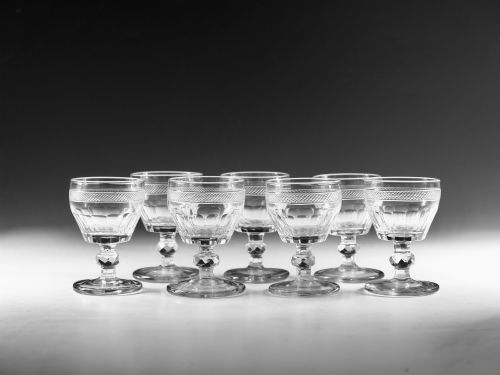


Antique Dining Glass Set
An antique dining glass set brings period character to the table, ranging from cut crystal finger bowls to silver-mounted cruet bottles.
Antique Dining Glass Set
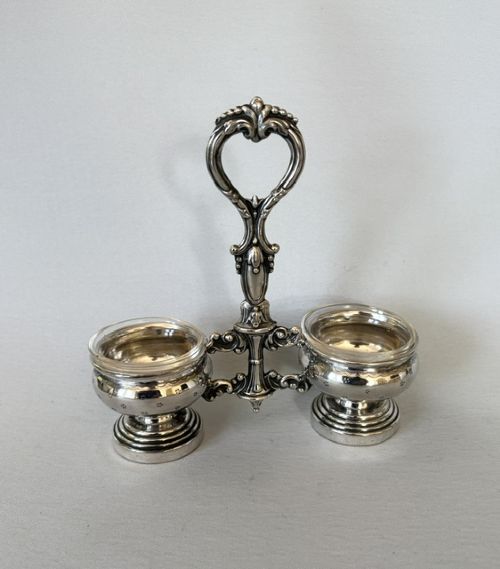
When you search for an antique dining glass set, you encounter a variety of table vessels and serving pieces spanning the Georgian, Victorian, Edwardian and Art Deco periods. These items include cut glass cruet sets, finger bowls, port glasses, table salts, condiment stands and salad services.
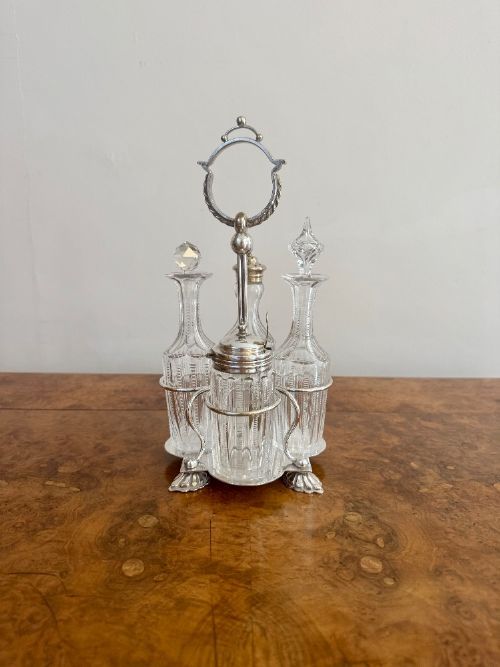
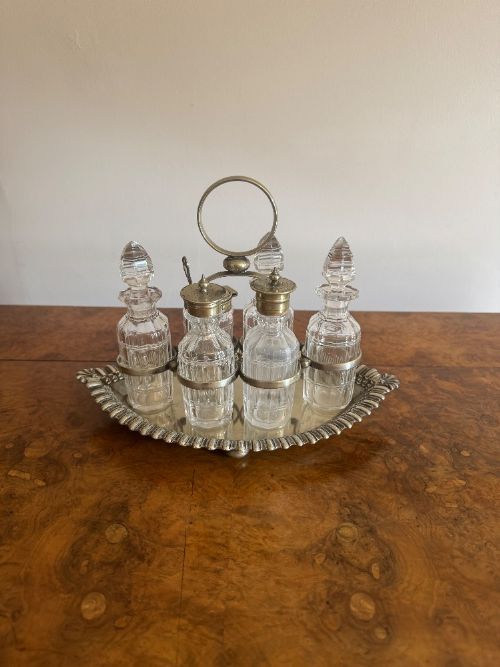
Cruet sets and condiment stands form a large part of what appears here, frequently combining glass bottles with silver plate, sterling silver, or ebonised wood stands. Finger bowls and port glasses also feature strongly, often decorated with engraving or cut crystal facets.
The materials span clear glass, lead crystal and cobalt glass, alongside metal mounts in sterling silver and silver plate. Pieces range from matched sets of four finger bowls to larger multi-bottle cruet frames designed for formal dining.
What varies in quality
Quality rests on the crispness of the glass cutting and the weight of the metal mounts. Finer pieces display sharp faceting on crystal bowls and heavy gauge silver or silver plate on stands and condiment lids.
Design cohesion also distinguishes the range. Matched sets with original matching bottles or coordinated engraved patterns command attention, while maker attribution to firms like Elkington & Co or Adie Brothers adds distinct provenance.
Listings feature dining glass from the Georgian period up through the Victorian, Edwardian and Art Deco eras.
Elkington & Co·Wade Wingfield Wilkins·Adie Brothers
The Antique Dining Glass Set Glossary
- Cruet set
- A matched collection of bottles or jars for oil, vinegar, salt and pepper, held in a metal or wooden frame for the dining table. These frames frequently use silver plate or sterling silver.
- Finger bowl
- A small bowl filled with water, placed by the plate during formal dinners for guests to rinse their fingers between courses. They often feature cut crystal or engraved glass.
- Table salt
- An open cellar or small vessel used to hold loose salt at each place setting before the invention of the shaker. They frequently pair glass bodies with silver spoons.
- Lead crystal
- A type of glass containing lead oxide, which increases weight, clarity and the refractive index to catch the light. This material forms many of the cruet bottles and bowls.
- Silver plate
- A base metal, typically copper or nickel silver, coated with a thin layer of pure silver. This technique allowed makers to produce ornate dining stands at a lower cost than solid silver.
Antique Dining Glass Set: Frequently Asked Questions
What is an antique cruet set?
A cruet set is a frame holding multiple glass bottles for condiments like oil, vinegar and sauces at the dining table. They were standard additions to formal dining rooms during the Georgian and Victorian eras.
Most sets combine cut glass or crystal bottles with silver plated or sterling silver stands, sometimes featuring carrying handles or novelty butler tray designs.
How do you use finger bowls?
Finger bowls are filled with warm water and sometimes a slice of lemon, placed before diners between rich courses to clean the fingers. They saw regular use across the nineteenth and early twentieth centuries.
Today, collectors use them as small dessert bowls or for holding floating flowers and tealights on a dining table.
What are port glasses used for?
Port glasses are small stemware vessels designed for serving fortified wine like port after a meal. Their compact size concentrates the aromas and suits smaller pours.
Georgian and Victorian examples often display delicate cutting or tinted glass, making them decorative additions to a bar cart or display cabinet.
How are silver plated dining sets marked?
Silver plated items carry maker marks and stamps indicating the plating technique used by the manufacturer. These punches help identify firms and approximate production dates.
Sterling silver pieces bear assay office hallmarks, showing the city of testing, date letter and lion passant to confirm the silver standard.