


Clear Glass Port Glasses
Clear glass port glasses are drinking vessels shaped for fortified wine, prized for their clarity and traditional form.
Clear Glass Port Glasses
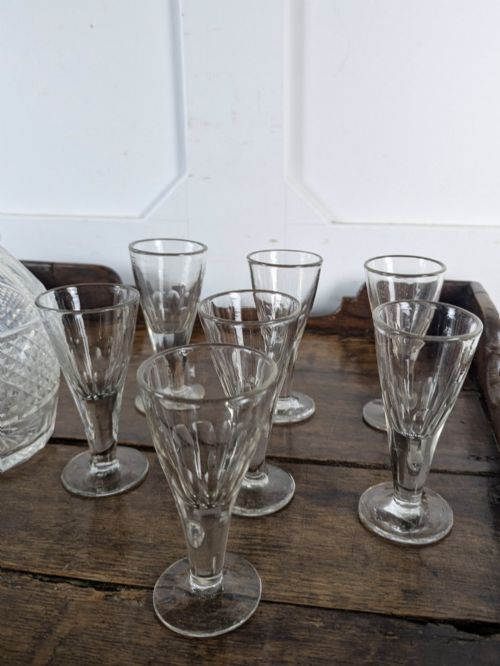
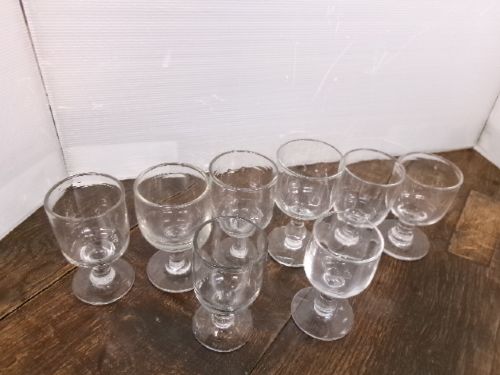
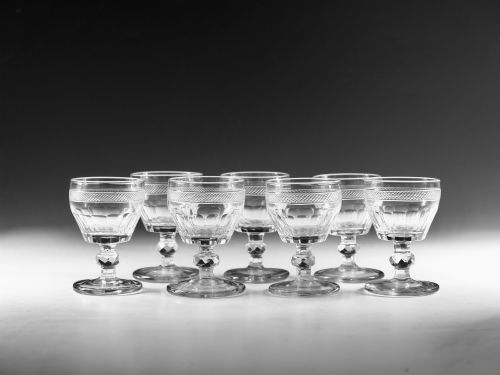
Clear glass port glasses comprise small drinking vessels designed specifically for fortified wine, drawing on forms from the Georgian, Regency, Victorian, and Edwardian periods. Buyers searching for clear glass port glasses will encounter hand-blown drinking glasses and matching sets originating from the nineteenth century.
The selection on this page includes related glassware and serving vessels such as decanters, rummers, and dessert wine glasses alongside the port glasses themselves. These pieces reflect the dining customs of nineteenth-century Britain, utilising lead crystal and clear glass.
Georgian Irish port glasses and Victorian etched dessert wine glasses represent the primary styles available to collectors. Most pieces date from the Regency era through to the early twentieth century, showing traditional hand-blown and cut techniques.
How they were made
Glassmakers shaped these pieces by hand blowing molten metal into forms, creating vessels from clear glass and lead crystal. Artisans then employed cutting techniques to produce thumb-cut patterns and facets that catch the light.
Decoration often involved wheel-engraving or etching floral and geometric motifs onto the surface of the glass. Workshops also combined lead crystal with sterling silver mounts, particularly on associated decanters and serving bottles.
Ship's decanters feature wide, heavy bases designed to prevent rolling when Victorian dining tables shifted on rolling seas.
What varies in quality
Quality rests in the weight and clarity of the metal, where heavy lead crystal demonstrates greater purity than standard utility glass. Crisp execution in hand-cut facets and delicate etching distinguishes finer glassware from simpler production.
The uniformity of a matched set and the survival of original stoppers on related decanters determine the desirability of the grouping. Subtle variations in thickness and bubbles within the glass indicate genuine hand-blown manufacture rather than modern machine moulding.
The Clear Glass Port Glasses Glossary
- Lead crystal
- Glass containing lead oxide, which increases the weight, refractive index, and clarity of the material. This composition allows for deeper and sharper cutting.
- Thumb-cut
- A decorative pattern of shallow, concave depressions resembling a thumbprint, cut into the exterior of the glass. It provided a secure grip on drinking vessels and decanters.
- Rummer
- A large, heavy drinking glass popular in the eighteenth and nineteenth centuries, often used for ale, wine, or punch. These vessels typically feature a short stem and a bucket bowl.
- Prussian style
- A decanter shape featuring three or more neck rings and a tapering body, common during the Georgian and Regency periods. The design kept the vessel stable on board ships and dining tables.
- Intaglio cut
- A technique where the design is carved directly into the surface of the glass rather than the background being removed. This creates a sunken, cameo-like relief effect.
Clear Glass Port Glasses: Frequently Asked Questions
Are these glasses safe for daily use?
Historic glassware can be used for special occasions, provided you handle the thin rims and delicate stems with care. Hand-blown glass from the nineteenth century is generally robust enough for gentle dining use.
Inspect the rims and bases for tiny chips before use, and store the glasses securely where they will not knock against one another.
How can I tell Georgian glass from Victorian glass?
Georgian glass often exhibits a darker tone with characteristic pontil scars on the base, reflecting earlier hand-blowing methods. The metal frequently contains small bubbles and striations unique to the period.
Victorian pieces tend to show sharper machine or acid-etched decoration alongside heavier lead crystal compositions. Stylistic motifs also shift from simple faceted Georgian bowls to elaborate botanical etchings in the later Victorian era.
Why do some port glasses have no stems?
Certain historic drinking vessels, such as rummers and small dram glasses, were fashioned with thick bases rather than long stems for stability. This heavier foot prevented accidental tipping on crowded dining tables or tavern surfaces.
Such forms remained popular throughout the Regency and Victorian periods for robust spirits and fortified wines.