



Bohemian Cut to Clear
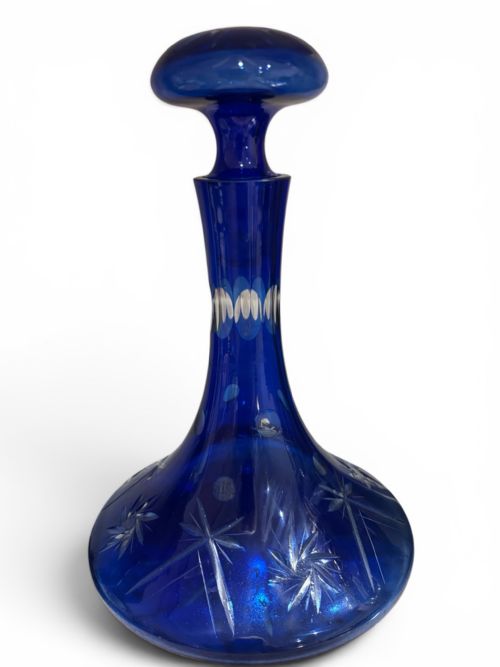
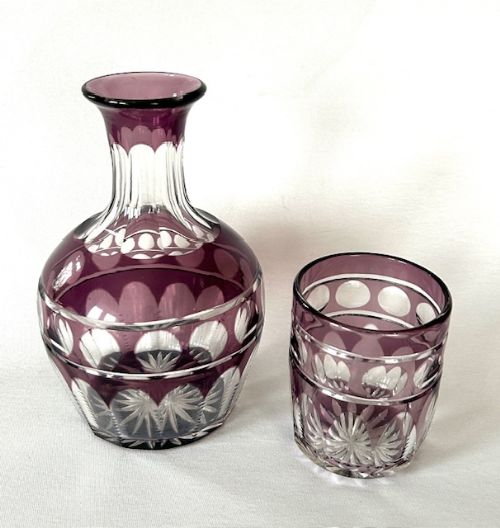
Bohemian cut to clear glassware combines heavy crystal with brilliant coloured layers to create striking contrast and deep optical patterns.
Bohemian Cut to Clear
When you search for bohemian cut to clear, you are looking at substantial decorative glassware and tableware originating primarily from the nineteenth and early twentieth centuries. These objects range from decanters and carafes to vases, bowls, and hock glasses, reflecting a rich heritage of European glassmaking. The versions you are most likely to meet on this page span the Victorian era up to 1930, capturing the height of traditional craftsmanship.
The aesthetic centres on a coloured outer layer or cased casing over a clear crystal base, carved away to reveal the contrasting transparent metal beneath. Pieces frequently emerge in deep shades of ruby red, cobalt blue, amethyst, and cranberry, often enriched with gilt accents or intricate engraving. Such items served both decorative and functional roles in period dining rooms and drawing rooms, valued for their refractive brilliance and weight.
How they were made
The creation of these items relied on glassblowing techniques where a gather of clear crystal was encased in one or more layers of coloured glass while molten. Makers achieved triple cased effects and rich colouration such as ruby flash and cobalt glass through careful chemical additions to the glass batch. Once annealed, the cooled vessel went to the cutting floor where artisans used abrasive wheels to grind away the exterior colour in geometric or floral patterns.
Detailing often included extensive wheel engraving and hand-gilding applied over the cut panels to add texture and metallic contrast. Heavy lead crystal provided a dense, sonorous foundation that allowed deep facet cutting without compromising the structural integrity of the vessel. The combination of thermal layering and cold-work engraving required immense precision from the glasshouses.
Listings feature items from eighteen sixty through to nineteen thirty, encompassing Victorian styles and heavy lead crystal forms.
What varies in quality
Quality in these pieces is dictated by the depth and crispness of the wheel cutting, where sharper facets and smoother polished recesses distinguish superior examples. The thickness and uniformity of the coloured overlay layer also play a critical role, as finer works exhibit a clean, precise boundary between the clear crystal and the saturated hue without bleeding or irregularity. Additionally, the weight of the lead crystal and the complexity of supplementary hand-engraving elevate a piece from standard utilitarianware to high decorative art.
The ambition of the form itself separates standard production from exceptional works, such as large ovoid vases, multi-piece sets, or heavily cased goblets with zip cut stems. Preservation of original gilt highlights and the absence of cloudiness in the metal contribute heavily to the overall desirability of an item. Every stage of production, from the initial blowing to the final polish, reflects the hand of a skilled artisan rather than mechanical output.
The Bohemian Cut to Clear Glossary
- Cut to clear
- A technique where a coloured layer of glass is carved away to expose the clear crystal underneath. This process creates bold patterns and high visual contrast.
- Ruby flash glass
- A thin layer of red glass applied over a clear crystal base before cutting. It provides vibrant colour while keeping the vessel relatively lightweight.
- Cased glass
- Glass formed of multiple distinct layers of different colours fused together during the blowing process. Triple cased versions feature three separate strata of glass.
- Hock glass
- A traditional stemmed drinking vessel traditionally used for white wine. They frequently feature long coloured bowls and heavily cut stems.
- Zip cut
- A decorative pattern consisting of narrow, parallel vertical cuts usually applied to the stems of glassware. It enhances grip and refracts light effectively.
Bohemian Cut to Clear: Frequently Asked Questions
What is bohemian cut to clear?
It is a style of decorative glassware featuring a clear crystal body covered by a coloured glass layer that is carved away to reveal patterns.
Items range from decanters to vases and stemware, produced largely during the nineteenth and early twentieth centuries in European workshops.
How do I clean antique glass?
Wash pieces gently by hand using warm water and mild detergent rather than placing them in a dishwasher. Avoid sudden temperature changes to protect the crystal.
Dry them immediately with a lint-free cloth to maintain the brilliance of the cut facets and any gilt detailing.
Are these items made of lead crystal?
Many of the period pieces utilise heavy lead crystal, which provides a denser structure and superior light refraction compared to standard soda-lime glass.
This material weight allowed artisans to cut deep facets without weakening the overall stability of the vessels.
How can I tell the period?
Dating relies on stylistic markers, glass colouration, and manufacturing techniques characteristic of the Victorian era and the decades leading up to nineteen thirty.
Forms like ovoid panels and specific overlay colours align closely with the production standards of nineteenth century Bohemian glasshouses.