




Opaque Twist Glass
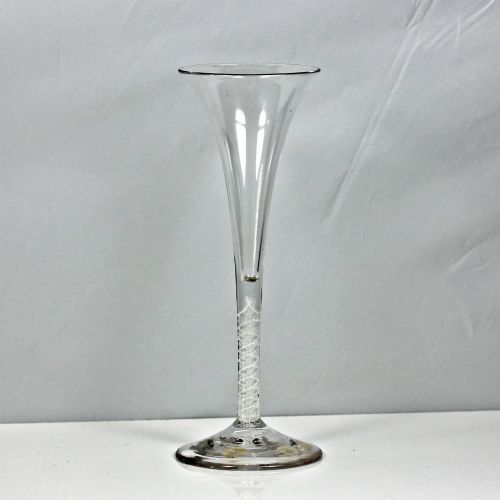
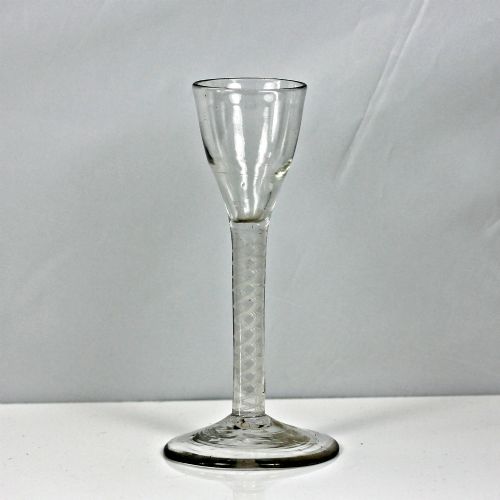
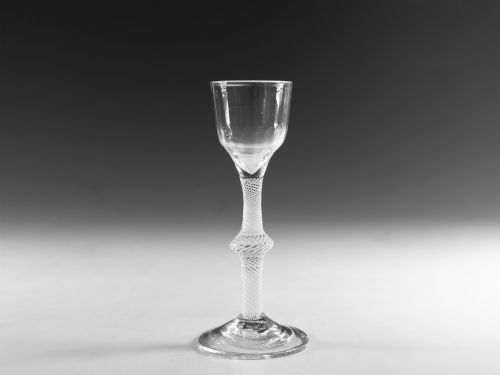
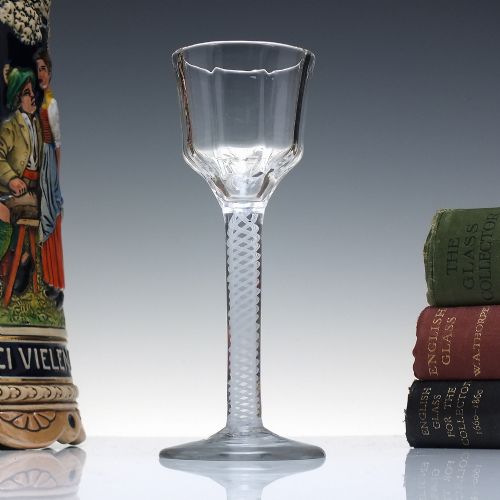
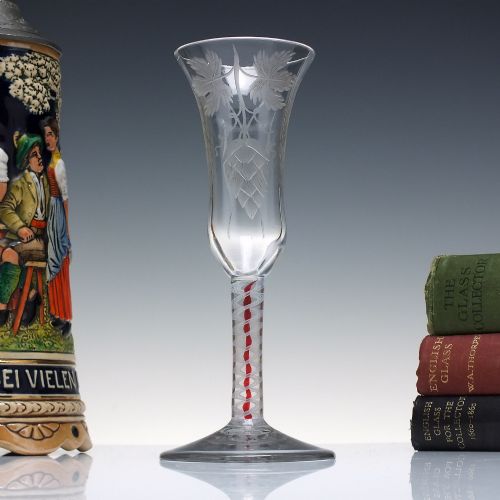
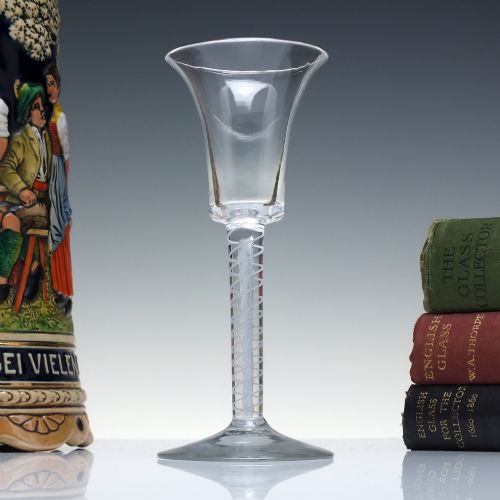
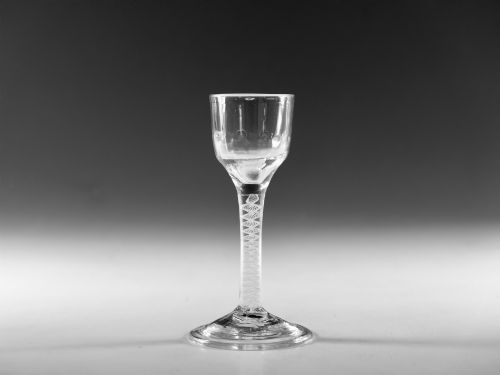
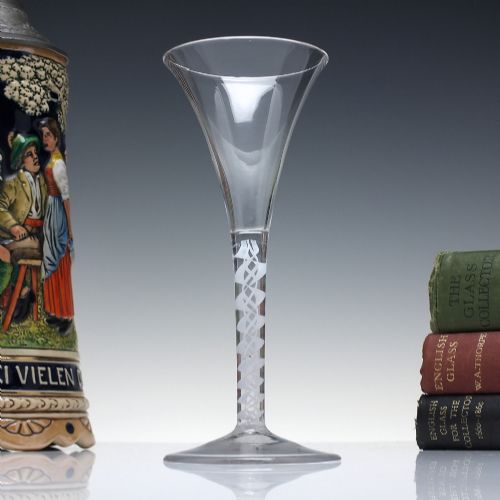
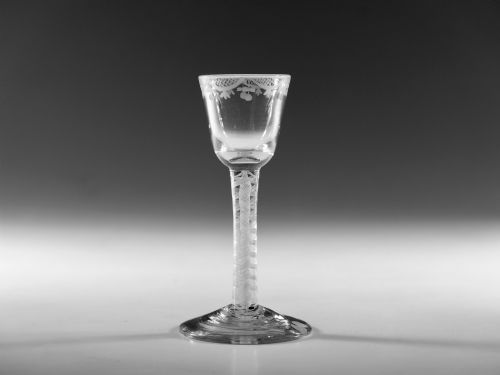
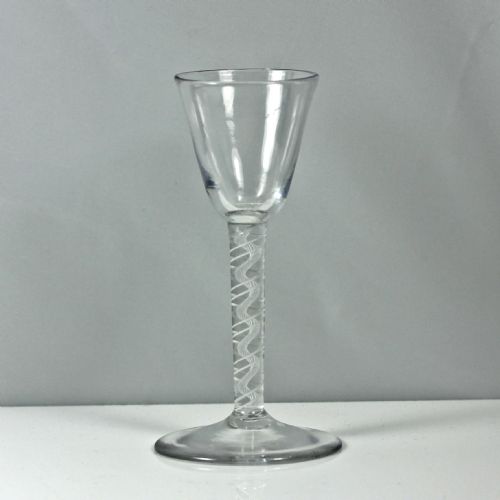
These opaque twist glass pieces are drinking vessels featuring milky-white enamel threads trapped within clear lead crystal stems.
Opaque Twist Glass
When you search for opaque twist glass, you encounter drinking vessels largely rooted in the eighteenth century alongside later nineteenth-century revivals. The form appears predominantly as wine glasses, accompanied by ale glasses, cordials, and sweetmeats featuring distinct bowl shapes such as ogee, bell, trumpet, and bucket.
Most examples date from the Georgian period, particularly the middle decades of the eighteenth century, though Victorian and Edwardian interpretations also surface. Bowls sit above slender stems enclosing opaque white enamel threads, terminating in conical or terraced feet.
Materials and construction
These items rely on lead crystal paired with white enamel glass to create the signature internal threads. Makers manipulated molten glass rods containing opaque enamel twists, encasing them within a clear outer layer before drawing and shaping the stem.
The internal patterns form distinct series, including single, double, and multi-spiral configurations, sometimes combined with air bubbles or central corkscrews. Bowls and feet were fashioned separately before being joined to the finished stem.
Some eighteenth-century examples served as Jacobite sympathy glasses, carrying covert political loyalties hidden within the innocent swirl of white enamel.
Distinctions in quality
Quality rests upon the precision and complexity of the internal twist formation, with multi-spiral and triple-series stems commanding higher regard among collectors. The clarity of the lead crystal and the sharpness of the bowl mouldings also dictate the merit of an individual piece.
Proportion and balance between the bowl, stem, and foot distinguish superior examples from simpler forms. Pieces featuring engraved decoration or specific historical associations add further distinction to the range.
Beilby·James Giles·Josphinenhutte
The Opaque Twist Glass Glossary
- Opaque twist
- A stem form containing white enamel glass threads enclosed within clear lead crystal. This technique succeeded the earlier air twist style.
- Ogee bowl
- An S-curve bowl profile curving outward at the rim and inward toward the base. This shape appears frequently on eighteenth-century drinking vessels.
- Sweetmeat glass
- A specialised vessel with a wider bowl designed for serving small confections or sweet dishes. These often feature decorative rims.
- Firing glass
- A heavy-based drinking vessel used during club or lodge toasts. The thick foot was banged on the table instead of cheering.
- Terraced foot
- A stepped foot profile rising in concentric tiers toward the stem. This feature provides additional weight and stability.
Opaque Twist Glass: Frequently Asked Questions
What are opaque twist glasses?
Opaque twist glasses are drinking vessels featuring stems filled with white enamel glass threads enclosed in clear lead crystal. They date chiefly from the eighteenth century.
These pieces served as wine, ale, and cordial glasses during the Georgian era, replacing earlier air twist designs.
How do you date an opaque twist glass?
Dating relies on stylistic clues including bowl shapes, foot formations, and the complexity of the internal enamel threads. Eighteenth-century examples generally display lighter metal and specific foot profiles.
Later nineteenth-century pieces often reveal differences in crystal weight, colour tone, and manufacturing technique compared to their Georgian predecessors.
Were these glasses used for drinking wine?
Yes, the majority of surviving examples functioned as wine glasses, alongside variants made for ale, champagne, and cordials. Their capacities were generally smaller than modern wine glasses.
Specialised forms like sweetmeat glasses held confectionery, while firing glasses were designed for toast-drinking rituals.
What is the difference between single and double series?
Single series twists contain a single pair of enamel threads, whereas double series incorporate two distinct sets of threads twisted around each other. Triple series examples feature even more complex internal arrangements.
More intricate twist configurations generally require greater skill from the glassmaker.