

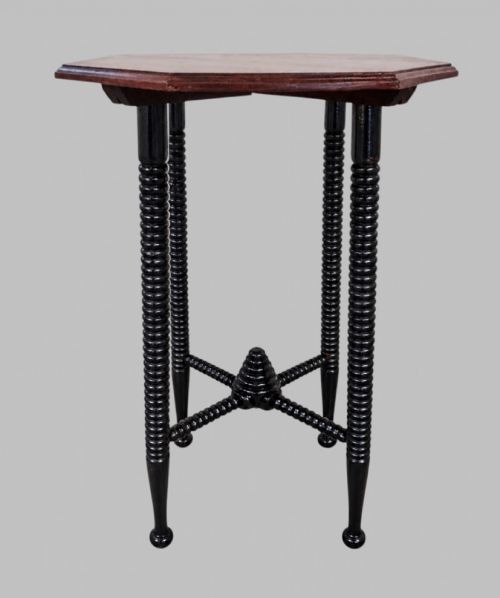
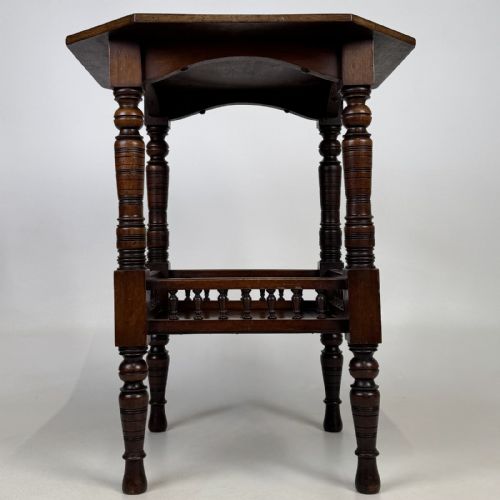
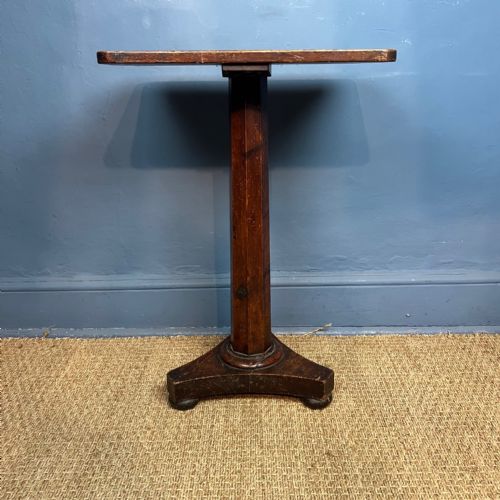
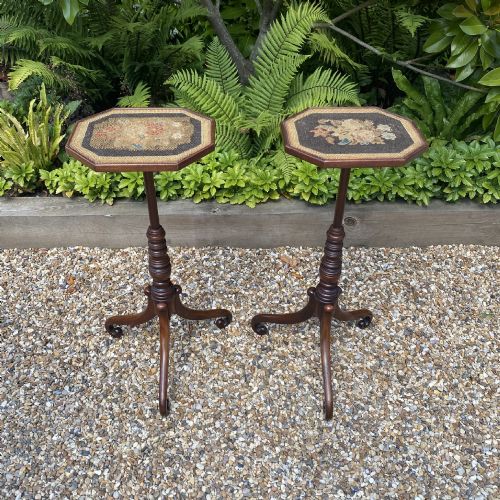

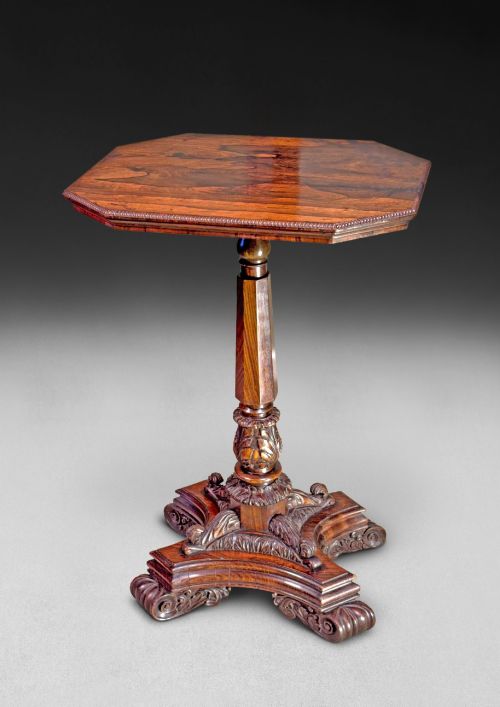
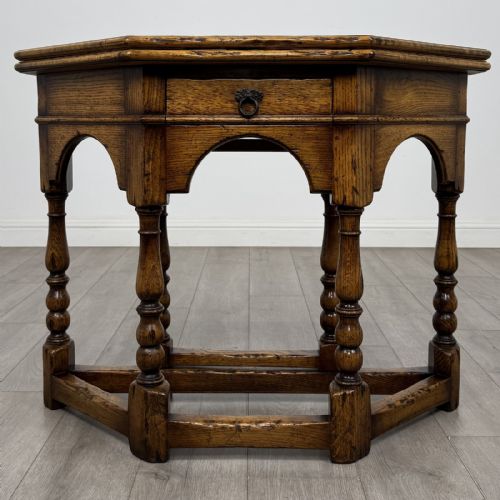
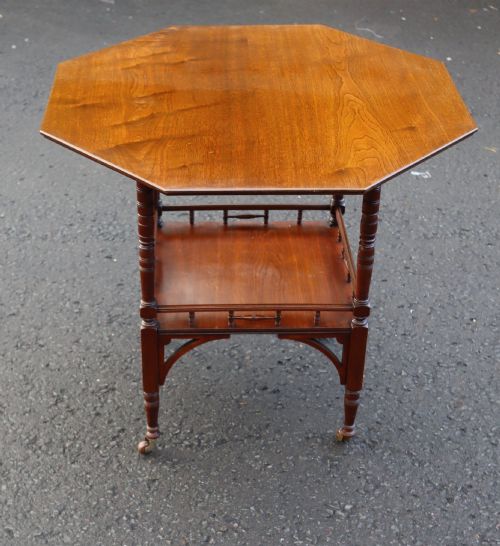
Octagonal Accent Side Table
An octagonal accent side table brings compact geometry and rich timber into a room, offering a distinct surface for lamps or tea.
Octagonal Accent Side Table
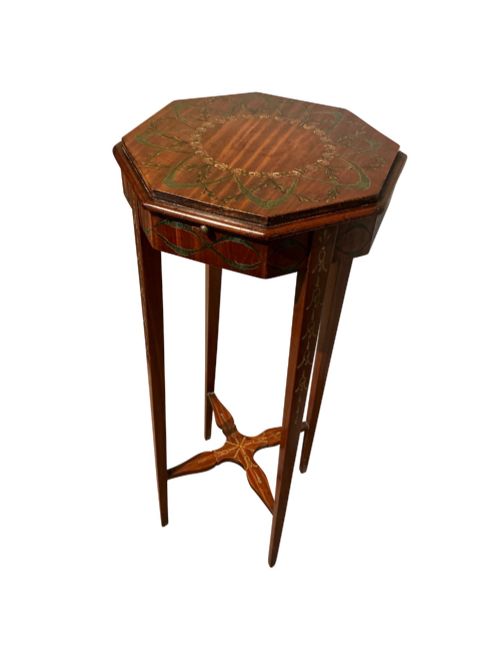
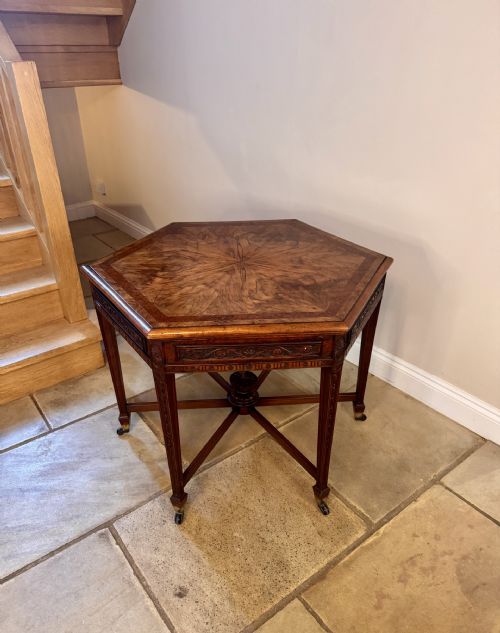
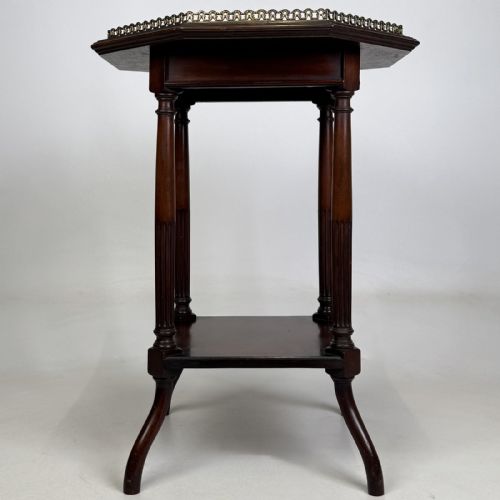
The octagonal accent side table appears in forms such as occasional tables, centre tables, and lamp tables across the nineteenth and early twentieth centuries. These pieces serve as versatile display surfaces, utilising eight-sided tops to fit neatly into corners or sit beside seating.
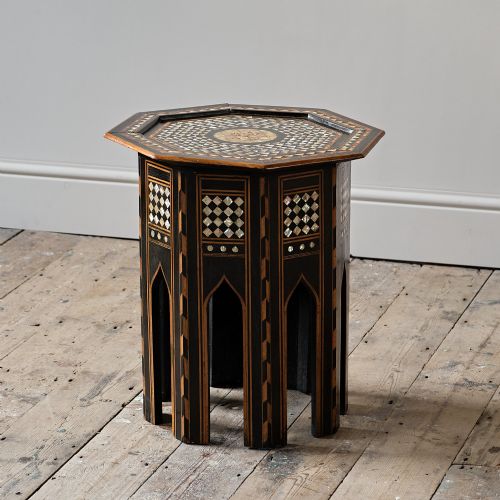
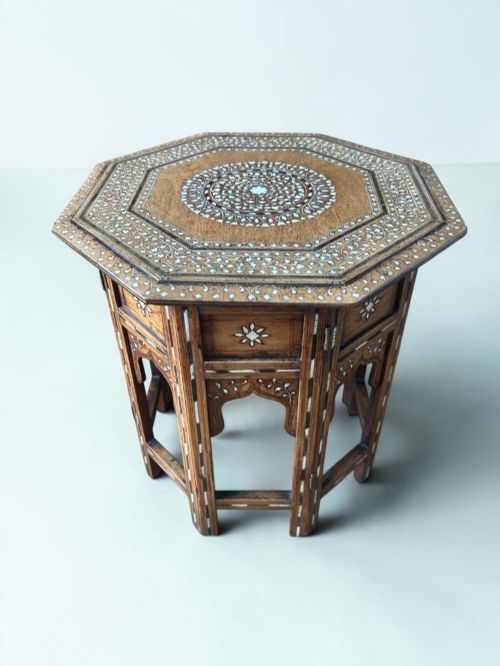
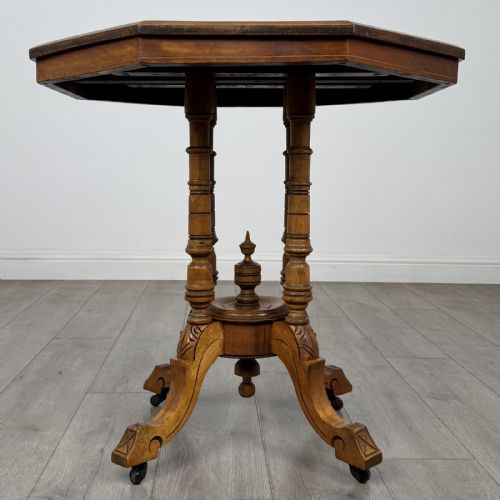
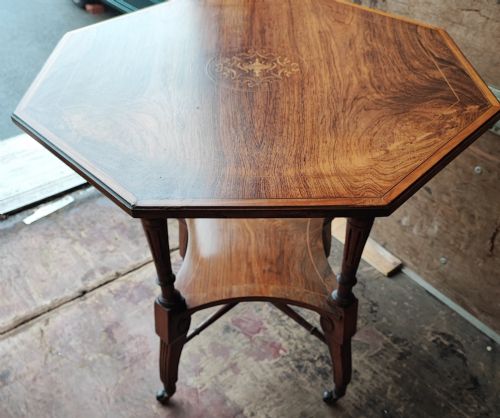
Victorian and Edwardian examples dominate the selection, often rendered in rich timbers like walnut, mahogany, and rosewood. Makers embraced diverse global influences, producing Anglo-Indian, Moorish Revival, and Burmese pieces alongside standard domestic styles.
How they were made
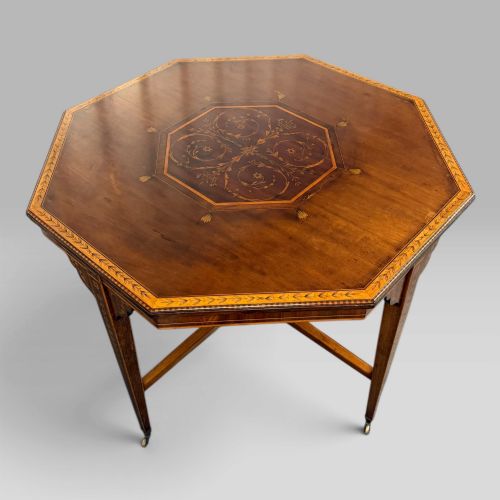
Cabinetmakers constructed these tables using solid hardwoods such as oak, mahogany, and walnut, frequently applying satinwood, mother-of-pearl, or marquetry inlay to the octagonal surfaces. Brass galleries, carved panels, and turned legs provide structural and decorative detail.
Regional workshops and major firms employed specialist joinery techniques, combining sturdy frames with intricate pierced carving or delicate geometric inlays. Polished finishes highlight the natural grain of the timber.
Octagonal Accent Side Table Retail Price Guide 2026
Typical asking prices for octagonal accent side table among the pieces listed under this phrase on Sellingantiques today, from the lower quarter to the upper quarter. They describe what is for sale here now, not the wider market.
Several tables arrive with their original Kilim seat covers or unexpected mother-of-pearl constellations set into the timber.
What varies in quality
The distinction between standard domestic production and high-end cabinet work rests on the precision of the marquetry and the depth of the carving. Finely executed inlay work and substantial timber framing elevate a piece far above simpler vernacular items.
Proportion and material selection dictate overall refinement, with superior examples exhibiting crisp geometric angles and integrated lower shelves or galleried edges. The complexity of regional carving styles, from Hoshiarpur work to British marquetry, defines the upper tier.
Gillows·Hindley and Sons·Liberty and Co
The Octagonal Accent Side Table Glossary
- Marquetry
- Decorative patterns formed by inserting small pieces of wood, veneer, or shell into a solid timber ground to create pictorial or geometric designs.
- Moorish Revival
- An architectural and decorative style popular in the late nineteenth century, incorporating intricate geometric lattice, arches, and mother-of-pearl inlay.
- Occasional table
- A small, movable table designed for specific, intermittent uses such as holding a lamp, books, or tea.
- Brass gallery
- A low decorative metal rail fitted around the perimeter of a table top to prevent items from sliding off.
- Hoshiarpur
- A North Indian centre renowned for intricate woodwork, producing tables densely carved and inlaid with bone or resin on hardwood bases.
Octagonal Accent Side Table: Frequently Asked Questions
What is an octagonal accent side table used for?
These tables function as versatile surfaces for lamps, tea sets, or decorative objects, fitting easily beside chairs or in room corners due to their compact shape.
Their distinct eight-sided top provides enough space for daily items while maintaining a smaller footprint than standard rectangular tables.
How do I identify a Victorian octagonal table?
Victorian examples typically feature dense hardwoods like walnut or mahogany, often complemented by turned legs and sometimes marquetry inlay.
Examining the construction methods underneath, such as hand-cut joints and timber ageing, helps confirm the nineteenth-century origin.
How do I care for antique timber tables?
Maintain the wood by keeping the table away from direct heat sources and strong sunlight, which can dry out and fade the polished surface.
Apply a suitable wax polish occasionally to nourish the timber and preserve the grain without building up a heavy residue.