
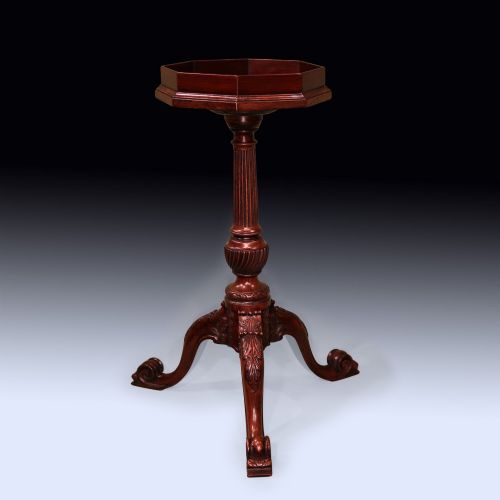
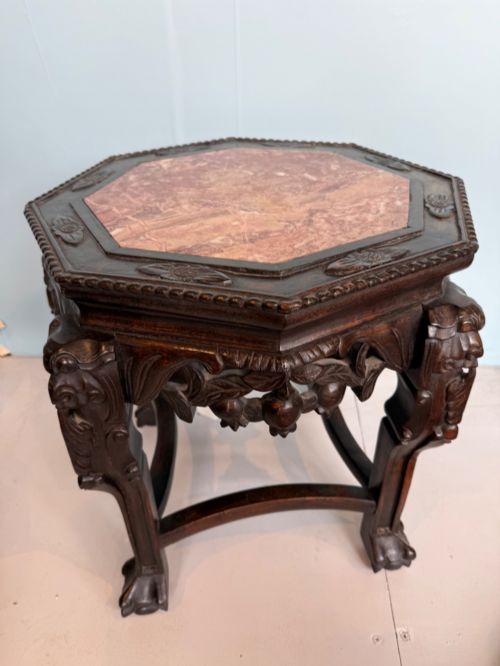


Octagonal Top Plant Stand
An octagonal top plant stand elevates greenery with geometric discipline, drawing the eye through carved wood and inset stone.
Octagonal Top Plant Stand
An octagonal top plant stand is a sturdy display piece designed to hold heavy pots or urns in a domestic interior. You meet these primarily in mahogany, oak, teak, and padouk, often shaped with eight distinct sides to the top surface.
The selections span from the 18th century through the Victorian era and Edwardian periods, including Chinese export forms and Anglo-Indian carving. These pieces double as occasional tables, torcheres, and wine tables depending on their height and top configuration.
Makers utilised woods like satinwood and walnut alongside copper and marble inserts to create varied surfaces for holding plants or decorative items. The eight-sided format provides a stable geometric platform that contrasts with traditional round or square table tops.
How they were made
Cabinet makers joined dense timbers such as mahogany, oak, and padauk using traditional mortise and tenon construction to support the heavy loads of stone tops and planted vessels. Turning lathes shaped the central pedestals and barley twist legs found on many examples.
Carving techniques required skilled hand chiselling, particularly visible in Anglo-Indian Hoshiarpur work and Chinese export pieces featuring intricate floral or geometric motifs. Insets of white marble or beaten copper were fitted directly into wooden frames to resist water damage from watering plants.
Camel tables join the lineup alongside standard plant stands, offering carved animal forms to support your greenery.
What varies in quality
The depth and crispness of hand carving separate ordinary production from superior craftsmanship, especially across Anglo-Indian and Victorian specimens. Dense, heavy hardwoods like solid mahogany or padauk indicate better initial material selection than lighter secondary woods.
Construction integrity in the pedestal joints and tripod bases determines how steadily the eight-sided top sits under weight. The integration of inset materials, such as fitted marble slabs or smooth copper tops, shows the maker's precision in joining disparate substances.
The Octagonal Top Plant Stand Glossary
- Torchere
- A tall ornamental stand designed to support a candle, lamp, or plant. These elevated pieces often feature slender central pedestals.
- Padauk
- A heavy, durable tropical hardwood prized for its rich reddish-brown colour and stability in antique furniture. It frequently appears in Chinese export and Indian pieces.
- Hoshiarpur
- A region in India renowned for intricate wood carving inlaid with materials like brass or bone. Pieces from this tradition display dense overall surface decoration.
- Jardiniere
- An ornamental pot or stand specifically made for holding flowers or plants. They often incorporate waterproof liners or stone tops.
- Tripod base
- A three-legged support structure commonly utilised on small tables and stands to ensure stability on uneven floors.
Octagonal Top Plant Stand: Frequently Asked Questions
How were these stands used?
These pieces functioned as raised platforms for heavy potted plants, jardinieres, or decorative lamps within principal rooms. Their elevated surfaces protected flooring from moisture and displayed greenery at eye level.
They also served as occasional tables for holding small items or candles during evening gatherings. The compact footprint allowed placement in corners or beside seating furniture.
What woods were commonly used?
Cabinet makers relied on durable hardwoods such as mahogany, oak, teak, and padauk to construct sturdy frames. These dense timbers supported heavy top surfaces made from marble, copper, or matching wood.
Finer decorative examples incorporated satinwood veneers and walnut for visual contrast. Regional preferences influenced timber choice, with tropical hardwoods appearing frequently in export and colonial pieces.
How do I identify the period?
Stylistic clues such as Chippendale carving, Aesthetic Movement motifs, or Edwardian inlay provide primary dating evidence. Construction methods and joinery also help determine whether a piece originates from the 18th, 19th, or early 20th century.
Turned elements like barley twist legs point towards specific revival periods or late Victorian production. Examining the underside and interior surfaces reveals tool marks consistent with historical manufacturing techniques.
Are marble tops original?
Many stands designed for plants feature inset marble or copper panels intended to withstand moisture from watering. Original stone slabs fit snugly into the rebated wooden frame without excessive gaps.
Replacement marble or metal liners do occur due to damage over long periods of domestic use. Inspecting the supporting framework underneath helps determine if the top surface retains its original configuration.