
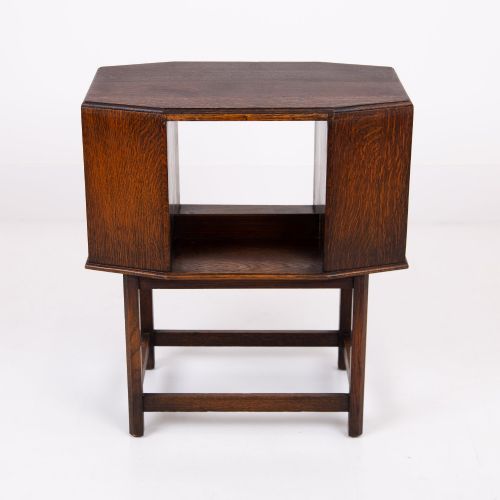
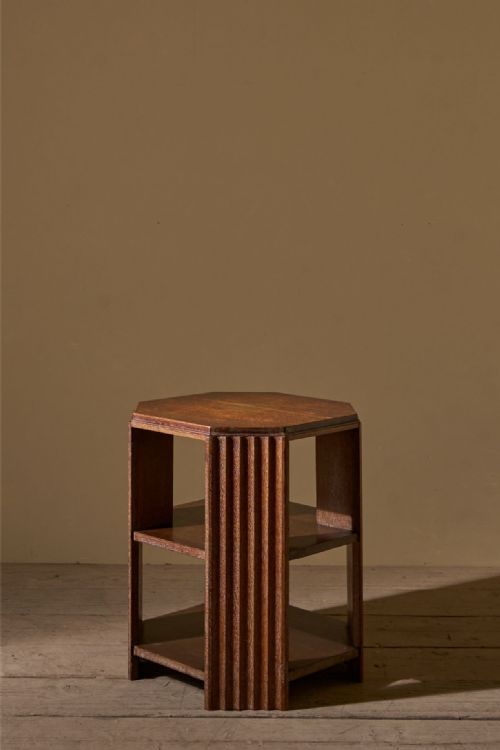
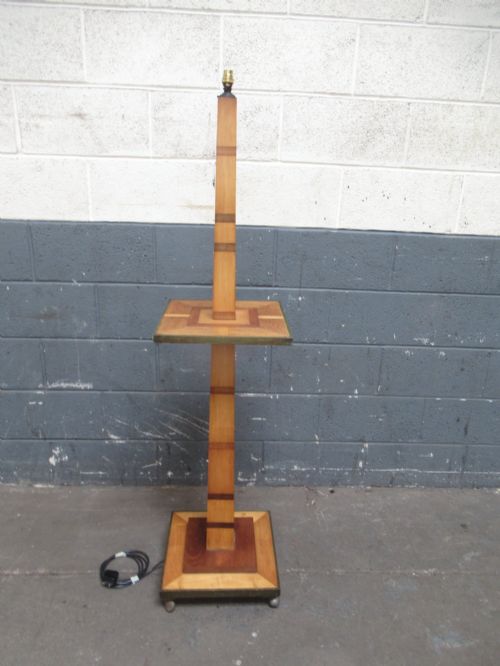
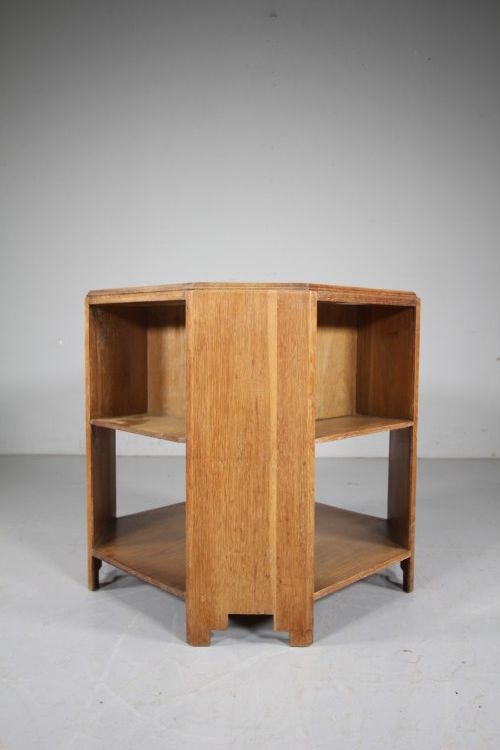


1930s Oak Lamp Table
A 1930s oak lamp table brings genuine period character and sturdy utility to a corner, offering a compact surface built to last.
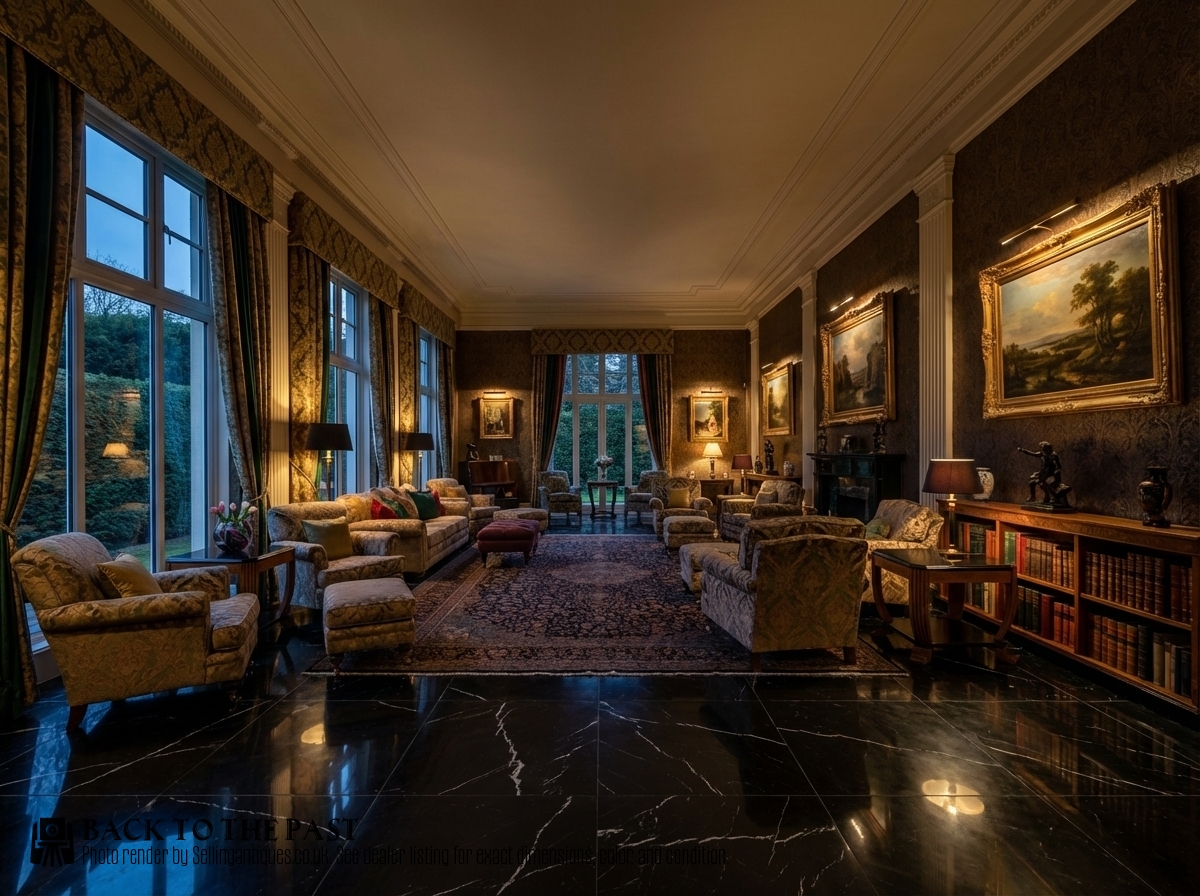
1930s Oak Lamp Table
A 1930s oak lamp table is a compact occasional piece designed to sit beside seating and hold a light source or books. These tables typically take the form of side tables, occasional tables, or octagonal stands.
The versions you are most likely to meet on this page span the 1920 and 1930 periods. They reflect either clean Art Deco lines or traditional Jacobean Revival motifs.
Makers of the era utilised solid timber and veneer to create practical furniture for interwar homes. Many examples include integrated storage or lower shelves for added function.
How they were made
Construction relies heavily on solid oak and oak veneer over timber carcases. Workshops also incorporated details in walnut, satinwood, and ebonised wood to create contrast.
Turned elements such as barley twist legs appear alongside smooth, geometric Art Deco planes. Brass hardware and fittings provide functional accents on tables with storage drawers or compartments.
Some tables hide clever storage compartments designed when homes needed every square inch to count.
What varies in quality
Quality rests on the choice of materials, distinguishing tables built from solid oak throughout from those relying on standard veneered construction. The crispness of carved details and turned woodwork also separates standard production from finer cabinetmaking.
Design ambition dictates value, moving from utilitarian occasional stands to sophisticated Art Deco modernist pieces or documented Heal's commissions. Clean joinery and well-fitted interior shelving mark the higher tier of these tables.
Heals
The 1930s Oak Lamp Table Glossary
- Art Deco
- A design style of the 1920s and 1930s characterised by sleek geometric shapes, streamlined forms, and stylised motifs. It represented a deliberate break from heavy historical revivals.
- Barley Twist
- A form of woodturning resembling a spiral rope, frequently used for table legs and floor lamp columns. This decorative feature dates back centuries but saw strong revival use in the interwar period.
- Veneer
- A thin layer of superior wood glued to a base timber surface to provide a decorative grain pattern. In 1930s furniture, oak and walnut veneers were common on flat table tops.
- Occasional Table
- A small, movable table designed for specific, intermittent use rather than central daily dining. These pieces include lamp tables, coffee tables, and small side stands.
1930s Oak Lamp Table: Frequently Asked Questions
How do I identify Art Deco style?
Art Deco style is recognised by streamlined geometric shapes, smooth surfaces, and a lack of excessive traditional ornamentation.
In these tables, you will see clean planes, sometimes paired with contrasting ebonised wood or satinwood details, marking a modern interwar aesthetic.
Are barley twist legs original to the 1930s?
Barley twist legs are entirely characteristic of 1930s oak tables influenced by Jacobean Revival tastes.
Cabinetmakers of this era frequently combined traditional turned woodwork with compact interwar table forms.
How do I care for an oak table?
Care for an oak table by dusting it regularly with a dry cloth and avoiding placement near direct heat sources or strong sunlight.
Occasional application of appropriate wax or polish will nourish the timber and maintain the natural finish of the wood.