
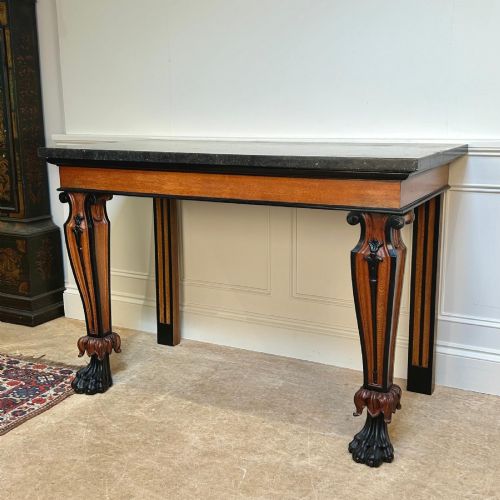


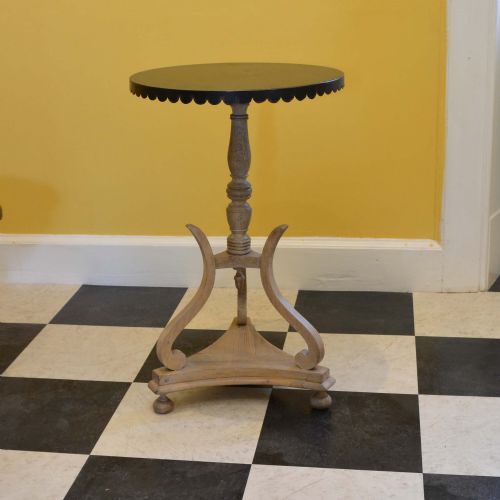


Ebonised Oak Side Table
An ebonised oak side table brings a dark, striking surface to a room, combining rich grain with a formal blackened finish.
Ebonised Oak Side Table
When you search for an ebonised oak side table, you encounter a variety of dark timber forms ranging from compact occasional tables to console and serving pieces. The selection includes examples from the Regency period, the Victorian era, and the early twentieth century, spanning styles such as Aesthetic Movement, Art Deco, and Arts and Crafts.
You are most likely to meet occasional tables, console tables, and small coffee tables finished with ebonised surfaces or constructed from solid oak alongside ebony and walnut highlights. Pieces reflect distinct periods, from nineteenth-century card tables to streamlined nineteen-thirties blonde and solid oak designs.
How they were made
Maker construction relies heavily on oak as a primary timber, frequently paired with ebonised wood, ebony, and walnut to create sharp contrast. Workshops utilised brass fittings, leather inserts, and marble tops to add utility and decoration to surfaces.
Techniques range from traditional joinery seen in Regency console tables to the distinctive aesthetic joinery of the Arts and Crafts and Manchester School pieces. Surfaces combine natural grain exposure with blackened or bleached finishes.
A handkerchief table folds out like fabric, concealing its clever geometry until you unfold the leaves.
What varies in quality
Quality rests in the crispness of the ebonisation and the integrity of the underlying timber, distinguishing carefully prepared pieces from simpler items. The refinement of stylistic details, such as the joinery in Aesthetic Movement items or the proportion of Regency console frames, dictates the standing of a piece.
Materials elevate certain examples, particularly where burr oak, solid ebony details, or inset leather and marble are integrated with precision. The execution of specific design movements, from Liberty & Co. productions to Dutch painted surfaces, marks the distinction between standard utilitarian items and notable workshop output.
Liberty & Co.
The Ebonised Oak Side Table Glossary
- Ebonised
- Timber treated with stain, dye, or polish to imitate the dark appearance of ebony. This finish was particularly favoured during the Victorian and Aesthetic Movement periods.
- Console table
- A table designed to stand against a wall, frequently supported by console brackets or legs. These items often function as serving or display surfaces in hallways and living rooms.
- Aesthetic Movement
- A late nineteenth-century style emphasising visual beauty over narrative content, often incorporating Japanese design influences. Pieces from this movement frequently feature ebonised wood and geometric simplicity.
- Trifold drop leaf handkerchief table
- A clever folding table design featuring multiple hinged leaves that unfold to expand the surface area. These compact pieces were often produced during the Victorian era.
Ebonised Oak Side Table: Frequently Asked Questions
What is an ebonised finish?
An ebonised finish is a blackened wood treatment designed to give cheaper or paler timbers the deep, dark appearance of solid ebony. Cabinetmakers applied this technique widely during the nineteenth century to achieve high-contrast furniture.
In the pieces listed here, the treatment highlights carved details and creates a formal, dramatic silhouette against lighter interiors.
Where should I place a console table?
Console tables fit best against flat walls in hallways, living rooms, or dining spaces where floor space is limited. Their shallow depth allows them to serve as functional surfaces without blocking pathways.
Pair them with a mirror or artwork above to anchor the arrangement in a room.
How do I identify an Aesthetic Movement piece?
Aesthetic Movement items typically feature clean geometric lines, dark ebonised surfaces, and subtle nods to Japanese decorative arts. They reject heavy Victorian ornamentation in favour of artistic simplicity.
Look for contrasting timber details and understated joinery that prioritize visual harmony.
Are these tables suitable for daily use?
These tables handle normal daily use well, provided they are treated with care regarding moisture and heat. Solid oak and walnut constructions offer robust daily utility for lamps, books, and decorative objects.
Using coasters and placing them away from direct heat sources preserves the historic wood and ebonised finishes.