
Victorian Octagonal Tea Table
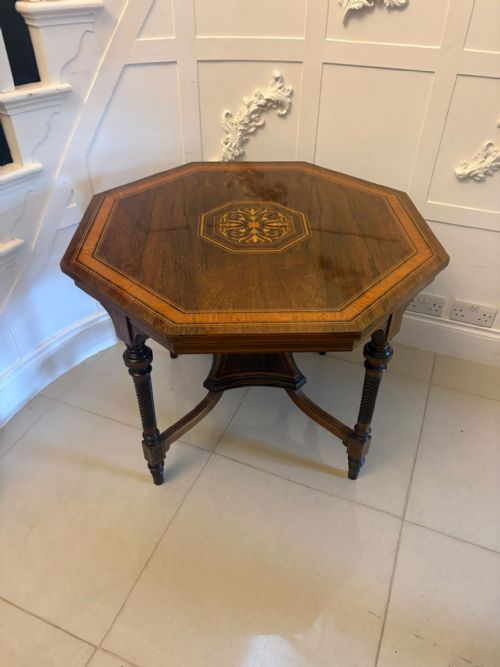
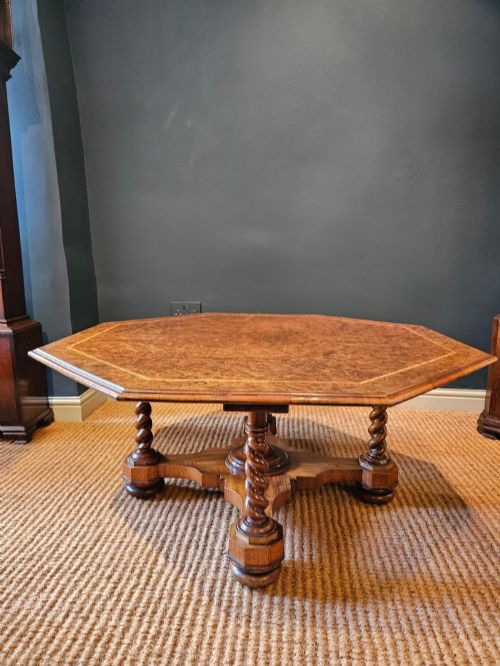
A victorian octagonal tea table brings distinct geometric form and rich timber grain to a room.
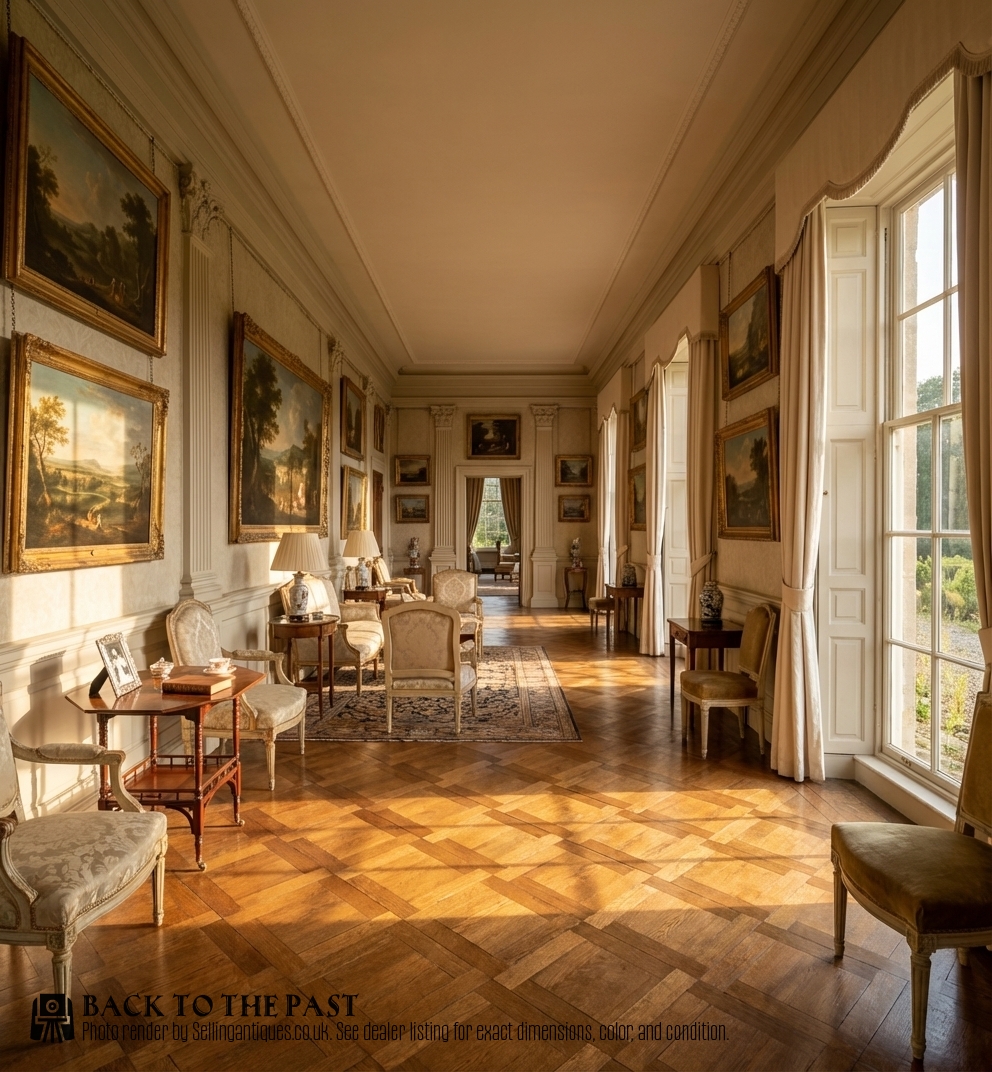
Victorian Octagonal Tea Table
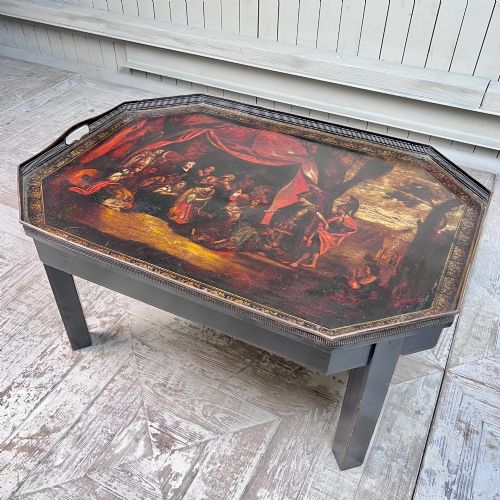
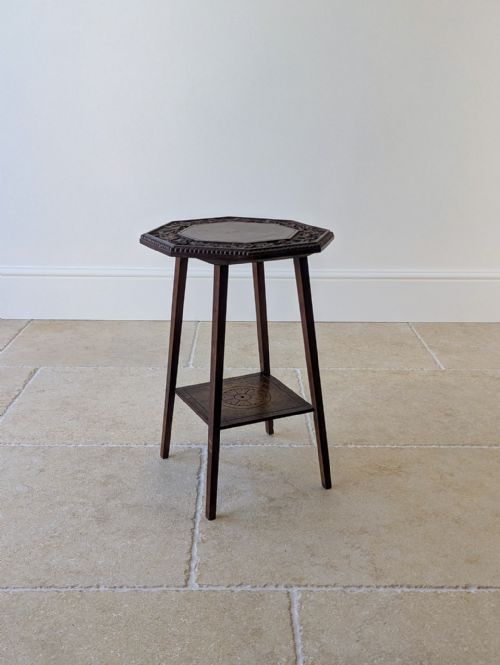
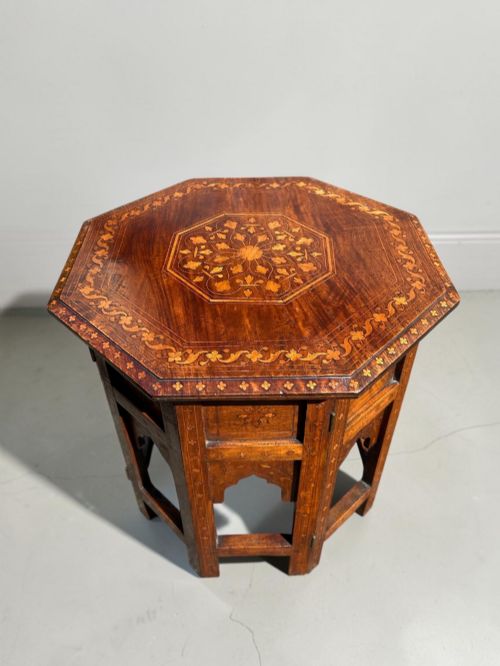
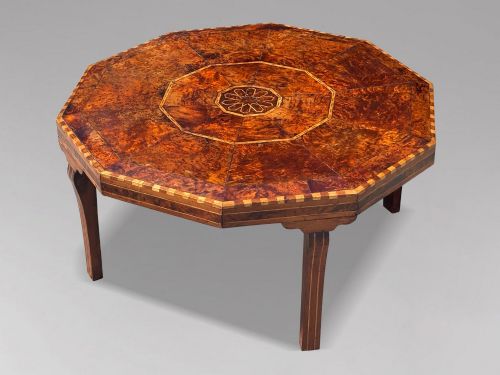
A victorian octagonal tea table offers eight-sided symmetry designed for domestic display and entertaining during the nineteenth century. These pieces appear in forms ranging from occasional and side tables to centre and coffee tables.
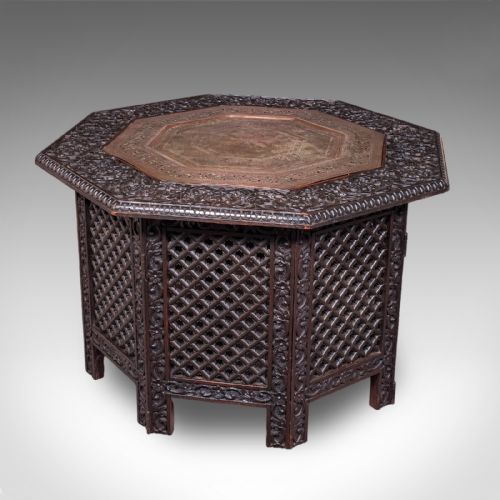
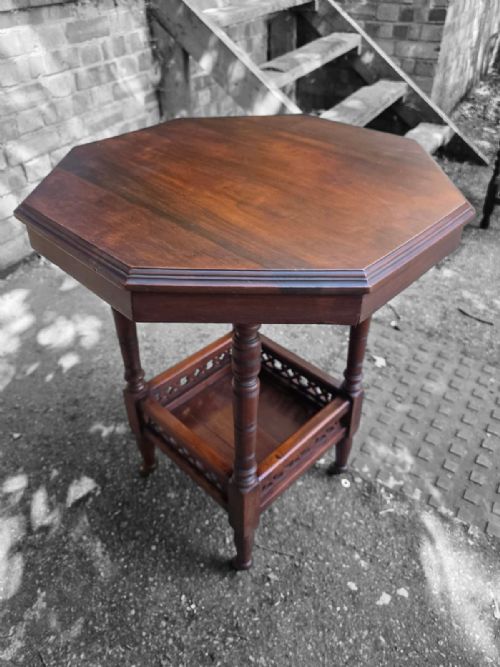
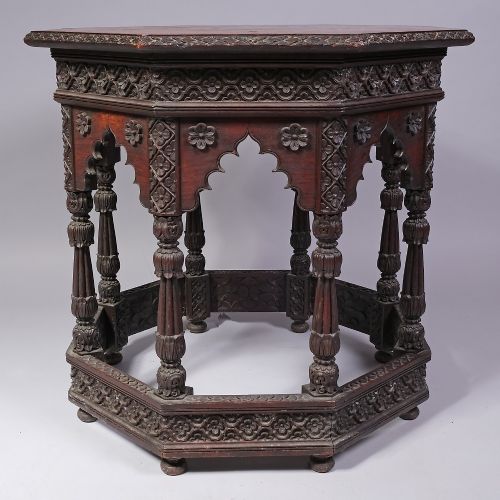
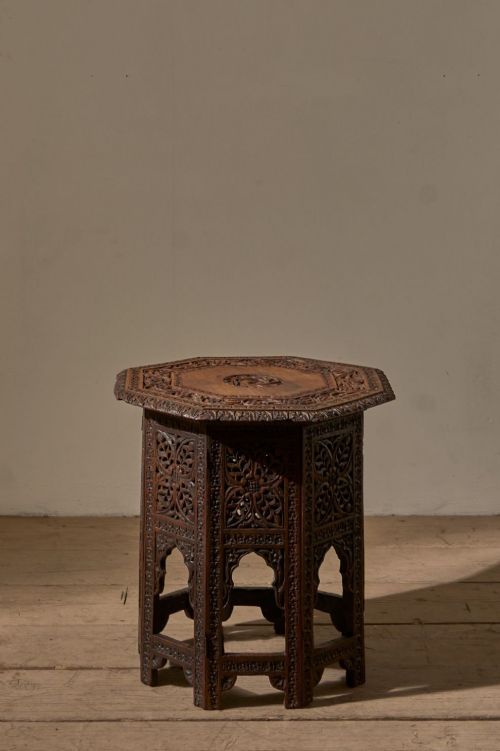
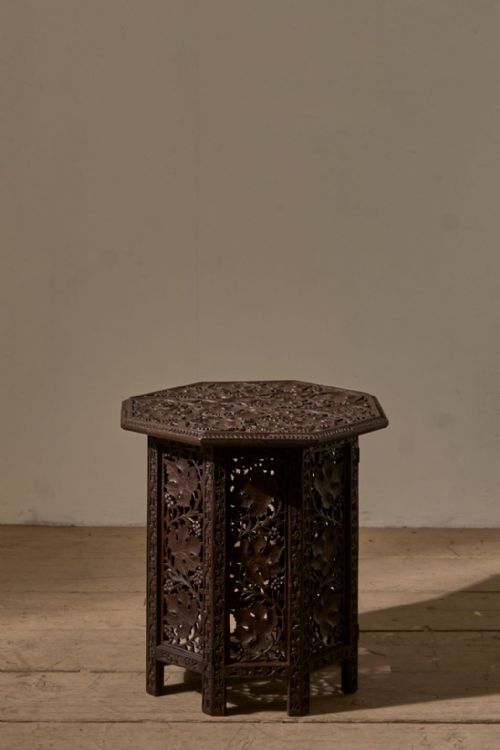
The selection includes British walnut, mahogany and rosewood examples alongside imported Anglo-Indian, Moorish and Burmese styles. Buyers encounter both domestic English cabinet work and intricately carved regional items originating from the nineteenth century.
Materials and construction methods
Cabinet makers utilised dense hardwoods such as mahogany, walnut, rosewood, teak and padauk. Many surfaces display contrasting inlay work utilising boxwood, brass, copper or specimen woods.
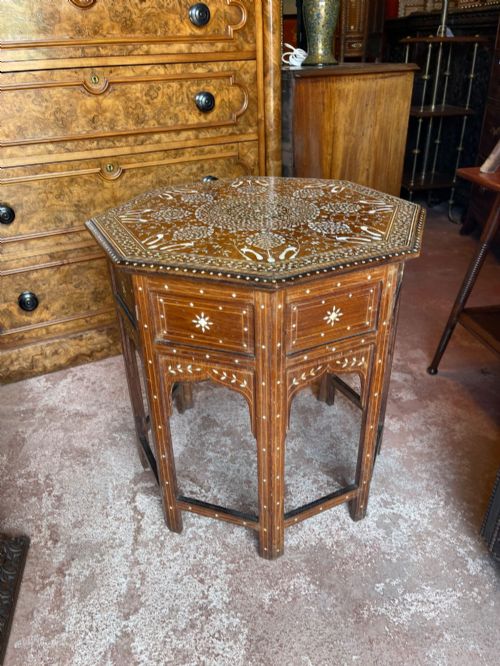
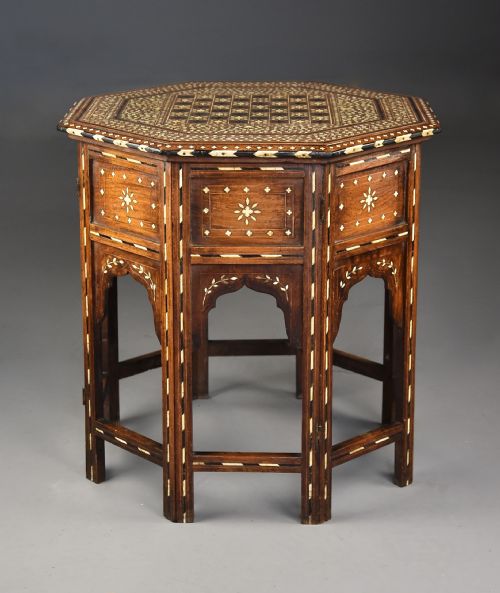
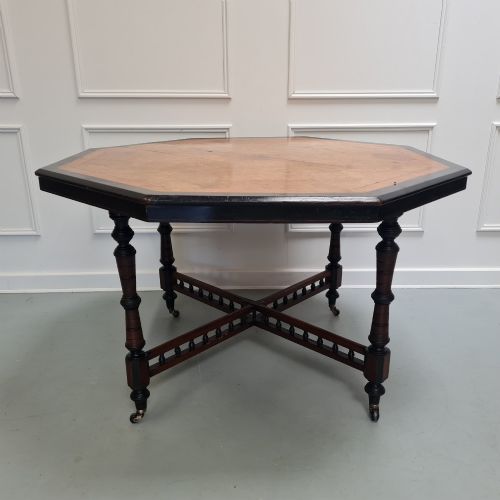
Carving and marquetry define the decorative schemes, ranging from British Aesthetic Movement motifs to intricate Hoshiarpur floral patterns. Folding frames and tilt-top mechanisms provide functional versatility across campaign and occasional variants.
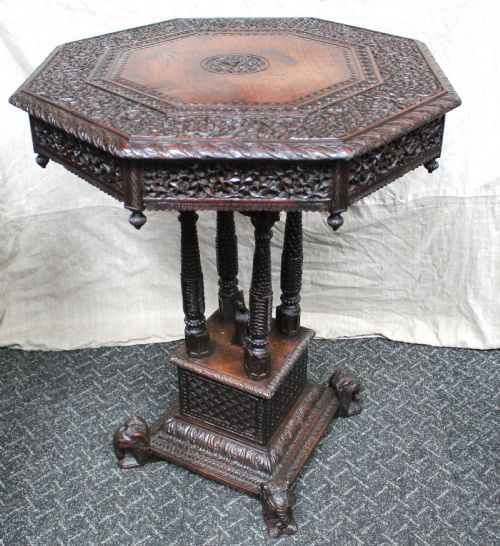
One curious hybrid piece emerges as an elephant table from the Bombay Presidency.
Distinctions in construction and design
Quality rests upon the precision of the geometric eight-sided top and the integrity of the timber selection. Burr veneers, elaborate marquetry inlay and deep relief carving separate standard production from superior pieces.
The complexity of regional work, such as dense Hoshiarpur or Moorish carving combined with brass or copper inlay, distinguishes the finer examples within the range.
The Victorian Octagonal Tea Table Glossary
- Octagonal
- Having eight sides and eight angles. This specific geometric format defines the perimeter of the table top.
- Marquetry
- Decorative veneer work forming geometric patterns or pictures. Craftsmen apply thin slices of wood to the underlying surface.
- Aesthetic Movement
- A late nineteenth century design style emphasising visual beauty over narrative subject matter. Pieces from this movement often display simplified structural forms.
- Hoshiarpur
- A manufacturing centre in Punjab known for intricate inlaid woodwork. Tables from this region typically combine dense carving with brass wire inlay.
Victorian Octagonal Tea Table: Frequently Asked Questions
How were octagonal tea tables used?
These tables served primarily for the formal afternoon tea service in nineteenth-century drawing rooms. Their eight-sided tops provided accessible surface area for cups and teapots while seated.
Secondary uses included acting as centre tables for display objects, lamps or reading materials within domestic interiors.
Where were Anglo-Indian tables made?
Anglo-Indian tables were produced in workshops across the Indian subcontinent during the British colonial period. Major centres included Hoshiarpur and the Bombay Presidency.
Craftsmen utilised local dense timbers such as teak and padauk, incorporating traditional regional carving techniques for export to British buyers.
What is an Aesthetic Movement table?
An Aesthetic Movement table follows late nineteenth-century design principles that prioritised artistic craftsmanship and visual harmony. These pieces often feature dark hardwoods and restrained ornamentation.
They reflect a departure from heavier mid-century Victorian styles towards lighter, more considered domestic furnishings.