



Oak Snap Table
These oak snap table pieces combine folding tilt tops with sturdy tripod legs, offering centuries of adaptable English country house practicality.
Oak Snap Table
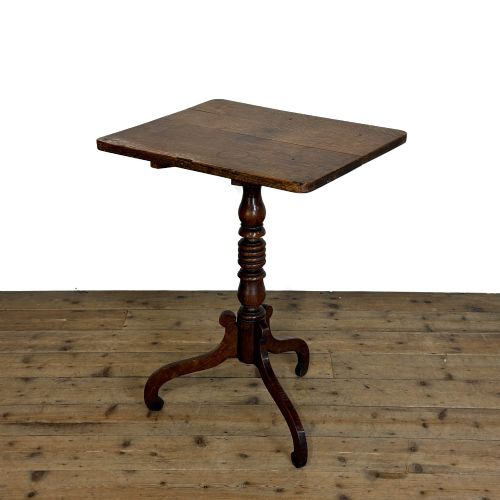
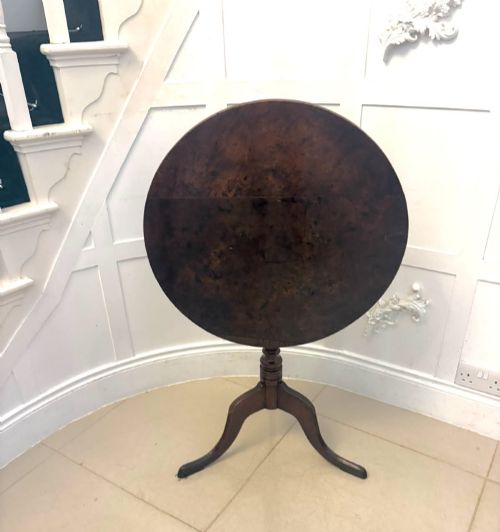
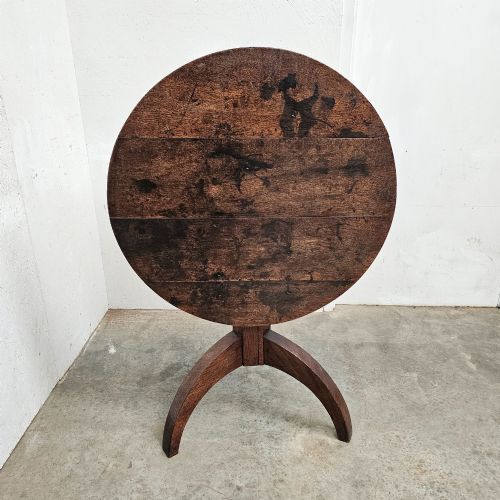
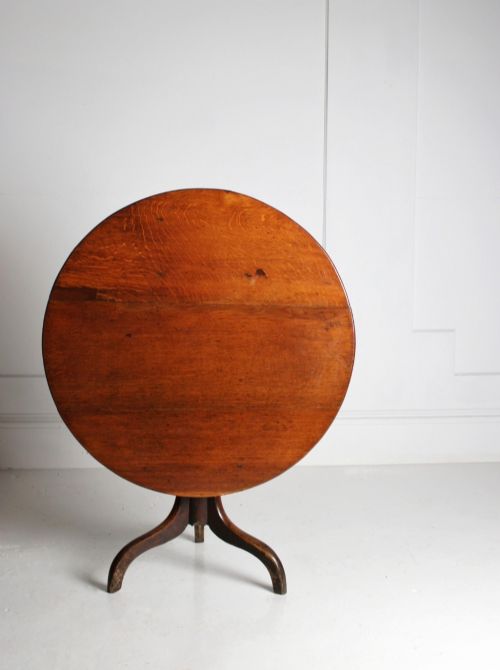
An oak snap table is a versatile occasional furniture form featuring a hinged top that pivots and locks flat for use or tilts vertically against the pedestal when stored. Most examples on this page hail from the Georgian and Victorian periods, reflecting centuries of domestic utility in British homes.
The format typically employs a tripod base supporting a central pedestal, which aids stability on uneven floors. Makers produced these pieces in various regional styles, ranging from rustic farmhouse adaptations to more refined Georgian parlour designs.
Materials and construction
Cabinet makers built these tables primarily using solid oak, frequently paired with secondary timbers like fruitwood or burr oak for top surfaces and brass or iron for the tilting mechanisms. The timber was selected for strength and grain pattern, giving each piece a robust structure suited to daily domestic service.
Joinery techniques relied on traditional turned pedestals fitted into tripod legs, alongside clever pivoting hardware that allowed the top to snap securely into place.
The listings span the 18th century, Georgian era, and 19th century, incorporating materials like oak, burr oak, fruitwood, and mahogany.
What distinguishes the quality
Quality in these pieces rests upon the choice of timber, such as figured burr oak, and the crispness of the turning on the central pedestal. Better examples exhibit harmonious proportions between the top and the three supporting legs, alongside smooth operation of the snapping mechanism.
Subtle details like finely shaped tripod feet and neat peg construction elevate an otherwise utilitarian country table into a more accomplished piece of period furniture.
The Oak Snap Table Glossary
- Tilt top
- A table top attached to a pivoting mechanism that allows the surface to be stored vertically when not in use. This clever design saved valuable floor space in historic rooms.
- Tripod base
- A three-legged support structure commonly found beneath pedestals. It ensures the table remains stable even on uneven historic floorboards.
- Birdcage
- A revolving wooden framework beneath the table top that permits both rotation and tilting actions. It represents a more complex mechanism found on select period examples.
- Snap top
- An alternative term for a tilt top table utilising a spring or catch mechanism to lock the surface horizontally. It prevents the top from tipping accidentally during use.
Oak Snap Table: Frequently Asked Questions
What is an oak snap table used for?
These pieces served historically as versatile occasional furniture for dining, drinking, or holding lamps in parlours and country houses. Their pivoting design allowed them to be pushed out of the way against a wall when floor space was needed.
Today, they function well as compact side tables or display surfaces in living areas, bringing period character and practical utility to modern interiors.
How do I identify a Georgian oak snap table?
Georgian examples typically display characteristic period proportions, pegged timber construction, and turned pedestals resting on tripod legs. Examining the timber patination and the simplicity or refinement of the turning helps confirm the era.
Many pieces from this time bear the marks of regional craftsmanship, showing subtle variations in leg profile and top shaping compared to later Victorian iterations.
Why do the tops tilt up?
The tilting mechanism was originally engineered to save space in crowded rooms when the tables were not actively in use for meals or gatherings. Snapping the top into a vertical position allowed servants to clear rooms quickly.
This functional adaptation also protected the timber surface from accidental damage and made the furniture easier to transport around large country houses.
Where should I place one at home?
An oak snap table fits naturally beside a sofa or armchair as a convenient spot for a lamp, book, or cup. Their compact footprint makes them ideal for smaller corners where traditional rectangular tables might crowd the space.
Leaving the top tilted against a wall occasionally also lets you showcase the timber grain and the craftsmanship of the underside mechanism.