

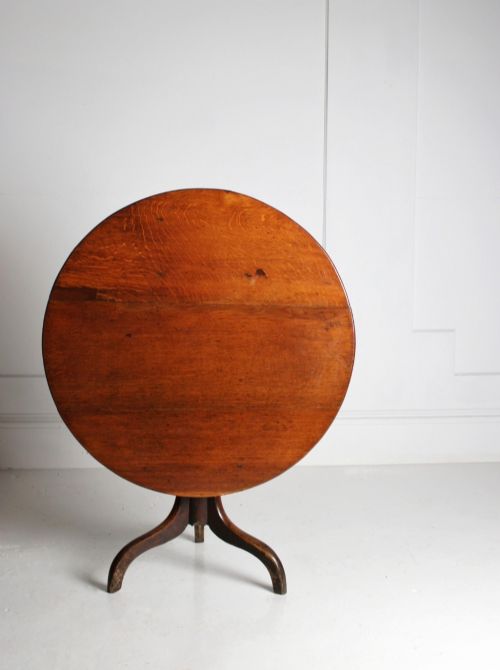


Georgian Oak Tea Table
A georgian oak tea table offers sturdy domestic timber formed into clever folding or tilting surfaces that served polite social rituals.
Forms and Origins
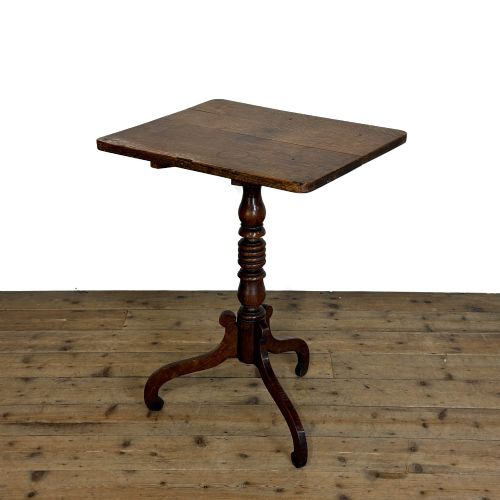
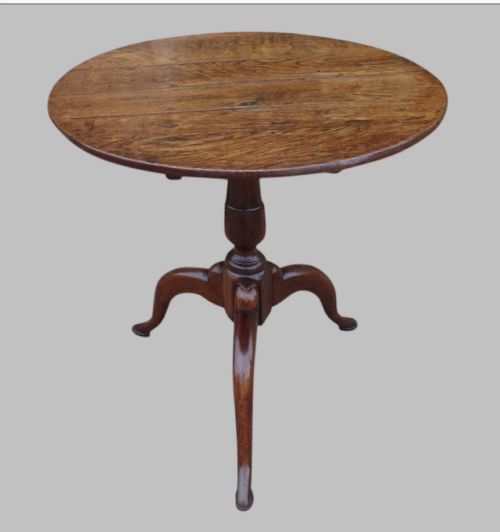
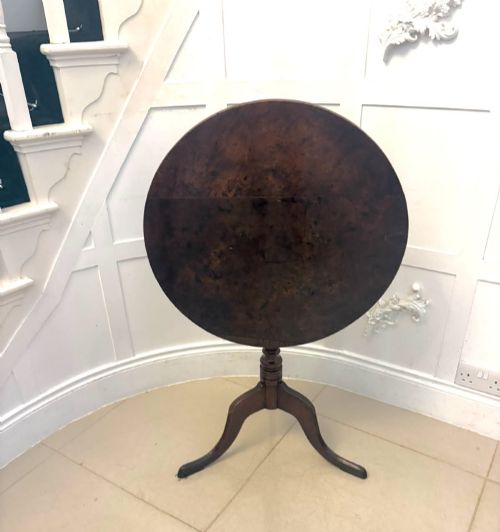
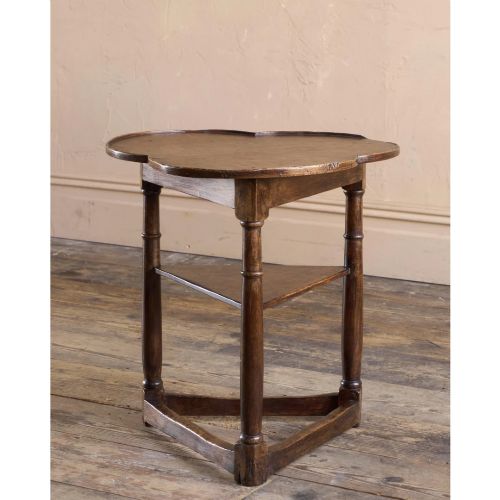
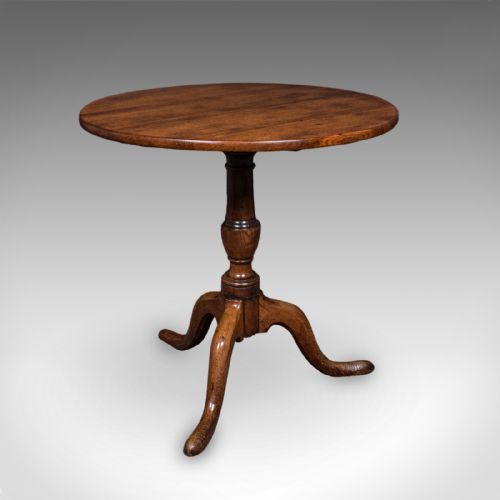
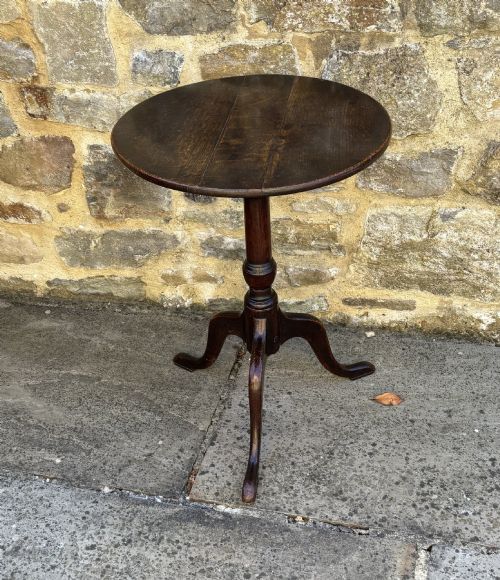
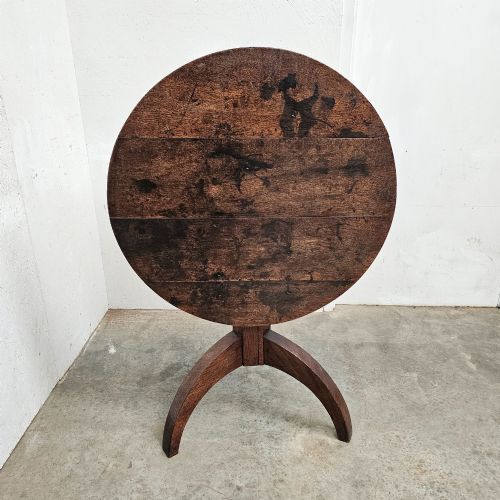
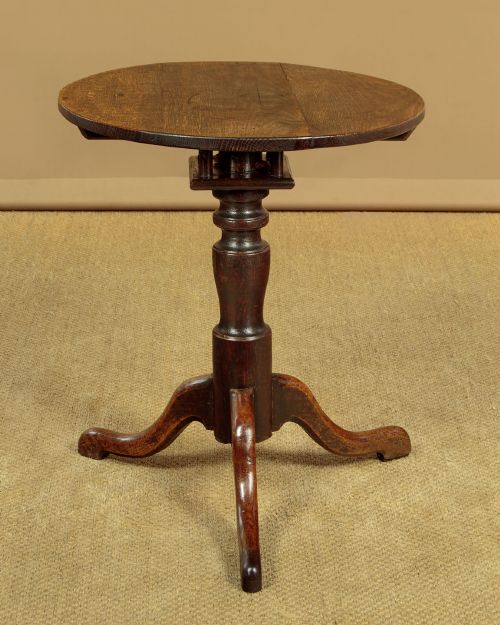
A georgian oak tea table takes distinct structural forms designed for the eighteenth-century parlour, appearing as fold-over top designs or circular tilt-top tables supported on tripod legs. These pieces reflect the rising domestic popularity of tea drinking during the georgian era, requiring a dedicated surface that could be moved aside when not in use.
The versions most commonly met on this page span the eighteenth century, particularly around the seventeen-eighties, alongside mid-century examples from seventeen-fifty. They function interchangeably as occasional tables, side tables, and lamp tables, demonstrating the adaptable nature of domestic furniture from the period.
Makers constructed these tables to be both functional and portable, employing clever hinges for fold-over leaves or tilting mechanisms for round table tops. This combination of utility and straightforward domestic design defines the category across both current listings and archive records.
Materials and Construction
Solid oak serves as the primary timber for these tables, occasionally complemented by mahogany banding on specific fold-over surfaces. Workshops utilised the natural strength of oak to build stable tripod bases and sturdy top planks capable of supporting repeated folding and tilting.
Metal hardware plays a practical role in the construction, incorporating brass hinges and tilt mechanisms to allow the timber tops to pivot or fold flat. Joinery relied on traditional methods suited to hardwood, ensuring the tables remained balanced whether deployed for tea or set against a wall.
Listings for this phrase feature solid oak and brass materials across eighteenth-century tilt-top, fold-over, and occasional table forms.
Judging Quality
The distinction between standard examples and superior pieces rests on the cleverness of the mechanism and the subtlety of the timber grain. Finer tables exhibit well-fitted brass hardware and smooth action in the fold-over leaves or tilt-top pivots.
Surface character and proportion also determine the grade of a table, with better pieces showing thoughtful balance in the tripod legs and clean execution of the circular or demi-lune top. The presence of secondary timbers like mahogany banding indicates a higher level of decorative ambition.
The Georgian Oak Tea Table Glossary
- Tilt Top Table
- A table with a hinged top that pivots into a vertical position for compact storage against a wall when not in use. This mechanism allowed homeowners to clear floor space in smaller eighteenth-century parlours.
- Fold Over Tea Table
- A table featuring a hinged top leaf that opens double its closed size to provide a wider surface for serving tea. When closed, it functions as a compact side table.
- Tripod Base
- A support structure consisting of three spreading legs connected to a central pillar, commonly found on round tea and occasional tables. This design prevents rocking on uneven historical floorboards.
- Demi Lune
- A half-moon shape used for table tops that sit flat against a wall until opened out for use. The form became popular for smaller tea and side tables during the georgian period.
- Mahogany Banding
- A decorative border of contrasting dark timber inlaid around the edges of an oak table top. It added a refined linear frame to the paler oak ground.
Frequently Asked Questions
What is a georgian oak tea table?
A georgian oak tea table is an eighteenth-century wooden furniture piece designed specifically to hold tea service equipment during social gatherings. These tables typically feature clever folding tops or tilting mechanisms.
They represent a key domestic innovation from an era when tea drinking became an important ritual in British homes. The sturdy oak construction ensured they could withstand regular daily use.
How did people use these tables?
These tables were brought into the centre of a room when tea was served and pushed back against the wall afterwards. Fold-over designs provided extra surface area when opened.
In daily life, they also functioned as general occasional tables for lamps or side storage. Their portable nature made them versatile additions to eighteenth-century parlours.
How do you identify an 18th century piece?
Eighteenth-century identification relies on observing traditional joinery methods, timber ageing, and period specific hardware like brass hinges. The use of solid oak throughout the frame is a strong indicator.
Design characteristics such as tripod pillar bases and demi-lune fold-over tops also point directly to the georgian period. Archive comparisons help confirm these stylistic traits.
How do I live with antique oak furniture?
Living with antique oak involves placing tables away from direct heat sources and sudden humidity changes to protect the timber. Regular dusting and occasional waxing keep the surface nourished.
These pieces integrate easily into modern interiors as side tables or lamp stands. Their robust construction makes them practical for daily use in contemporary homes.