
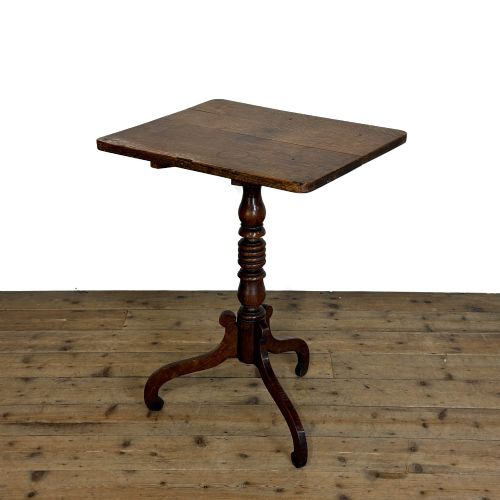
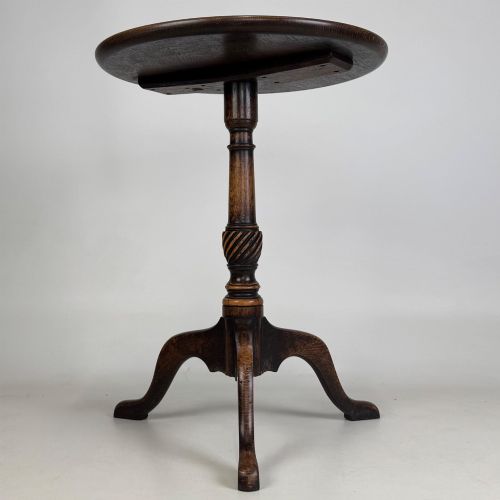
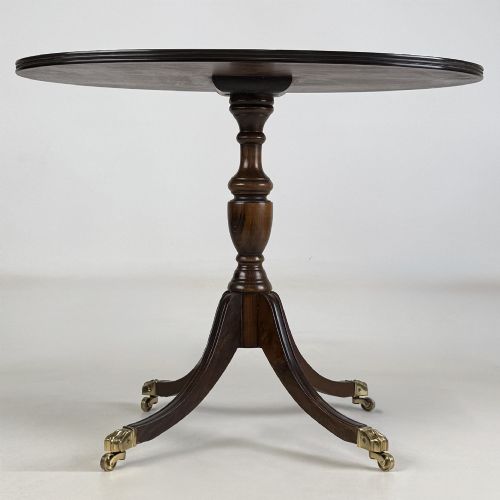
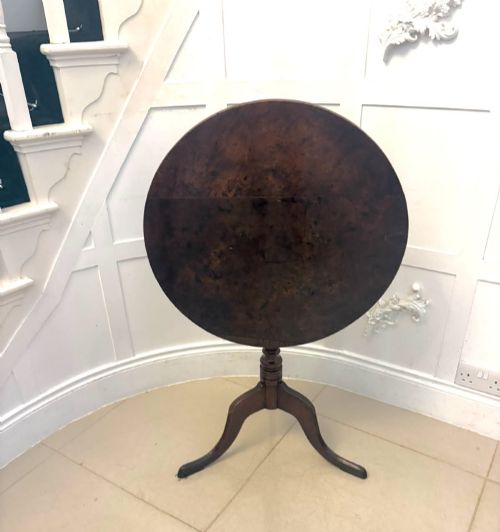

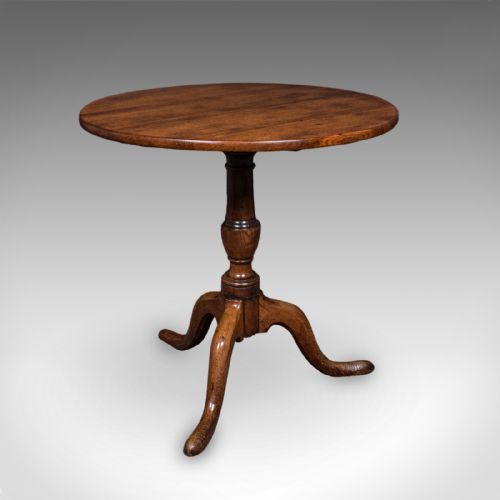
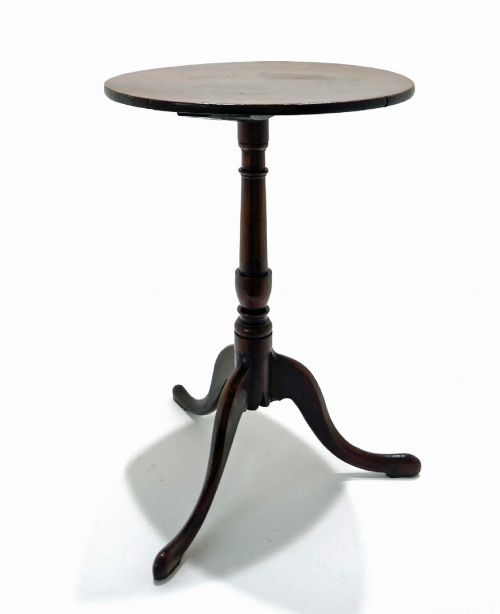
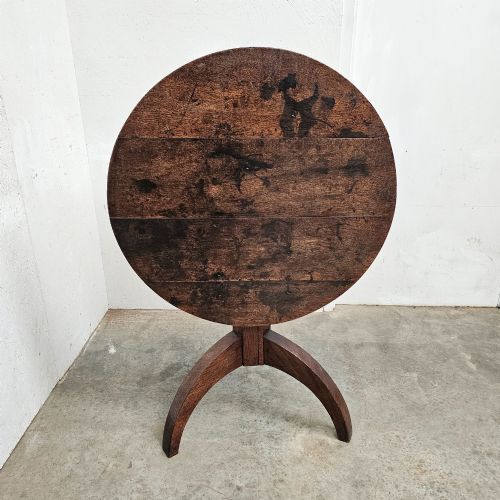
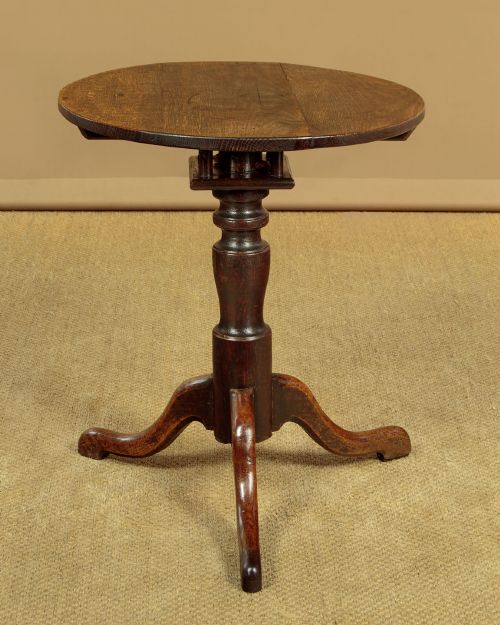
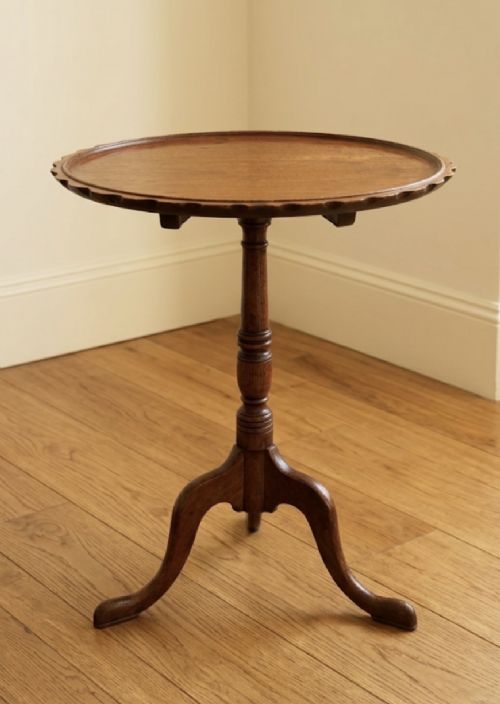
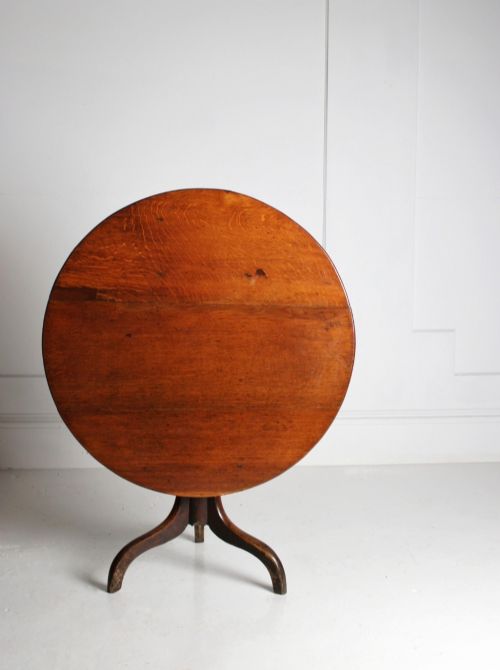


Dark Oak Tilt Table
A dark oak tilt table combines practical ingenuity with vernacular charm, pivoting flat to save space when not in use.
Materials and construction
Makers relied primarily on solid oak, frequently supplemented by burr oak veneer, fruitwood, yew wood, and beech for structural supports and turning. Legs and central columns were turned on a lathe, while table tops were joined from solid planks or veneered onto stable timber foundations.
The pivoting mechanism typically utilises a birdcage or wooden catch block fixed beneath the top, allowing the surface to lock horizontally or drop vertically against the pedestal. Hand tools such as drawknives and planes left subtle tool marks that confirm period construction methods.
Assessing quality
Quality rests in the balance of proportions between the top diameter, the slenderness of the central column, and the sweep of the tripod legs. Superior examples maintain a tight, original pivoting mechanism without excessive wobble in the catch.
Current listings feature oak alongside fruitwood, burr oak veneer, and yew wood, spanning periods from the 17th century through the Edwardian era.
The Dark Oak Tilt Table Glossary
- Tilt top
- A tabletop mounted on a hinge mechanism that allows the surface to pivot into a vertical position. This clever design enabled tables to be stored flat against a wall when floor space was required.
- Tripod base
- A support structure consisting of three legs radiating from a central pillar. This configuration ensured stability on uneven floors common in historic houses.
- Birdcage
- A wooden framework beneath the tabletop that allows the surface to both rotate and tilt. It represents a more complex mechanism found on higher-status examples.
- Snaptop
- An alternative historical term for a tilt-top table, referencing the spring or catch mechanism that snaps the top into a horizontal position. It is frequently encountered in eighteenth-century descriptions.
- Vernacular furniture
- Everyday domestic pieces made by local regional craftsmen rather than urban cabinetmakers. These items prioritize functional utility and local materials over high-style ornament.
Dark Oak Tilt Table: Frequently Asked Questions
Why did tables tilt?
Historic rooms served multiple functions throughout the day, requiring furniture to be moved or stored quickly. Tilting the top allowed bulky tables to be tucked away against walls when meals or gatherings ended.
This space-saving practicality made tripod tables popular in parlours, bedrooms, and smaller dining spaces across the eighteenth and nineteenth centuries.
How do I spot an 18th-century table?
Eighteenth-century examples often feature slender turned columns, pegged tenon joints, and hand-planed timber surfaces with deep patination. The construction underneath usually displays handmade iron fixings or wooden catches rather than modern screws.
Examining the underside reveals the tool marks and ageing process unique to period workshops before industrial manufacturing standardisation.
Can I use a tilt table daily?
These tables adapt easily to modern living as lamp tables, side tables, or occasional surfaces for drinks and books. The pivoting mechanism remains fully functional on most surviving examples.
Placing them away from direct heat sources and sudden humidity changes protects the old timber and preserves the historical finish.
What is a birdcage mechanism?
A birdcage is a small wooden cage structure fitted beneath the tabletop that permits the surface to rotate as well as tilt. This added movement allowed users to adjust the table angle without shifting the entire base.
It is typically found on finer Georgian tripod tables and indicates a higher degree of joinery skill.