


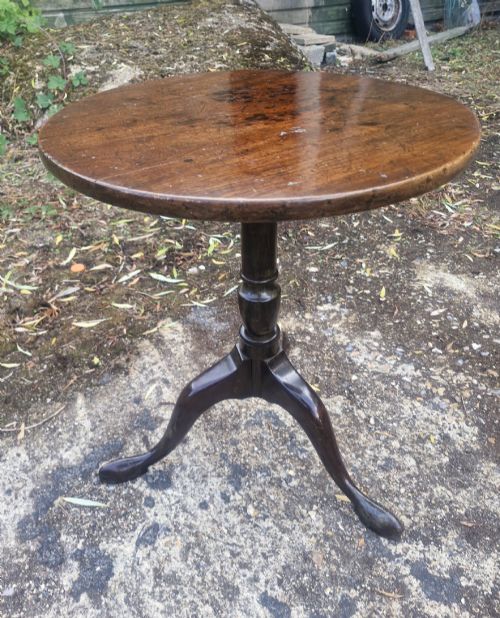
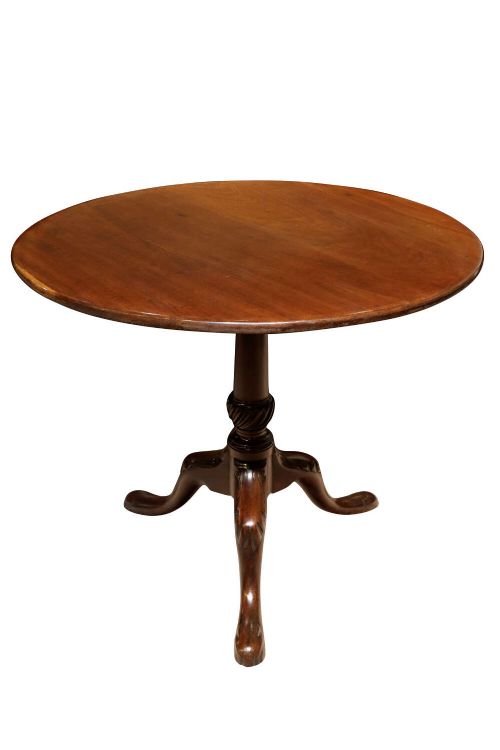
Antique Circular Tilt Table
An antique circular tilt table offers a clever folding mechanism alongside compact proportions, making it a practical piece for modern rooms.
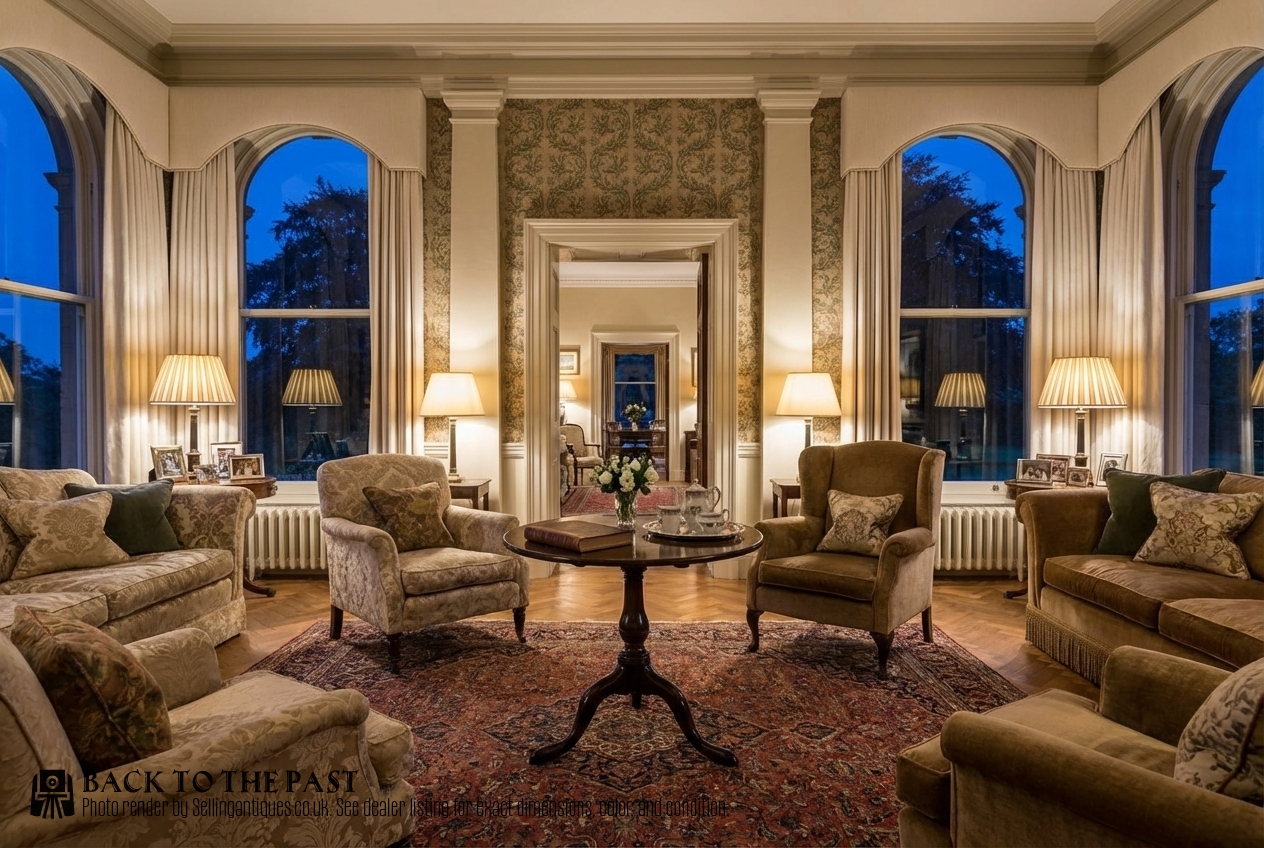
Antique Circular Tilt Table
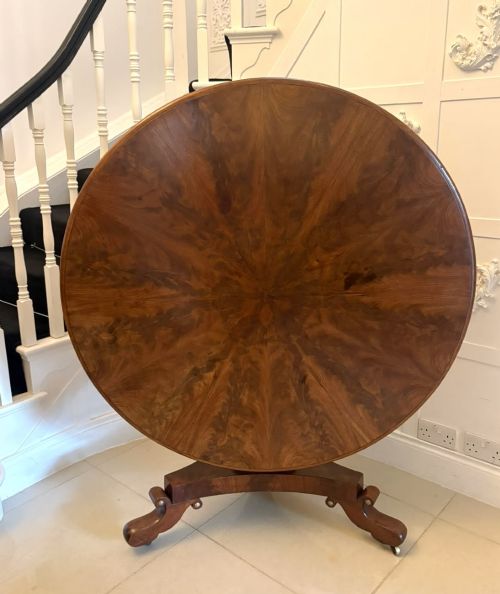
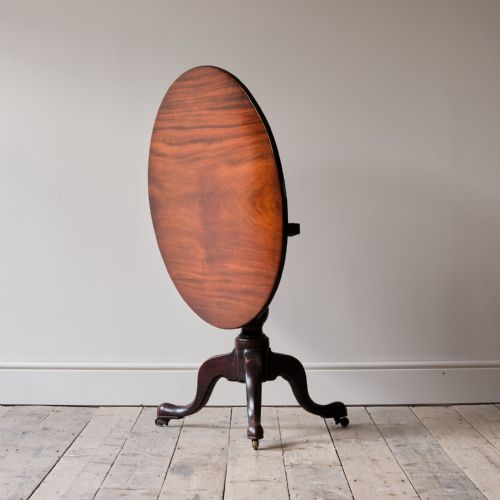
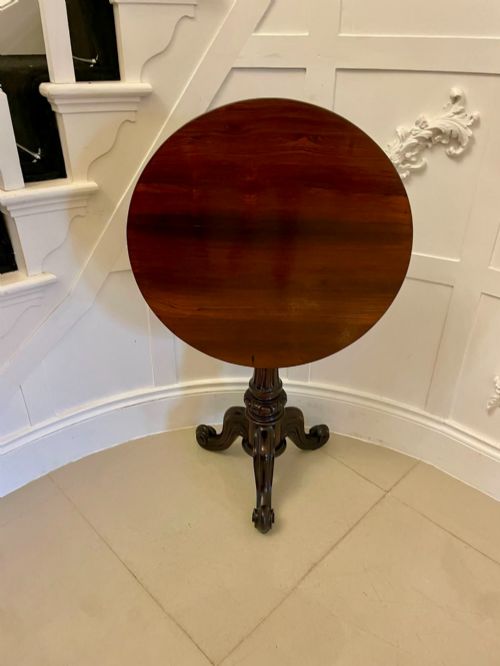
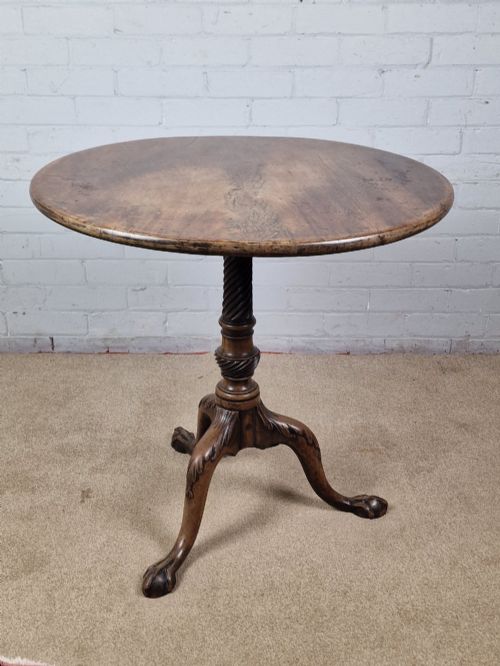
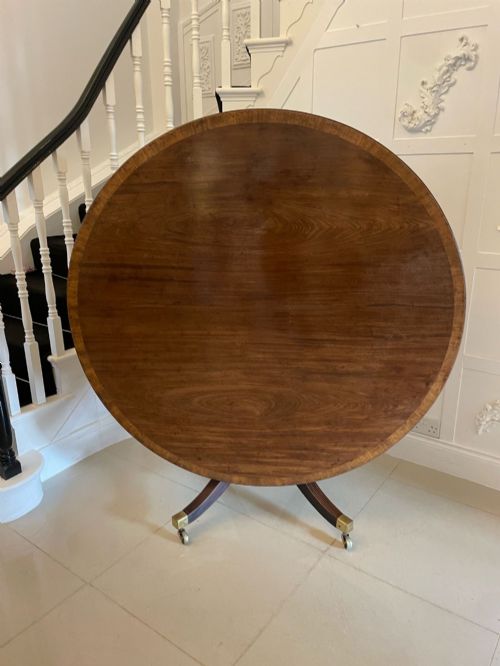
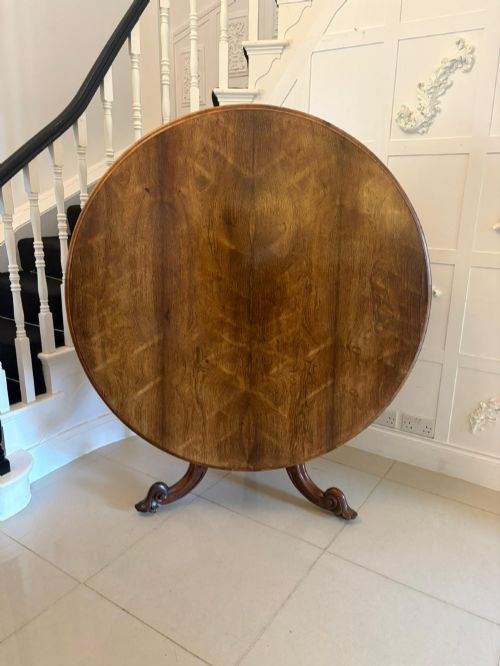
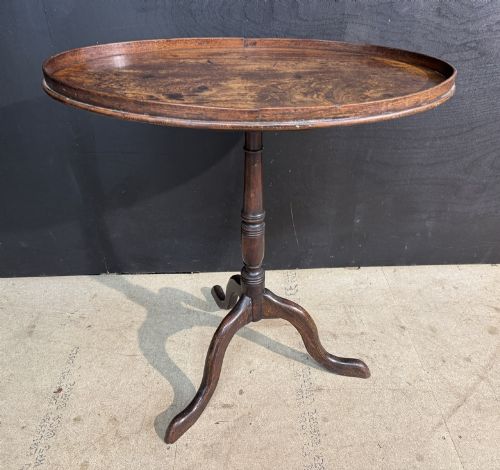
An antique circular tilt table is primarily designed with a mechanism that allows the top to tip vertically when not in use, saving valuable floor space in smaller chambers. These pieces frequently appear in Georgian and Victorian forms, functioning variously as occasional tables, wine tables, breakfast tables or large dining centrepieces supported by tripod bases or pillar pedestals.
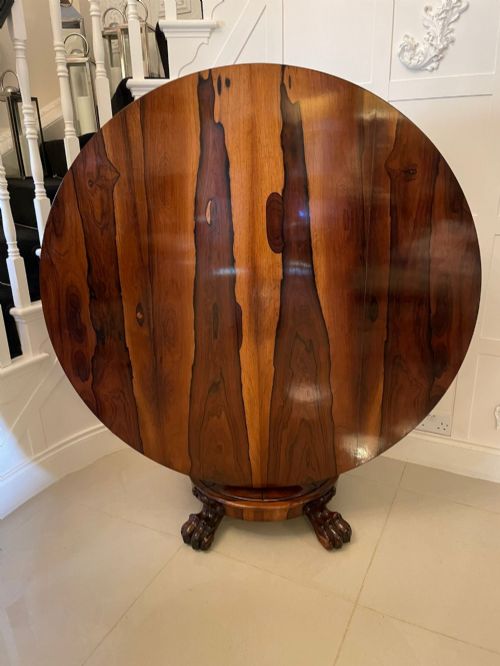
The materials span dense timbers like mahogany, oak and walnut alongside richly grained rosewood and painted surfaces, reflecting the domestic habits of the eighteenth and nineteenth centuries. Buyers encounter everything from compact tripod tea tables intended for corners to substantial rosewood breakfast tables designed to sit centrally in a room.
How they were made
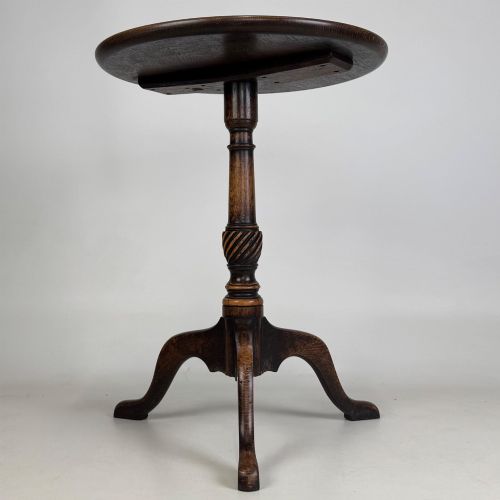
Cabinetmakers utilised solid and veneered timbers, selecting mahogany, walnut and rosewood for their durability and capacity to take a fine polish. Turned pedestals and stable tripod legs provide the necessary balance to support the pivoting top.
The tilting action relies on a clever catch or catch-block mechanism fitted beneath the surface, allowing the circular top to swing flat and lock securely into position for use.
Antique Circular Tilt Table Retail Price Guide 2026
Typical asking prices for circular tilt table among the pieces listed under this phrase on Sellingantiques today, from the lower quarter to the upper quarter. They describe what is for sale here now, not the wider market.
Listings feature circular tilt tables spanning the Georgian, Regency and Victorian periods, constructed from mahogany, rosewood, oak, walnut and fruitwood.
What varies in quality
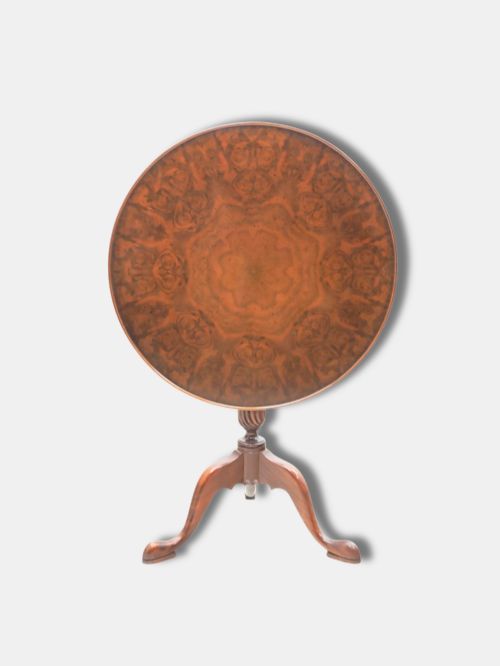
The distinction between standard examples and finer pieces rests upon the selection of timber, such as figured mahogany or burr walnut, and the crispness of the turned pillars and carved tripod legs. Superior execution is visible in the stability of the tilt mechanism and the seamless alignment of the circular top when locked flat.
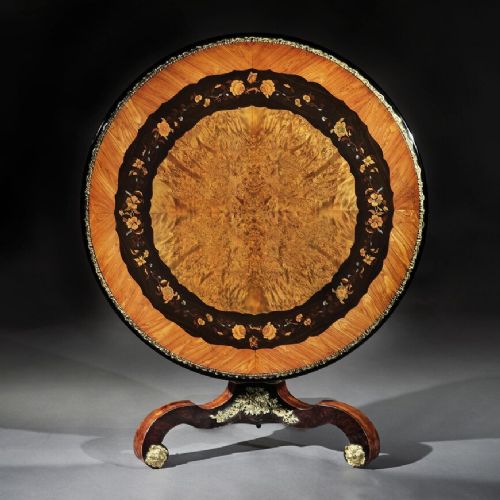
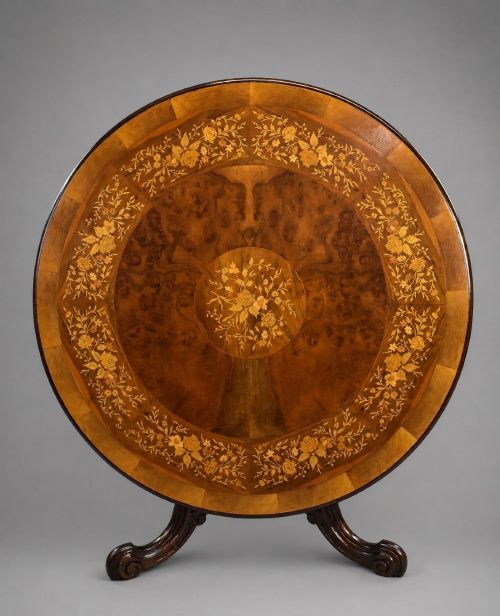
Maker attribution and decorative additions like marquetry inlay or brass fittings elevate certain examples, separating utilitarian country furniture from sophisticated urban cabinetwork.
Edward Holmes Baldock·Gillow
The Antique Circular Tilt Table Glossary
- Tilt top
- A mechanism allowing the tabletop to pivot into a vertical position. This saved space in historic homes when the furniture was pushed against a wall.
- Tripod base
- A support structure featuring three legs radiating from a central pillar. It provides steady footing on uneven floors.
- Snap top
- A spring-loaded catch that locks a tilting table top firmly into the horizontal position. It prevents accidental movement during use.
- Breakfast table
- A large circular table supported by a central pedestal, popular during the Regency and Victorian periods. These pieces often feature rosewood or mahogany veneers.
- Wine table
- A small, low-profile occasional table designed to hold glasses and bottles. They frequently utilise tripod bases for portability.
Antique Circular Tilt Table: Frequently Asked Questions
How did people use tilt top tables historically?
These tables served multiple functions throughout the day, acting as tea or card tables when horizontal and moving against the wall to clear the floor when tilted.
In larger houses, breakfast tables occupied the centre of the room for morning meals before clearing the space for other domestic activities.
Are these tables stable when placed on modern floors?
Tripod bases naturally distribute weight across three points, meaning they remain steady even on older uneven floorboards found in period properties.
Care should be taken on very smooth modern surfaces to ensure the feet do not slip when the table is loaded.
How do I distinguish between Georgian and Victorian examples?
Georgian tables tend to feature simpler mahogany or oak tripod frames with understated turned pillars and restraint in ornament.
Victorian pieces frequently display heavier proportions, utilising rosewood or burr walnut alongside richer marquetry inlay and carved pedestal bases.
Can I use a tilt table for everyday dining?
Larger breakfast tables from the Regency and Victorian eras provide ample surface area for seating several people comfortably for meals.
Smaller tripod wine or occasional tables are better suited for holding drinks or lamps rather than serving as primary dining furniture.