
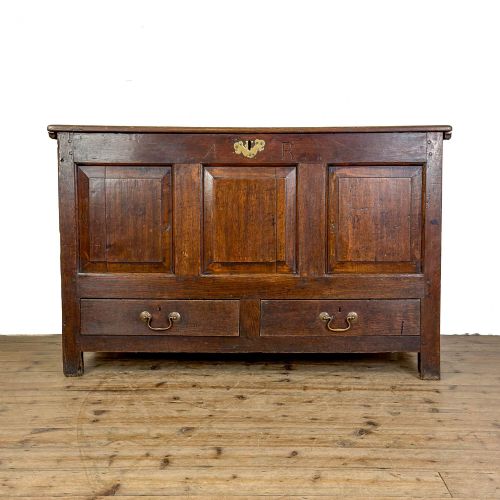


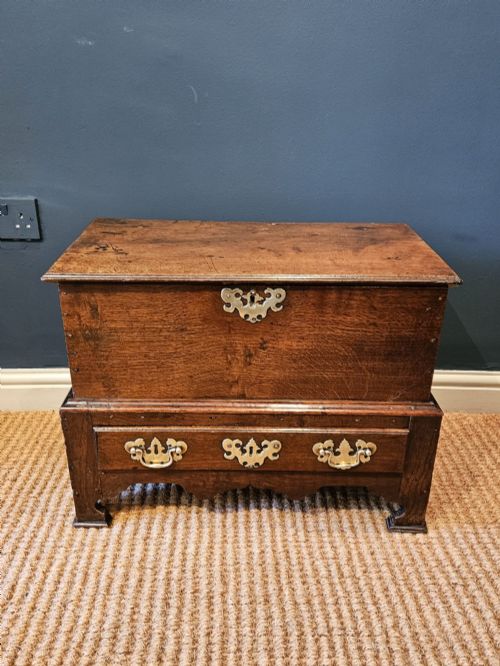
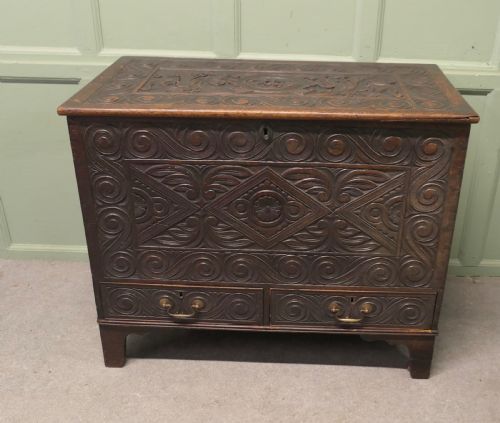


Oak Mule Chest Drawers
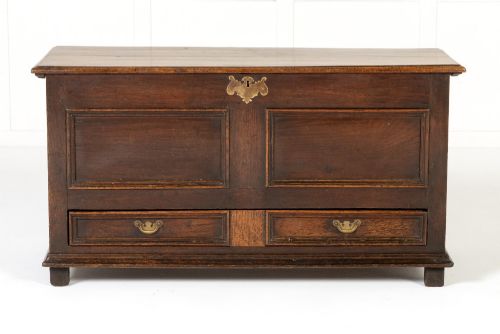
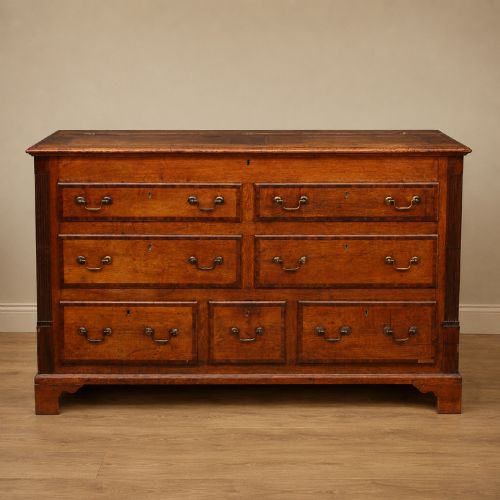
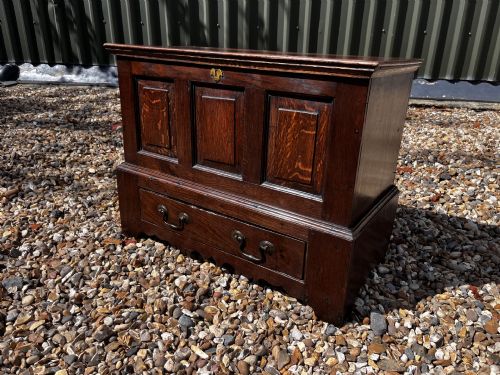
Oak mule chest drawers combine the deep storage of a traditional lidded coffer with accessible base drawers for everyday linens and clothes.
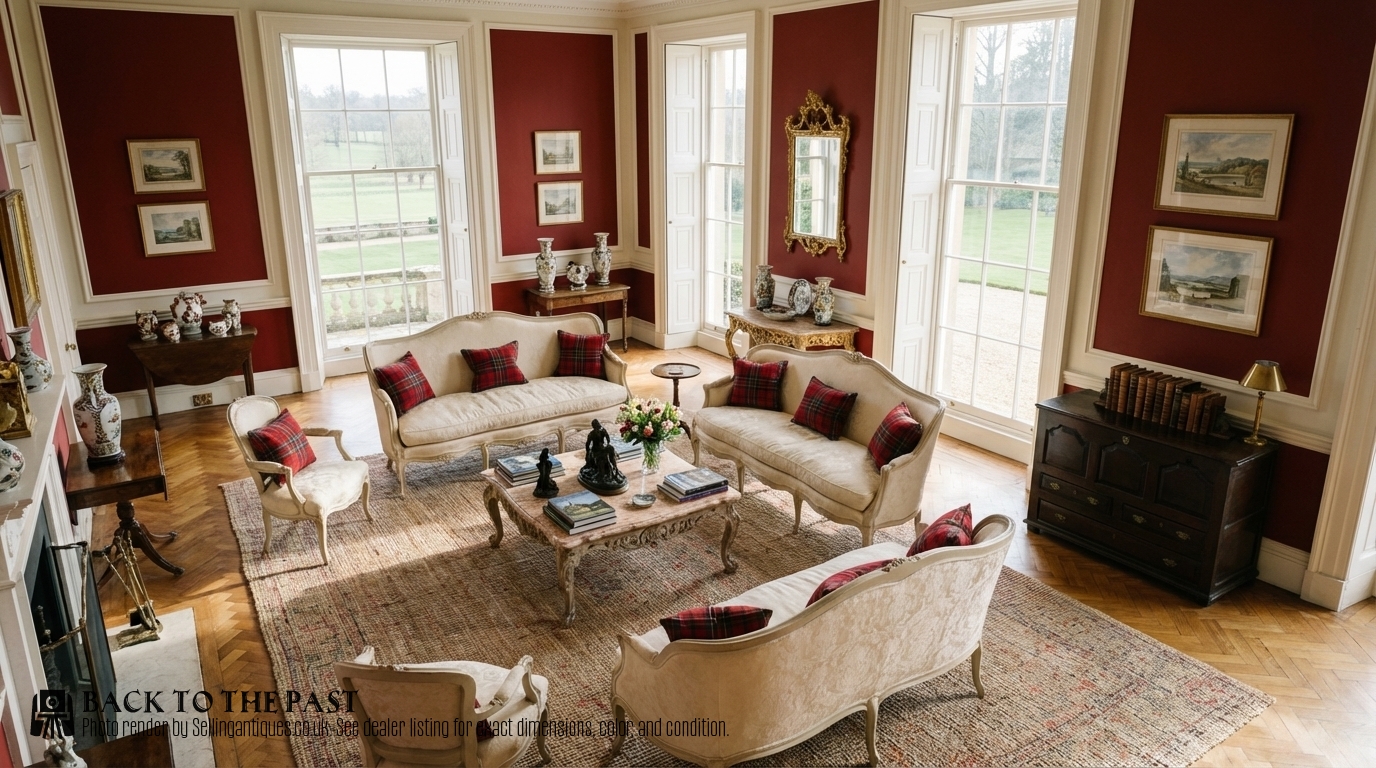
Oak Mule Chest Drawers
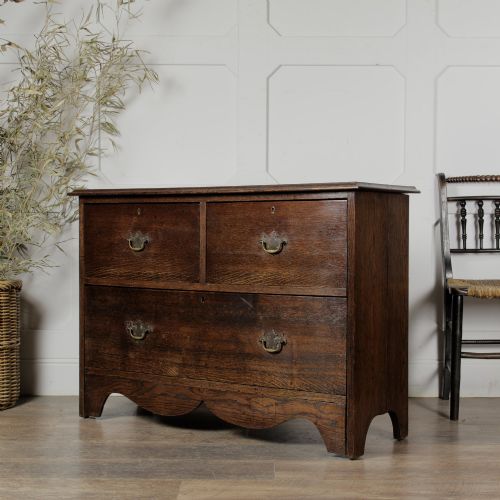
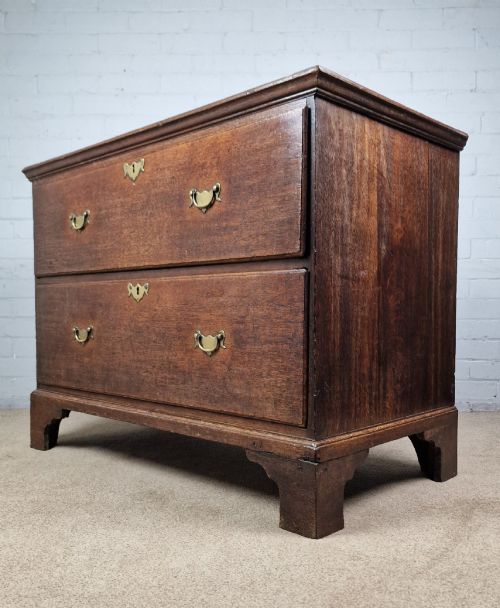
When you search for oak mule chest drawers, you are looking at utilitarian storage furniture that evolved from simple blanket chests by adding one or more drawers beneath the main compartment. These hybrid pieces bridge the gap between a chest and a chest of drawers, making them practical for modern bedrooms and living spaces.
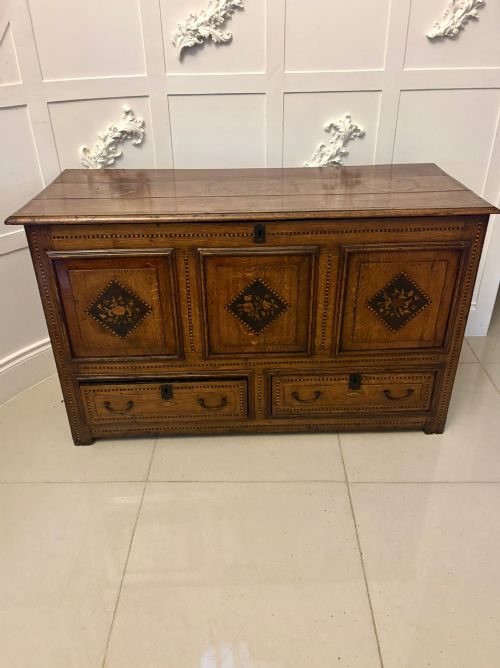
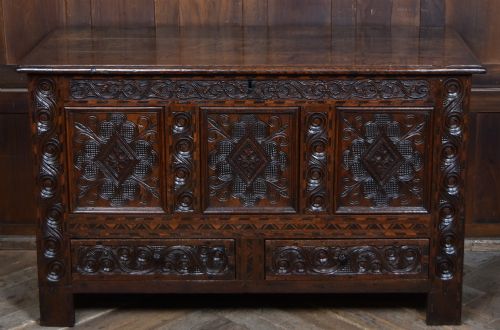
The pieces you will most frequently encounter on this page span the seventeenth, eighteenth and nineteenth centuries, with a strong representation of Georgian vernacular and English country examples. They range from robust, dark Jacobean boards to lighter, warmer eighteenth-century panels augmented by mahogany crossbanding or marquetry inlay.
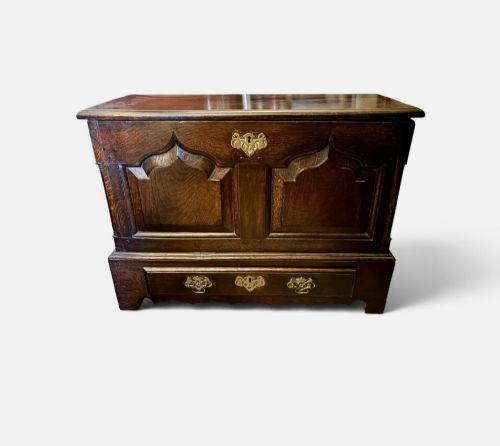
Regional variations also appear among the selections, notably smaller Welsh coffer bach formats alongside large three-panel and four-panel blanket chests. Whether built as provincial country furniture or more refined urban pieces, each item retains the fundamental architecture of a lidded box raised above functional lower storage.
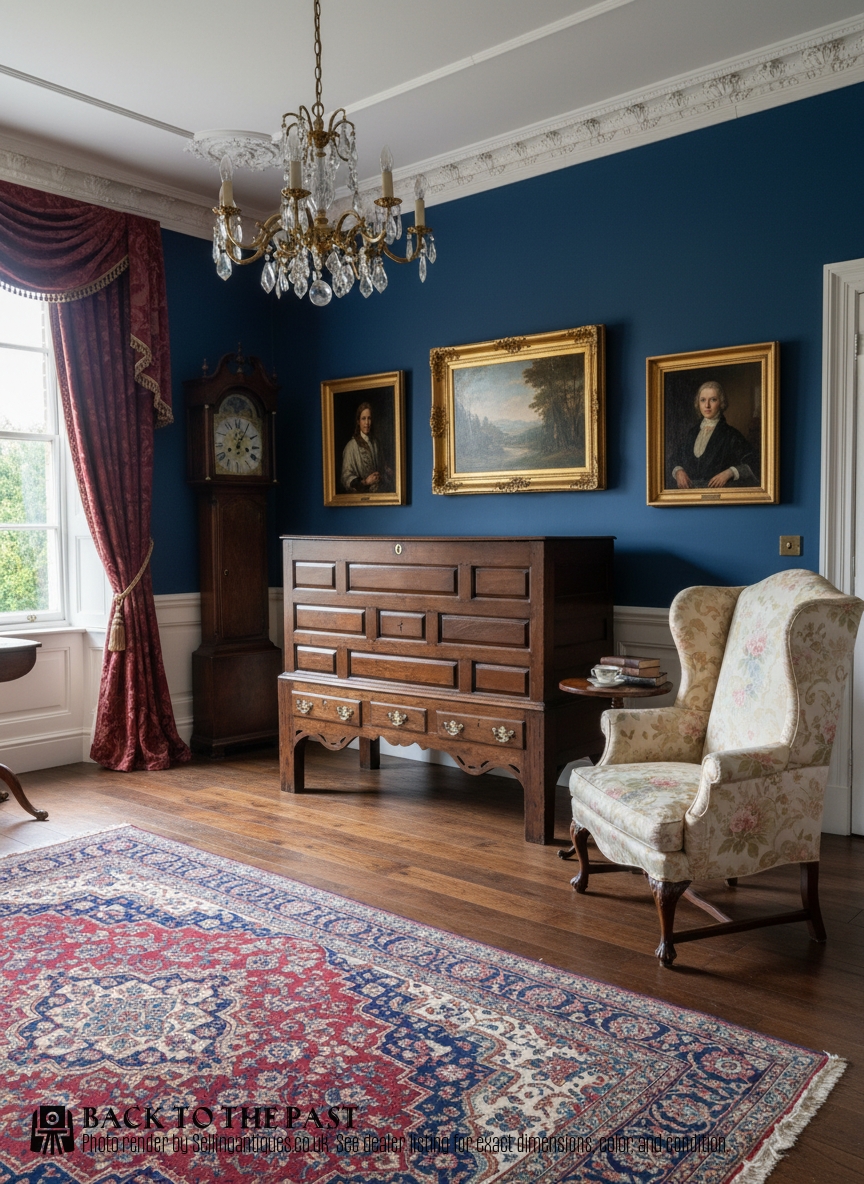
Quality and Proportion
The standard of an oak mule chest depends heavily on the integrity of its timber, the depth of its carved or panelled details, and the preservation of its original surfaces. Superior examples display carefully selected grain patterns on the primary panels, tidy dovetail joints within the lower drawers, and minimal replacement of structural elements.
Proportion and proportioned hardware also separate standard utilitarian boxes from finer vernacular work. Pieces retaining matching period brassware, well-balanced drawer arrangements below the coffer section, and undisturbed patination command greater appreciation among collectors than heavily altered or stripped examples.
Several country pieces include carved green man motifs peering out from the woodwork, watching over centuries of stored household linens.
The Oak Mule Chest Drawers Glossary
- Mule Chest
- A storage chest with one or more drawers built into the base beneath the main lidded compartment. This form bridges the traditional blanket chest and the conventional chest of drawers.
- Coffer Bach
- A small Welsh box or chest, often translated as a little coffer, occasionally raised on a stand or fitted with a single small drawer. These miniature versions were traditionally made as dowry pieces or presentation items.
- Crossbanding
- A decorative border technique where thin strips of veneer, frequently mahogany, are applied to the edges of drawer fronts or panels so the grain runs perpendicular to the surrounding wood.
- Marquetry Inlay
- The art of applying fitted pieces of contrasting wood veneers to a structural surface to create pictorial or geometric patterns. It appears on select seventeenth-century and eighteenth-century examples to enhance visual richness.
- Panelled Construction
- A method of joining wooden boards using floating panels set within grooved frames to accommodate the natural expansion and contraction of solid oak. This technique prevents warping across large surfaces like lid covers and chest sides.
Oak Mule Chest Drawers: Frequently Asked Questions
What is a mule chest?
A mule chest is a hybrid storage item that combines a lidded coffer box on top with one or more functional drawers positioned directly beneath it.
This design emerged when cabinetmakers realised that reaching items at the bottom of a deep chest was inconvenient, prompting them to add base drawers for smaller garments and linens.
How do I date an oak mule chest?
Dating relies on examining construction techniques, joinery methods, hardware types, and wood patination. Seventeenth-century pieces typically feature heavy boarded framing and dark, dense oak, while eighteenth-century Georgian variants introduce finer panel mouldings and mahogany crossbanding.
Secondary woods, drawer dovetailing styles, and the evolution from iron strap hinges to internal brass pivot hinges also help narrow the period of manufacture.
Where were mule chests used in the home?
Historically, these chests served multiple domestic purposes in bedrooms, hallways, and living quarters for storing blankets, heavy winter clothing, and household textiles.
Today, their low profile and flat lids make them versatile pieces that function effectively as coffee tables, window seats, or bedroom blanket boxes while providing concealed storage.
What is the difference between a coffer and a mule chest?
A traditional coffer is simply a large wooden box with a hinged lid used for general storage, lacking any external drawers.
A mule chest incorporates one or more drawers into the lower section beneath the main chest compartment, adding accessibility and structural complexity to the standard coffer design.