




Historic Carved Coffer
A historic carved coffer is a robust wooden storage chest built to house valuables and textiles, offering centuries of authentic domestic craftsmanship.
Historic Carved Coffer
A historic carved coffer is a substantial chest designed for storage, frequently shaped by the domestic needs of past households. These pieces appear across several distinct periods, spanning from the sixteenth century through the nineteenth century.
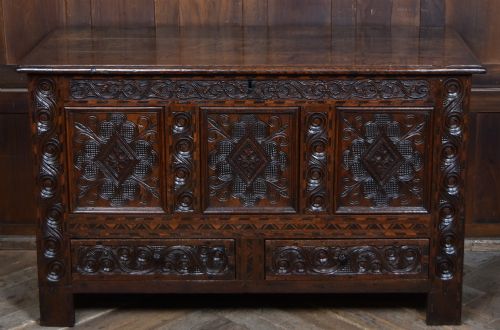
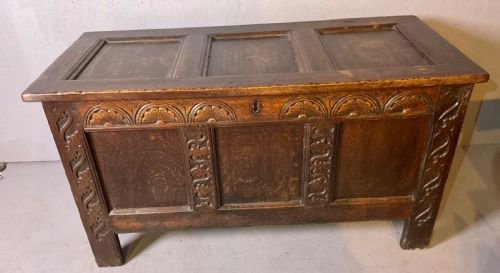
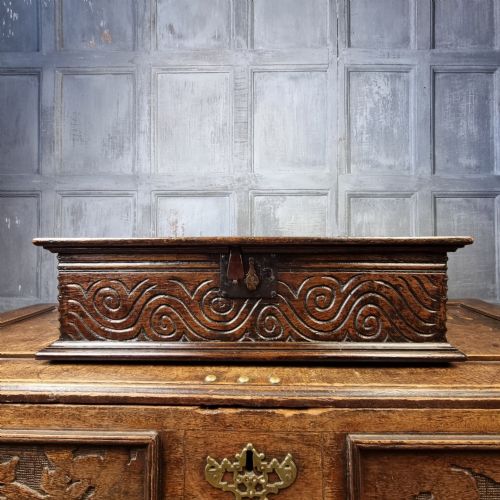
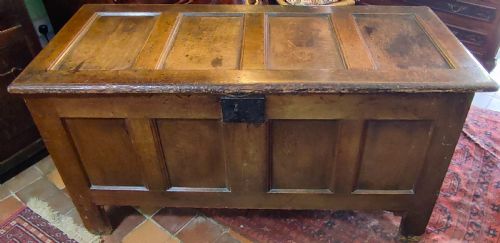
Buyers browsing this selection will most frequently encounter examples fashioned from oak, often reflecting Jacobean, Tudor, or Georgian aesthetic traditions. The forms range from standard storage chests and mule chests to smaller desk boxes and Bible boxes with internal drawers.
The regional variety is evident in joined pieces originating from specific areas like Lancashire alongside more general seventeenth-century English work. Such items served practical household functions before finding appreciation as decorative antique furniture.
Materials and construction methods
Construction relies heavily on solid oak, shaped through traditional joinery and embellished with surface carving. Artisans utilised durable timbers to ensure the furniture endured heavy daily use.
Iron and wrought iron hardware, including hinges and locking mechanisms, provide structural reinforcement and functional security. Wood inlay sometimes appears to accent the primary surfaces with contrasting geometric or floral patterns.
The listings span from the sixteenth century to the nineteenth century, utilising oak, iron, and wood inlay.
Assessing quality in early storage chests
The refinement of the carved ornamentation largely distinguishes standard storage from exceptional examples. Crisp relief work on the frieze and panels demonstrates the skill of the original joiner.
The integrity of the timber and the preservation of original ironwork heavily influence the standing of a piece. Retaining internal fittings like drawers adds distinct character and structural complexity.
The Historic Carved Coffer Glossary
- Cofer
- A heavy wooden chest used historically for storing valuables, linen, and documents. These pieces form the primary focus of this collection.
- Mule chest
- A storage chest featuring one or more drawers built into the base beneath the main compartment. This form emerged as domestic storage needs evolved.
- Frieze
- The horizontal decorative band running along the upper section of a chest, often heavily carved. Artisans frequently used this area to display intricate geometric or floral motifs.
- Joined oak
- Furniture constructed using mortise and tenon joints secured with wooden pegs rather than modern fasteners. This method defines the sturdy framework of sixteenth and seventeenth-century boxes.
- Bible box
- A small desktop box with a sloped or flat lid, designed to hold sacred texts and writing materials. These compact items often incorporate internal drawers.
Historic Carved Coffer: Frequently Asked Questions
What were coffers originally used for?
These chests served primarily as secure storage for valuable household goods, clothing, and documents. Because houses lacked fitted closets, large boxes held portable wealth.
They also functioned occasionally as seating or tables when space required multiple uses within a single room.
How do I date a carved coffer?
Dating relies on examining the construction methods, such as joined frame-and-panel techniques, alongside the style of the carving. Specific motifs often align with periods like the Tudor, Jacobean, or Georgian eras.
Hardware styles and the type of timber preparation also offer reliable clues to the century of manufacture.
Where should I place a coffer at home?
These sturdy pieces work well as living room focal points, serving as coffee tables or blanket storage beneath windows. Their flat tops provide practical surfaces for display.
In bedrooms or hallways, they offer functional linen storage while adding historical texture to the interior space.
What is a mule chest?
A mule chest is a variation of the standard storage box that incorporates drawers beneath the main compartment. This design bridged the gap between basic trunk storage and modern chest of drawers.
The inclusion of internal or external drawers allowed easier access to smaller items without disturbing the main lid.
Are these chests suitable for daily use?
Solid oak construction and robust iron hardware make these pieces durable enough for contemporary domestic storage. They handle blankets, winter wear, and household items with ease.
Care should be taken to maintain stable humidity levels to protect the antique wood and historic joints.