


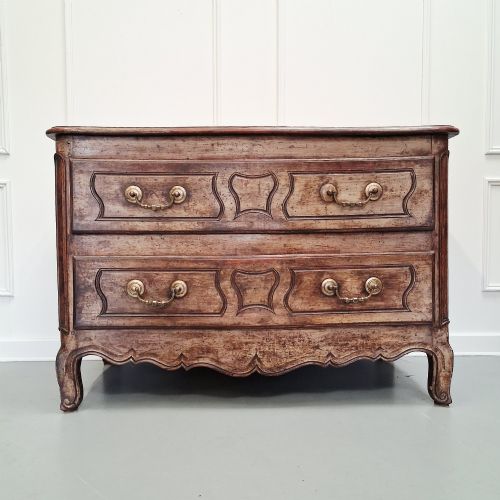
Oak Dresser with Drawers
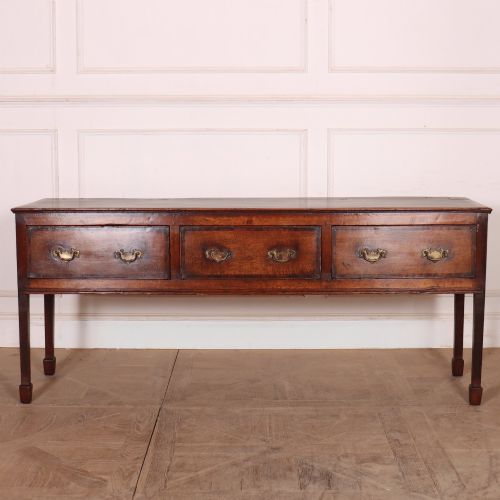
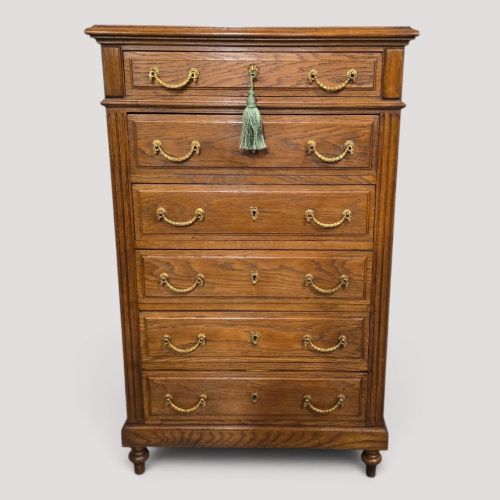
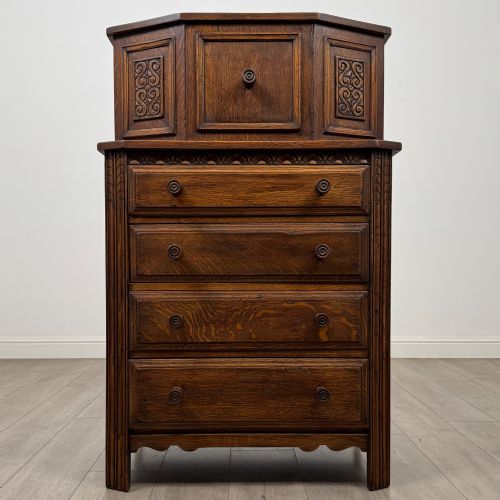
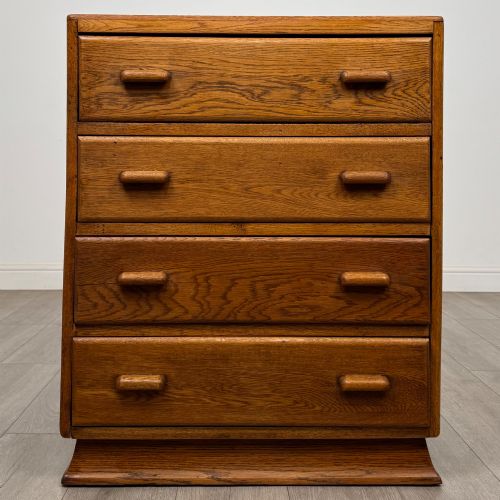
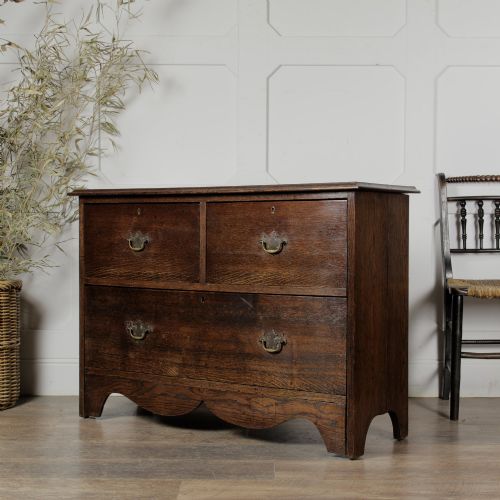
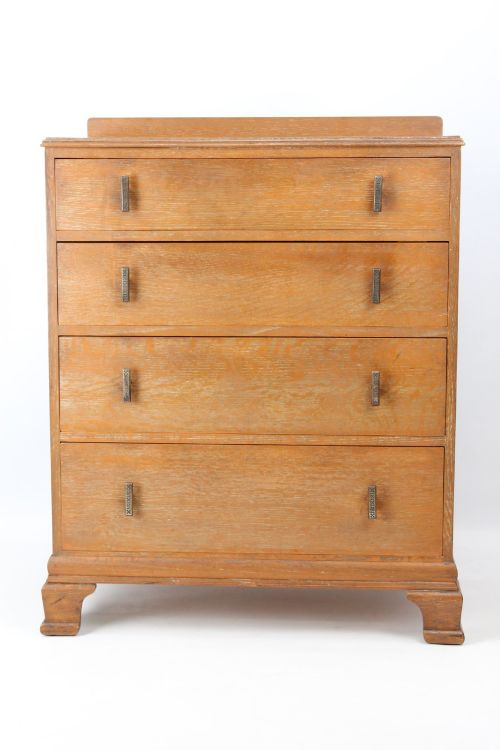
These oak dresser with drawers pieces are practical storage items built from sturdy timber, offering traditional utility for any home.
Identifying an oak dresser with drawers
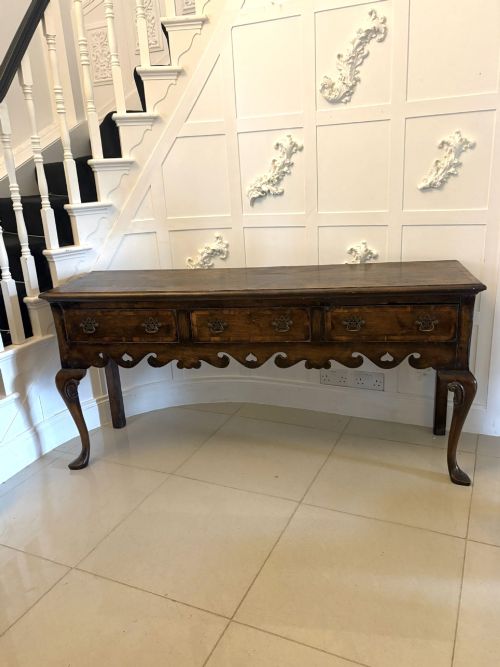
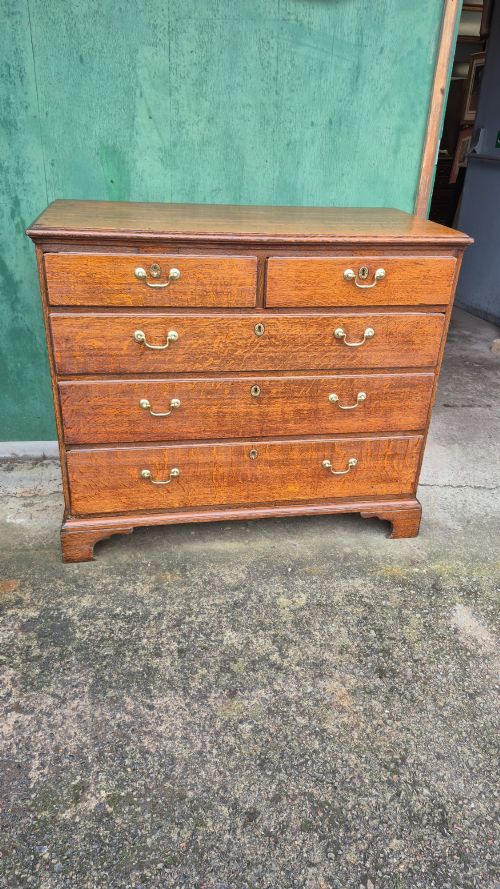
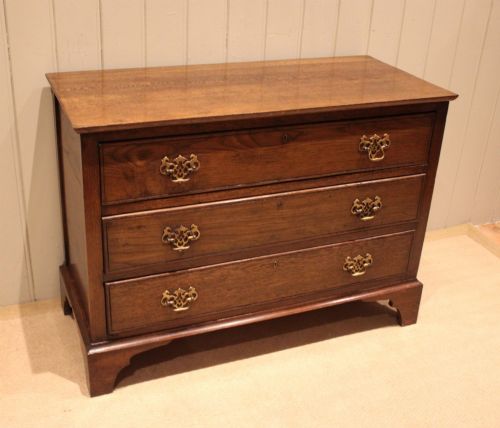
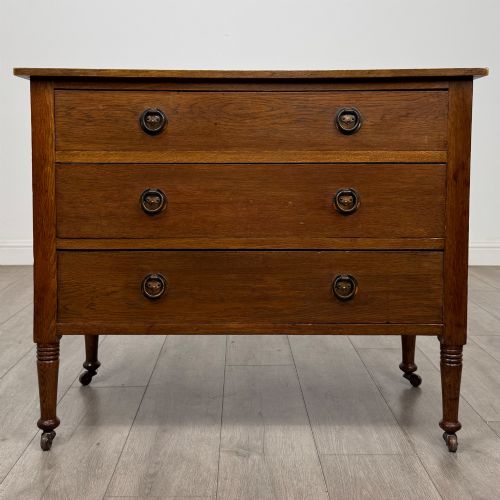
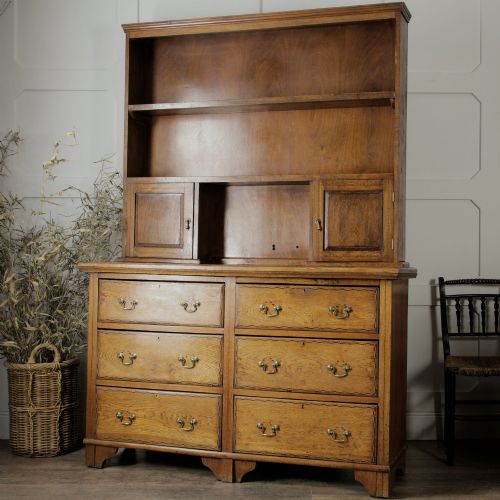
An oak dresser with drawers serves as a functional storage piece combining surface display or shelving with integrated lower drawer compartments. Buyers searching for an oak dresser with drawers will encounter items spanning the eighteenth and nineteenth centuries, including Georgian examples and English country pieces.
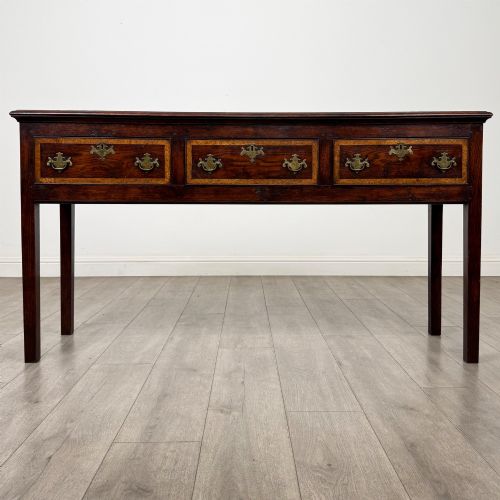
The layout typically takes the form of a low dresser base or a potboard format, sometimes incorporating spice drawers or upper cupboards. Regional varieties such as Welsh and Lancashire pieces appear frequently alongside general Georgian country cottage styles.
Materials and construction methods
Construction relies primarily on solid oak, occasionally paired with walnut or enhanced with mahogany details. Brass fittings frequently furnish the drawer pulls and handles, adding functional metalwork to the timber framework.
Joinery techniques reflect traditional cabinetmaking, with carved elements, shaped friezes, and barleytwist supports appearing on selected examples. Individual pieces range from straightforward country workshop items to more elaborate carved and panelled designs.
Retail Price Guide 2026
Typical UK retail prices for oak dresser with drawers, calculated from the Sellingantiques database of over a million retail prices indexed since 2003. This retail price guide relies exclusively on Sellingantiques data; no external sources or auction records are used, so the figures do not describe the wider market.
Some nineteenth-century collectors cabinets contain twenty-six separate oak drawers alongside pigeon holes.
Assessing quality in period furniture
Quality rests in the handling of the timber and the integrity of the original construction rather than surface ornamentation alone. Superior examples display thoughtful proportions, well-figured oak grain, and proportioned drawer arrangements such as spice configurations or deep side compartments.
The relationship between the base structure and secondary woods or fittings dictates the character of the piece. Untouched patination and robust joinery distinguish higher tier regional work from later utilitarian adaptations.
The Oak Dresser with Drawers Glossary
- Potboard dresser
- A dresser featuring an open lower shelf beneath the drawers, traditionally used for storing pots and heavy kitchen equipment. This lower platform sits raised above the floor on feet or stile supports.
- Spice drawers
- Small, multiple internal or external drawers incorporated into the upper section of a dresser base. These compartments were designed for storing valuable culinary spices and dry goods.
- Frieze
- The horizontal band of timber situated directly beneath the top surface of the dresser base. This area frequently incorporates decorative shaping or carved detailing.
- Barleytwist
- A decorative turning technique resembling a twisted rope, used to shape wooden furniture supports and legs. This form appears on nineteenth-century regional variations.
- Cabriole leg
- A furniture leg that curves outward in a convex arc before tapering inward in a concave sweep. This style reflects Georgian cabinetmaking influences.
Frequently Asked Questions
How do I date an oak dresser?
Dating relies on examining construction methods, timber choice, and hardware styles across the piece. Eighteenth-century examples often show hand-cut joinery and regional vernacular traits.
Later nineteenth-century iterations incorporate different turning styles like barleytwist supports or simpler panel construction methods.
What are Welsh dressers?
Welsh dressers are regional pieces traditionally incorporating upper shelving units above a lower drawer and cupboard base. They served as combined display and storage furniture for domestic tableware.
Evidence shows variations including specialised spice drawers and early Georgian forms originating from rural workshops.
How do I care for antique oak furniture?
Antique oak benefits from stable indoor humidity and protection from direct sunlight to prevent timber movement. Regular dusting with a dry or slightly damp cloth preserves the finish.
Avoid modern silicone polishes, as traditional wax maintains the natural patination built up over centuries of use.