
Oak Desk on Stand
An oak desk on stand brings together solid timber and elevated form, offering a workspace with distinct period character.
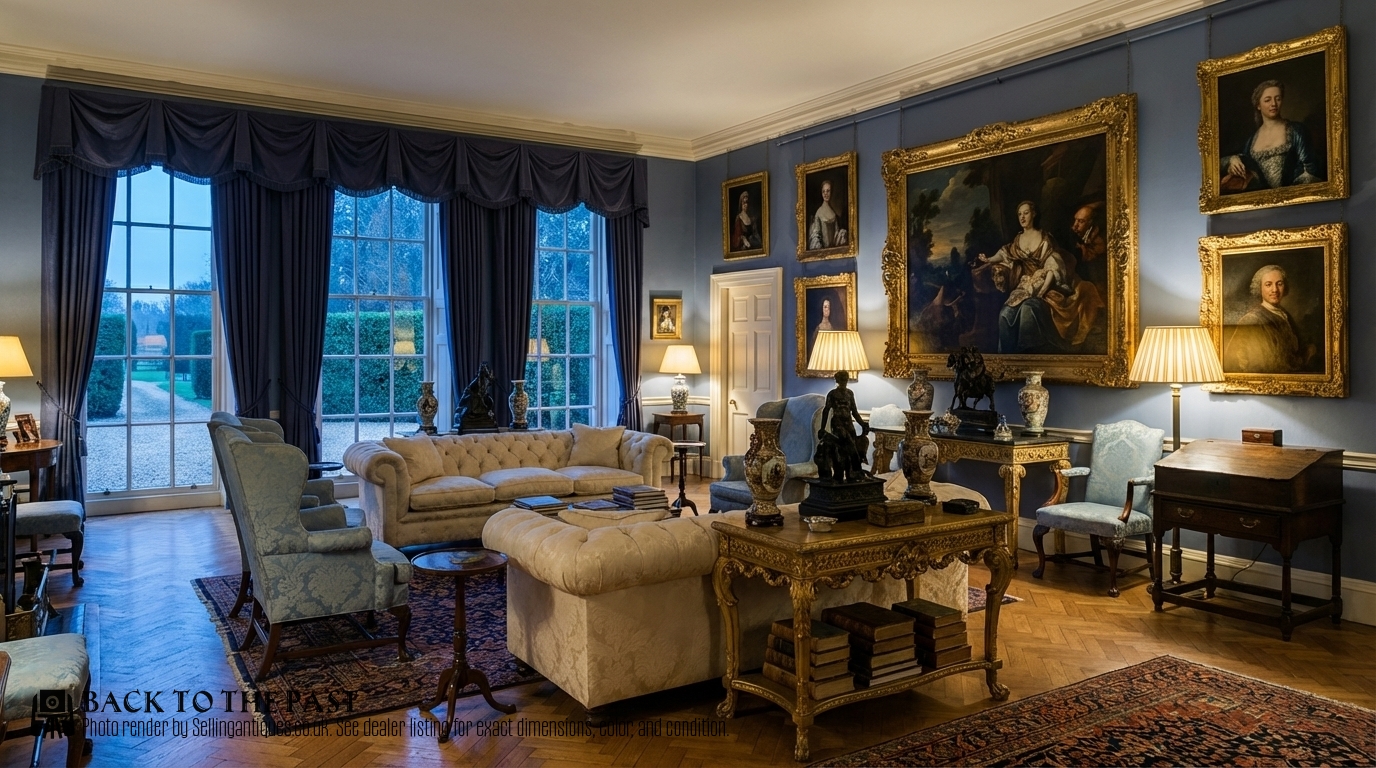
Oak Desk on Stand
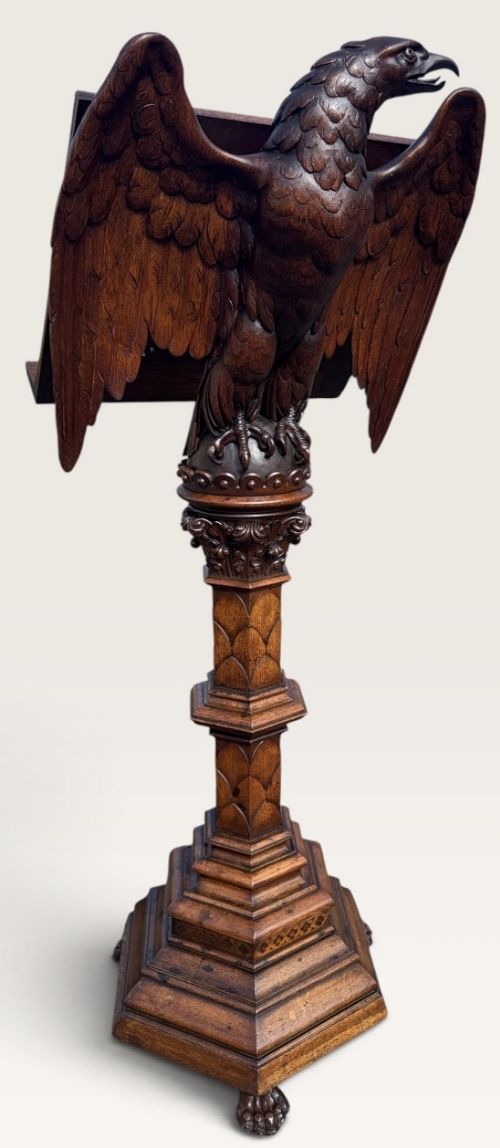
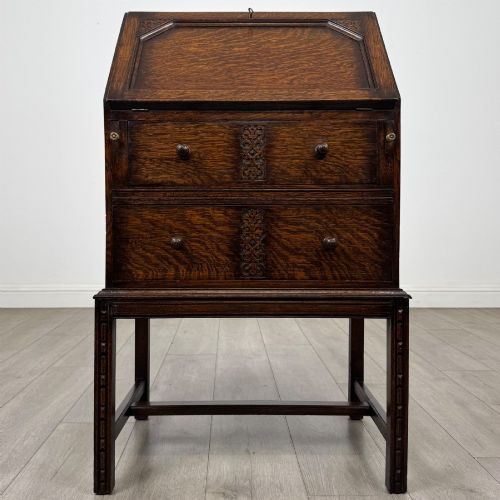
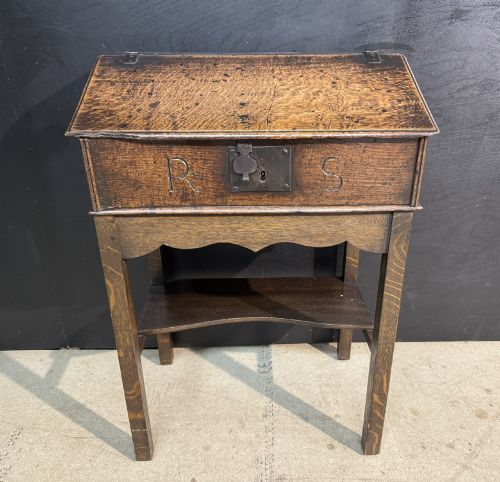
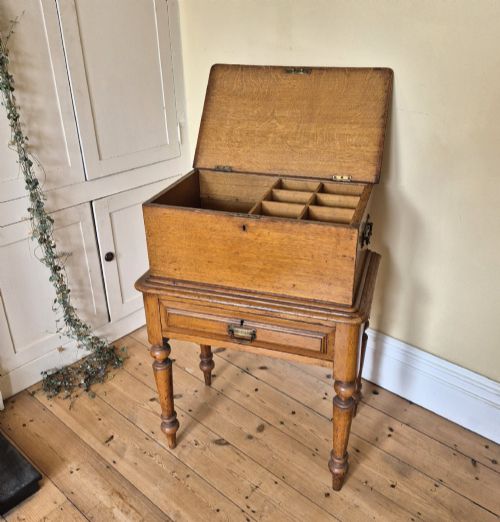
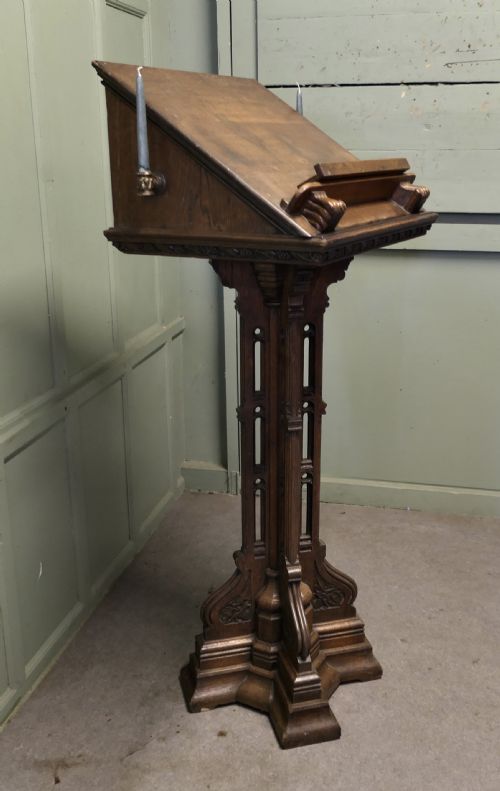
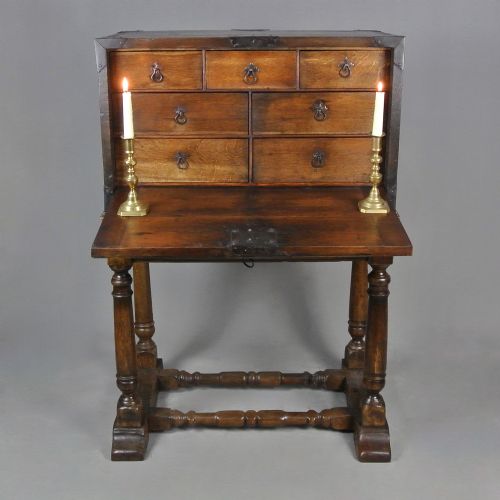
When searching for an oak desk on stand, buyers encounter pieces ranging from seventeenth-century joined timber boxes on frames to nineteenth-century clerks' desks and twentieth-century ecclesiastical lecterns. These forms combine a writing surface or storage compartment with a raised support structure, creating practical working furniture that takes up minimal floor space.
The versions most commonly met on this page span the Victorian and Edwardian eras, alongside earlier seventeenth-century examples and Arts and Crafts interpretations. These pieces often incorporate practical compartments, sloping lids, or associated stands in oak, sometimes paired with pine or elm elements.
Assessing quality
Quality rests on the integrity of the timber, the crispness of any carved ornamentation, and the originality of the stand. Pieces retaining their original matched base structure and authentic hardware sit at the top of the range.
Proportion and execution of joinery distinguish utilitarian items from workshop-made pieces produced during the Arts and Crafts period. The presence of maker labels or documented institutional provenance adds further weight to a piece.
Listings feature oak alongside brass, iron, glass, leather, mahogany, and silver across periods from the 17th century to the 1920s.
Arthur Simpson·Stanley Webb Davies·Simpsons of Kendall·Carters Of London
The Oak Desk on Stand Glossary
- Sloping lid
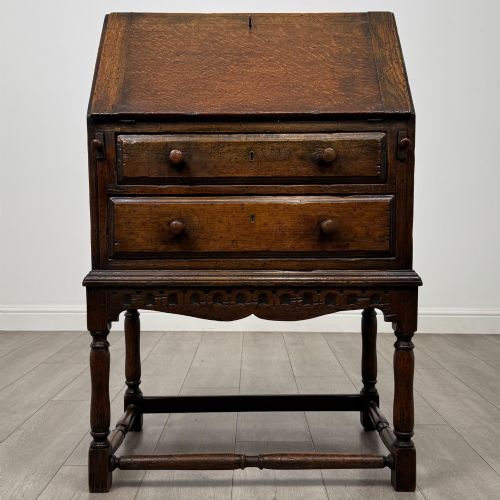
- An angled writing surface that often lifts to reveal interior compartments for paper and ink.
- Lectern
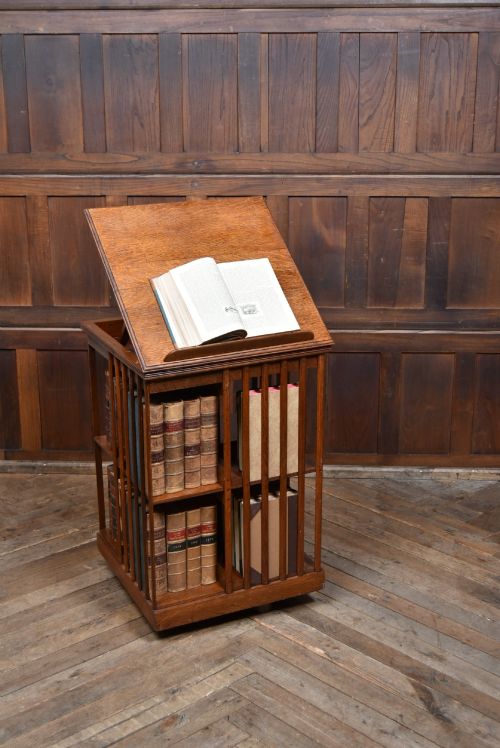
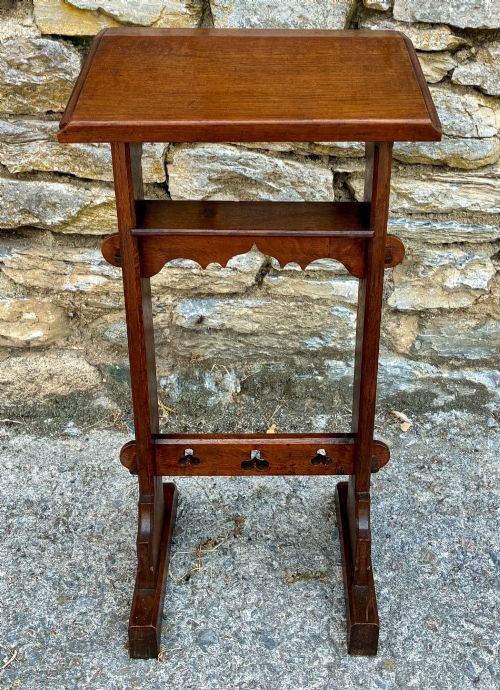
- A raised stand with a slanted top designed to hold books or documents for reading.
- Gothic Revival
- A nineteenth-century design style drawing on medieval architectural motifs, featuring pointed arches and tracery.
- Arts and Crafts
- A movement prioritising visible construction, hand-craftsmanship, and simple forms.
- Bureau
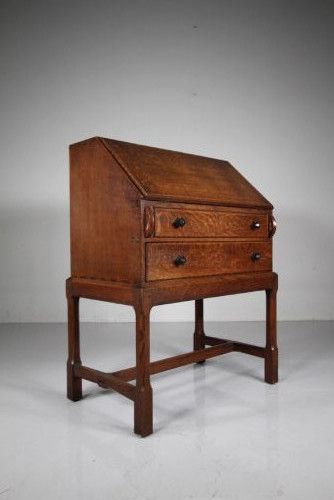
- A desk featuring a sloping flap that opens to form a writing surface above drawers or pigeonholes.
Oak Desk on Stand: Frequently Asked Questions
What periods do these desks date from?
The pieces span multiple eras, beginning with seventeenth-century joined oak boxes and extending through Georgian clerks' desks.
Later examples include Victorian and Edwardian pieces, alongside Arts and Crafts and 1920s workshop productions.
How were these stands used originally?
Many served in offices, town halls, and railway stations as standing writing surfaces or ticket-dispensing stations.
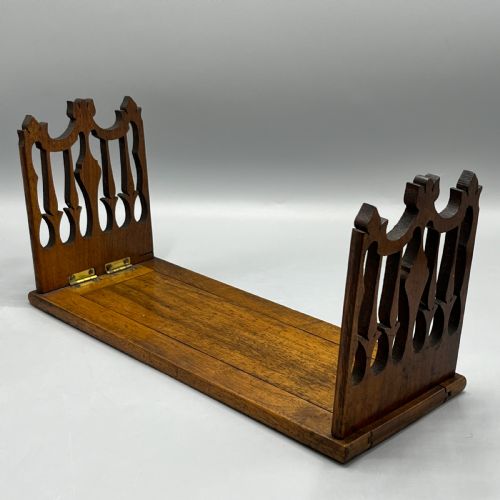
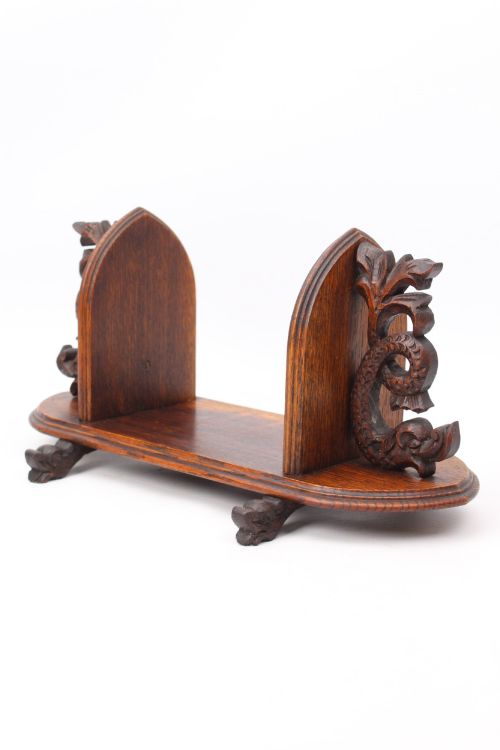
Others functioned in churches and libraries as lecterns, book stands, or reading podiums for public addresses.
How do I care for antique oak furniture?
Keep the wood away from direct heat sources and sudden temperature changes to prevent timber splitting.
Apply a traditional beeswax polish occasionally to nourish the grain and maintain the surface sheen.
Are the stands detachable from the desks?
Some configurations feature a separate table base supporting a removable desk box or slope.
Other examples employ an integrated freestanding pedestal frame where the stand and upper section form a single unit.