

Oak Bedroom Chest Drawers
An oak bedroom chest drawers brings sturdy timber and practical storage into a room, offering enduring utility alongside period character.
Oak Bedroom Chest Drawers
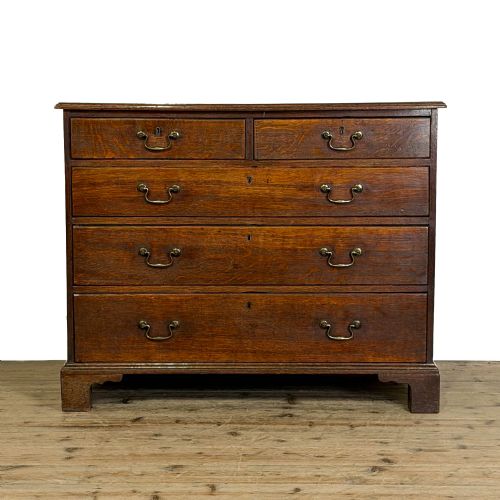
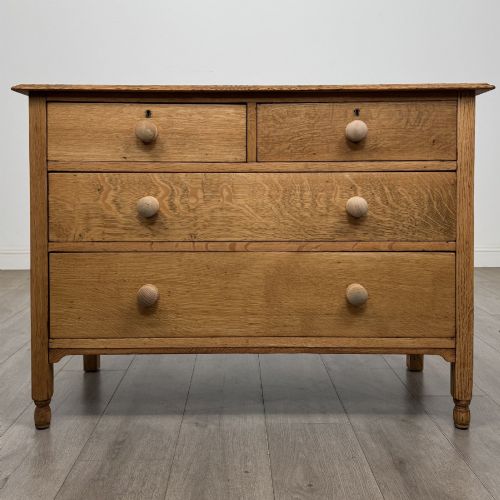
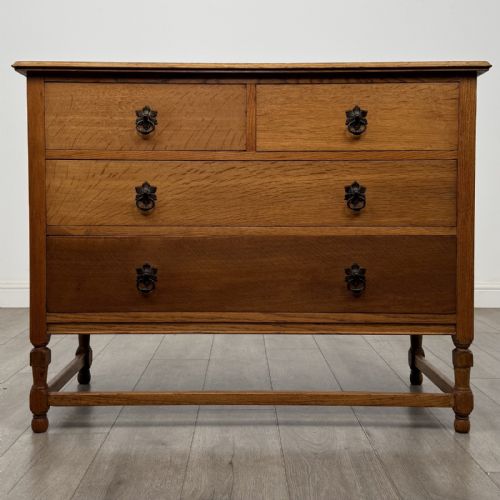
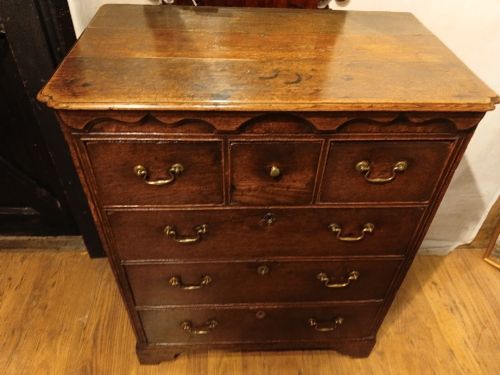
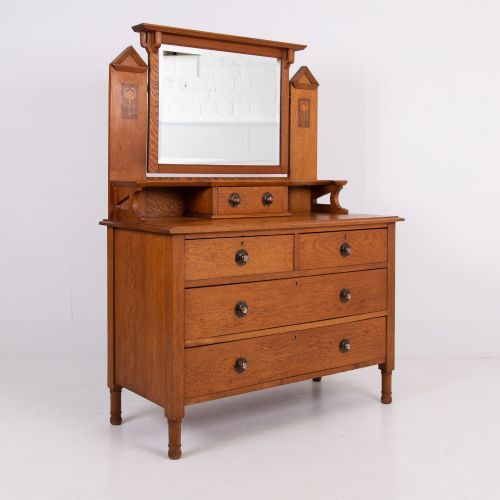
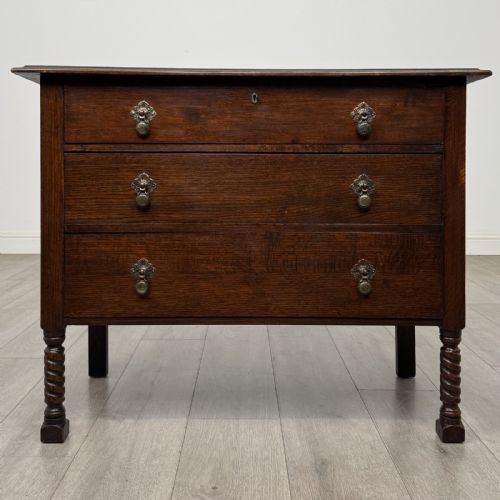
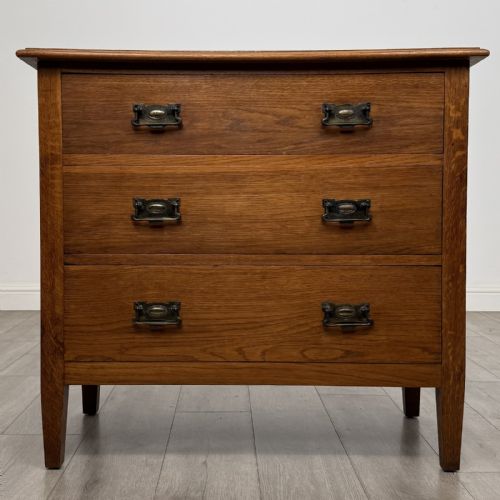
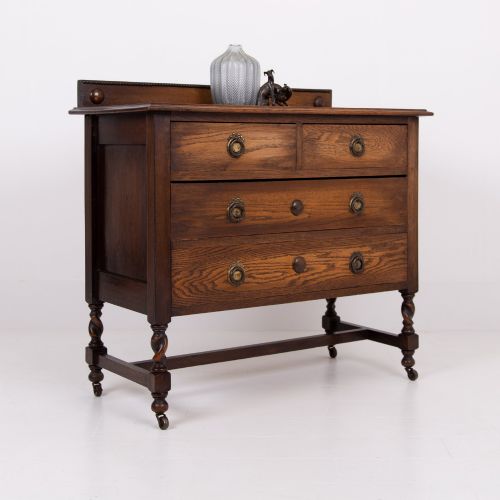
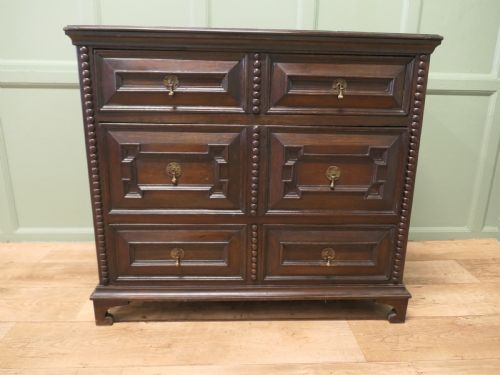
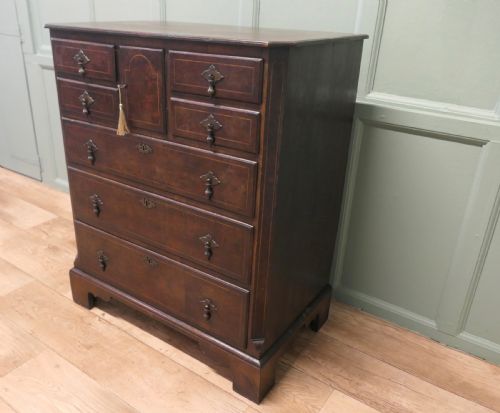
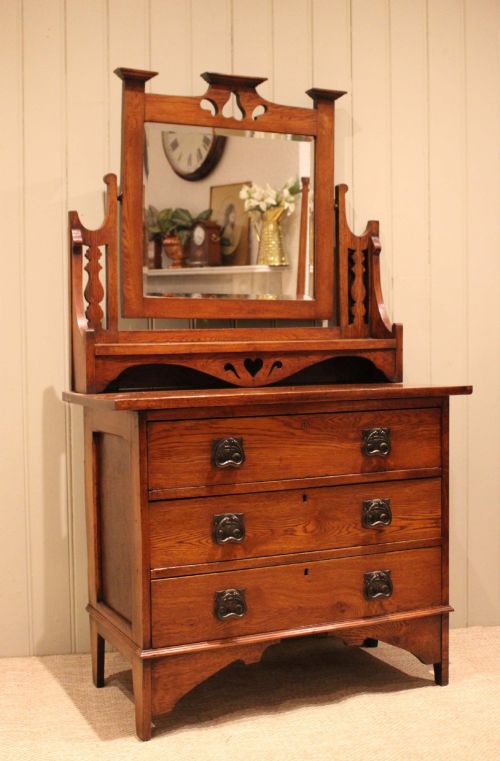
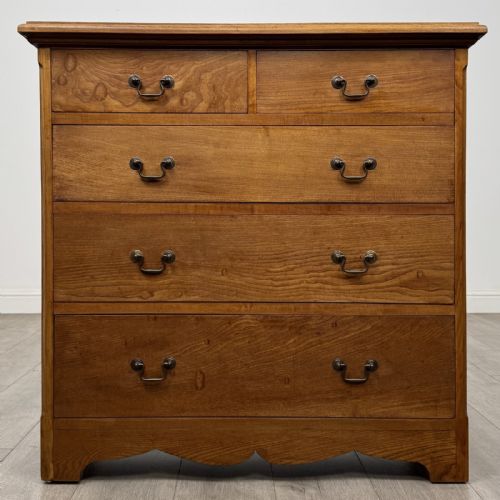
When you search for an oak bedroom chest drawers, you encounter storage furniture spanning from the seventeenth century through to the early twentieth century. The selection ranges from robust provincial pieces of the Georgian era to lighter Edwardian designs and Arts and Crafts examples fitted with mirrors or raised galleries.
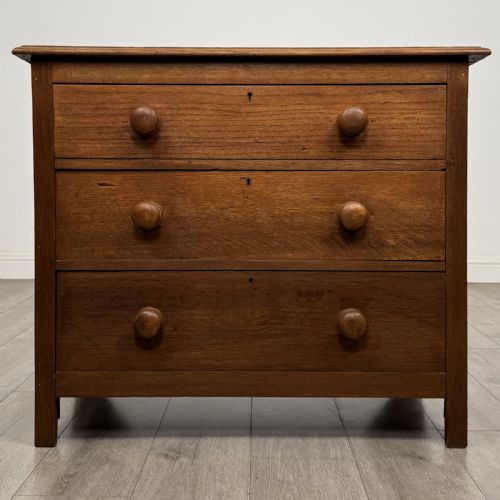
The most common formats on this page are upright chests featuring graduated drawer arrangements, tallboys, and dressing chests. Formats vary from small proportions suitable for tight spaces to tall structures incorporating turned legs, bun feet, or bracket bases.
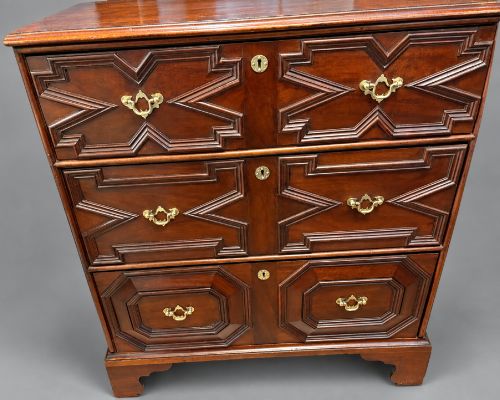
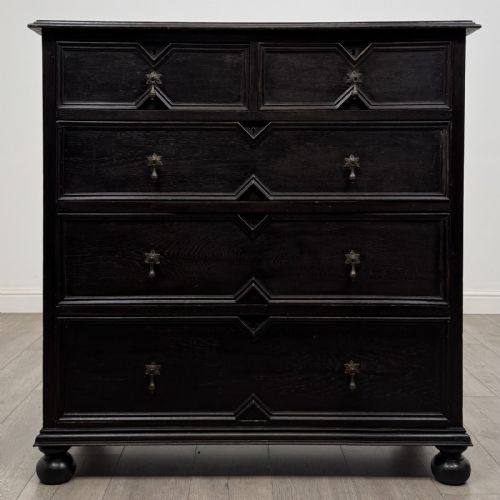
Origins include English regional workshops, notably Norfolk and Suffolk, alongside revival styles that imitate earlier Charles II and Jacobean aesthetics. Timber tones range from deep ebonised surfaces and rich golden hues to limed finishes and bleached French oak.
Materials and construction methods
Construction relies primarily on solid oak, frequently paired with secondary timbers such as walnut, mahogany, ash, and pine. Joinery techniques reflect the period of manufacture, utilising traditional framing and drawer-building methods that ensure long-term stability.
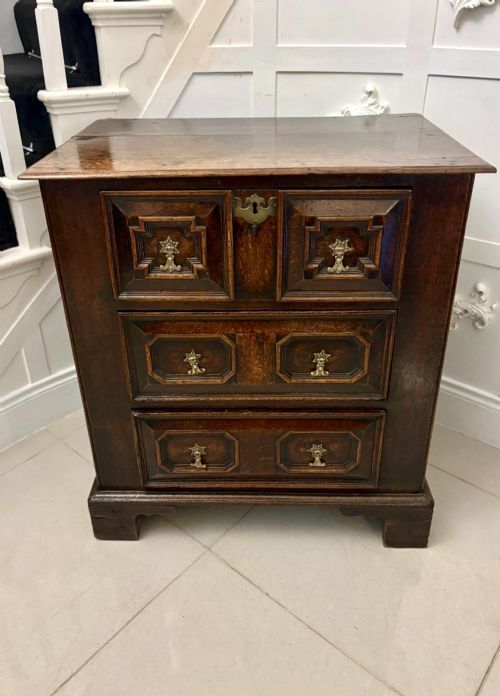
Surface details and hardware define the visual execution of these items, incorporating turned wooden knobs, brass drop handles, acorn pulls, and swan neck mounts. Decorative elements span geometric mouldings, carved top edges, and ebonised highlights applied to the drawer fronts and frames.
Oak Bedroom Chest Drawers Retail Price Guide 2026
Typical asking prices for oak bedroom chest drawers among the pieces listed under this phrase on Sellingantiques today, from the lower quarter to the upper quarter. They describe what is for sale here now, not the wider market.
Listings feature oak alongside walnut, mahogany, ash, and pine across periods spanning the seventeenth century to the 1930s.
Assessing quality in period chests
Quality rests upon the crispness of the timber grain, the depth of the colour, and the integrity of the original construction. Pieces exhibiting strong figuring in the oak, alongside well-preserved surface patination, represent the finer end of the spectrum.
The sophistication of the hardware and decorative flourishes, such as geometric applied mouldings or finely turned bun feet, elevates a piece beyond utilitarian workshop production. Conversely, later alterations or mismatched handles diminish the historical cohesion of an item.
The Oak Bedroom Chest Drawers Glossary
- Tallboy
- A tall chest of drawers, often constructed as a double-chest configuration where a smaller set sits atop a larger base.
- Dressing chest
- A low chest of drawers equipped with an attached mirror and sometimes small trinket drawers, popular during the Edwardian and Arts and Crafts periods.
- Wellington chest
- A tall, slender vertical chest featuring a hinged locking side-stile that secures all the drawers simultaneously.
- Bun foot
- A spherical or slightly flattened wooden foot, heavily turned, frequently seen on seventeenth-century and revival furniture.
- Raised gallery
- A low wooden upstand fixed to the top rear and sides of a chest to prevent items from sliding off the surface.
Oak Bedroom Chest Drawers: Frequently Asked Questions
How do I date an oak chest?
Dating relies on examining the construction of the drawers, the type of timber used for the carcase linings, and the style of the handles and feet. Earlier pieces from the seventeenth and eighteenth centuries show hand-cut dovetails and pegged joints.
Later Victorian and Edwardian examples often utilise machine-sawn elements and standardised hardware fittings. Comparing the secondary woods inside the drawers helps confirm the era of manufacture.
What is a Jacobean revival chest?
A Jacobean revival chest is a later piece, often dating to the late nineteenth or early twentieth century, constructed in the heavy style of the seventeenth century. These items feature geometric mouldings on the drawer fronts and sturdy turned supports.
Makers adopted these seventeenth-century motifs to satisfy a sustained demand for traditional, heavy timber furniture in domestic interiors. They combine older aesthetic elements with modern manufacturing conveniences.
Where were these chests made?
These chests originate from various British regions, with specific regional traits recorded in areas like Norfolk and Suffolk during the eighteenth century. Other pieces reflect French styling through bleached oak finishes or adhere to standard English cabinet-making traditions.
Local workshops utilised regional stands of timber, resulting in distinct grain patterns and colour variations. Urban cabinet makers also produced standardised designs for the growing Victorian and Edwardian markets.
How do I care for antique oak?
Maintaining antique oak involves keeping the timber away from direct heat sources and sudden temperature fluctuations that can cause the wood to split. Regular dusting with a soft, dry cloth preserves the surface without building up excessive residues.
Occasional application of traditional beeswax helps nourish the grain and maintain the natural lustre of the finish. Avoid using modern silicone-based polishes that can permanently alter the historic patination of the wood.