

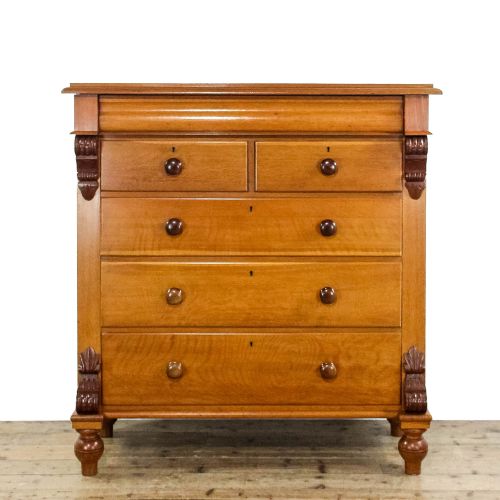
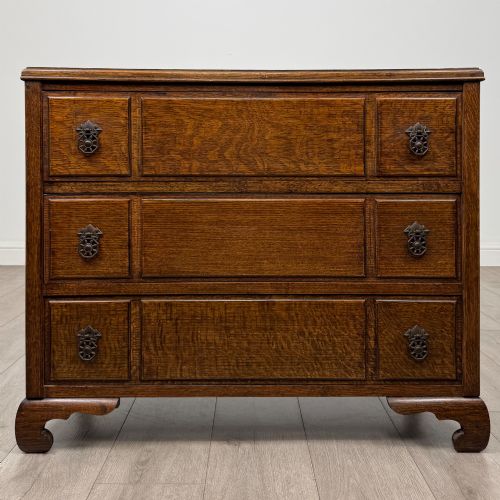
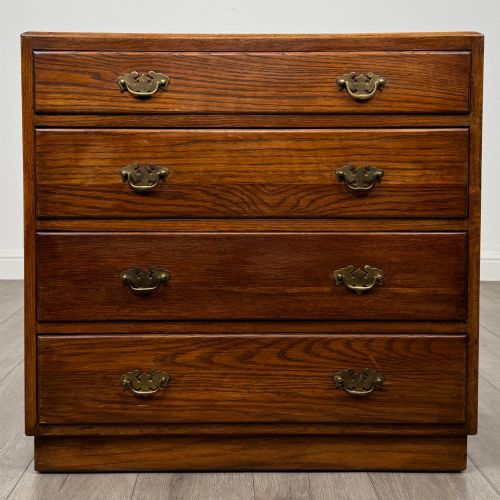
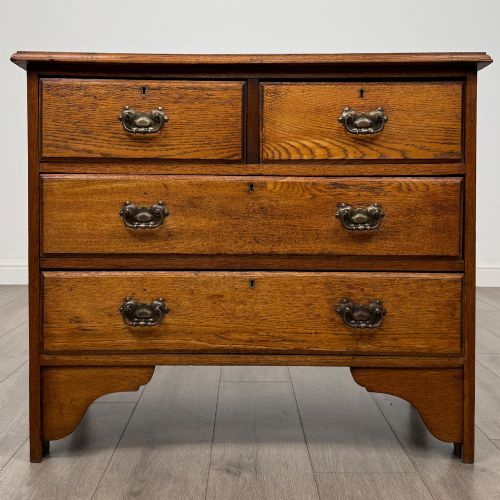
Traditional Oak Bedroom Storage
Traditional oak bedroom storage brings robust, timber-built utility to domestic spaces through centuries-old chest and wardrobe forms.
Traditional Oak Bedroom Storage
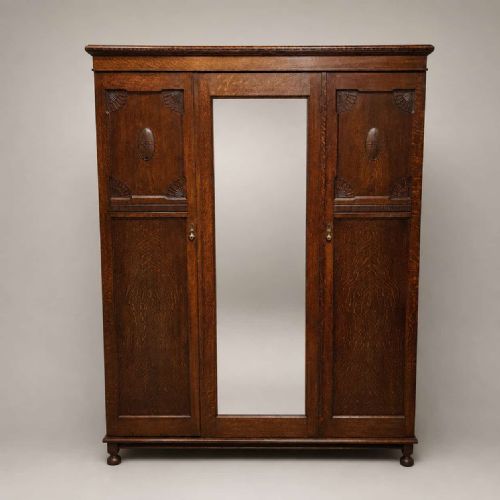
Traditional oak bedroom storage encompasses sturdy chests of drawers, spacious wardrobes, linen presses, and coffers designed for domestic organisation. These pieces span periods from the seventeenth century through the Georgian, Victorian, and Edwardian eras.
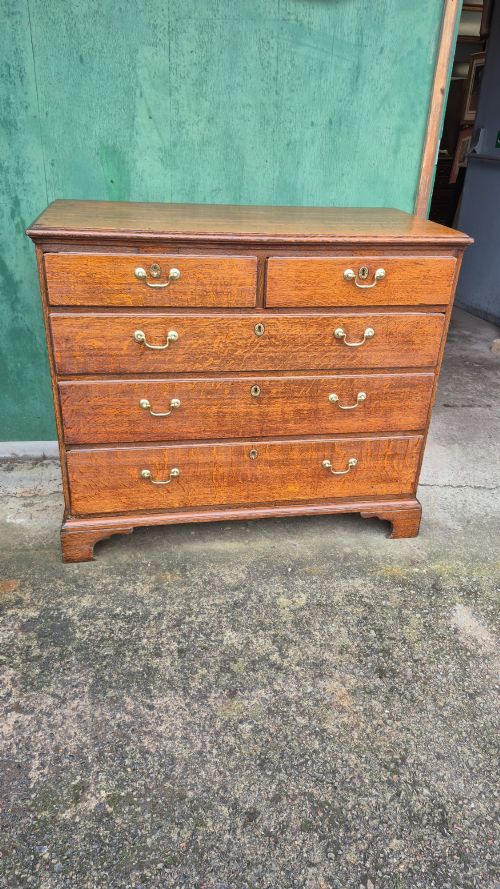
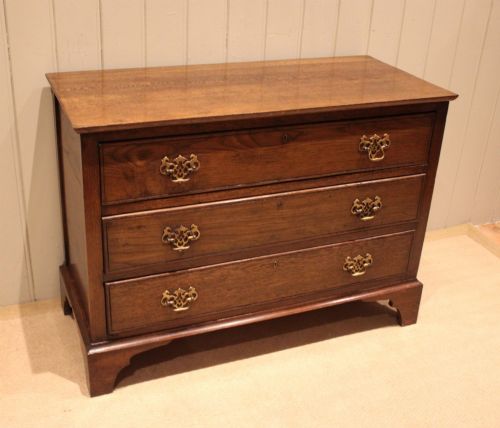
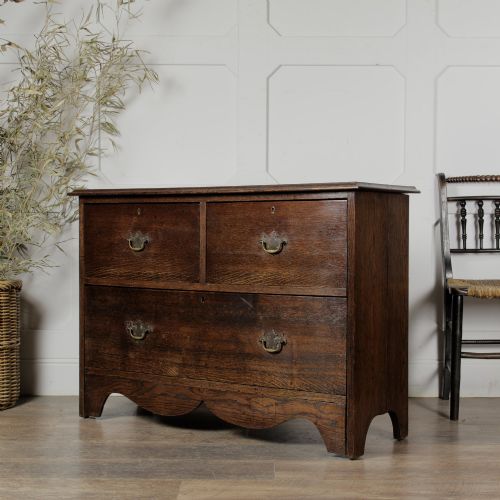
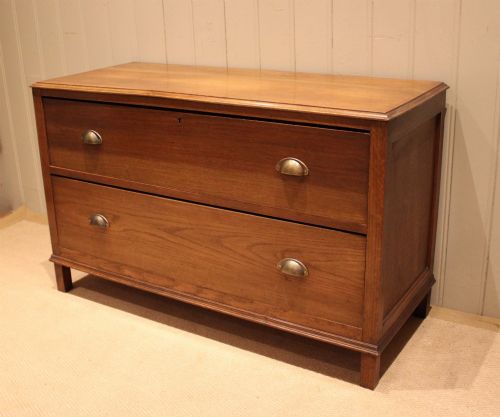
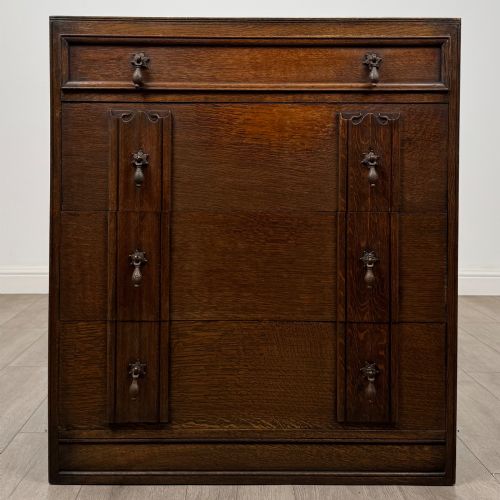
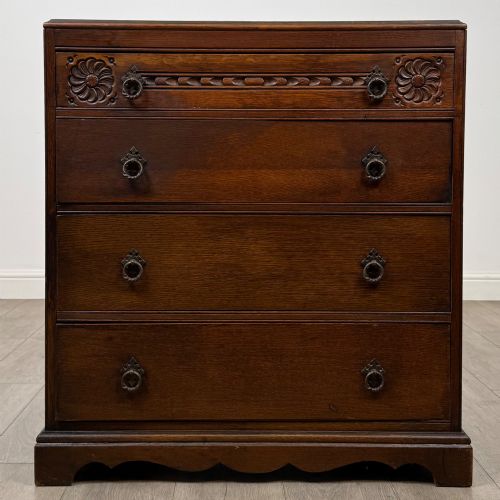
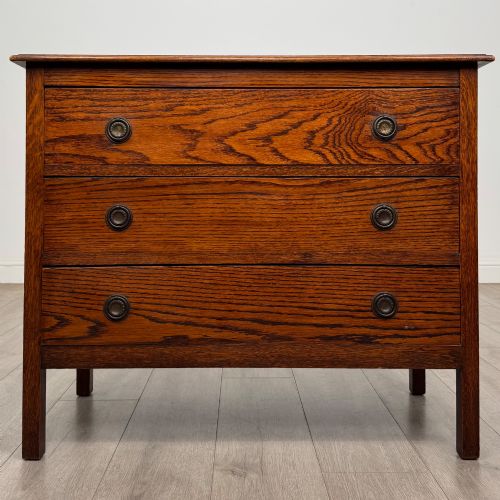
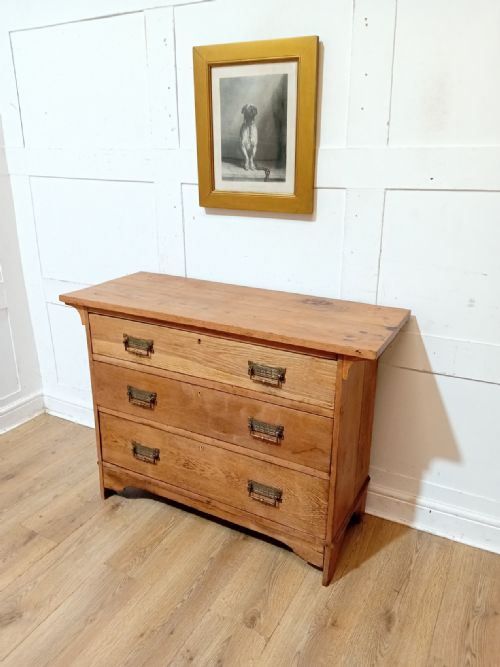
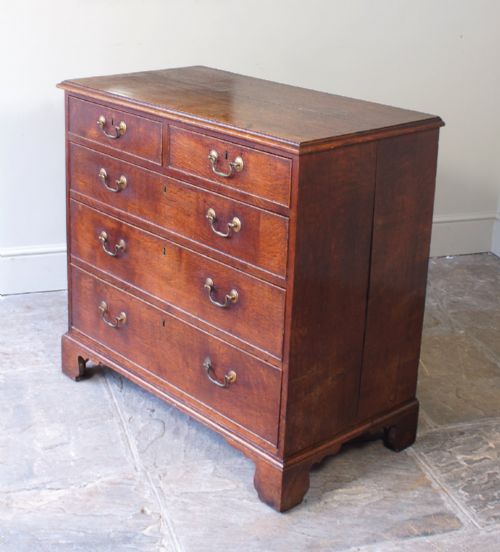
The chest of drawers dominates the selection, appearing in low forms, straight fronts, bow fronts, and bachelor variants. Alongside these stand large triple wardrobes and linen chests built to house garments and household textiles.
Origins range across English country workshops to formal cabinet-maker studios, utilising regional timber stocks. Pieces demonstrate stylistic shifts from panelled Jacobean severity to clean Arts and Crafts lines.
How these pieces were constructed
Construction relies heavily on solid oak timbers, frequently paired with mahogany cross-banding or walnut inlay for decorative contrast. Cabinet-makers utilised brass and iron for drawer pulls, handles, and key escutcheons.
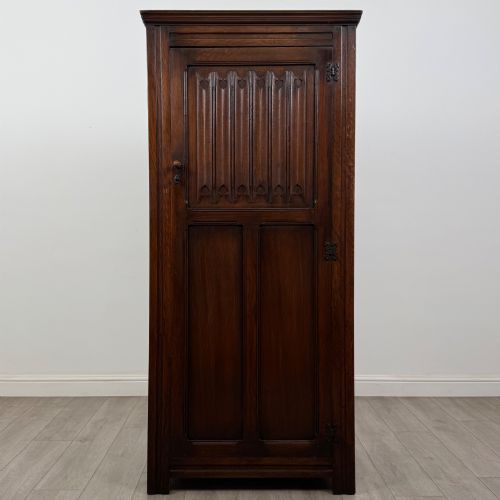
Techniques combine traditional panelled framing, dovetail joinery for drawer construction, and surface carving such as linenfold motifs. Secondary woods like mahogany appear alongside glass panels in wardrobe doors and brass hardware.
Object types include chests of drawers, wardrobes, linen presses, and coffers, reflecting diverse domestic storage needs across multiple centuries.
What separates the standard of pieces
Quality rests on the selection of timber grain, the precision of dovetail joinery, and the integrity of the structural frame. Finer examples display thoughtful grain matching across drawer fronts and crisp execution of panel moulding.
The presence of secondary decorative elements, such as walnut inlay, mahogany cross-banding, or original brass hardware, elevates a piece. Heavier scaling and unyielding solid oak construction distinguish utilitarian country pieces from finer urban commissions.
The Traditional Oak Bedroom Storage Glossary
- Chest of drawers
- A piece of furniture consisting of multiple parallel drawers used for storing clothing. They form the core of bedroom storage listings.
- Coffer
- A heavy wooden chest traditionally used for storing valuables or linens. These large storage boxes predate modern fitted wardrobes.
- Linenfold
- A style of wood carving that resembles folded parchment or linen cloth. It frequently decorates panels on Edwardian pieces.
- Cross-banding
- A strip of veneer applied across the grain of the primary wood to form a decorative border. Cabinet-makers used this technique on drawer fronts.
- Bachelor's chest
- A compact chest of drawers featuring a fold-over top or sliding shelf. They date primarily from the Georgian period.
Traditional Oak Bedroom Storage: Frequently Asked Questions
What periods do these pieces date from?
The pieces span the seventeenth, eighteenth, nineteenth, and early twentieth centuries. Georgian and Edwardian examples appear frequently among the listings.
Maker styles range from vernacular English country designs to formal Jacobean Revival and Arts and Crafts movements.
How do I identify a Georgian chest?
Georgian chests typically feature hand-cut dovetails, thick oak carcases, and period brass hardware. Proportions are often lower and more compact on bachelor variants.
Panelled construction and restrained mouldings help distinguish genuine eighteenth-century examples from later revival pieces.
What materials are used besides oak?
While solid oak forms the primary structure, cabinet-makers incorporated mahogany and walnut inlay for decorative contrast. Brass and iron provide the hardware for handles and escutcheons.
Glass panels occasionally appear in wardrobe doors, and secondary timbers line the interiors of drawers.
How were these items used originally?
Chests and wardrobes stored garments, linens, and personal valuables in domestic bedrooms. Coffers held heavier textiles before dedicated bedroom furniture became standard.
Linen presses specifically accommodated folded household linens and shirts on sliding trays behind cabinet doors.
Are these pieces suitable for modern bedrooms?
The varied dimensions of these chests and wardrobes allow them to function effectively in contemporary spaces. Low configurations and standard straight fronts fit standard bedroom layouts.
Robust solid timber construction ensures daily utility for modern clothing storage.