
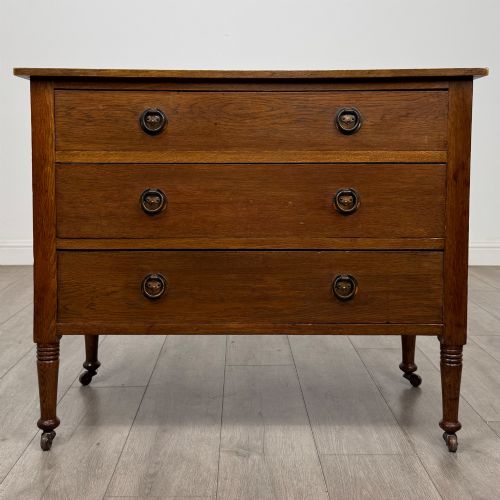
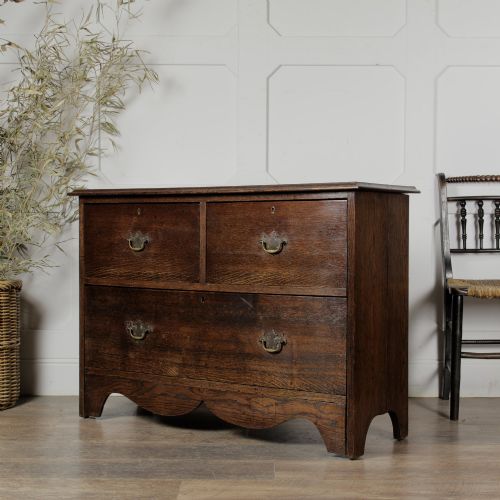

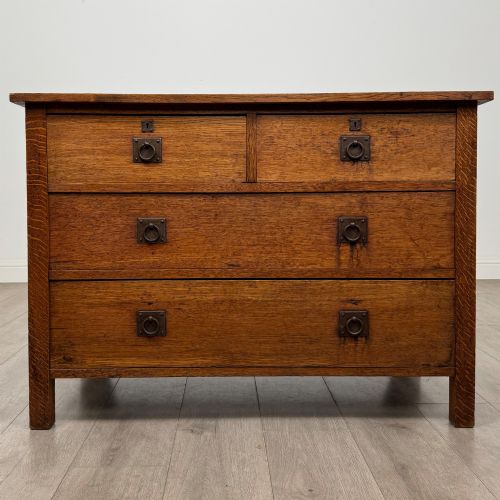
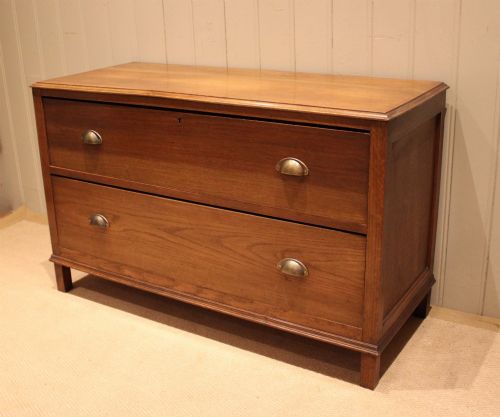


Solid Oak Commode
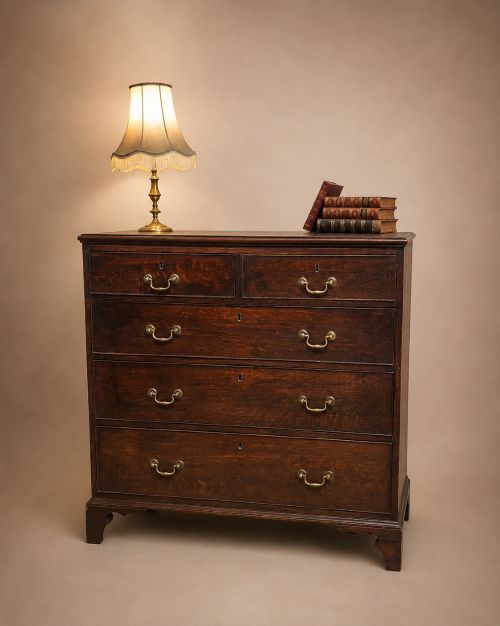
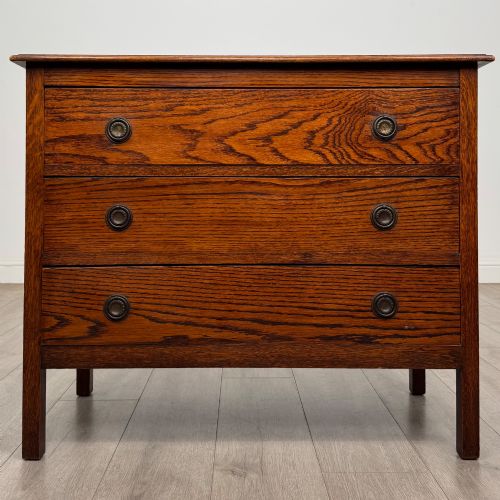
A solid oak commode brings robust joinery and deep timber grain to a room, offering practical storage with enduring architectural weight.
What these pieces are
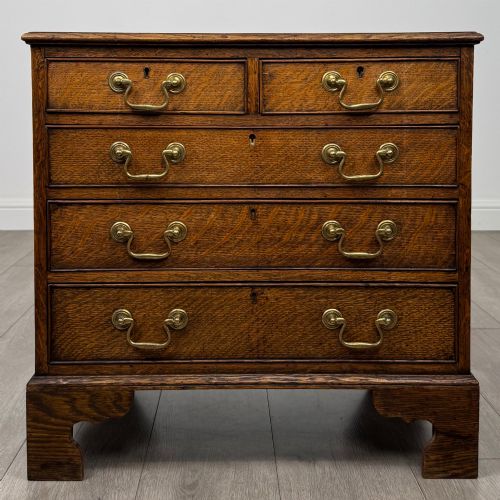
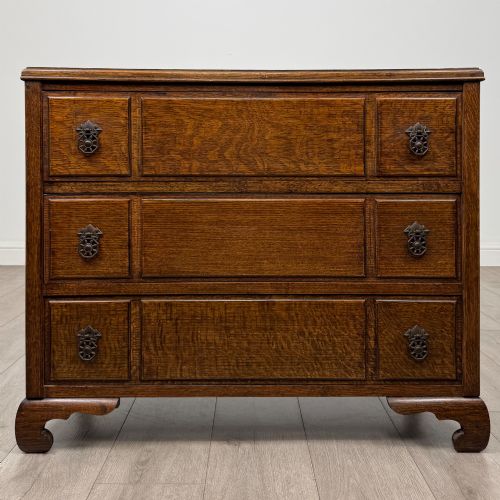
A solid oak commode represents a heavy-duty storage chest built from durable hardwood, appearing across the seventeenth and eighteenth centuries. These pieces function primarily as chests of drawers, offering substantial storage capacity within domestic settings.
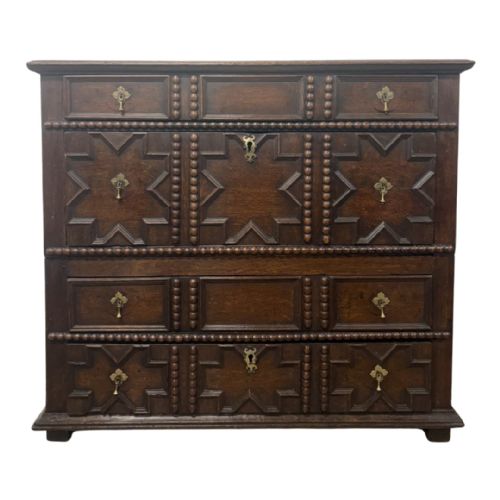
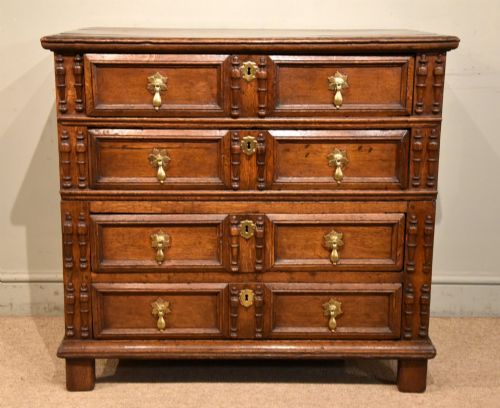
Buyers encountering this search phrase find low chests or bedside commodes alongside larger chest of drawers configurations. The seventeenth-century examples typically feature moulded drawer fronts and Jacobean influences, while eighteenth-century pieces lean towards Georgian proportions.
The material remains resolutely oak throughout, often paired with brass hardware. Surviving examples demonstrate the shift from early pegged construction to refined eighteenth-century cabinet making.

How they were made
Cabinet makers constructed these pieces using solid oak boards, joining panels with traditional woodworking techniques suited to heavy timber. The joinery relies on pegged frames and substantial drawer linings designed to withstand heavy daily use.
Hardware consists of brass handles and escutcheons secured to the drawer fronts. Surface finishes develop naturally over centuries, highlighting the medullary rays and grain patterns inherent in quarter-sawn oak.
Retail Price Guide 2026
Typical UK retail prices for solid oak commode, calculated from the Sellingantiques database of over a million retail prices indexed since 2003. This retail price guide relies exclusively on Sellingantiques data; no external sources or auction records are used, so the figures do not describe the wider market.
Some seventeenth-century drawers survive with their original pegged joints intact, having outlived several dynasties.
What varies in quality
The standard of a solid oak commode rests on the crispness of its mouldings and the integrity of its timber selection. Early seventeenth-century pieces rely on the depth of hand-carved panels and geometric applied mouldings to set them apart.
Proportion and surface patination dictate the standing of eighteenth-century examples. Pieces that retain their original brass mounts and untouched timber surfaces command greater appreciation among traditional collectors.
The Solid Oak Commode Glossary
- Commode
- A low chest of drawers or cabinet designed for domestic storage. This term spans French-influenced marble-topped tables as well as British drawer chests.
- Oak
- A hard, heavy timber with prominent grain and distinct medullary rays. Cabinet makers utilised this material for its exceptional structural strength and durability.
- Moulding
- A decorative strip applied to surfaces or shaped directly from the timber edge. Seventeenth-century examples frequently employ geometric mitred mouldings on drawer fronts.
- Jacobean
- An early seventeenth-century design style characterised by heavy proportions and stark geometric ornamentation. Pieces from this period show robust construction methods.
Frequently Asked Questions
How do I date a solid oak commode?
Examine the construction methods, drawer linings, and overall proportions of the piece to determine its age. Seventeenth-century examples display heavier mouldings and pegged frames, whereas eighteenth-century Georgian items show lighter, more refined framing.
Hardware placement and timber colour also offer clues to the period. Original brass fixtures and hand-cut drawer dovetails help narrow down the exact decade of manufacture.
Are these chests suitable for modern bedrooms?
A solid oak commode provides sturdy surface space and deep drawers that fit comfortably into contemporary living layouts. The neutral tones of aged timber complement various interior colour schemes.
Maintenance involves regular dusting and occasional waxing to preserve the finish. Avoid placing timber furniture near direct heat sources to prevent the wood from splitting.
What is the difference between a commode and a chest of drawers?
While the terms often overlap in marketplace descriptions, a commode historically refers to a low, ornate cabinet or table with storage. Standard chests of drawers focus strictly on vertical stacking for clothes.
Both forms utilise solid oak in these listings, offering similar storage benefits. The distinction lies primarily in the regional terminology and the specific proportions of the piece.
How should I care for antique oak furniture?
Preserve the surface of antique oak by keeping it away from moisture and direct sunlight. Apply a traditional beeswax polish sparingly to maintain the natural lustre of the timber.
Check drawer runners periodically to ensure smooth operation without forcing the wood. Gentle cleaning prevents the buildup of dust within the deep grain patterns.