
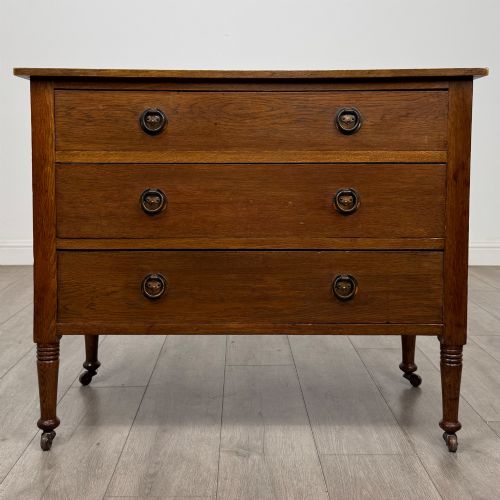


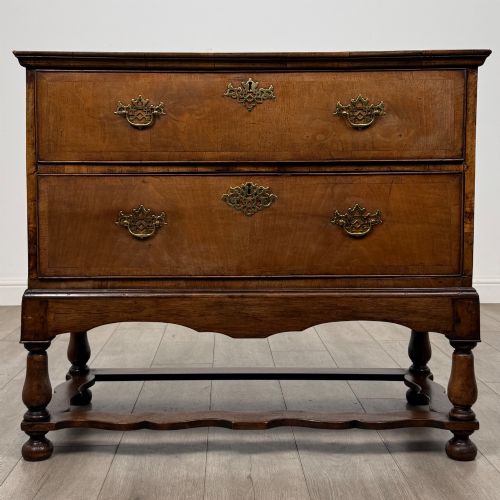
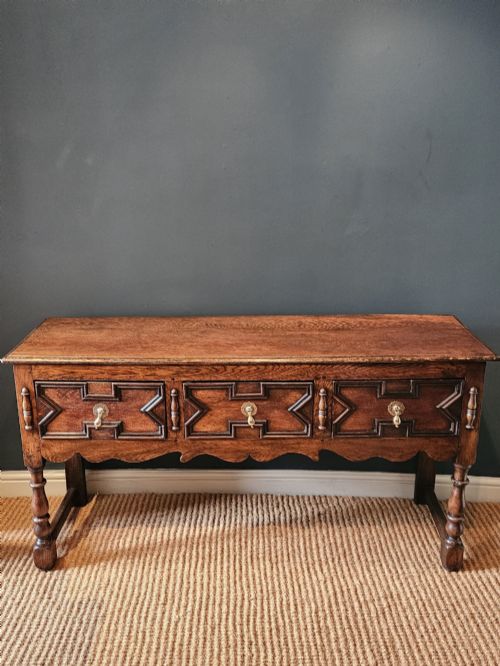
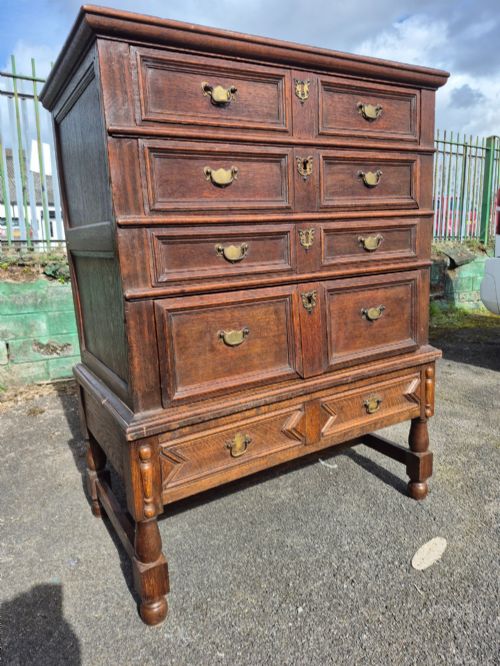
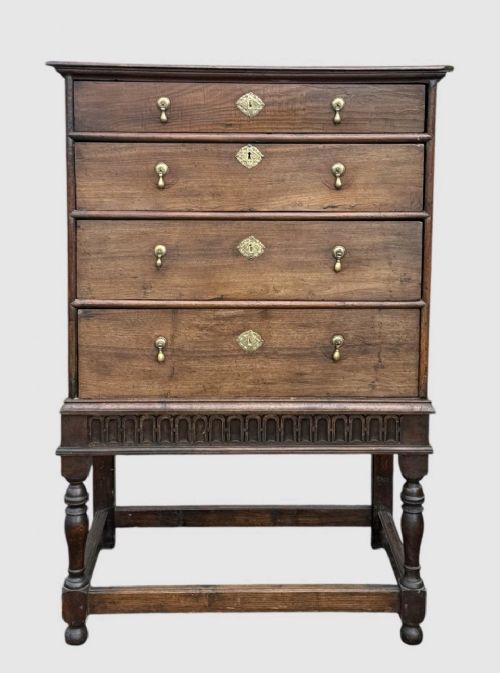


Turned Leg Oak Chest
A turned leg oak chest brings heavy timber and raised stands into a room, offering practical drawer storage rooted in centuries of British cabinetmaking.
Turned Leg Oak Chest
When searching for a turned leg oak chest, a buyer encounters pieces raised from the floor on stands or legs, often featuring multiple drawers and robust timber construction. These items bridge various eras, from seventeenth-century origins through eighteenth-century forms to twentieth-century revivals.
The most common versions met on this page include chests on stands and chests of drawers spanning seventeenth-century, eighteenth-century, and Edwardian or later revival periods. Alongside standard drawer configurations, related forms such as dressers, cabinets, side tables, and close stools appear in oak and walnut.
The styles range from authentic early periods like Charles II and George I to later revivals including Jacobean Revival and William and Mary style. This variety gives a buyer choices between genuine age and later interpretations built in the same vernacular.
What varies in quality
Quality rests in the harmony of the timber selection and the integrity of the period construction, distinguishing early authentic examples from later revivals. The crispness of geometric mouldings and the fidelity of the turned legs reveal the maker's hand.
The integration of the stand with the chest above dictates the visual balance of the piece, separating standard utility furniture from finer proportioned examples. Original brass hardware and undisturbed patination on the oak surface elevate a piece within its period.
A mid-seventeenth-century close stool reminds modern buyers that even private domestic routines once involved sturdy oak joinery.
The Turned Leg Oak Chest Glossary
- Chest on stand
- A storage chest elevated on a separate frame with legs. This form lifts the drawers off the floor for easier access and distinct proportions.
- Jacobean Revival
- A later stylistic movement mimicking seventeenth-century design motifs. It reinterprets earlier heavy oak forms with turned elements and geometric panels.
- Geometric moulded
- A decorative technique using applied mouldings to create geometric patterns on drawer fronts. It adds architectural depth to flat timber surfaces.
- Close stool
- An early form of enclosed seat or stool concealing a commode or chamber pot. These surviving pieces often retain functional internal spaces beneath a lidded top.
- William and Mary style
- A late seventeenth to early eighteenth-century aesthetic characterised by turned trumpet legs and stretcher bases. It brings lighter, more dynamic silhouettes to oak furniture.
Turned Leg Oak Chest: Frequently Asked Questions
What is a turned leg oak chest?
A turned leg oak chest is a storage piece built from timber and raised on shaped supports, taking forms like chests of drawers or cabinets on stands.
These items span original seventeenth and eighteenth-century periods as well as twentieth-century revivals.
How do I date an oak chest?
Dating relies on examining the construction methods, timber ageing, hardware types, and distinct stylistic details like geometric mouldings or leg turnings.
Comparing the piece against known period styles from the seventeenth, eighteenth, or revival eras clarifies its age.
Where were these chests used?
These chests served primarily for storing clothing, linens, and valuables in domestic chambers and formal rooms across British homes.
Their elevated stands and drawer layouts made them central pieces of functional furniture in early households.
How do I live with antique oak?
Living with antique oak involves keeping pieces away from direct heat sources and sudden humidity changes to protect the solid timber.
Routine dusting and minimal waxing preserve the natural grain and historic patination built up over centuries.
What is a chest on stand?
A chest on stand combines a primary storage box or cabinet mounted securely onto an open base with four or more turned legs.
This construction elevates the storage capacity and introduces lighter architectural space beneath the main body.