

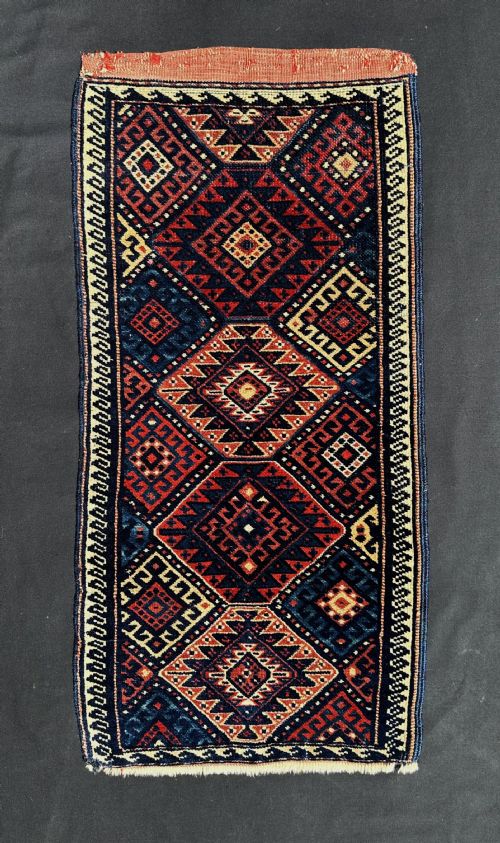


Nomadic Woven Cushion Face
A nomadic woven cushion face brings the tactile geometry of tribal utility directly into a modern interior.
Nomadic Woven Cushion Face
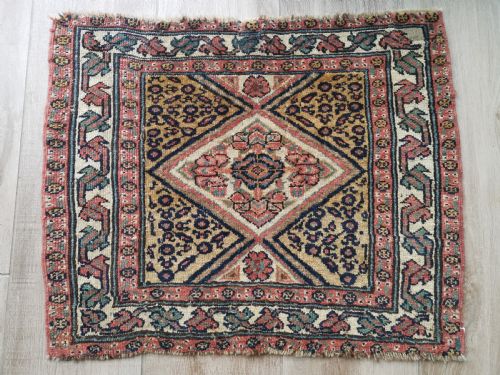
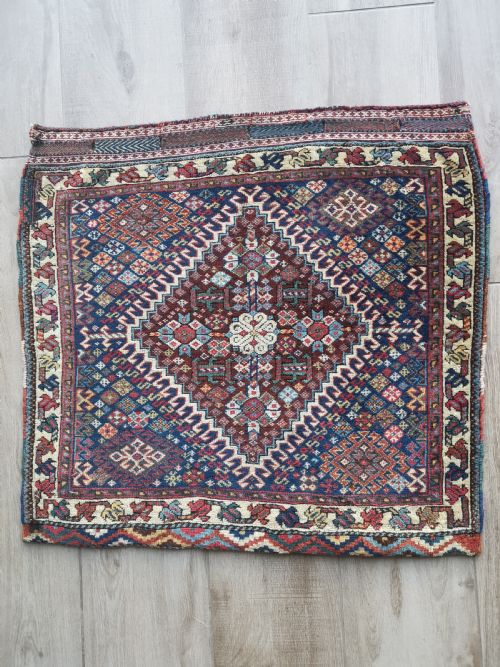
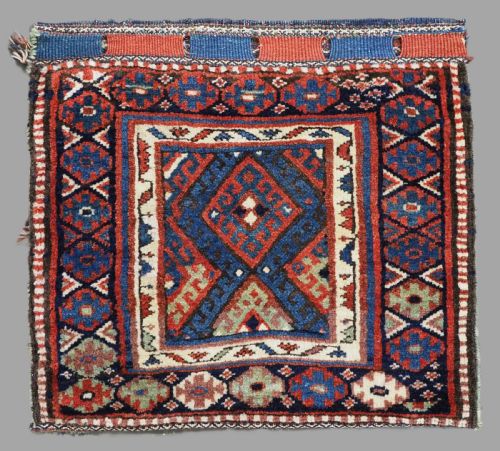
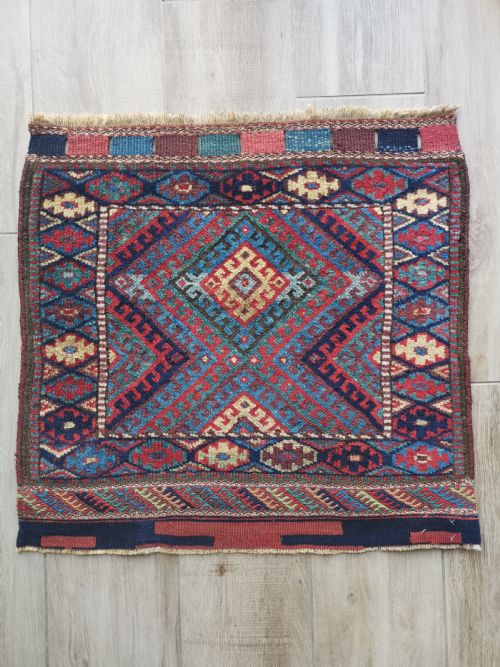
A nomadic woven cushion face originates as the front panel of a utilitarian storage bag, saddlebag, or grain sack made by tribal groups across Persia, Central Asia, and the Caucasus. These textile fragments are repurposed into cushions, preserving tribal weaving traditions that span the nineteenth and early twentieth centuries.
The pieces encountered here belong to distinct tribal confederations and regional groups, including the Qashqai, Afshar, Khamseh, Shahsevan, Kurdish groups, and various Turkmen tribes such as the Tekke, Saryk, and Ersari. Each group utilises specific regional motifs, structures, and colour palettes derived from their nomadic lifestyle.
Forms vary from complete saddlebag faces and torba panels to smaller balisht pillow faces and half-saddlebags. Many retain portions of their original plain weave backs or have been adapted into standalone cushions while maintaining their dense tribal knotting and flatweave construction.
Materials and construction
The foundation of a nomadic woven cushion face relies on hand-spun wool for both the pile and the structural warps and wefts. Weavers source local wool, which retains natural lanolin and contributes to the durability and sheen of the textile.
Colour comes from natural dyes applied to the hand-spun wool, yielding deep reds, blues, and earthy tones that age gracefully over time. Artisans combine pile knotting with flatweave techniques, such as soumac or plain weave, to create textured geometric patterns.
Object types include saddlebags, torbas, pillow faces, and storage bags originating from Persian and Central Asian tribes.
Judging quality and execution
Quality rests upon the density of the weave and the precision of the tribal motifs, such as guls, boteh, or herati designs. Finer knotting allows for sharper delineation of geometric patterns and complex field divisions.
The integrity of the wool and the vibrancy of the natural dyes dictate the visual impact of the surface. Lustrous wool and well-preserved pile indicate careful selection of materials during the weaving process.
The Nomadic Woven Cushion Face Glossary
- Bagface
- The decorative front panel of a utilitarian nomadic storage bag or saddlebag. This section typically displays the primary tribal motifs and denser pile work.
- Balisht
- A small tribal pillow or bag face produced for domestic use within nomadic tents. These pieces often feature compact regional designs suited to smaller formats.
- Soumac
- A flatweave technique involving wrapped weft threads that produce a textured, durable surface. This method creates raised patterns without a cut pile.
- Gul
- A medallion or repeating primary motif characteristic of Turkmen and Central Asian tribal weaving. Each design often identifies a specific tribe or clan.
Nomadic Woven Cushion Face: Frequently Asked Questions
How do I identify different tribal styles?
Tribal styles are distinguished by their specific geometric vocabulary, colour palettes, and structural techniques. Turkmen pieces often feature repeating guls, while Afshar and Qashqai works frequently display boteh motifs or structured medallion layouts.
Origin can also be inferred from the specific regional weaving traditions recorded in the nineteenth and early twentieth century pieces.
Were these originally cushions?
No, these textiles were utilitarian items used by nomadic groups to transport goods on animals or store items within tents. They functioned as bags, saddlebags, and sacks before later being mounted or sewn into cushion formats.
Many examples still retain remnants of their original plain weave backs or side attachments from their days as functional containers.
What materials were used to make them?
The primary material is hand-spun wool, utilised for both the structural foundation and the decorative pile. Natural dyes provide the rich colour palette, deriving hues from local plants and minerals.
The combination of hand-spun wool and natural colourants gives these pieces their characteristic sheen and depth.
How should I care for a textile cushion?
Care involves gentle handling, avoiding direct prolonged sunlight, and regular light vacuuming without a rotating brush. Protecting the wool from excessive friction preserves the integrity of the pile and flatweave.
Professional textile conservation cleaning should be sought if deep cleaning becomes necessary.