





Antique Baluch Weave Bag
An antique baluch weave bag brings nomadic textile traditions into the home through practical storage vessels made by tribal makers.
Antique Baluch Weave Bag
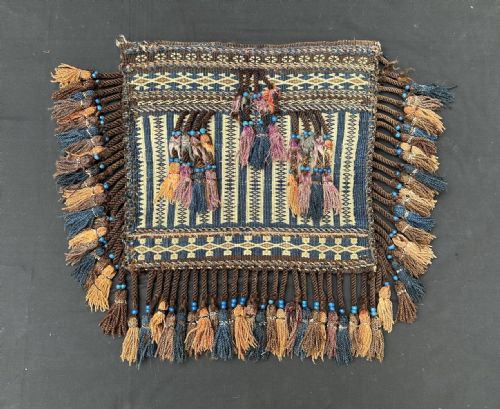
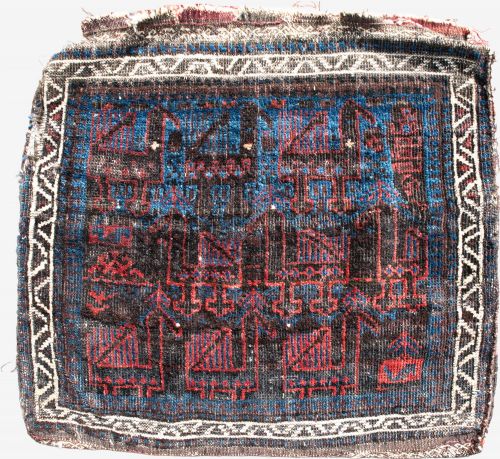
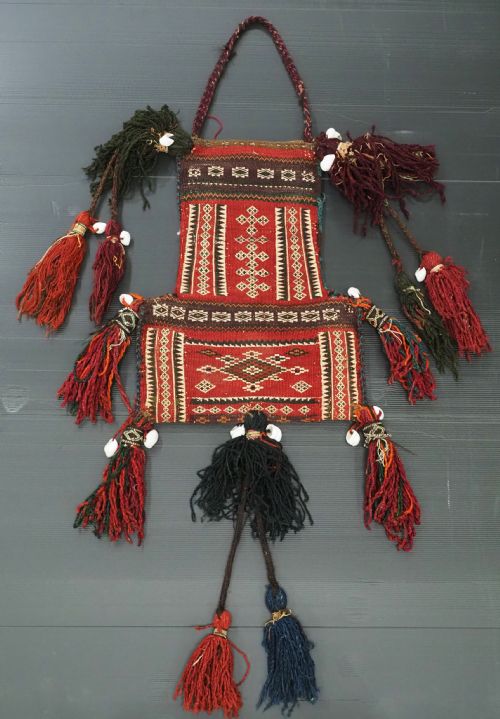
An antique baluch weave bag comprises utilitarian forms created by nomadic and tribal groups, including storage containers, salt bags, vanity bags, and saddle bags. These woven objects originate from regions such as South-West Afghanistan, North-East Persia, and Western Afghanistan.
The pieces appearing most frequently on this page date from the late nineteenth century into the early twentieth century, spanning periods around 1890, 1900, 1910, and 1920. Collectors encounter complete bags with original plain weave backs alongside individual bag faces and cushions.
Specific regional designs include the Salar Khani tribe from Khorassan Province and the Zaggar Mengal Baluch nomads. Common structural variations involve double-sided vanity bags, grain bags known as balisht, and bird bags featuring distinct motifs.
Materials and construction methods
The makers relied primarily on wool, cotton, and goat hair to construct these heavy-duty utilitarian textiles. Natural dyes provided the palette for geometric patterns, banded weft work designs, and Herati motifs.
Makers occasionally incorporated decorative elements such as glass beads and cowrie shells onto the surface. The weaving techniques included fine weaves, plain weave backs, and structured pile work suited for nomadic life.
Antique Baluch Weave Bag Retail Price Guide 2026
Typical asking prices for baluch weave bag among the pieces listed under this phrase on Sellingantiques today, from the lower quarter to the upper quarter. They describe what is for sale here now, not the wider market.
Materials documented across the site include wool, cotton, goat hair, glass beads, natural dyes, and cowrie shells.
Distinctions in quality
The fineness of the weave separates standard utilitarian pieces from exceptional examples. A tighter, denser knotting structure typically indicates greater time and skill invested by the weaver.
The survival of original backs on storage and vanity bags elevates the integrity of the piece. Additionally, the clarity and richness of natural dyes and the preservation of decorative elements like beads and shells distinguish superior survivals.
The Antique Baluch Weave Bag Glossary
- Balisht
- A traditional grain bag or pillow bag woven by Baluch nomads. These pieces often feature plain weave backs.
- Namakdan
- A specialised salt bag created for nomadic storage needs. Collectors prize these narrower necked containers for their distinctive tribal geometry.
- Salar Khani
- A specific tribal subgroup originating in the Khorassan Province. Their weaving style is recognised through particular design characteristics.
- Herati
- A classic Persian repeating pattern featuring floral motifs enclosed within a lattice. This design appears across various Baluch tribal pieces.
Antique Baluch Weave Bag: Frequently Asked Questions
What were antique baluch weave bags used for?
Nomadic tribes utilised these bags for practical storage needs during daily transport and domestic life. Common forms held salt, grain, vanity items, and personal possessions.
Saddle bags functioned as twin pouches carried across pack animals. Over time, many complete double-sided bags separated into individual bag faces.
How do I date an antique baluch weave bag?
Dating relies on structural analysis, wool quality, and traditional natural dye palettes characteristic of the late nineteenth and early twentieth centuries. Surviving examples on record predominantly cluster around the decades between 1890 and 1920.
Stylistic markers and regional attributions help narrow the timeframe of creation. Comparisons with documented archive pieces provide further chronological context.
How should I display an antique bag face at home?
Bag faces and small mats suit gentle wall mounting using non-invasive display methods that support the textile weight. Alternatively, many collectors place them on flat surfaces or utilise them as small cushions.
Keeping textiles away from direct sunlight preserves the natural dyes. Gentle rotation prevents uneven environmental exposure.
Where were these tribal bags made?
Tribal weavers produced these textiles across regions spanning South-West Afghanistan, North-East Persia, and Western Afghanistan. Specific groups such as the Timuri and Zaggar Mengal Baluch inhabited these territories.
Nomadic migration routes influenced the exchange of patterns and weaving techniques between different tribal factions. This movement explains shared design elements across diverse geographical locations.