

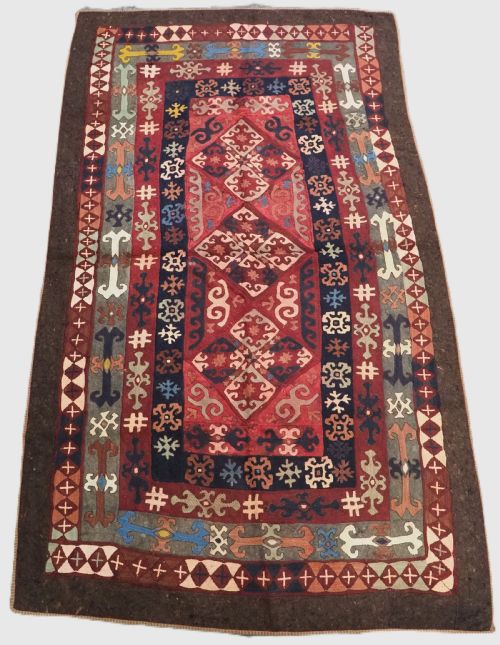
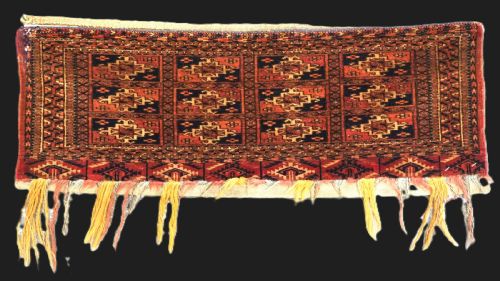


Terracotta Tribal Textile
When you explore terracotta tribal textile pieces, you encounter nomadic weavings shaped by Central Asian and Persian traditions.
Terracotta Tribal Textile
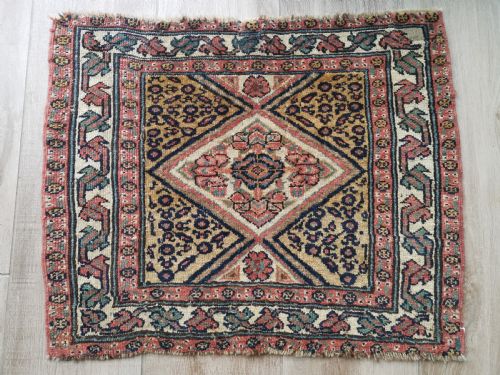
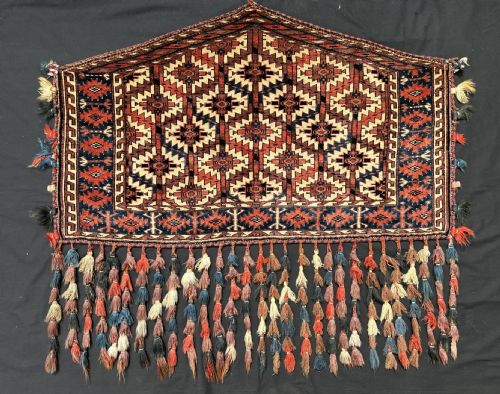
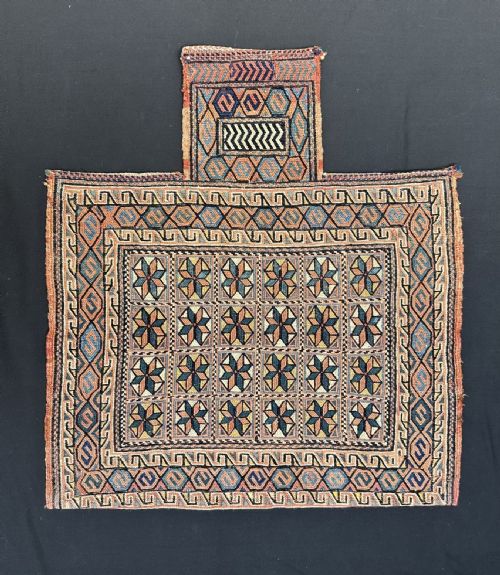
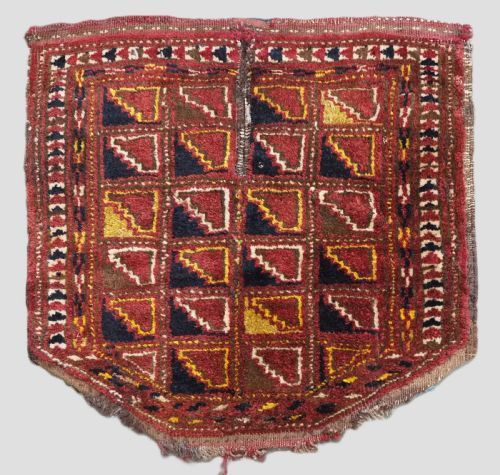
The terracotta tribal textile selection comprises nomadic and village weavings, including bag faces, torbas, saddle-bags, rugs, and wall hangings originating from Central Asia, the Caucasus, and Persia. These pieces reflect the functional artistry of tribal groups such as the Yomut, Tekke, Ersari, and Shahsavan from the nineteenth and early twentieth centuries.
A buyer examining this page will frequently encounter utilitarian items designed for nomadic life, such as storage bags, tent bands, and dowry trappings. These creations utilise rich earthy hues and distinctive tribal motifs, spanning periods from the mid-nineteenth century up to the 1930s.
How they were made
These textiles rely on hand-spun wool and cotton, worked through knotted pile, flatweave, and embroidered felt techniques. Artisans integrated natural dyes to achieve deep terracotta and red tones across the surfaces.
Structural elements frequently include supplementary weft work, slit tapestry weaves, and applied glass beads or tassels. Many functional items incorporate original wool or cloth backs designed to withstand nomadic daily use.
Terracotta Tribal Textile Retail Price Guide 2026
Typical asking prices for terracotta tribal textile among the pieces listed under this phrase on Sellingantiques today, from the lower quarter to the upper quarter. They describe what is for sale here now, not the wider market.
Listings feature nomadic weavings produced between the mid-nineteenth century and the 1930s.
What varies in quality
Quality within these tribal works rests upon the precision of the weave, the clarity of the primary guls or medallions, and the saturation of the natural dyes. Denser knotting and fine structural execution distinguish superior workshop or dowry pieces from standard utilitarian examples.
The survival of original components, such as side cords, backs, and tassels, elevates the integrity of a textile. Greater definition in graphic layouts and balanced proportions set finer examples apart from heavily worn fragments.
The Terracotta Tribal Textile Glossary
- Torba
- A small Turkmen wall storage bag used inside the yurt. These rectangular pieces often featured multiple guls and detailed elem panels.
- Mafrash
- A large rectangular storage bag or bedding sack produced by nomadic groups. They were frequently woven in panel sections before being assembled into box shapes.
- Gul
- A repeating primary medallion motif characteristic of Turkmen and Central Asian tribal weaving. Each design often identified a specific tribe or clan.
- Asmalik
- A pentagonal or trapeze-shaped camel trapping hung on the flanks of animals during wedding processions. They represent some of the most decorative tribal nomadic commissions.
- Soumac
- A flatweave technique utilising wrapping wefts over warp threads to create a textured, durable surface. This method provides substantial structural firmness to saddlebags and panels.
Terracotta Tribal Textile: Frequently Asked Questions
What is a tribal bag face?
A tribal bag face is the decorative front portion of a utilitarian storage sack created by nomadic weavers. These panels were preserved when the utilitarian backs wore out.
They display the primary design motifs and natural dyeing techniques characteristic of specific tribal groups.
How were these textiles used?
Nomadic groups utilised these woven pieces for practical storage inside tents, animal transport during migrations, and interior decoration. Items ranged from salt-bags and saddle trappings to large yurt bands.
Many also functioned as dowry objects created to mark important family milestones and weddings.
How do I care for a textile?
Keep these historic wool and cotton pieces out of direct sunlight to protect natural dye colours. Gentle vacuuming through a mesh screen helps remove dust without disturbing fragile hand-spun fibres.
Avoid hanging heavy pieces by single points to prevent distortion of the foundational warp threads.
How are tribal regions identified?
Tribal attribution relies on structural traits, specific primary guls, and characteristic border arrangements. Weavers from different regions, such as the Yomut or Shahsavan, employed distinct palettes and knotting styles.
Comparative study of structural formats helps narrow down the probable origin to specific steppes or provinces.