
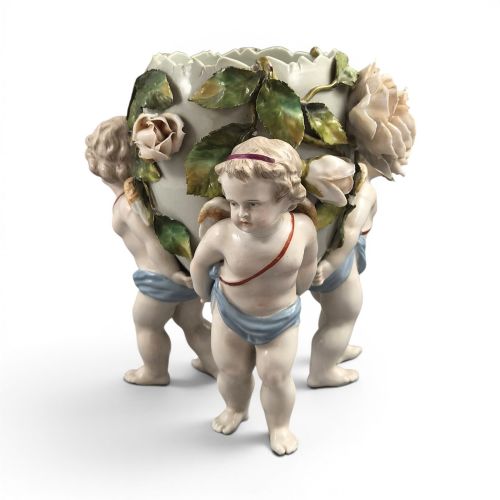


Nineteenth Century Porcelain Vases
Nineteenth century porcelain vases offer a rich study in decorative ceramic forms, ranging from English campana shapes to large Japanese export pieces.
Nineteenth Century Porcelain Vases
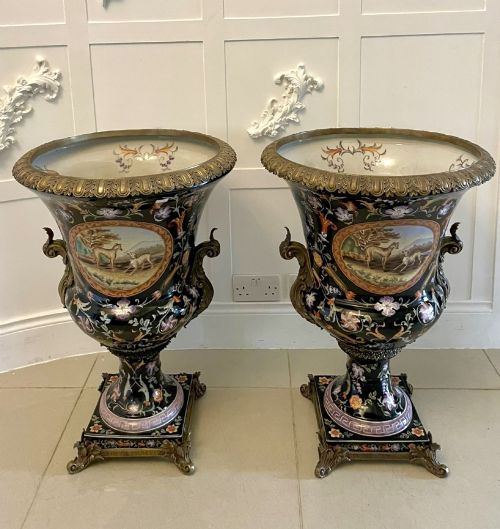
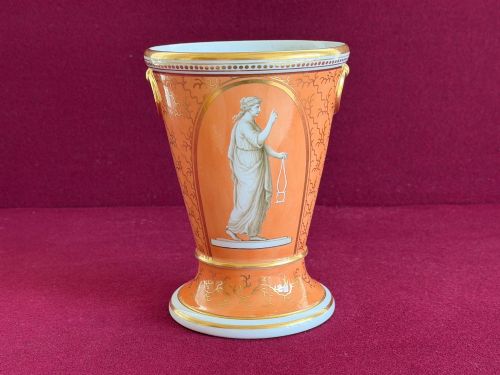
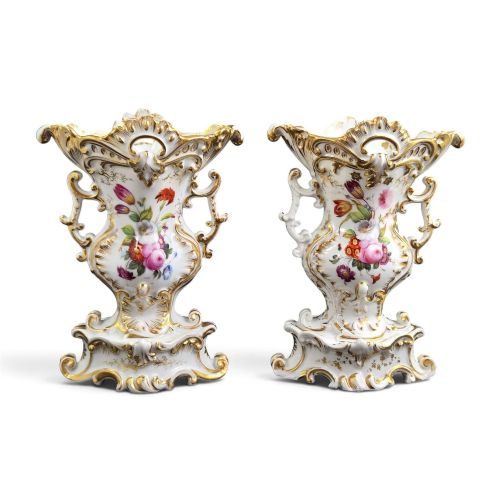
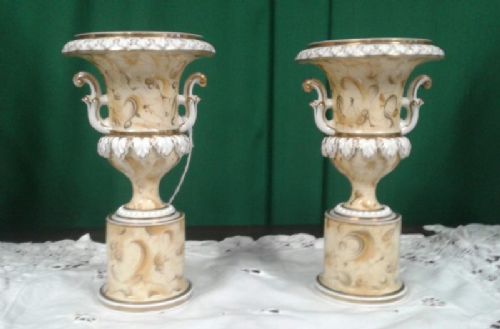
Nineteenth century porcelain vases encompass a wide array of decorative vessels produced across European and Asian kilns during the 19th Century, Georgian, Regency, and Victorian periods. Collectors frequently encounter French, English, and Japanese examples, including campana urns, garnitures, and large floor vases.
How they were made
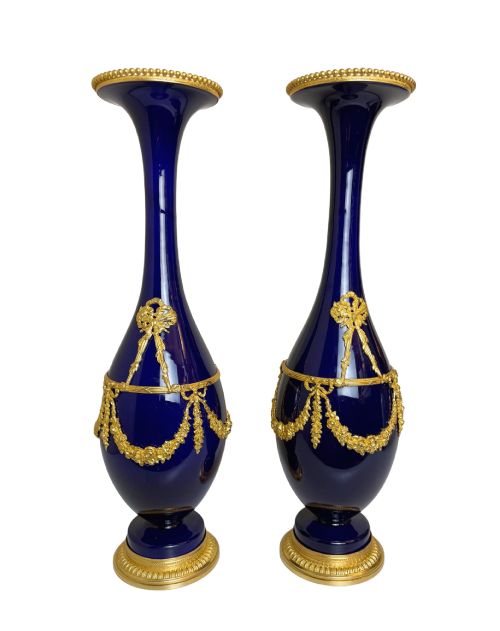
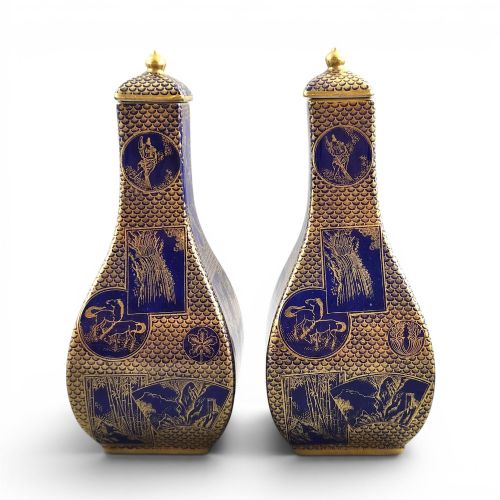
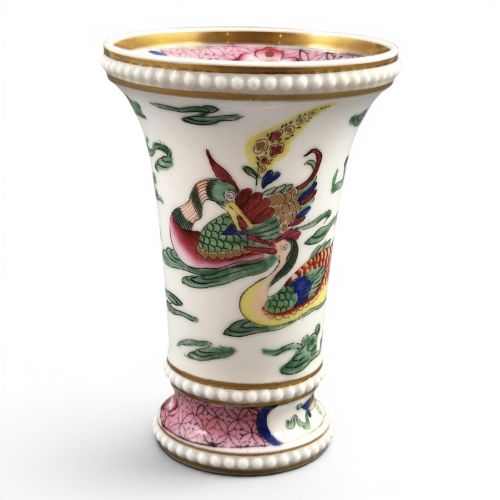
Potters utilised hard-paste and soft-paste porcelain bodies, frequently enhancing the ceramic surface with hand-painted enamels, cobalt blue underglaze, and raised moriage details. Artisans applied gold leaf and gilding to accentuate moulded contours and figural scenes.
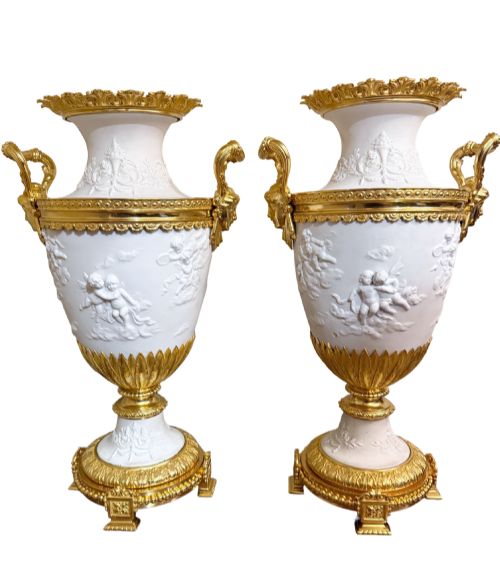
Many European and Asian pieces incorporated metal mounts, combining porcelain bodies with cast brass, gilt bronze, and ormolu bases or handles. Workshops also employed transfer printing and specialised techniques such as pate sur pate to build layered relief decorations.
Several Victorian spill vases feature hand-painted Scots harvesters, proving that even lighting kindling required a touch of pastoral romance.
What varies in quality
The standard of execution in painting and gilding heavily differentiates standard production wares from exhibition pieces. Fine examples display meticulous hand-painted detail, precise enamel control, and crisp definition in moulded motifs.
The integration of mounts and secondary materials also dictates worth, as heavy cast bronze or ormolu mounts indicate superior craftsmanship compared to simpler brass fittings. Furthermore, the prominence of the maker or workshop mark influences the desirability of the piece.
Flight & Barr Worcester·Jacob Petit·Mason's Patent Ironstone·Ridgeways·Spode·Sitzendorf·Tunnicliffe·Sèvres·Old Paris·Nanzan·Royal Worcester·Minton·Meissen·Doulton Burslem
The Nineteenth Century Porcelain Vases Glossary
- Campana urn
- A bell-shaped vessel with an everted rim, widely produced in porcelain and ironstone during the Georgian and Victorian eras.
- Garniture
- A set of matching vases or urns designed to be displayed together on a mantelpiece or sideboard.
- Moriage
- A decorative technique using slip trailing to create raised, textured patterns on Japanese ceramics, often highlighted with gold.
- Pate sur pate
- A method where successive layers of white slip are built up on a coloured porcelain body to create a low relief cameo effect.
- Ormolu
- Gilt bronze mounts used to embellish decorative porcelain bodies, prevalent in French nineteenth century works.
- Spill vase
- A small, narrow vessel designed to hold taper candles or wooden spills used for lighting fires.
Nineteenth Century Porcelain Vases: Frequently Asked Questions
How do I identify a nineteenth century porcelain vase?
Examine the base for factory marks, impressed stamps, or hand-painted signatures which often denote the maker and period of manufacture. Stylistic clues such as Rococo revival moulding or Japanese Meiji motifs also help narrow down the date.
Material composition and mounting techniques provide further context. European soft-paste and hard-paste porcelain exhibit different translucencies, while nineteenth century French pieces frequently integrate cast ormolu mounts.
Were these vases used for fresh flowers?
While some forms like jardinieres and large urns held plants or arrangements, many decorative vases served strictly as ornamental display pieces. Garniture sets and heavily gilded exhibition pieces were intended for visual impact on mantelpieces.
Water can occasionally harm older glazes or exposed ceramic bodies if hairline cracks are present. Collectors often use discrete glass liners if displaying fresh stems in antique vessels.
How should I clean my antique porcelain vase?
Dust the surface gently with a soft, dry brush to remove particles without disturbing delicate enamel or gilt details. Avoid harsh chemical cleaners, abrasives, or soaking the piece in water.
If washing is necessary, use lukewarm water with a mild, neutral soap and dry immediately with a lint-free cloth. Take extra care around metal mounts to prevent tarnishing or moisture retention.