




Classical Painted Porcelain Urns
Classical painted porcelain urns bring formal Neoclassical presence to a room through hand-painted decoration, gilt bronze mounts and substantial ceramic bodies.
Classical Painted Porcelain Urns
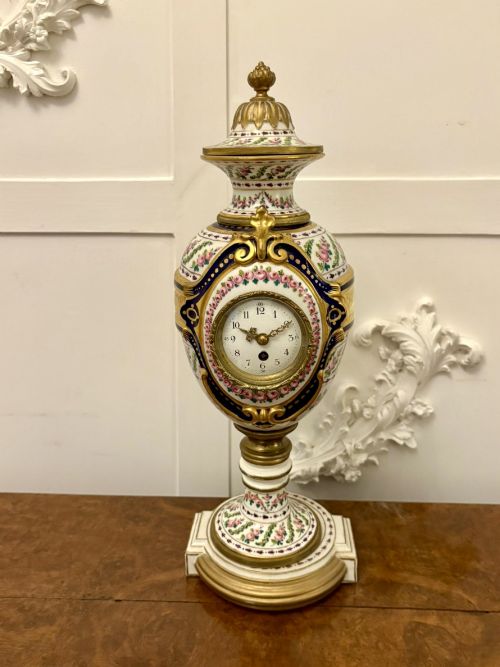
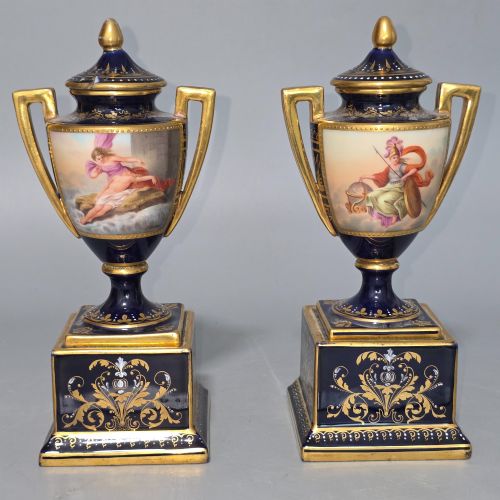
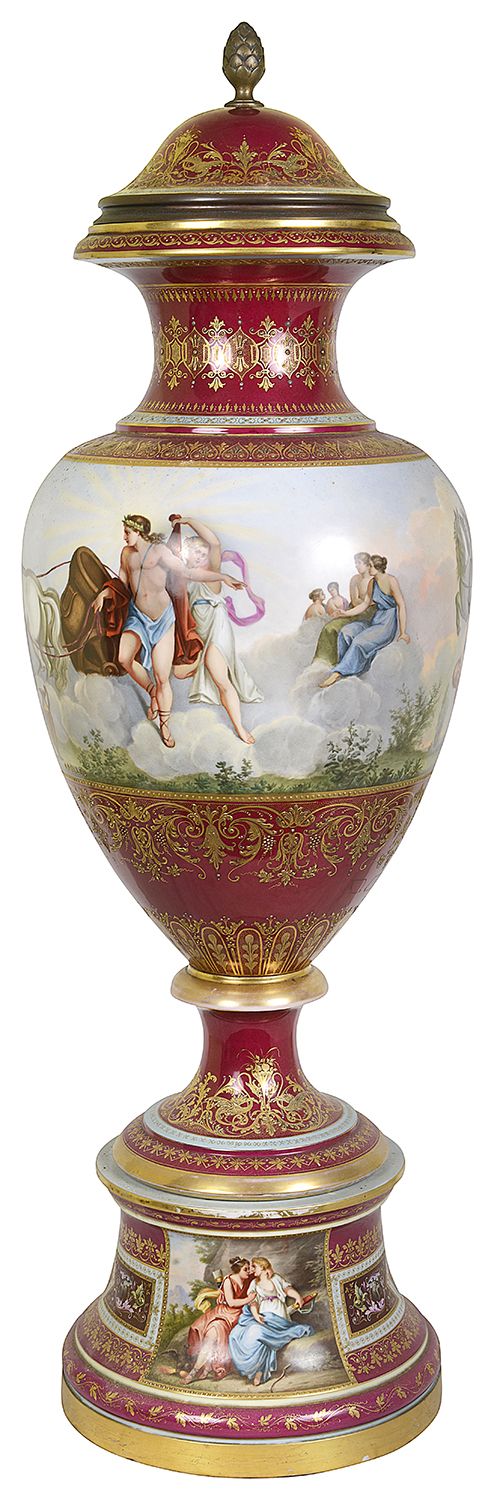
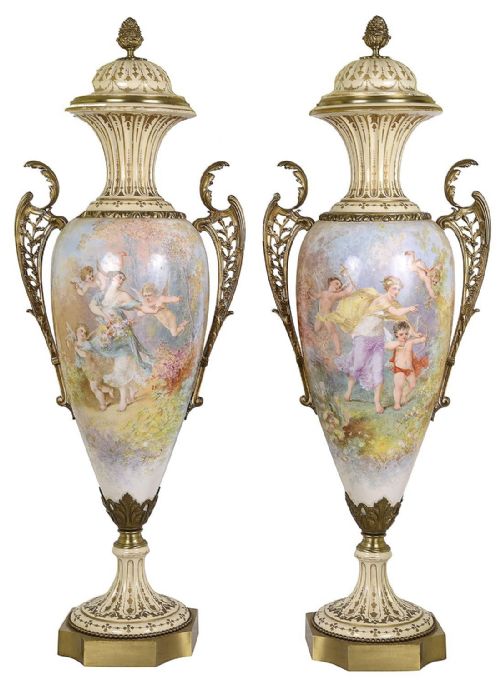
When you search for classical painted porcelain urns, you encounter decorative vessels, mantel clocks and table lamps produced across the nineteenth century in various European ceramic centres. The most common examples on this page are lidded vases and garnitures executed in the Sevres style or originating from Vienna factories during the eighteen-eighties and nineties.
Makers drew on Neoclassical, Empire and Rococo Revival repertoires to shape these ceramic forms, often mounting the bodies on ormolu or gilt brass bases. Objects range from single cabinet pieces to monumental matched pairs standing over a metre tall.
Victorian and Georgian iterations sit alongside continental productions from Dresden, Berlin and Paris, reflecting a sustained European demand for classical antiquity rendered in hard-paste and soft-paste porcelain.
How they were made
Potters shaped the ceramic bodies by throwing or casting porcelain before applying enamel pigments by hand for figurative scenes and floral panels. Artisans then enriched the surfaces with gold leaf, gilt, ormolu mounts and brass fittings.
Kiln firing fixed the painted enamel colours and underlying glazes, after which metalworkers secured the cast bronze and ormolu mounts around handles, necks and plinths.
Listings feature porcelain urns, mantel clocks, and table lamps spanning the Georgian, Victorian, and late nineteenth-century periods.
What varies in quality
The standard of hand-painted detail on the porcelain panels distinguishes simpler production from superior works, particularly in the precision of portraiture and botanical studies. Finer pieces demonstrate careful control over enamel blending and thick, burnished gold leaf application.
The execution and weight of the cast ormolu mounts separate exceptional items from standard ones, as does the integration of the metalwork with the ceramic body.
Meissen Porcelain·Royal Vienna·Sevres·Dresden Porcelain·KPM·Minton·Capodimonte
The Classical Painted Porcelain Urns Glossary
- Garniture
- A set of three or more matching decorative vases designed to stand together on a mantelpiece or sideboard. They typically comprise a central taller urn flanked by two smaller matching vessels.
- Ormolu
- Gilded bronze used for mounts, handles and decorative bases on nineteenth-century porcelain. The technique involves applying a gold-mercury amalgam to cast bronze before heating.
- Amphora
- A two-handled ancient vessel shape adopted by nineteenth-century porcelain factories for classical revival urns. These forms feature tapering bodies and distinct neck collars.
- Hard-paste porcelain
- A dense ceramic material composed of kaolin and petuntse fired at high temperatures. It resists scratching and takes enamel and gilt decoration securely.
- Ewer
- A large jug with a flared spout and curved handle, often produced as a pair with a basin or companion urn. These vessels draw directly on classical metal prototypes.
Classical Painted Porcelain Urns: Frequently Asked Questions
How do I clean painted porcelain urns?
Dust surfaces gently with a soft, dry brush to prevent accumulation in crevices and around ormolu mounts. Avoid water, harsh solvents or abrasive cloths that can damage delicate enamel and gold leaf.
Check that mounts remain secure before moving any vessel. Handle the urn by the ceramic body rather than the decorative handles or lids.
Where should I place a porcelain garniture?
Display these matching sets across a mantelpiece, console table or sideboard where the central urn and flanking vases can be viewed together. Keep them out of direct sunlight to protect the hand-painted enamel colours from fading.
Ensure the surface is stable and capable of supporting the combined weight of porcelain and metal mounts.
How do I distinguish Vienna style from Sevres?
Vienna style pieces often feature rich cobalt grounds with intricate raised gilding and classical portrait medallions. Sevres style items frequently showcase soft blue or bleu royale grounds with pastoral scenes and gilt bronze mounts.
Examine the palette and mount styles to identify the specific design vocabulary at work.
What is an urn garniture set?
A garniture set consists of multiple matching vessels designed to create a balanced decorative display on a fireplace mantel. The arrangement usually places the largest lidded urn in the centre with two smaller matching vases flanking it.
These sets became popular during the nineteenth century for formal drawing room decoration.