

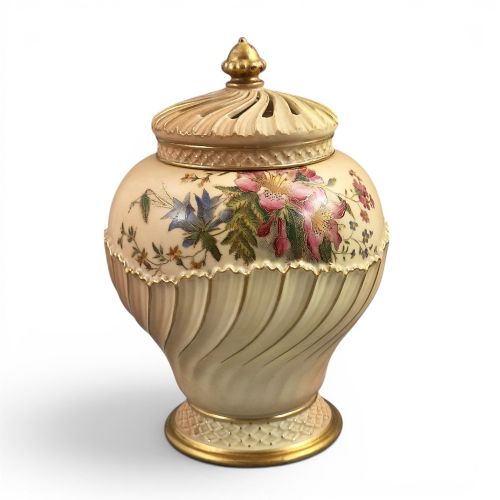
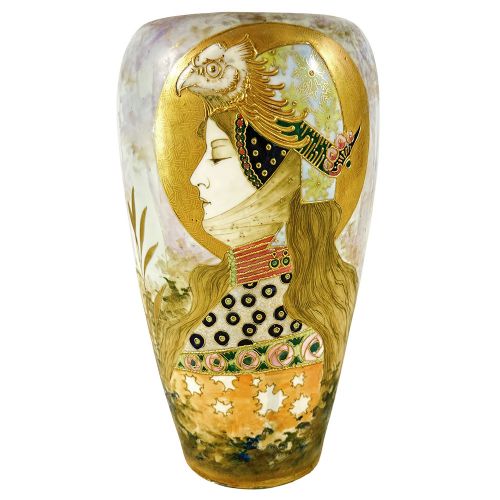
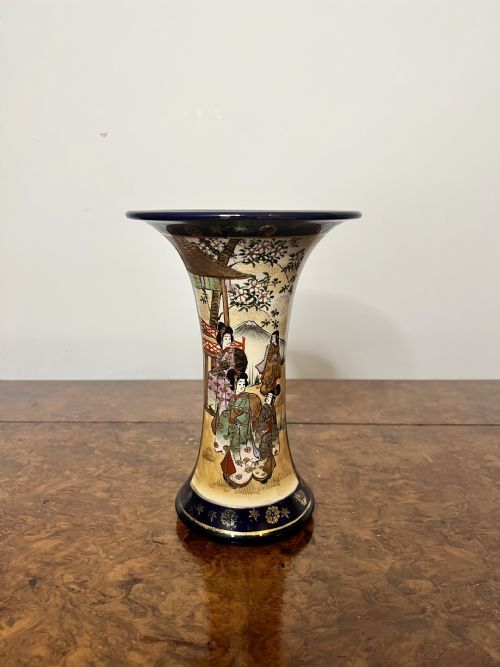


Cream Hand Painted Vases
Cream hand painted vases bring together delicate ceramic bodies and meticulous brushwork from the nineteenth and early twentieth centuries.
Cream Hand Painted Vases
Cream hand painted vases comprise earthenware, porcelain, and ceramic vessels decorated with painted floral, figural, and landscape motifs. These pieces span from the late nineteenth century through the Edwardian period and the early decades of the twentieth century.
Makers utilised pale grounds, blush ivory bodies, and cream-glazed earthenware as a canvas for detailed artistic expression. Buyers encounter both diminutive signed miniatures and substantial exhibition-quality pairs.
How they were made
Potters shaped porcelain, earthenware, and ceramic bodies before applying smooth glazes or pale enamel backgrounds. These light surfaces provided an even foundation for subsequent hand painting.
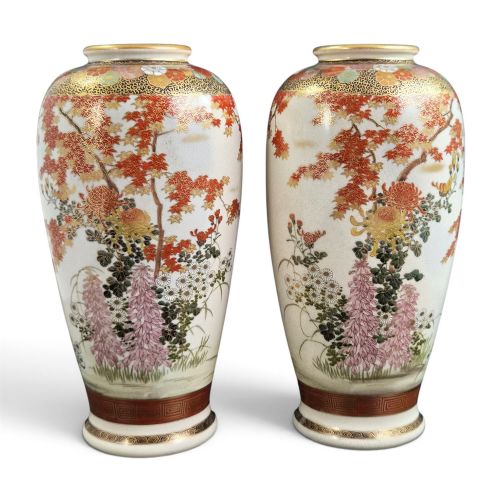
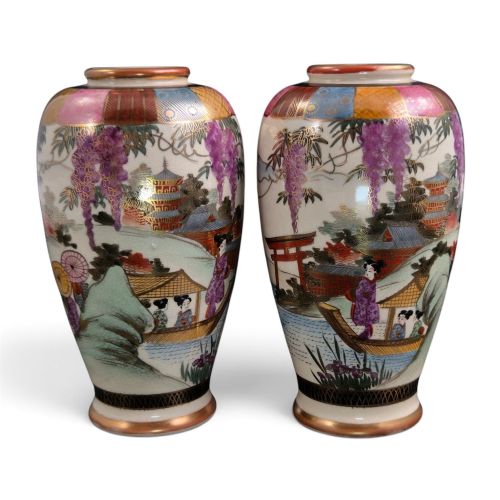
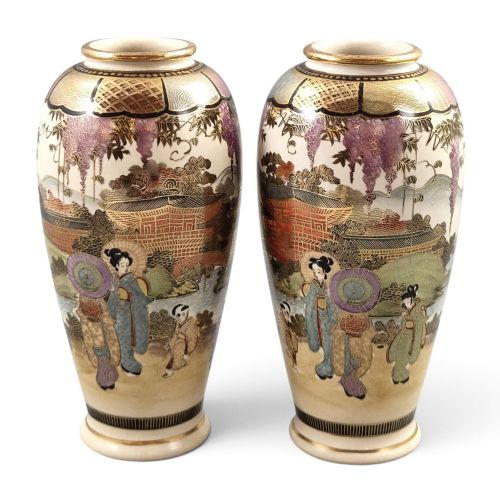
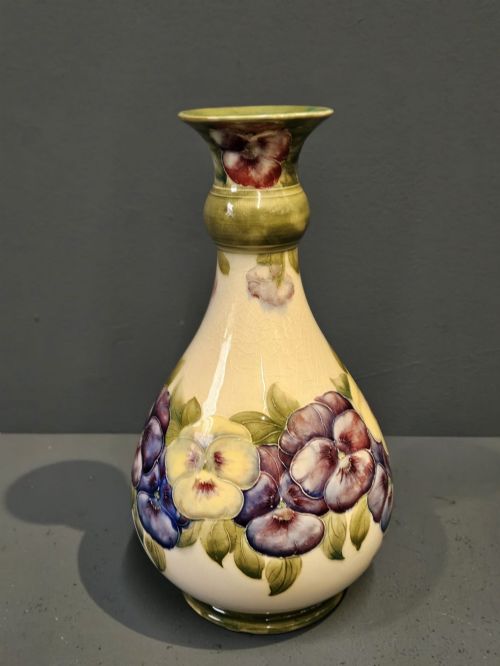
Artists painted floral sprays, landscapes, and figural scenes using fine brushes and mineral pigments. Artisans then added gold leaf, gilding, and gilt highlights to accentuate handles, rims, and borders.
Miniature vases measure small enough to fit in the palm of a hand yet still depict entire imperial processions.
What varies in quality
The finesse of the brushwork distinguishes standard items from exceptional examples. Skilled artists achieved intricate detail in figures, foliage, and feathered subjects, whereas lesser pieces display simpler execution.
The application of gilding and gold leaf also marks a difference in grade. Thick, well-preserved metallic detailing elevates the overall presence of a vessel.
Maruni Kobe·Shozan·Moorcroft McIntyre·Royal Vienna·Royal Worcester·Nicholas Kannhauser·Reissner Stellmacher and Kessel·Robert T Lallement·Chosei·Shuzan·James Stinton·H Davis·Choshuzan·Jissei·Yoshisada·Hakusan·Hododa·Doulton Burslem·Doulton Lambeth·Hayakawa·Ernst Wahliss·Hadley
The Cream Hand Painted Vases Glossary
- Satsuma
- Japanese pottery originating from Satsuma Province, typically characterised by a crackle-glazed earthenware body decorated with enamel and gilt motifs.
- Blush ivory
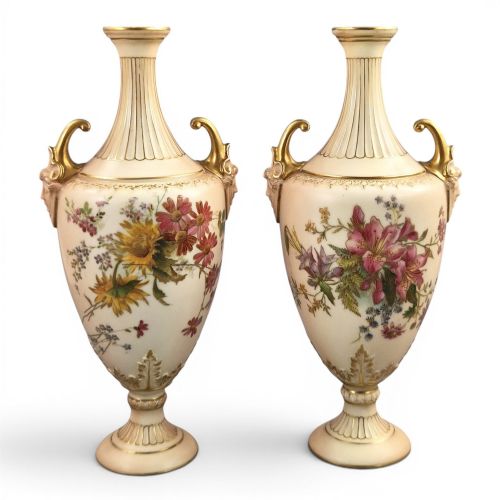
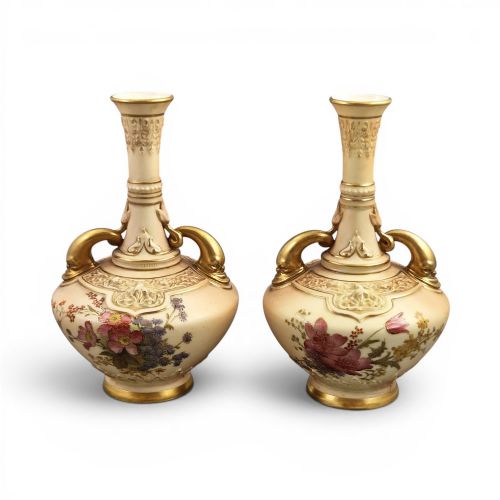
- A soft cream-coloured porcelain body developed by Royal Worcester, designed to mimic the appearance of ivory and accept hand-painted floral decoration.
- Gilding
- The application of gold leaf or gold powder to ceramic surfaces, used to highlight handles, rims, and painted designs.
- Garniture
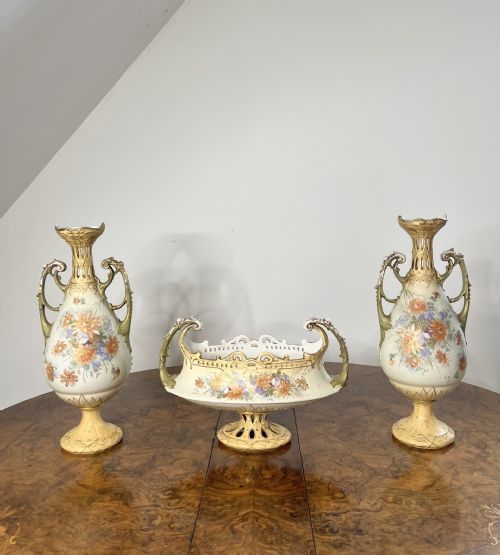
- A set of matching vases or ornamental jars designed to be displayed together on a mantelpiece or sideboard.
- Ewer
- A large jug with a wide spout and handled body, often produced as a decorative ornamental piece rather than for practical use.
Cream Hand Painted Vases: Frequently Asked Questions
How do I care for antique hand-painted vases?
Dust these delicate ceramic and porcelain pieces gently with a dry, soft brush to protect the painted surfaces and gilding. Avoid using water, chemical cleaners, or abrasive cloths that can damage the antique enamel and gold leaf.
Keep the vases away from direct sunlight to prevent the hand-painted colours from fading over time. Secure them in stable locations where they will not be knocked or vibrated.
How can I tell Satsuma vases apart?
Japanese Satsuma vases feature distinct earthenware bodies covered in a fine crackle glaze. Look closely at the base for artist signatures, workshop marks, or family crests such as the Shimazu mon.
Subject matter also helps distinguish different pieces, ranging from dense figural processions and deities to quiet landscapes and wisteria gardens. Finer examples display meticulous detail in the gold leaf and enamel work.
What periods do these cream vases come from?
The listings span the late nineteenth and early twentieth centuries, covering the Victorian, Meiji, and Edwardian eras. You will find pieces dated from the 1880s through to the 1930s Art Deco period.
Earlier items often exhibit classical revival or aesthetic movement influences, while later examples showcase shifting artistic styles. Examining any backstamps or signatures helps narrow down the exact decade of manufacture.