


Late Victorian Urn Pair
These late victorian urn pair selections offer balanced decorative symmetry through ornamental vessels from the nineteenth century.
Late Victorian Urn Pair
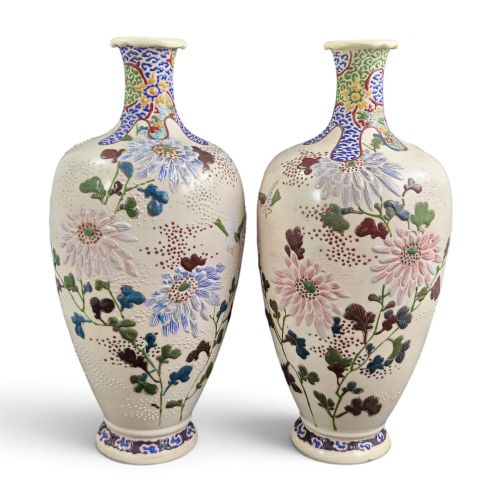
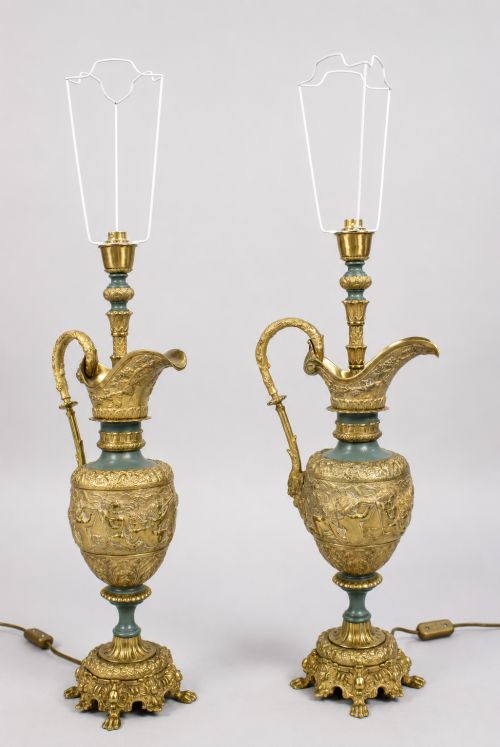
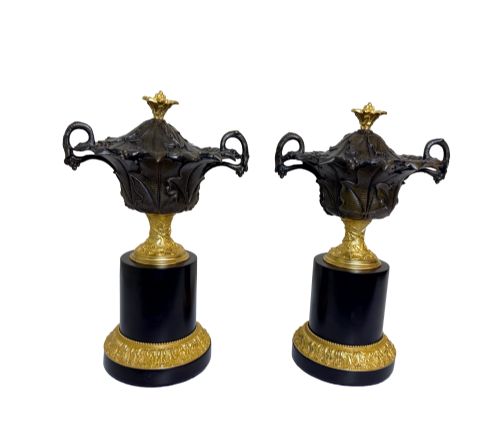
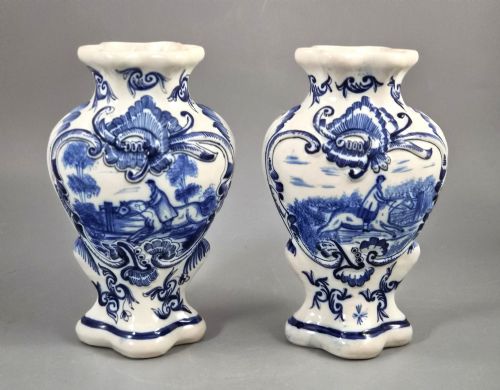
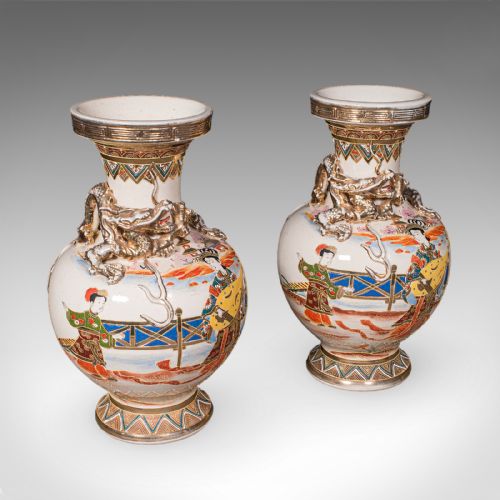
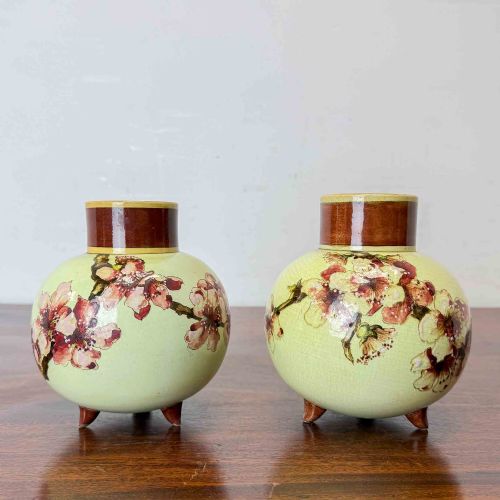
A late victorian urn pair consists of matching decorative vessels, lidded jars, or ewers produced during the later decades of the nineteenth century. These symmetrical groupings were designed for mantelpieces, pedestals, and formal reception rooms to create visual balance. The selections range from porcelain and ceramic baluster forms to gilt metal and brass mountings.
Buyers encounter diverse stylistic revivals within this category, notably Neoclassical, Rococo, and Art Nouveau expressions. Many of these matching items incorporate specific regional traditions, such as English earthenware, French porcelain, Austrian porcelain, and Japanese Satsuma ceramics. Forms extend from two-handled vases to table lamps and pedestal-mounted coupes.
Materials and Construction Methods
Makers utilised ceramic mediums including porcelain, earthenware, and faience, often finished with hand-painted decoration, enamel, or gilding. Glass examples employ bohemian cut, etched, or peachblow techniques to achieve varied surface textures and optical depth. Metal elements combine brass, gilt bronze, and polished steel.
Structural embellishments involve applied gold leaf, glaze treatments, and pierced brass work. Ceramic bodies are shaped into baluster, beaker, and ewer forms, occasionally supported by marble pedestal bases. Many pieces integrate functional components such as oil lamp mechanisms or mounted handles.
Three-dolphin bases steady several nineteenth-century beaker forms, proving marine life had a brief architectural moment.
Distinctions in Quality and Execution
The refinement of hand-painted detail and the precision of gilding separate standard production items from finer studio examples. Painted porcelain and ceramic surfaces display varying degrees of artistic control in floral and figural motifs. Applied metal mounts and cast bronze elements differ in crispness and chased definition.
Material selection and structural weight also influence the overall character of a pair. High-grade items demonstrate careful matching between left and right components, ensuring even proportions and balanced colour saturation. The complexity of decorative techniques, such as etching on glass or piercing on metal, marks the ambition of the maker.
Fourmaintraux Courquin·Doulton Lambeth·Royal Doulton·Royal Crown Derby·Ernst Wahliss·Sitzendorf Porcelain·Royal Worcester·Moorcroft Macintyre
The Late Victorian Urn Pair Glossary
- Baluster
- A vertical architectural form resembling a vase or pillar, characterised by a rounded lower body tapering to a narrow neck.
- Ewer
- A large jug with a wide spout and curved handle, often produced purely for ornamental display in pairs.
- Faience
- Tinned glazed earthenware originating in European traditions, known for absorbent porous bodies painted with opaque pigments.
- Coupe
- A shallow decorative bowl or vase, frequently raised upon a short stem and mounted on a distinct pedestal base.
- Potpourri
- A lidded vessel perforated to diffuse scent from dried plant materials placed within the interior chamber.
Late Victorian Urn Pair: Frequently Asked Questions
What is a late victorian urn pair?
A late victorian urn pair comprises two matching ornamental vessels created during the final decades of the nineteenth century. These symmetrical objects served primarily as decorative focal points within period interiors.
The listings demonstrate that these pairs encompass various forms, including lidded vases, ewers, and decorative jars. They reflect diverse international aesthetics popular during the period, from European revival styles to Japanese export wares.
How were these decorative urns used?
Owners placed matching vessels symmetrically upon mantelpieces, sideboards, or dedicated pedestals to anchor room design. Many items were purely ornamental, whilst others functioned as table lamps or oil lamps.
Their placement depended on the scale of the room and the formality of the setting. Paired objects provided visual stability and demonstrated the household's appreciation for fine craftsmanship.
How do I identify different styles?
Stylistic periods are identified through ornamentation, form, and material characteristics. Neoclassical examples feature restrained classical motifs, whereas Rococo revival items display asymmetric scrollwork and organic curves.
Art Nouveau pieces introduce fluid, plant-inspired lines characteristic of the turn of the century. Examining the painted palette and baseline manufacture helps attribute items to specific origins.
Are these items purely decorative?
While most pieces were designed for display, many serve secondary practical purposes. Several recorded items function as table lamps, lidded storage jars, or candle holders.
Even utilitarian forms like ewers and beakers were treated primarily as ornamental art objects. Their utility often evolved as lighting technology and interior fashions changed over time.