




French Porcelain Lidded Vases
French porcelain lidded vases combine ceramic bodies with cast metal mounts to create decorative focal points.
French Porcelain Lidded Vases
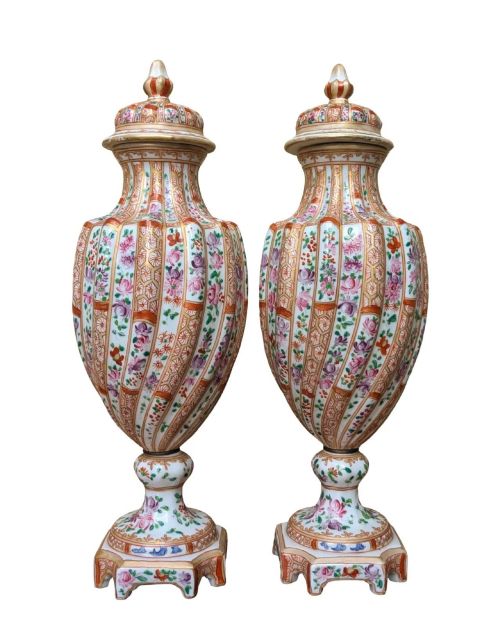
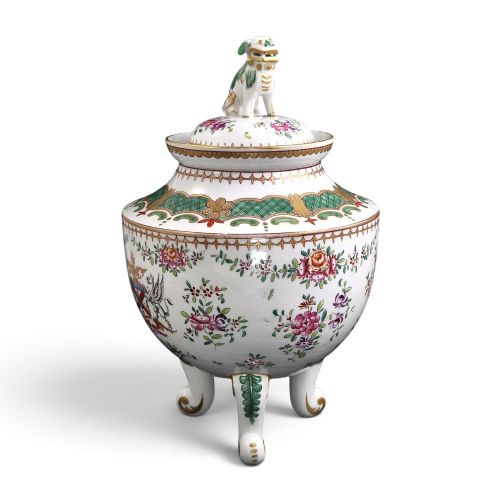
French porcelain lidded vases are covered ceramic vessels designed for ornamental display rather than functional storage. When you search for french porcelain lidded vases, you encounter pieces spanning the eighteenth century through the Edwardian period, with nineteenth-century examples appearing most frequently on this page.
The selection includes decorative urns, table lamps, and ceramic vases featuring matching covers. Styles range from French Rococo revival and Chinoiserie to classical Sèvres-style works and French Chateau designs.
Makers such as Samson of Paris and factories producing Sèvres-style wares dominate the recorded inventory. Many items survive as pairs, ranging from modest cabinet pieces to monumental floor-standing objects.
How they were made
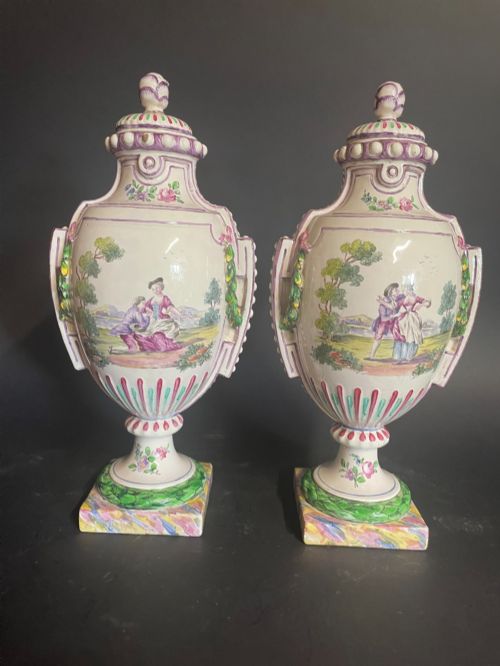
The manufacture of french porcelain lidded vases relies on ceramic bodies shaped by hand or mould, painted with enamel pigments, and finished with gilding. Potters also utilised tin-glazed earthenware and faience alongside hard-paste porcelain.
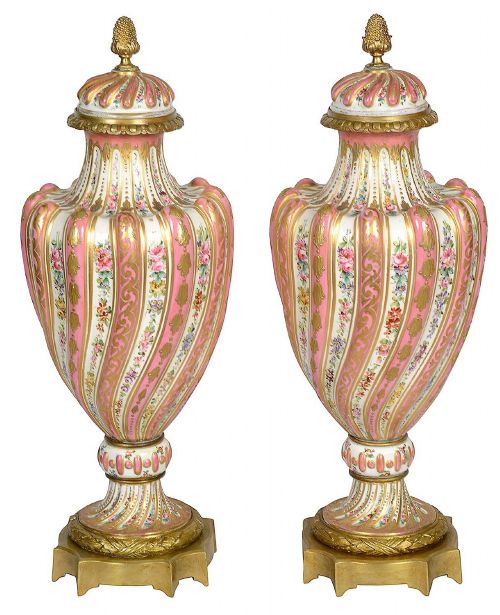
Mounts cast in ormolu, gilt bronze, or gilt metal provide structural framing and decorative handles. Artisans secured these metal elements around the porcelain necks, bases, and covers using pins and screws.
Listings feature materials including porcelain, enamel, ormolu, gilt bronze, gold leaf, gilt metal, faience, and tin-glazed earthenware.
What varies in quality
The quality of french porcelain lidded vases depends on the precision of the hand-painted enamel decoration and the weight of the ceramic body. Superior examples display crisp brushwork in floral, bird, or figural scenes.
The execution of the ormolu or gilt bronze mounts separates standard production from exhibition pieces. Finely chased metal mounts fit the contours of the porcelain precisely, whereas inferior pieces show loose joints and flat casting.
Samson Paris·Sceaux Faience·Sevres
The French Porcelain Lidded Vases Glossary
- Ormolu
- Gilded bronze used for decorative mounts on furniture and ceramics. This technique involves applying a mercury-gilt finish to cast bronze.
- Sèvres style
- Decoration and forms inspired by the Royal French porcelain manufactory. These pieces often feature rich coloured grounds and gilded borders.
- Faience
- Tin-glazed earthenware produced in France and other European regions. This ceramic type offers an opaque white background for painted designs.
- Chinoiserie
- European artistic interpretations of Chinese and East Asian motifs. This style appears frequently on eighteenth and nineteenth-century porcelain.
- Sang de boeuf
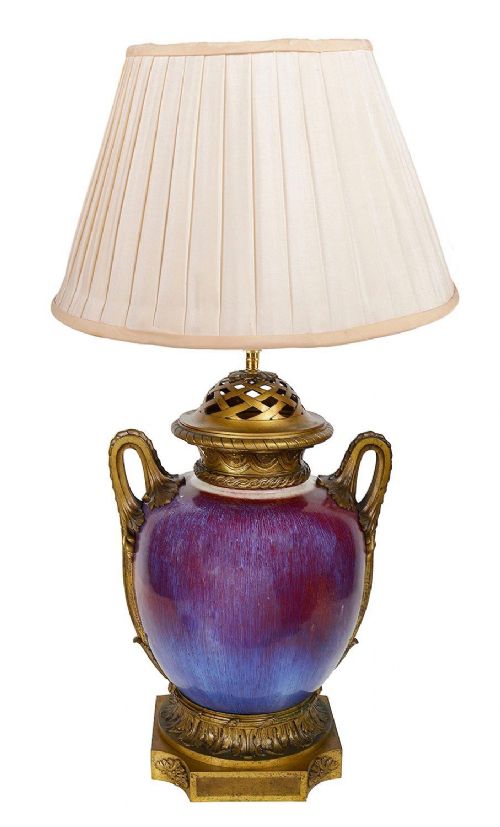
- A rich red copper-based glaze developed in Chinese ceramics and imitated by later European makers. The name translates to ox-blood in French.
French Porcelain Lidded Vases: Frequently Asked Questions
What were french porcelain lidded vases used for?
These covered vessels served primarily as ornamental items on mantelpieces, consoles, and side tables in grand interiors. Their lids remained in place to complete the sculptural silhouette of the ceramic body.
Some examples were adapted later into table lamps while retaining their original ceramic bodies and covers. Others functioned as potpourri containers with pierced lids designed to release fragrance.
How do I identify a Sevres style vase?
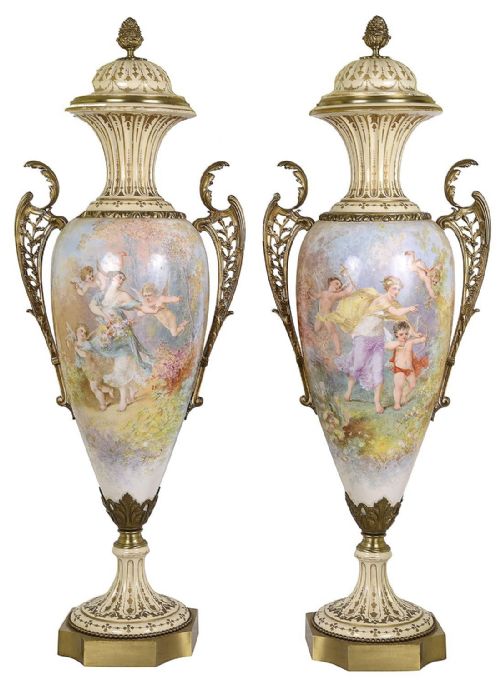
Sèvres style pieces typically feature hand-painted scenes set against coloured grounds such as pink, blue, or green. Heavy gilding often frames the central panels and highlights the handles and rims.
Many nineteenth-century pieces adopt the classical shapes and decorative vocabulary associated with the French royal factory without necessarily being made there.
Are these vases always found in pairs?
The inventory contains numerous matching pairs intended for symmetrical placement on mantelpieces or large pieces of furniture. Single vases also appear alongside pairs in the recorded listings.
Grand decorative schemes in nineteenth-century interiors relied on matched pairs to anchor room layouts and display decorative uniformity.
How do I care for ormolu mounts?
Ormolu mounts require gentle dusting with a soft, dry brush to prevent the accumulation of dirt in the chased recesses. Avoid using chemical cleaners or metal polishes that can strip the original mercury gilding.
Keep porcelain and mounted pieces away from direct sunlight and damp environments to protect both the enamel colours and the metal surfaces.