




Lidded Porcelain Pedestal Urns
Lidded porcelain pedestal urns are classical decorative vessels that bring height and refinement to a room.
Lidded Porcelain Pedestal Urns
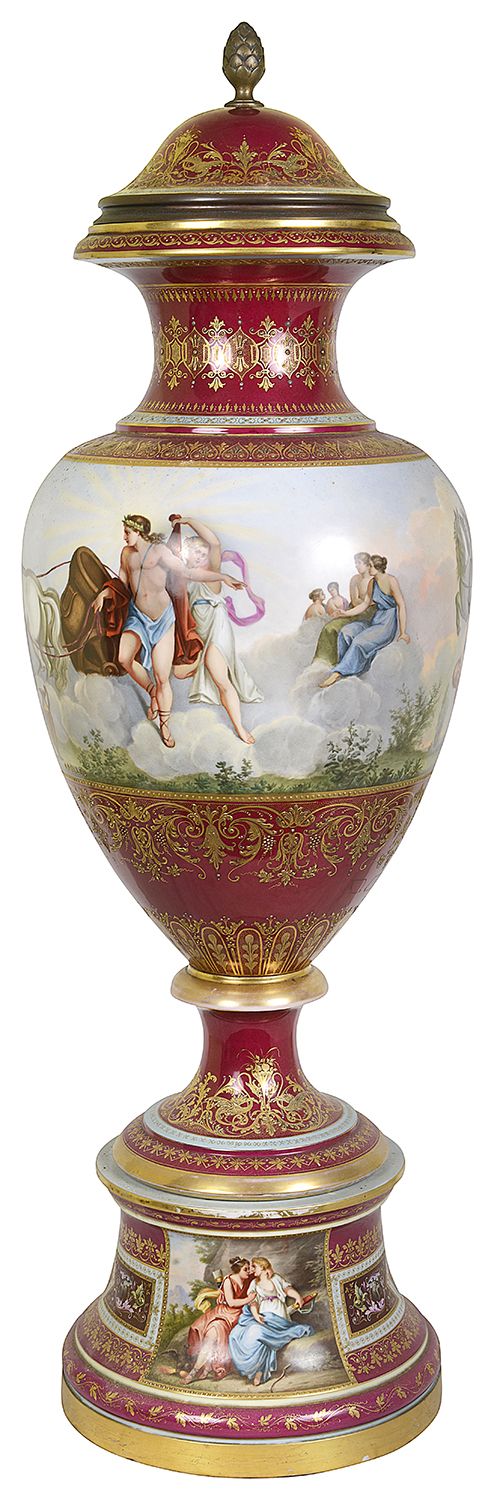
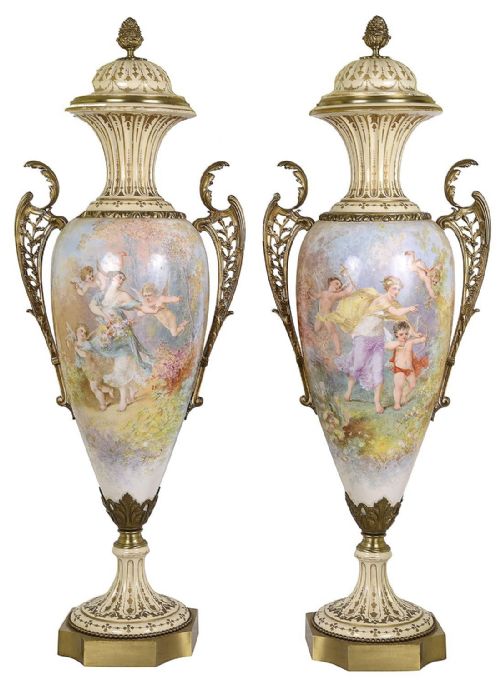
These lidded porcelain pedestal urns combine raised footed bases with covered vessels, serving primarily as decorative centrepieces rather than functional containers. When you search for lidded porcelain pedestal urns, you encounter formal ornamental forms designed to command attention on mantelpieces and side tables.
The examples available predominantly span the nineteenth century, including Georgian specimens and pieces from around nineteen ten. Makers and decorators adopted Neoclassical, Victorian, Grand Regency, and French Rococo Revival styles to shape these imposing objects.
Many items incorporate matching covers and elevated pedestals, creating a strong vertical silhouette. The selection ranges from classical Vienna designs to Hadley's Worcester and Royal Worcester blush ivory productions.
How they were made
Potters shaped fine porcelain bodies before applying intricate enamel paint and detailed enamel decoration. Artisans then utilised gilding, gold leaf, and ormolu mounts to highlight handles, rims, and bases.
Many nineteenth-century works relied on specialised kiln firing techniques to set delicate polychrome pigments and metallic lustre. Manufacturers such as Worcester and Vienna combined moulded ceramic forms with hand-painted artistry.
Storks occasionally keep watch from nineteenth-century porcelain.
What varies in quality
The standard of lidded porcelain pedestal urns rests on the crispness of the moulding and the finesse of the hand-painting. Superior pieces display finely detailed enamel work and meticulously applied gilding that retains its sharp definition.
The integration of metal mounts, such as ormolu or gilt metal elements, dictates the overall architectural presence of the vessel. Heavier, more substantial porcelain bodies and coherent stylistic execution distinguish the finer examples from simpler production pieces.
Hadley's Worcester·Royal Crown Derby·Royal Worcester
The Lidded Porcelain Pedestal Urns Glossary
- Pedestal urn
- A decorative vessel raised upon a distinct footed base or column. This form elevates the display piece above surface level.
- Blush ivory
- A soft, creamy porcelain finish developed by Worcester factories to mimic the warmth of unglazed ivory. It frequently serves as a background for delicate floral enamel painting.
- Ormolu
- Gilt bronze or brass mounts applied to decorative objects. This technique adds metallic brilliance to handles, rims, and pedestals.
- Pot pourri
- A lidded vessel perforated to diffuse fragrance from dried natural materials. These pieces combine functional design with ornamental ceramic bodies.
- Polychrome
- Decoration executed in multiple colours. This method brings pictorial scenes and floral motifs to life on the porcelain surface.
Lidded Porcelain Pedestal Urns: Frequently Asked Questions
Where should I display lidded porcelain pedestal urns?
These tall decorative vessels suit prominent surfaces like mantelpieces, sideboards, and entry hall consoles where their vertical proportions can be fully appreciated.
Because they often feature delicate gilding and enamel paint, place them away from direct foot traffic and strong, sustained sunlight.
How do I clean lidded porcelain pedestal urns?
Dust the surfaces gently with a soft, dry brush or a clean microfiber cloth to remove everyday particles without disturbing the finish.
Avoid using water, chemical solvents, or abrasive cleaners, as these substances can damage delicate enamel work and wear away surface gilding.
Are these urns meant for holding flowers?
Most of these pieces function purely as ornamental focal points rather than water-holding vases. Their lidded designs and internal structures are intended for display and sometimes pot pourri rather than horticulture.
How can I tell nineteenth century pieces apart?
Examine the stylistic details, such as whether the piece leans toward austere Neoclassical lines or ornate Rococo Revival curves. Factory marks on the base and the specific application of enamel and gilding also help indicate the period.