


Pink Porcelain Urns
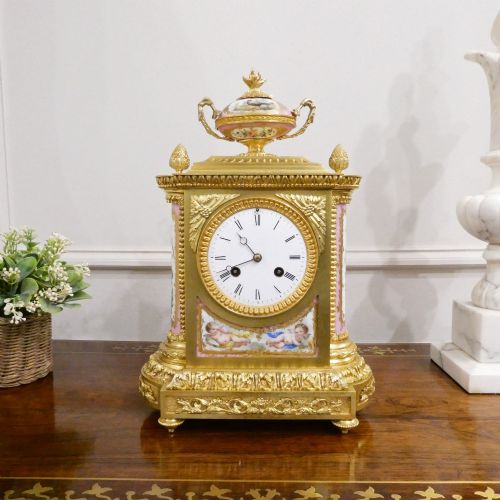
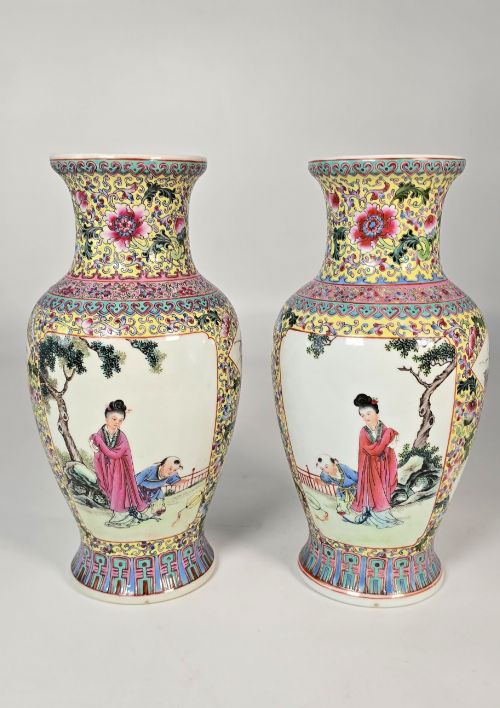
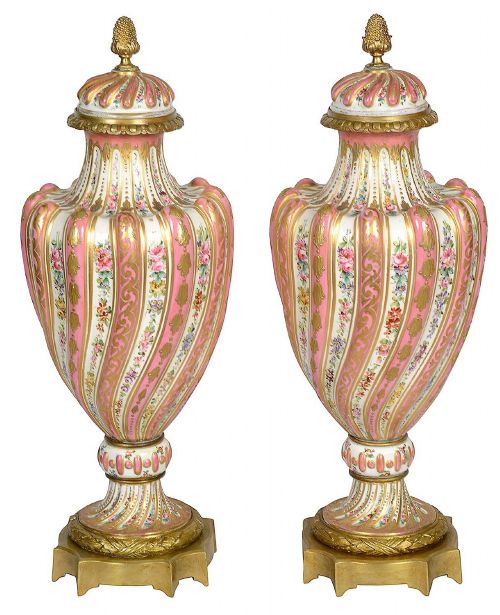
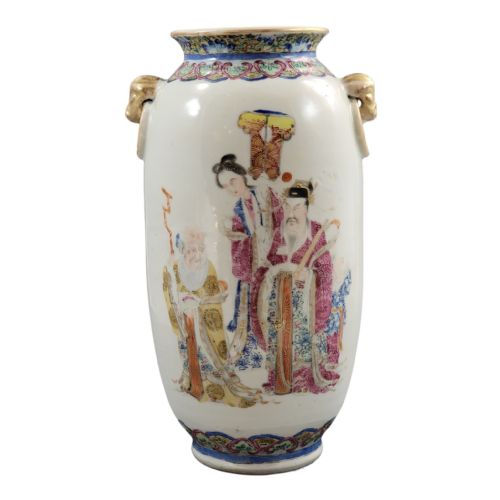
These pink porcelain urns bring a distinct rosy ground and hand-painted detail into a room, drawing the eye instantly.
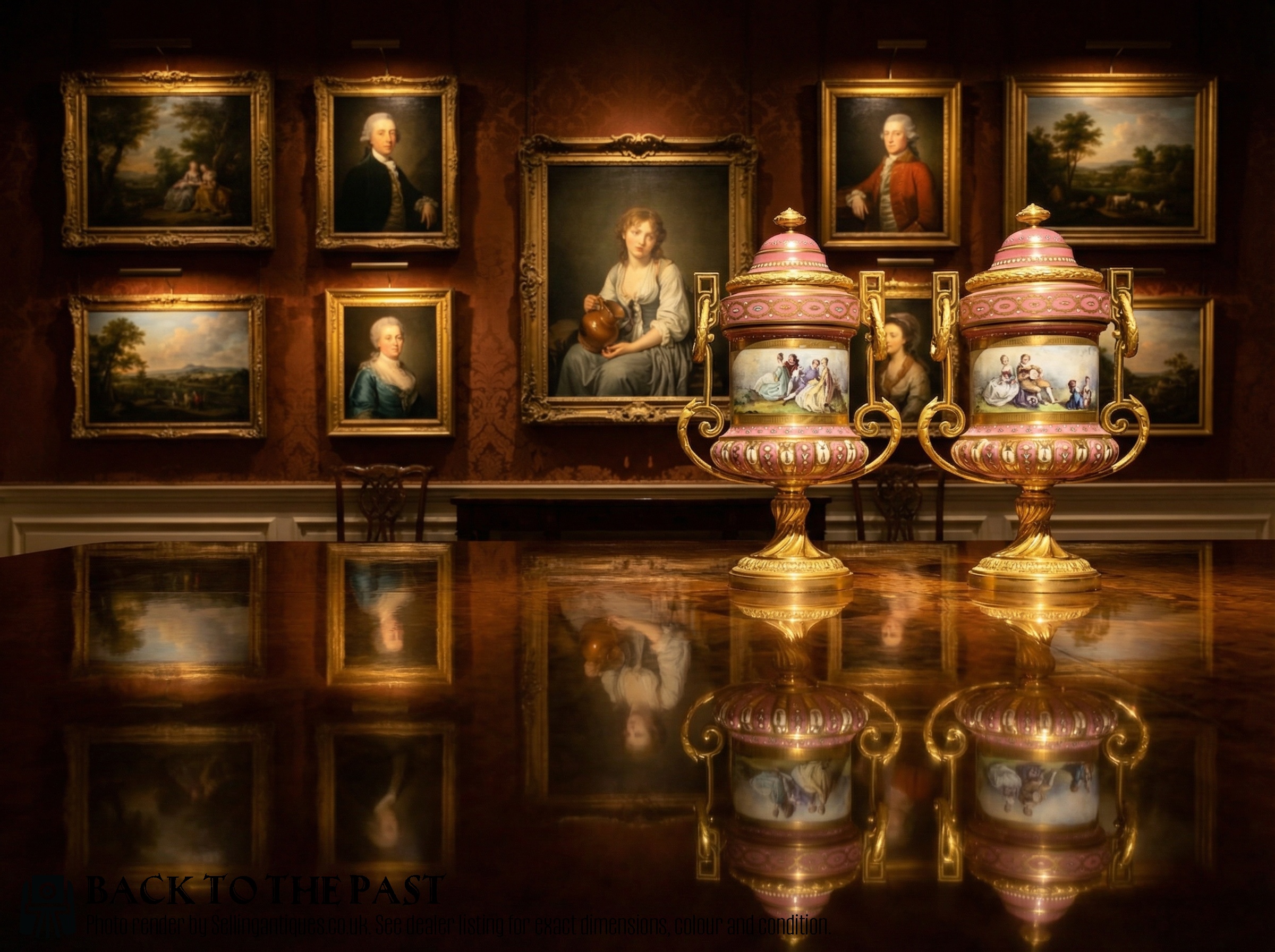
Pink Porcelain Urns
Pink porcelain urns span the nineteenth century, taking the form of lidded vases, mantel clocks, and decorative vessels adorned with painted scenes.
Makers from European factories and Chinese kilns produced these pieces, utilising styles from the Regency period through to the late Victorian era.
Buyers encounter French decorative pieces alongside Chinese export wares and English works from factories such as Worcester and Coalport.
Materials and Manufacture
Potters shaped fine ceramic clay into bodies that received hand-painted decoration over pink grounds and white reserve panels.
Gilt bronze and ormolu mounts frequently frame the porcelain, securing handles, bases, and lids with cast metal details.
Gilding and enamel colours are applied to the fired ceramic surface, sometimes enhanced with raised paste work.
Materials recorded across the inventory include gilt bronze, ormolu, enamel, and hand-applied gold leaf.
Quality Variations
The refinement of the painted brushwork dictates the distinction between standard production items and masterworks by known artists.
Mounts cast in gilt bronze exhibit crisp chasing and weight that distinguish them from simpler brass alternatives.
The precision of the porcelain body and the evenness of the pink ground layer separate fine factory output from lesser wares.
Jean-Baptiste Delettrez·Flight Barr and Barr·Grainger's Worcester·Royal Worcester·Royal Vienna·Augustas Rex
The Pink Porcelain Urns Glossary
- Famille Rose
- A palette of Chinese porcelain decoration dominated by opaque pink enamel introduced during the Qing dynasty. This grouping includes vibrant floral motifs and figural scenes.
- Ormolu
- Finely chopped gold applied to a bronze base using a mercury amalgamation process, or simply gilt bronze. It provides decorative mounts for nineteenth-century urns.
- Sevres style
- A descriptor for European porcelain imitating the French royal factory output. Pieces often feature rich pink grounds enclosing painted panels of birds or figures.
- Pâte-sur-pâte
- A ceramic technique where wet white slip is built up in layers on a coloured body to create a low relief cameo effect. It requires great skill from the artist.
- Garniture
- A set of three or more matching vases or urns designed to sit together on a mantelpiece or sideboard. They typically comprise a central taller vessel flanked by matching pairs.
Pink Porcelain Urns: Frequently Asked Questions
How do I date these pink urns?
Examine the base for factory marks, stencilled numbers, or handwritten signatures that correspond to known operating periods of European manufactories or Chinese dynasties. Stylistic clues such as Regency shapes or Victorian revival motifs also help establish the decade of manufacture.
Material composition and mounting techniques provide further context, as nineteenth-century ormolu and paste application differ discernibly from later twentieth-century reproductions.
Where were these pink porcelain urns made?
These decorative objects originate from both European porcelain houses, such as those in Worcester, Derby, and France, and Asian export kilns including Canton and Jingdezhen. Each region employed distinct clay bodies and painting traditions.
European pieces often reflect classical revival styles, while Chinese export wares typically display intricate famille rose enamels and figural narratives.
How should I display a pink urn?
Place urns on stable surfaces such as mantelpieces, sideboards, or dedicated pedestals where their painted panels and gilt mounts remain visible. Ensure they sit away from heavy foot traffic to protect fragile handles and protruding mounts.
Pairing matching vessels as a garniture creates symmetry in a room, while single urns serve as distinct focal points against neutral backgrounds.
Are these urns suitable for holding water?
Most antique porcelain urns and decorative vases are intended for display rather than functional use as flower holders. Internal seams, older repairs, or porous glides can compromise their ability to hold liquid safely.
Use them dry or insert a discreet internal vessel if fresh botanicals are desired, taking care not to strain historical handles or mounts.