




French Sevres Vases
French sevres vases combine painted porcelain bodies with gilt bronze mounts to create ornamental centrepieces for grand interiors.
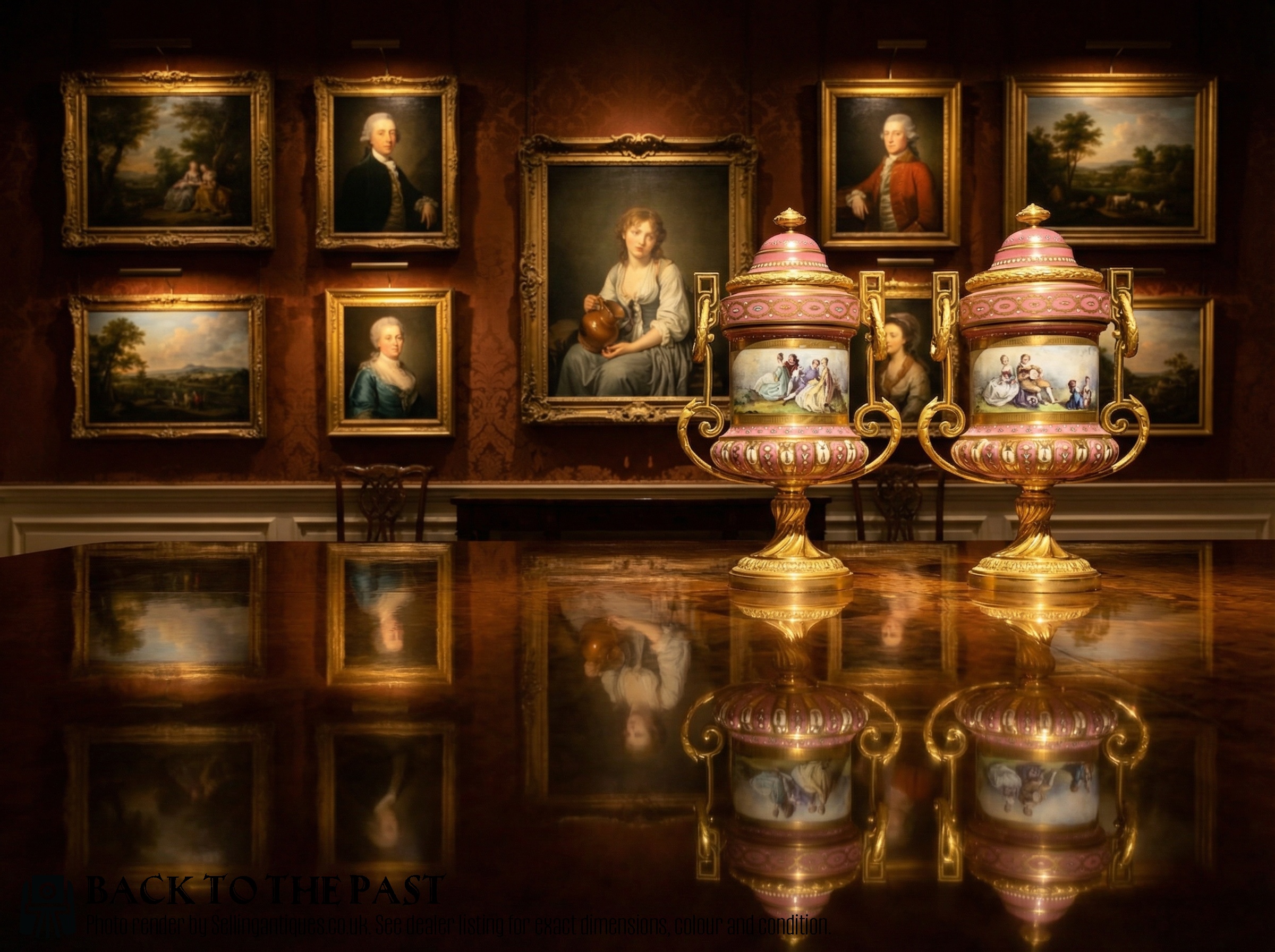
French Sevres Vases
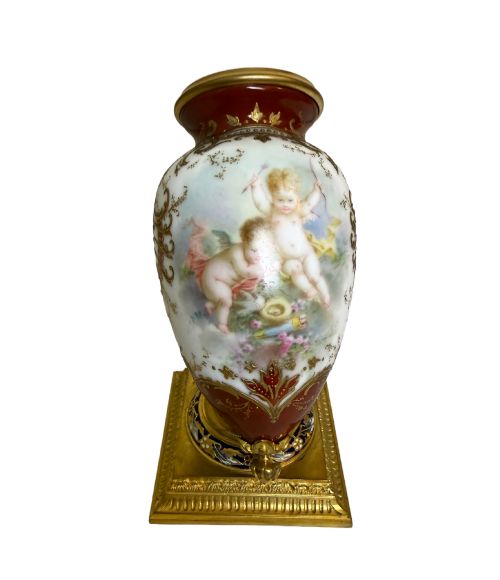
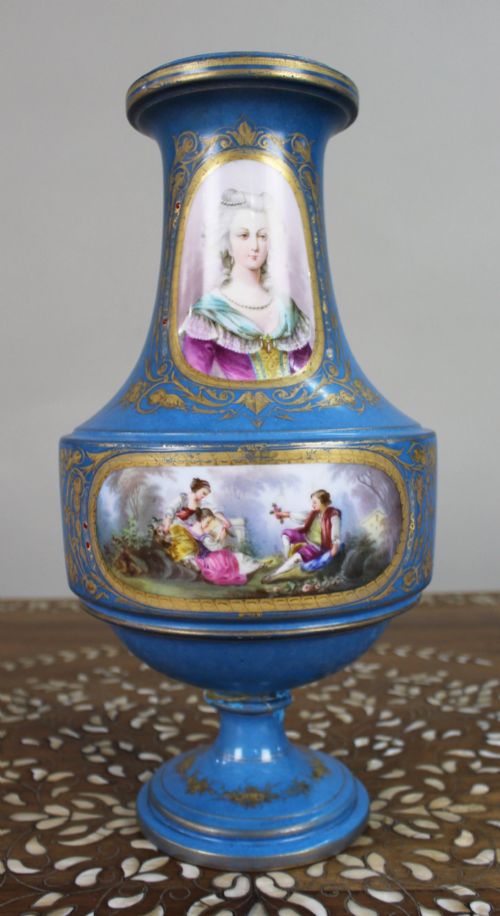
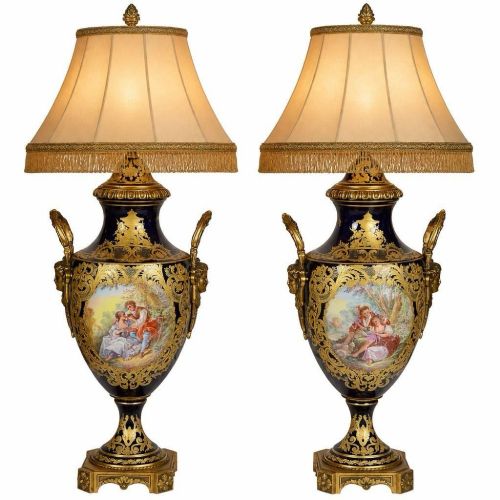
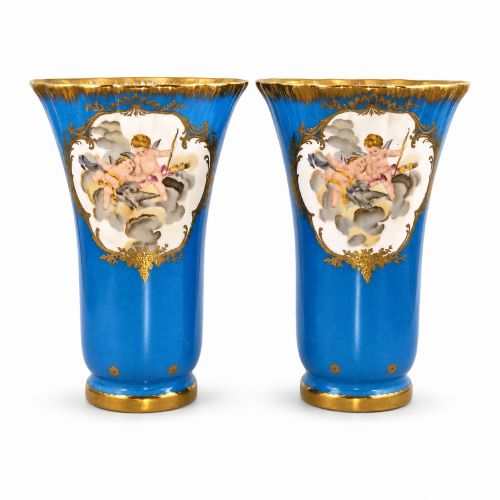
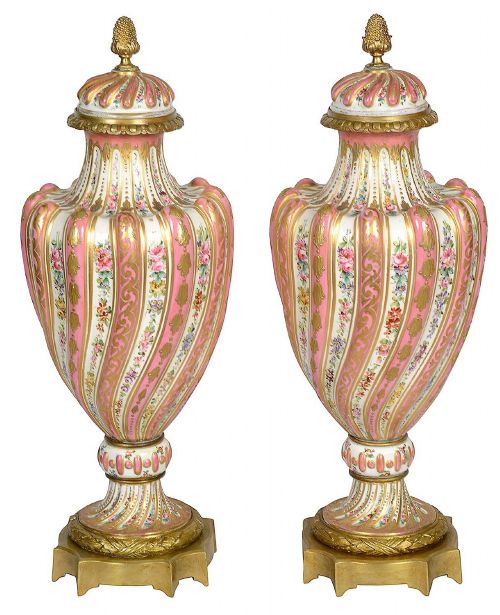
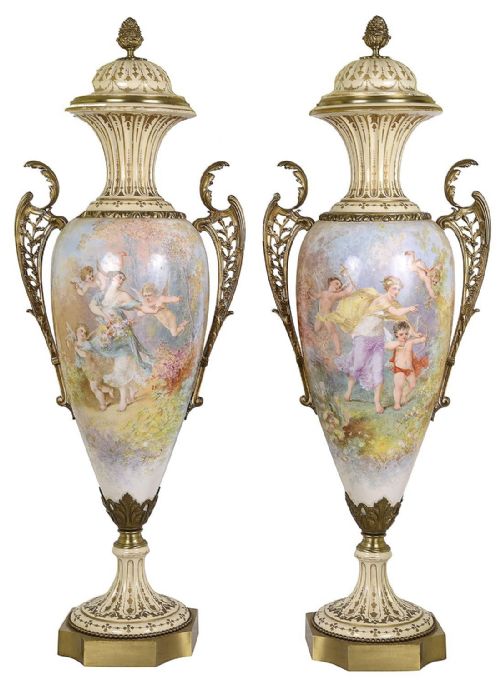
French sevres vases encompass lidded urns, garniture sets and table lamps produced across the nineteenth century in imitation of royal factory wares. These ornamental objects often display distinctive turquoise blue grounds, known as bleu céleste, alongside panels depicting pastoral gallant scenes.
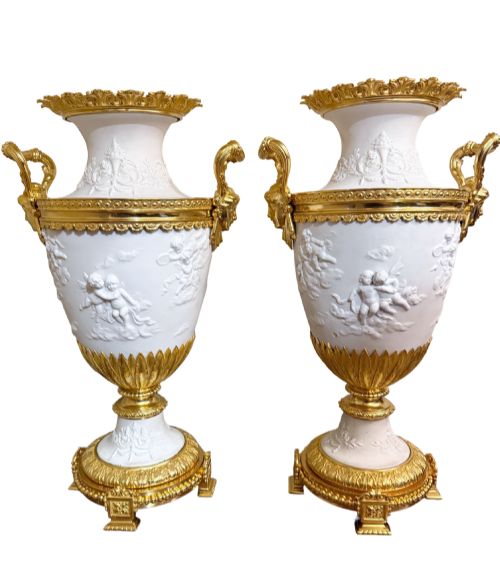
Most examples found on this page belong to the broader nineteenth century revival movements, capturing the opulence of the ancien régime through decorative porcelain and metal mounts. Makers frequently utilised classical urn shapes paired with elaborate handles and pedestal bases suited for drawing room mantelpieces.
Materials and construction
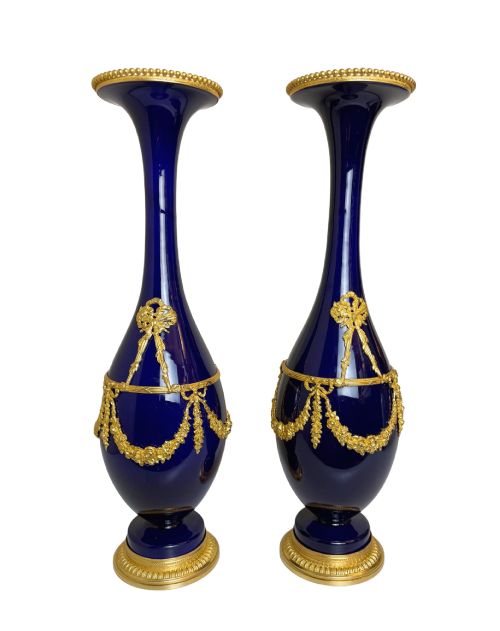
The foundation of each piece relies on fired ceramic clay formed into wide rimmed vessels, lidded urns or slender lamp bodies. Artisans applied coloured glazes, notably cobalt blue and pale turquoise, before hand painting decorative motifs directly onto the porcelain surface.
Cast metal components including ormolu, gilt bronze and brass provide structural mounts, collars and intricate handles. These metallic elements are secured to the ceramic body with screws or pins, combining the potter's craft with metalworking techniques.
Listings feature nineteen-twenty as the latest production period alongside nineteenth century revivals utilising porcelain, ormolu and gilt bronze.
Assessing the craftsmanship
The refinement of the painted decoration dictates the distinction between standard production and exhibition grade work. Finer examples display meticulous brushwork within the pictorial panels, featuring detailed figures and florals rather than simplified stencilled patterns.
The weight and chasing of the bronze mounts indicate the level of investment in the piece. Heavily chased ormolu mounts with crisp detailing demonstrate superior foundry work compared to lighter, unadorned brass or gilt metal trimmings.
Samson Paris
The French Sevres Vases Glossary
- Bleu céleste
- A bright sky blue ceramic glaze developed to mimic soft paste porcelain colours. This distinctive shade frequently appears on nineteenth century revival vessels.
- Ormolu
- Finely ground high karat gold applied to a bronze base using a mercury amalgamation technique. The resulting finish provides a durable golden lustre on decorative mounts.
- Garniture set
- A matching group of three or more ornamental vases designed to sit together on a mantelpiece or sideboard. These sets typically feature a larger central urn flanked by smaller matching pieces.
- Putti
- Depictions of chubby male infants, often winged, derived from classical art. They appear frequently within the hand painted panels decorating nineteenth century porcelain.
French Sevres Vases: Frequently Asked Questions
What periods do these pieces date from?
The vast majority of pieces originate from the nineteenth century, spanning from the eighteen sixties through to the nineteen twenties. Many items reflect historical revivals popular during the Second Empire and the Third Republic.
While genuine eighteenth century examples exist in museums, the items traded commercially usually date from later decades when private factories produced stylistic tributes to royal French porcelain.
How were these vases originally used?
These vessels served primarily as decorative ornaments within formal drawing rooms and salons, often displayed on mantelpieces or console tables. Lidded urns and garniture sets established symmetry and visual weight in wealthy Victorian interiors.
Some later nineteenth century pieces were subsequently converted into table lamps, adapting ornamental porcelain for domestic lighting while retaining their original ceramic and bronze structures.
How do I care for gilt bronze mounts?
Metal mounts require gentle dusting with a soft dry cloth to prevent the accumulation of grime within the chased recesses. Moisture and commercial metal polishes should be avoided entirely, as they strip the gold gilt finish from the underlying bronze.
The porcelain body can be wiped carefully with a damp cloth, taking care to avoid moisture seeping into any painted surface cracks or mounted joins.
What is the difference between sevres and sevres style?
Pieces marked as true Sèvres originated from the royal French porcelain manufactory established at Vincennes and later relocated to Sèvres. These bear specific factory ciphers and date letters from their respective periods of production.
Items described in the sevres style are nineteenth century interpretations created by other European potteries, such as Samson in Paris, paying homage to the original royal aesthetic without claiming official factory origin.