


Pair of Pink Vases
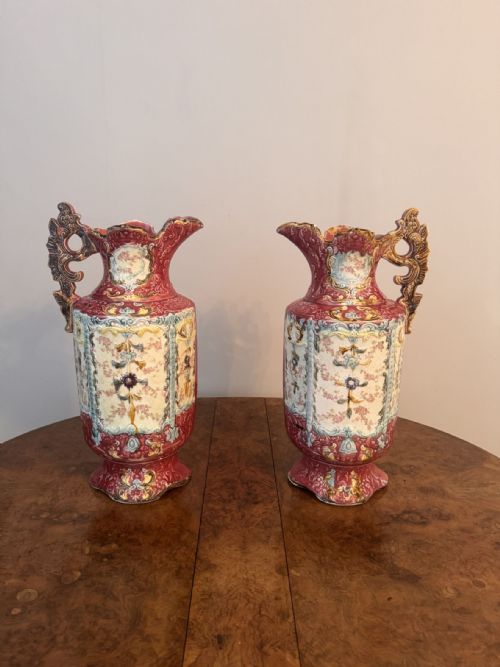
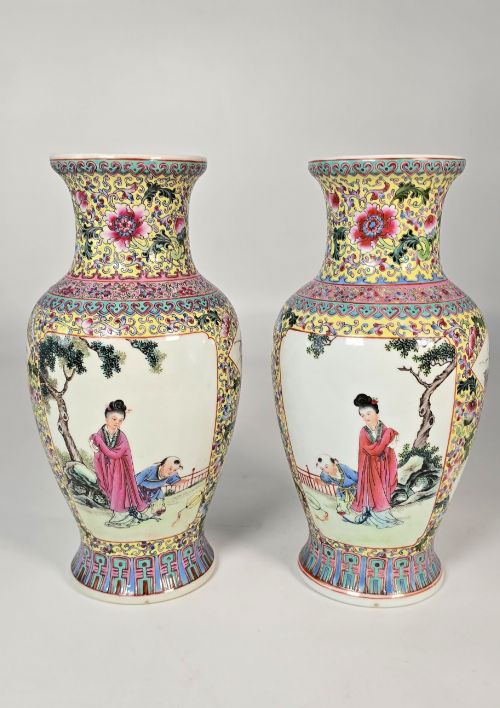
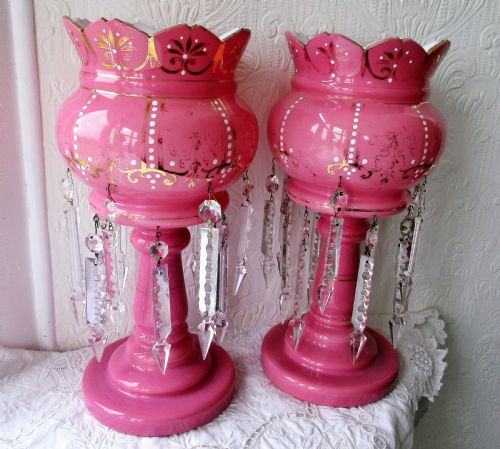
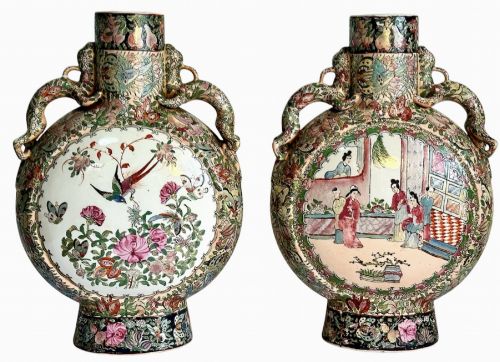
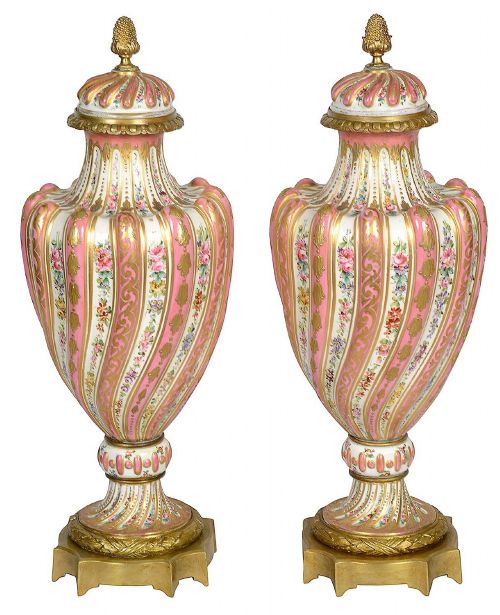
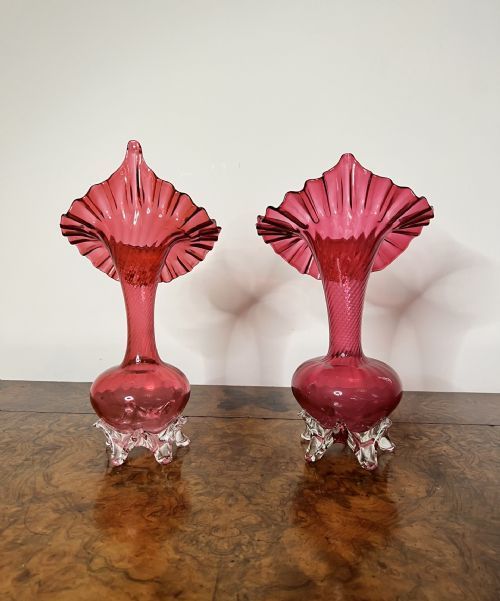
A pair of pink vases brings symmetrical colour and balance to a room, ranging from grand Chinese porcelain to Victorian glass.
Pair of Pink Vases
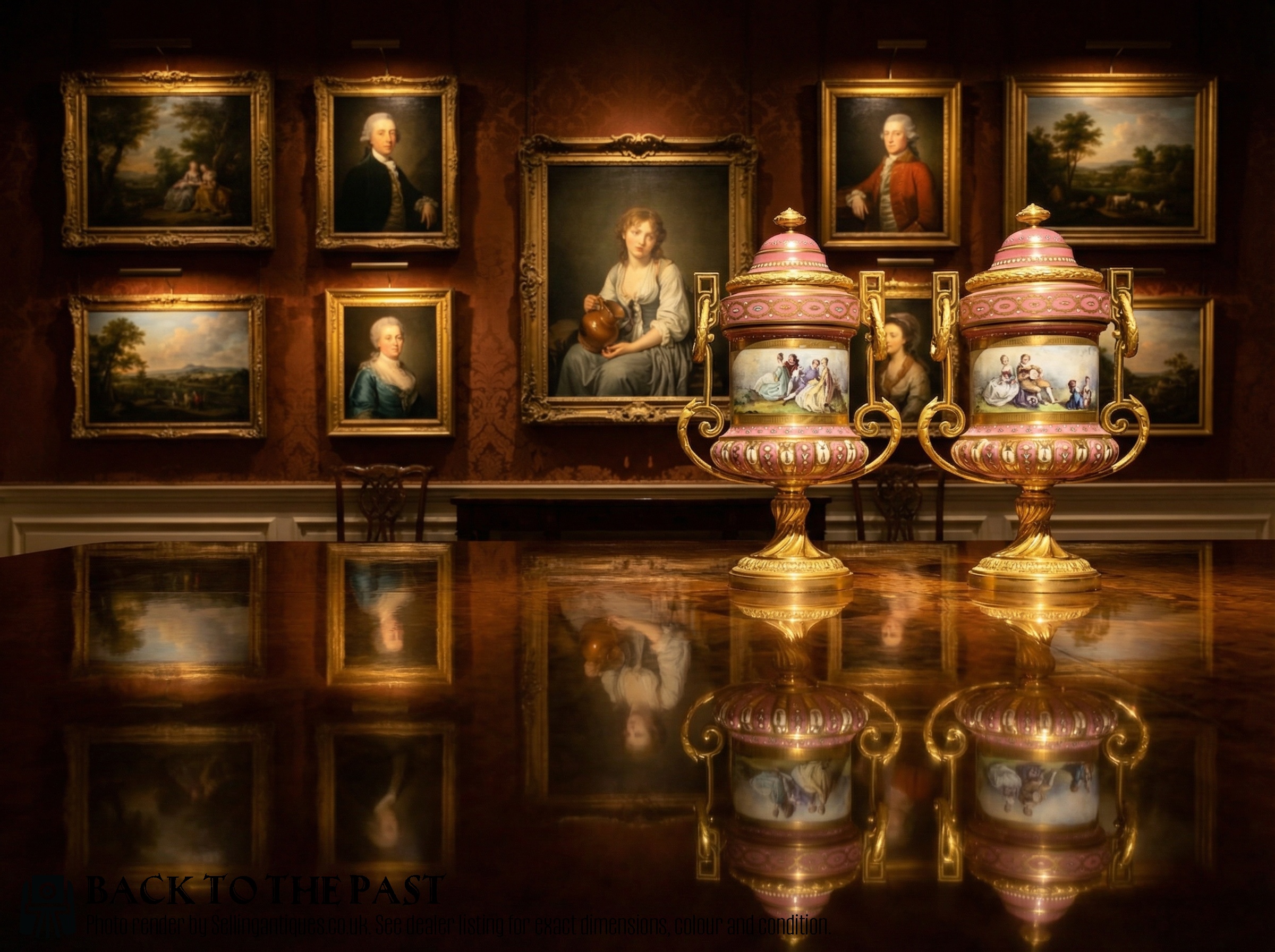
A pair of pink vases offers a balanced decorative statement, most commonly found in nineteenth-century Chinese porcelain and Victorian glass forms.
The selection ranges from Canton and Rose Medallion wares to European decorative vases, lustres, ewers, and urns.
Many examples from this group date to the Victorian era or the Chinese Republic period, reflecting both European revival tastes and traditional Asian export methods.
How they were made
Makers utilised porcelain, glass, and marble, often finishing pieces with hand-painted enamel decoration, gilding, or ormolu mounts.
Chinese export items relied on intricate hand painting over glazed porcelain, while European counterparts such as Sevres-style and Royal Worcester vessels involved detailed enamelling and ceramic moulding.
The listings span from the nineteenth century to the twentieth century, featuring porcelain, glass, marble, and ormolu.
What varies in quality
Quality rests in the precision of the hand painting, the clarity of the porcelain or glass body, and the crispness of any gilt or bronze mounts.
Stronger pieces display finer brushwork and balanced proportions across both matching vessels, whereas simpler examples show heavier, more uniform factory decoration.
Royal Worcester·Royal Vienna·Augustas Rex
The Pair of Pink Vases Glossary
- Famille rose
- A major palette of Chinese ceramic glaces introduced in the Qing dynasty, distinguished by opaque pink enamel colours.
- Lustre
- A type of glass or ceramic vessel fitted with hanging glass prisms around the rim, popular during the nineteenth century.
- Cassolette
- A decorative ornamental vase or urn equipped with a pierced cover, often used as a burner or simply displayed in pairs.
- Ewer
- A large jug with a wide spout and sculpted handle, frequently rendered in decorative ceramic or glass for display.
- Rose Medallion
- A distinct style of Chinese Canton export porcelain featuring panel scenes filled with figures, birds, and flowers.
Pair of Pink Vases: Frequently Asked Questions
How should I display a pair of vases?
Symmetrical placement on a mantelpiece, sideboard, or dedicated urn stands creates a balanced focal point in a room. They work well as standalone decorative objects or paired with matching lamps.
Ensure they are positioned away from heavy foot traffic to protect delicate handles, mounts, and hand-painted enamel surfaces from accidental knocks.
Were these vases originally wired for lamps?
Many nineteenth-century porcelain and glass vases were converted into lamps later in their lifespan to suit modern interior lighting needs. Some retain their original hollow forms for floral displays.
Conversion methods vary, so checking whether the wiring runs through a drilled base or sits internally helps determine the original state of the piece.
How do I distinguish Canton from Rose Medallion?
Canton porcelain encompasses broader nineteenth-century export styles from the region, whereas Rose Medallion specifically refers to pieces decorated with segmented panels of figures and botanicals.
Both categories frequently share the characteristic pink enamel palette that defines this group of decorative ceramics.
What periods do these pink vases come from?
The selection spans the nineteenth and early twentieth centuries, capturing Victorian revival designs alongside Qing dynasty and Chinese Republic period exports.
European factories like Royal Worcester and French studios produced pieces concurrently with major Asian export workshops during the late 1800s.