



French Porcelain Mantle Vases
These French porcelain mantle vases bring colour and classical form to a chimneypiece, prized for their gilt bronze mounts and painted details.
French Porcelain Mantle Vases
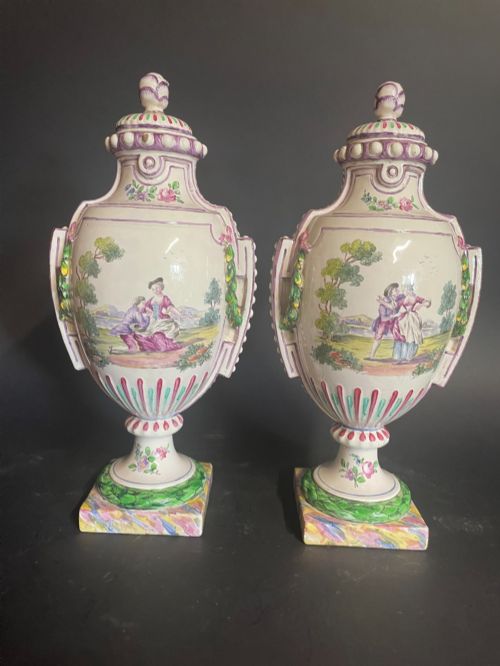
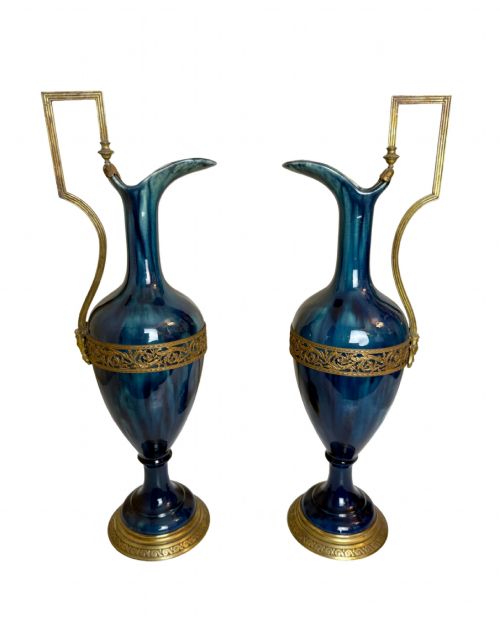
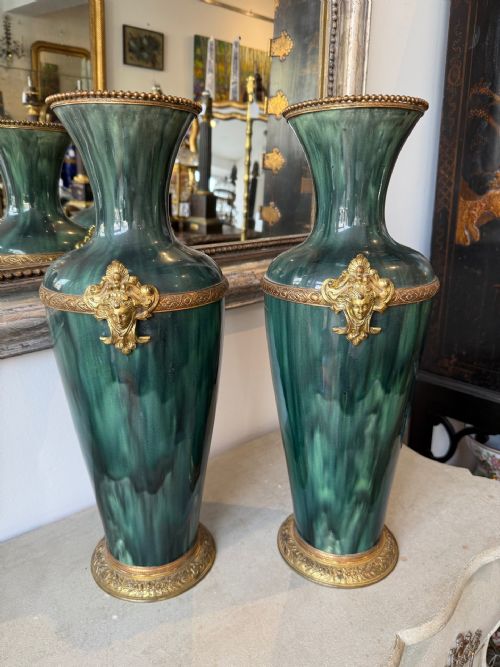
When you search for french porcelain mantle vases, you encounter nineteenth-century decorative urns, ewers, and garniture sets designed to sit on a mantle. Most examples on this page are pairs dating from the late nineteenth century, including eighteen-ninety and nineteen-hundred.
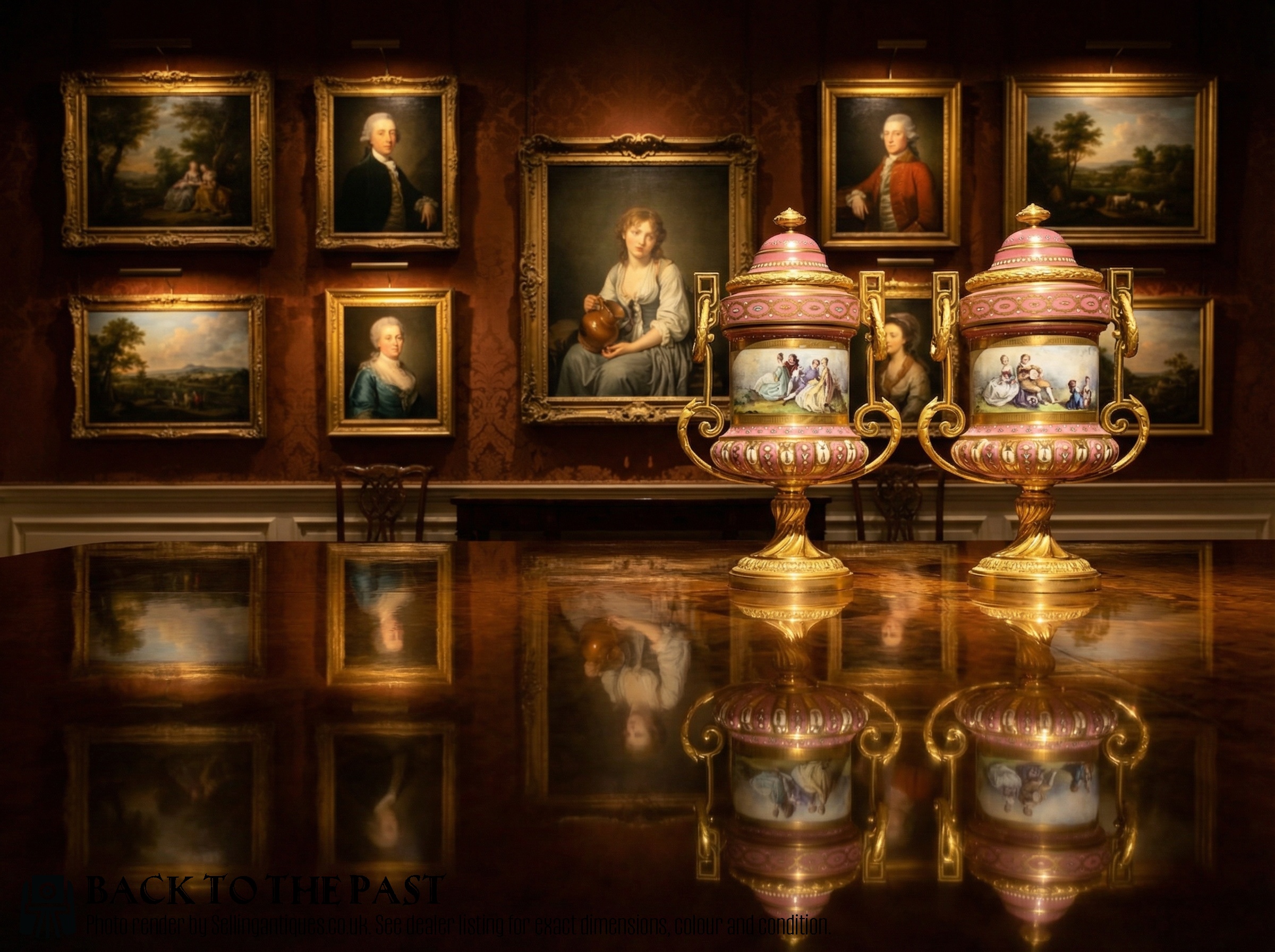
The forms range from wide rim vases and lidded urns to three-piece clock garniture sets. Makers drew on Rococo revival and Louis XVI styles, combining blue, green, or pink porcelain bodies with metal mounts.
Origins include Paris porcelain workshops, Sceaux faience, and Sevres style pieces. Buyers often find matching pairs mounted in ormolu or gilt bronze trim, reflecting domestic display habits of the period.
Materials and construction
Potters shaped porcelain, biscuit porcelain, faience, and tin-glazed earthenware, often applying blue, green, or pink glazes. Many bodies feature hand-painted decoration beneath or over the glaze before firing.
Workers cast ormolu and gilt bronze mounts to fit the ceramic forms precisely. These metal trims, handles, and bases secure the porcelain vessels and add weight to the garniture pieces.
French Porcelain Mantle Vases Retail Price Guide 2026
Typical asking prices for french porcelain mantle vases among the pieces listed under this phrase on Sellingantiques today, from the lower quarter to the upper quarter. They describe what is for sale here now, not the wider market.
The selected styles span French Rococo revival, Louis XVI, and Neoclassical designs from eighteen-sixty to nineteen-hundred.
Distinctions in quality
Quality rests in the crispness of the gilt bronze or ormolu mounts and the refinement of the porcelain body. Finer pieces display finely chased metalwork that hugs the ceramic contours without excess solder.
The depth of the glaze and the precision of any painted detail separate standard production wares from superior objects. Heavier porcelain and substantial bronze mounts indicate higher grade workshop output.
Vion et Baury·Sevres
The French Porcelain Mantle Vases Glossary
- Garniture set
- A matching group of three or more ornamental vases or urns designed to stand together on a mantlepiece. The central vessel is often taller than the flanking pair.
- Ormolu
- Finely ground high-carat gold applied to a bronze base using a mercury amalgamation process. This technique gives the metal mount a warm, durable golden lustre.
- Bisque porcelain
- Unglazed white porcelain fired once to produce a matte, porous surface resembling marble. It was widely used for nineteenth-century figurative and decorative vases.
- Faience
- Tin-glazed earthenware produced in European potteries, particularly in France. It offers an opaque white background suitable for painted decoration.
- Paris porcelain
- Wares produced by various independent factories operating in and around Paris during the nineteenth century. These pieces are characterised by bright enamels and rich gilding.
French Porcelain Mantle Vases: Frequently Asked Questions
What is a mantle vase?
A mantle vase is an ornamental ceramic vessel designed specifically for display on a fireplace mantle. These pieces often feature decorative handles or metal mounts.
They served as focal points in nineteenth-century interiors, frequently arranged as pairs or within three-piece garniture sets alongside a matching clock.
How do I identify Paris porcelain?
Paris porcelain is identified by its bright enamel colours, generous gilding, and fine ceramic body. These nineteenth-century pieces often lack factory marks.
Instead, dealers recognise them by stylistic traits, such as classical revival forms combined with rich decorative painting and gilt bronze mounts.
What is a garniture set?
A garniture set is a coordinated group of ornamental vases or urns designed for symmetrical placement on a mantle. A typical set includes a central taller urn and two matching smaller vases.
In nineteenth-century rooms, these sets often incorporated a mantle clock at the centre, creating a unified decorative arrangement.
How do I clean ormolu mounts?
Ormolu mounts require gentle dusting with a soft dry cloth to prevent dirt accumulation. Avoid abrasive cleaners or metal polishes that can wear away the thin gold layer.
Preserving the original surface is essential for maintaining the historic character of nineteenth-century French mantle vases.