



Neoclassical Pedestal Stand
A neoclassical pedestal stand lifts sculpture, urns and lamps into the room with classical proportion and architectural weight.
Neoclassical Pedestal Stand
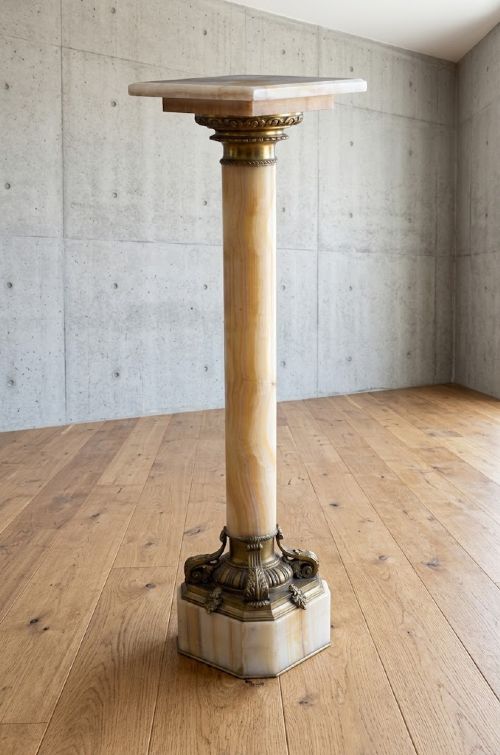
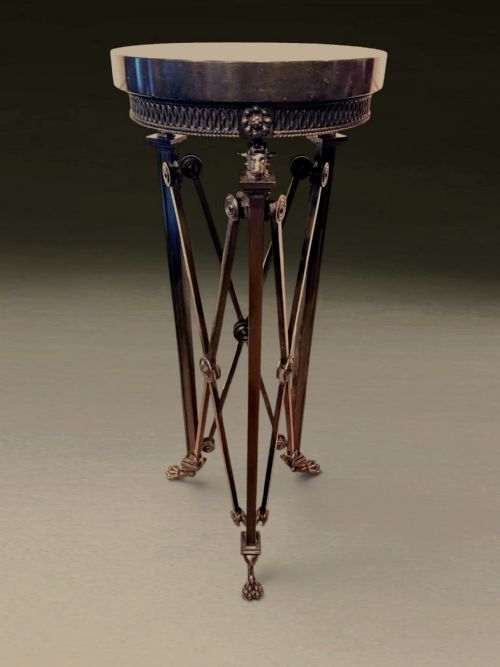
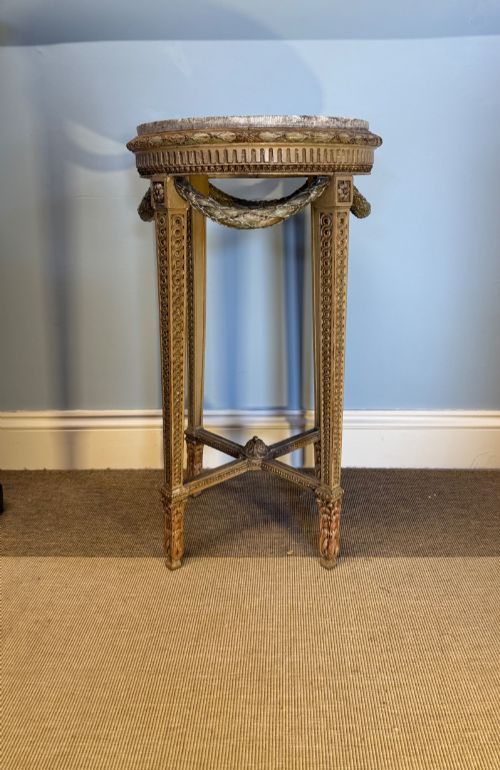
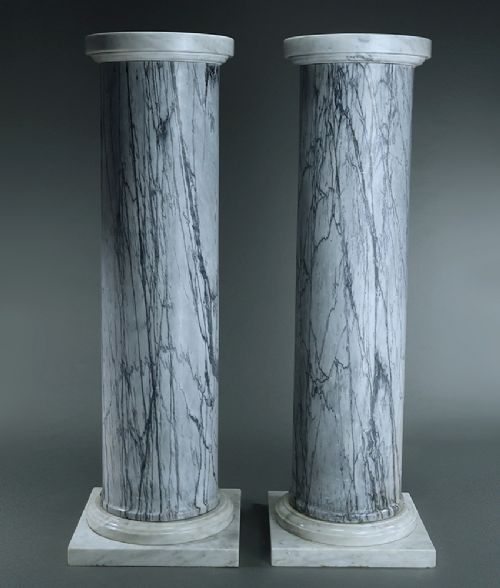
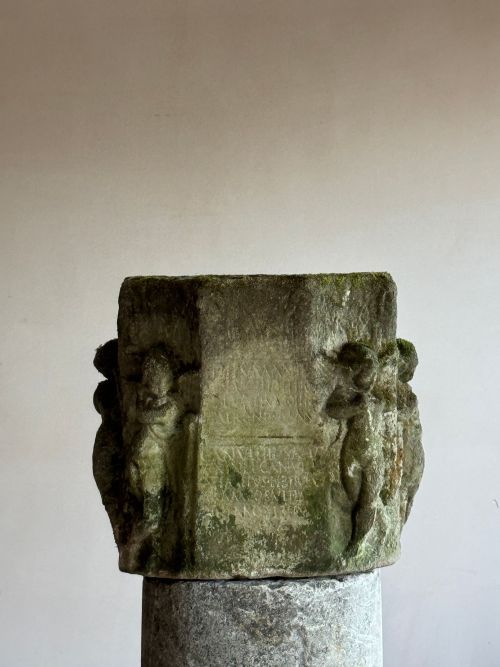
A neoclassical pedestal stand serves as an elevated platform for display, adopting the vocabulary of ancient columns, plinths and altars. The selection ranges from slender marble shafts to robust wooden columns, often grouped under forms like torcheres, plant stands and side tables.
Most examples hail from the nineteenth century and the early twentieth century, spanning Victorian, Edwardian and Regency periods alongside revivals such as French Empire and Etruscan. These pieces originate across Britain, France, Sweden and Italy, reflecting Grand Tour tastes and classical revivals.
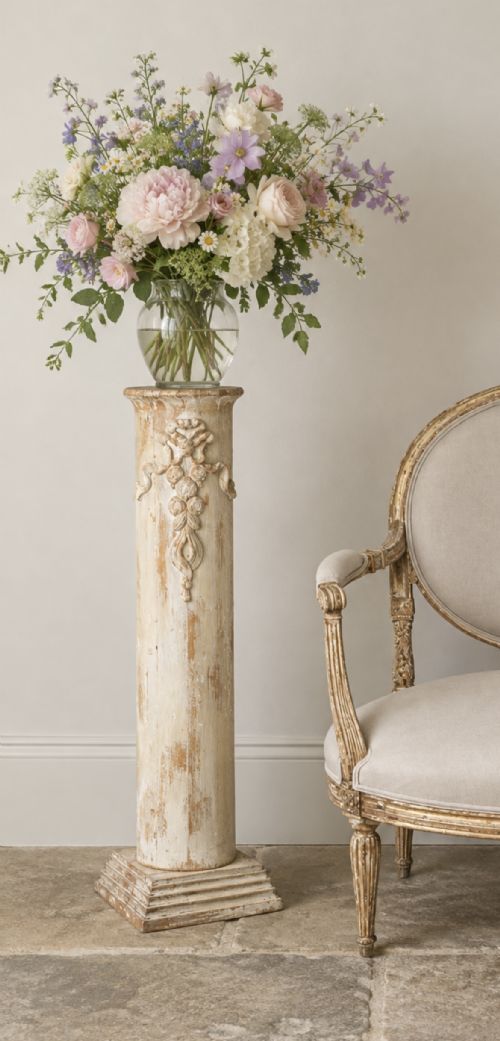
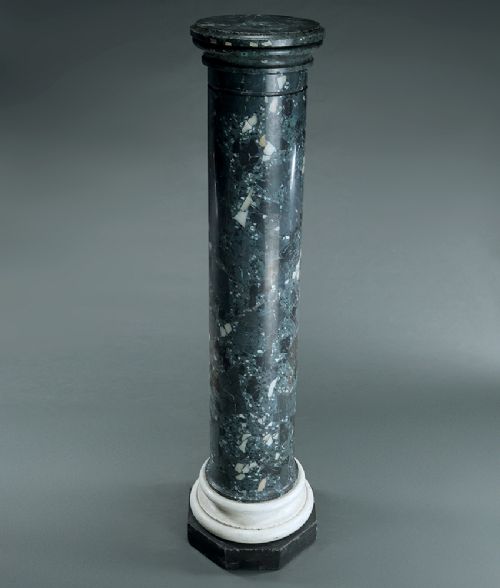
Buyers encounter everything from simple painted plaster supports to grand architectural columns in verd antique and carrara marble. Whether configured as round table tops or square plinths, each piece prioritises vertical display.
Materials and Construction
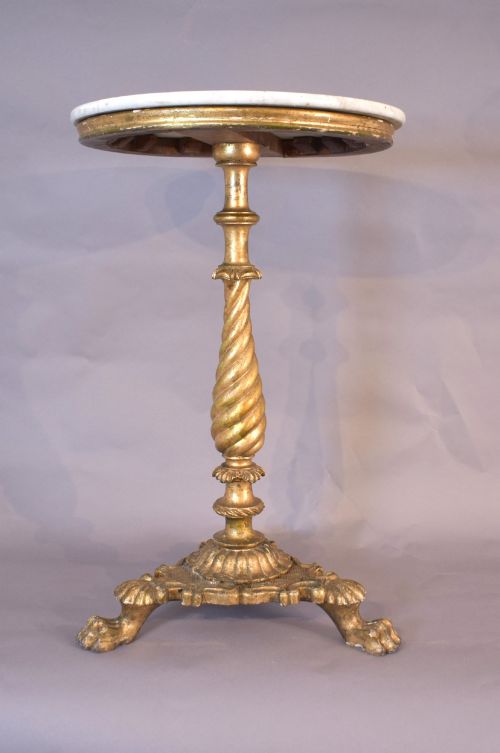
Masonry and timber dominate construction, utilising solid marbles such as bardiglio, arabescato and verde antico, alongside scagliola and cast stone. Wood workers turned mahogany, satinwood, birch and giltwood into fluted columns and tripod tables.
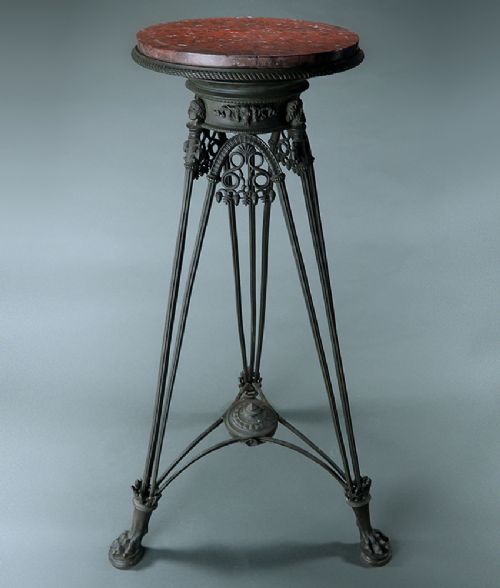
Metalwork provides structural accents and decorative contrast through ormolu, brass and bronze mounts, collars and cast iron bases. Painted finishes, faux marble effects and plaster extend the material palette to replicate stone cost-effectively.
Listings feature nineteen-century marble, mahogany, bronze and scagliola columns alongside Edwardian cast stone and Victorian painted garden planters.
Craft and Proportion
The architectural integrity of the column or plinth defines its standing, distinguishing carefully proportioned capitals and bases from simpler turnings. The precision of carved acanthus leaves, flower mouldings and fluting separates standard workshop output from finer interpretations.
Material selection dictates much of the stature, where solid exotic marbles and fire-gilded bronze mounts outweigh painted plaster and soft woods. The integration of contrasting elements, such as ormolu collars fitted snugly to onyx shafts, reveals the maker's hand.
The Neoclassical Pedestal Stand Glossary
- Ormolu
- Gilt bronze mountings applied to furniture and pedestals. This technique involves gilding a finely chased bronze object with powdered gold.
- Scagliola
- A composite material made from selenite, glue and pigments, mimicking natural marble. Artisans apply and polish it to achieve stone-like finishes.
- Guéridon
- A small French round table, often supported by a single central column or tripod base. These frequently serve as display stands or occasional tables.
- Campana
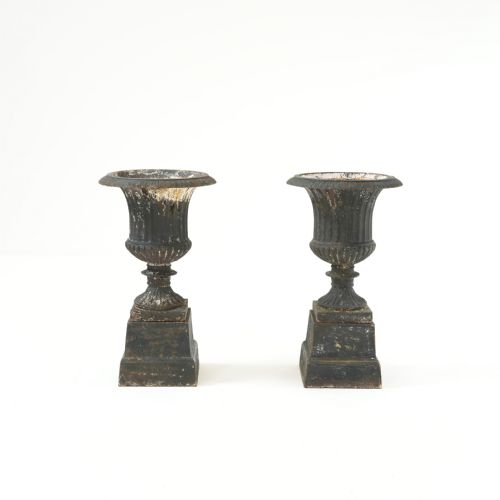
- A bell-shaped urn or garden vessel often mounted on plinths. The form derives from classical antiquity.
- Vert de Patricia
- A specific green decorative marble variety seen in French columns. It brings distinct veining to nineteenth-century pedestals.
Neoclassical Pedestal Stand: Frequently Asked Questions
How do I style a neoclassical pedestal stand?
Position the pedestal in an empty corner or flanking a doorway to draw the eye upward and anchor open spaces. Place bronze urns, marble busts or heavy ceramic lamps on top to utilise the height effectively.
Keep surrounding furniture lower to let the architectural lines of the stand remain visible. Pairing matching columns on either side of a fireplace or sideboard creates balanced symmetry.
What is the difference between a column and a plinth?
Columns feature cylindrical shafts with capitals and bases, often tapering toward the top in the classical architectural orders. Plinths are generally square or rectangular blocks that provide a solid, weighty base for statuary.
Both serve to elevate display items, but columns lean toward slender verticality while plinths offer a more grounded, blocky silhouette.
Can these stands support heavy marble busts?
Solid stone columns and hardwood pedestals easily bear the weight of heavy marble busts, bronze figures and large urns. Heavy stone bases provide the necessary gravity to keep top-heavy sculpture stable.
Lighter wooden or plaster versions require careful placement to avoid tipping when holding substantial weight.
How do I identify a Grand Tour piece?
Grand Tour pieces typically incorporate exotic Italian marbles like verde antico or scagliola, reflecting souvenirs brought back from nineteenth-century travels. They frequently scale down classical architectural ruins or statuary into portable decorative objects.
Turned columns and miniature bronze urns from this tradition carry detailed hand-finishing designed to evoke ancient Rome and Greece.