


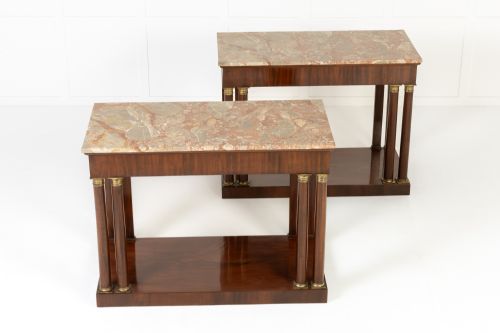
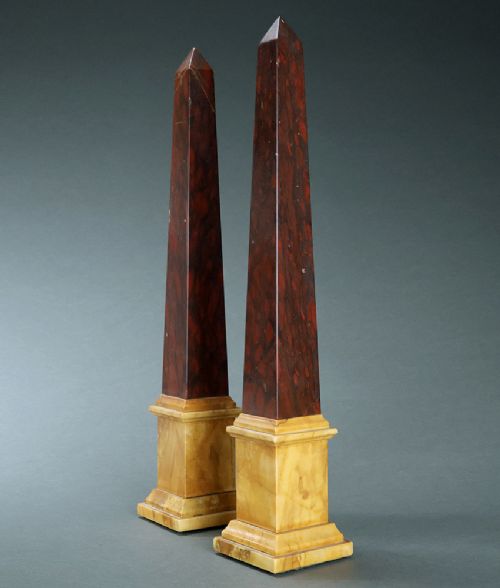


19th Century Marble Column
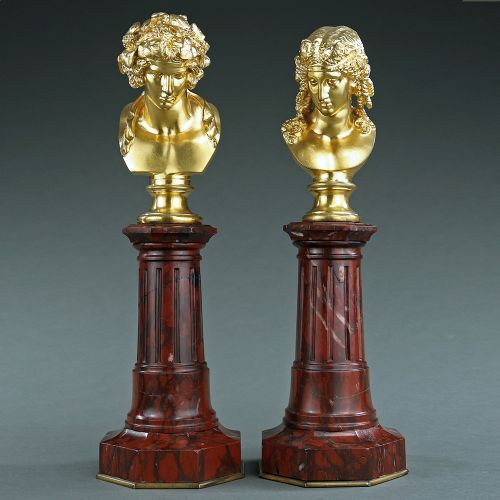
When you examine a 19th century marble column, you are looking at carved stone supports and display pedestals that bring classical proportion into interior spaces.
19th Century Marble Column
A 19th century marble column functions primarily as a decorative architectural support, a pedestal for displaying busts or urns, or a standalone focal point within a room. Buyers searching this phrase encounter both solid stone examples and hollow sectional columns designed for display rather than weight-bearing architectural use.
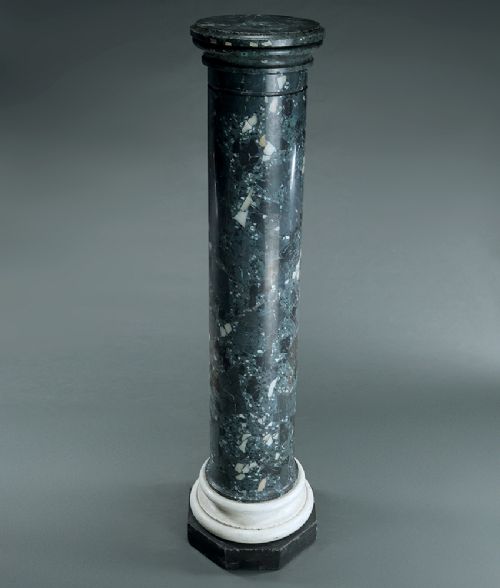
The pieces on this page heavily reflect Italian and French craftsmanship, often drawing inspiration from Neoclassical and Grand Tour aesthetics. Alongside natural stone shafts in varieties such as Verde Antico, Carrara, and Serpentine, the selection includes faux marble painted timber and scagliola alternatives.
Materials and construction
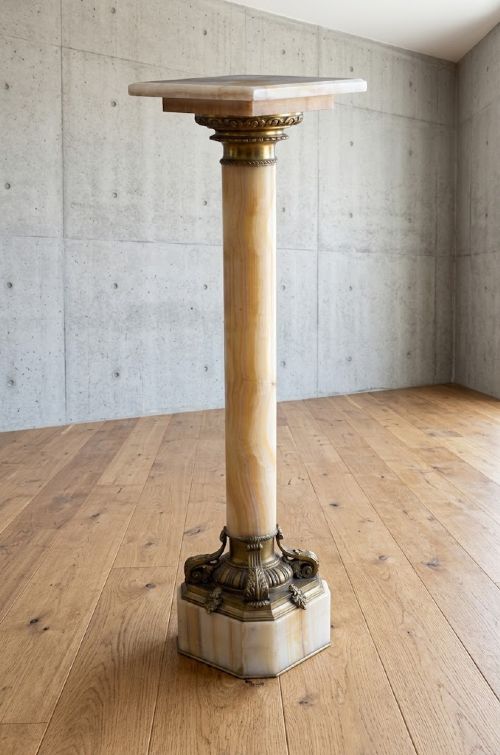
Craftsmen utilised lathe-turning to shape solid blocks of stone into smooth cylindrical shafts, frequently incorporating brass, bronze, or ormolu collars and mounts at the capitals and bases. Natural mineral varieties including onyx, alabaster, and diverse coloured marbles provided rich visual depth without additional surface decoration.
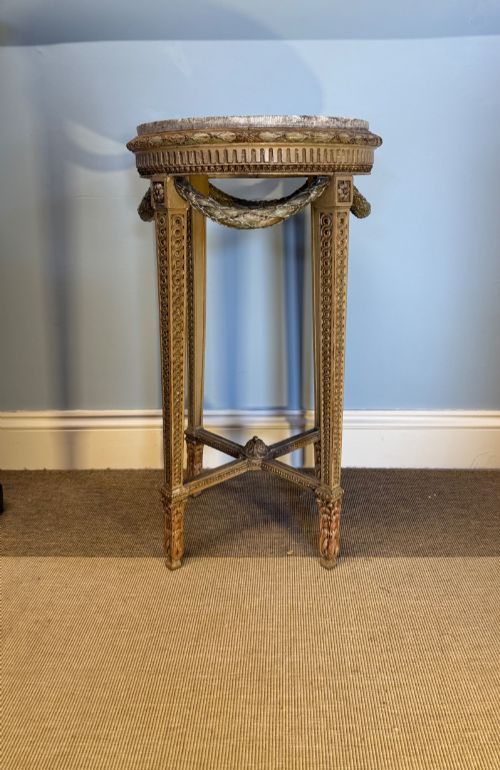
Alternative manufacturing methods involved scagliola, a composite technique using pigmented selenite, glue, and plaster to imitate natural stone veining. Painters also applied faux marble finishes to pine and other woods, achieving the appearance of classical stone through layered oil paint and varnishes.
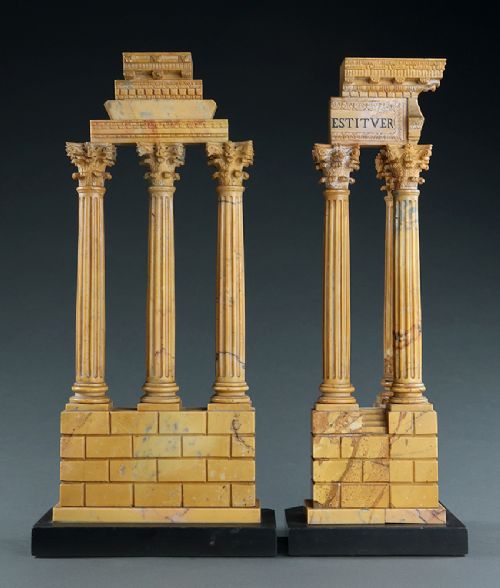
Even ancient Rome makes an appearance here through Grand Tour columns dedicated to emperors like Marcus Aurelius.
Judging the work
Quality in these pieces depends on the precision of the stone-turning, the complexity of the geological variety used, and the weight of the material. Finer examples feature seamless sectional construction and tightly fitted bronze or ormolu mounts that accent the stone without awkward gaps.
The distinction between superior and standard work also rests on surface finish and decorative intent. Hand-carved capitals displaying crisp acanthus leaves or classical motifs separate finely sculpted architectural elements from simpler, utilitarian supports.
The 19th Century Marble Column Glossary
- Ormolu
- Gilt bronze mounted onto furniture or stone supports. This technique involves applying a gold amalgam to bronze through heat treatment.
- Grand Tour
- A cultural journey through Europe undertaken by wealthy individuals during the eighteenth and nineteenth centuries. Travellers frequently collected small architectural models, busts, and columns as souvenirs.
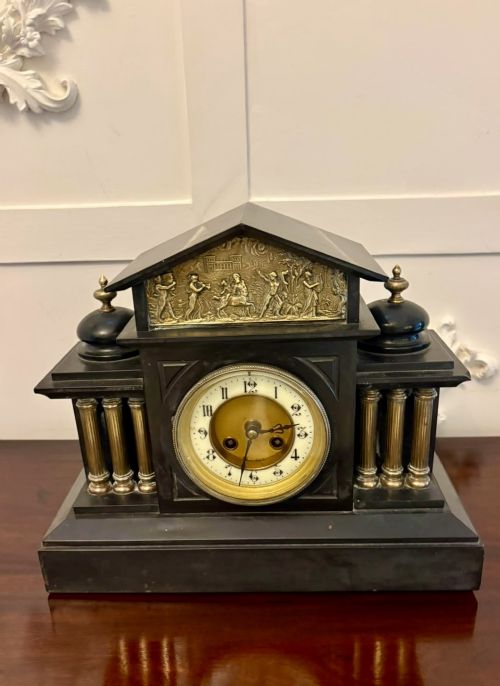
- Portico clock
- A mantel clock framed by architectural columns. These timepieces were popular in France during the nineteenth century.
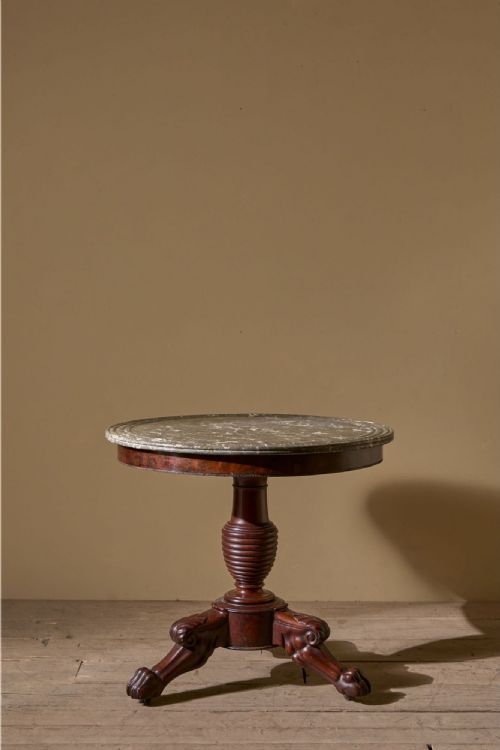
- Guéridon
- A small round table supported by a central column or pedestal. French makers produced these pieces in mahogany, burr elm, and marble-topped variants.
19th Century Marble Column: Frequently Asked Questions
Were these columns used for structural support?
Most nineteenth-century examples served decorative functions inside domestic interiors rather than bearing heavy architectural weight. They acted as display stands for sculptures, clocks, and lamps.
Solid stone varieties could support moderate loads, but hollow columns and scagliola versions were built specifically for visual display.
Where should I place a column in a room?
Columns function effectively in corners or against blank walls where they can elevate a bust, urn, or plant. Pairing them with compatible furniture enhances classical symmetry.
Shorter columns suit tabletops as decorative objects, while full-height pedestals stand directly on the floor.
How do I care for marble surfaces?
Marble requires gentle cleaning with a soft cloth and neutral soap to avoid scratching the polished surface. Acidic substances like citrus or vinegar will etch the stone and should be wiped away immediately.
Applying a specialist wax helps protect antique stone from moisture and dust accumulation.