
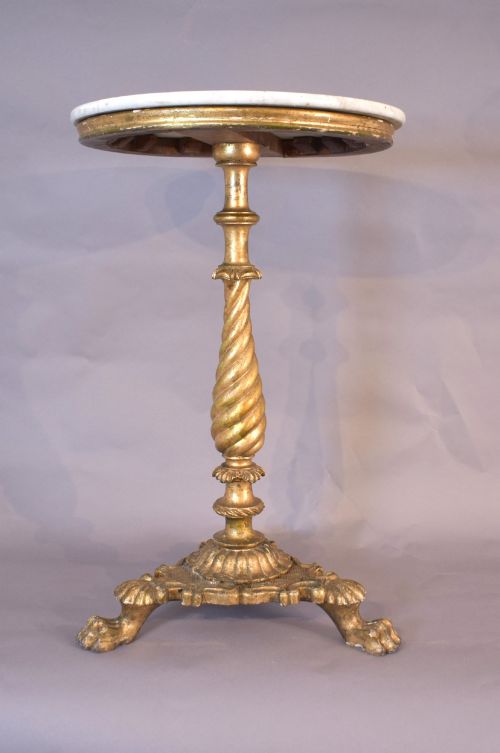
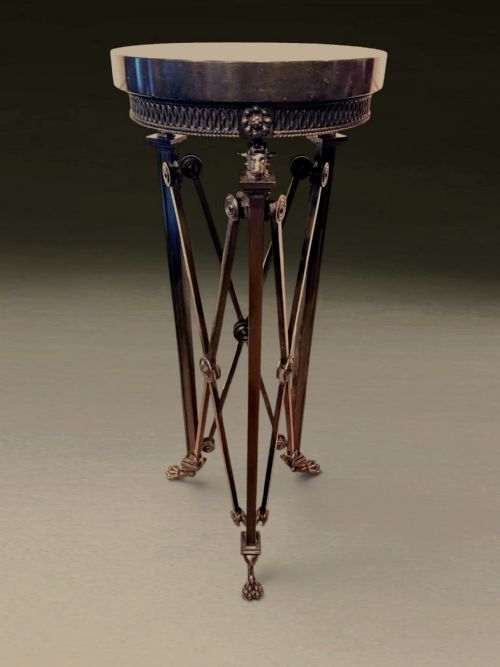
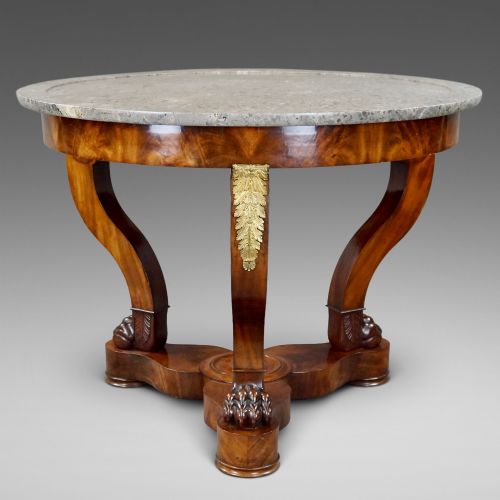
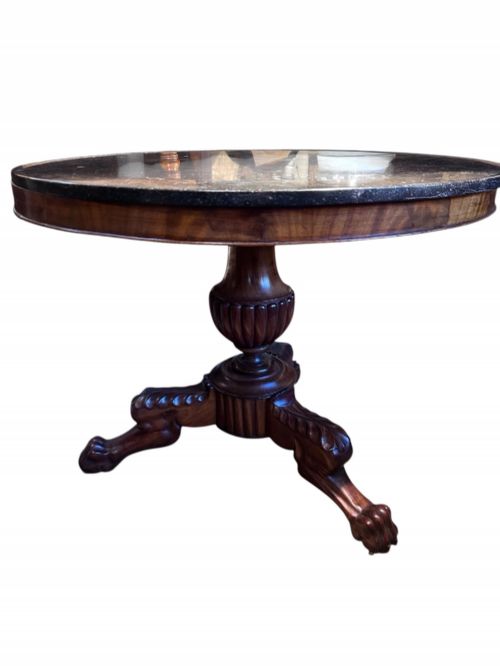




Antique Marble Top Tripod
An antique marble top tripod brings solid stone and warm timber together on three steady legs for everyday use in any room.
Antique Marble Top Tripod
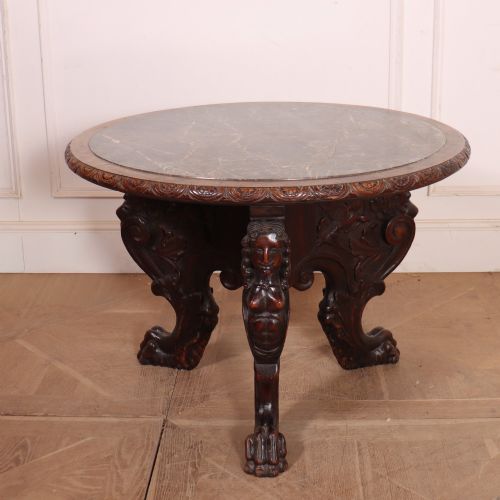
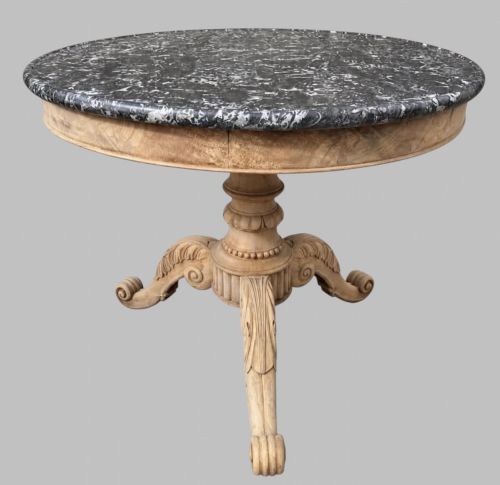
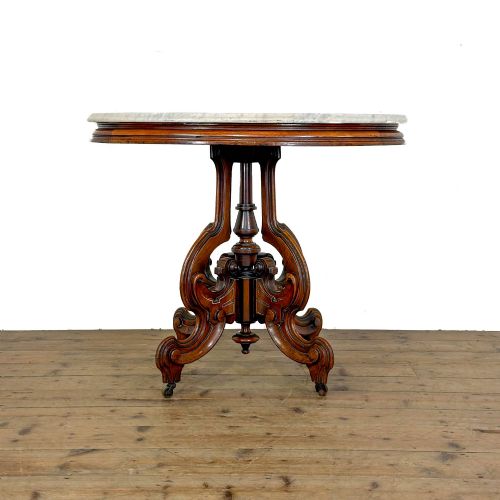
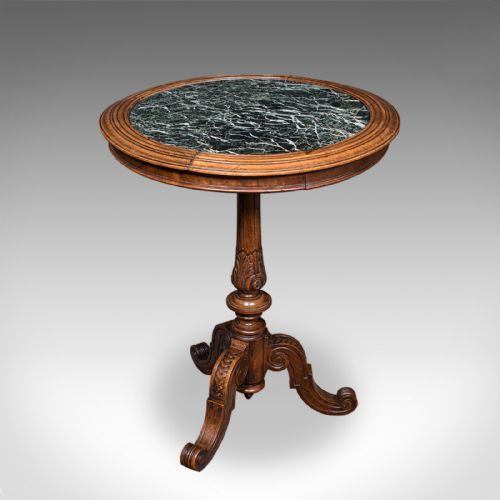
When you search for an antique marble top tripod table, you encounter round centre tables, occasional tables, gueridon tables, and plant stands designed to anchor a room or sit beside a chair. These pieces serve practical functions as lamp tables, decanter tables, and cafe tables while offering a smooth stone surface for daily placement.
The selections span the nineteenth century, including Victorian, Regency, and French Empire periods. Many pieces originate from French workshops, featuring characteristic three-legged pedestals and inset stone discs.
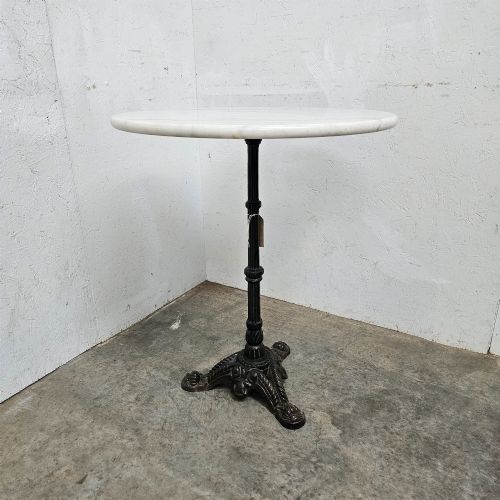
You will also find English specimen tables, Chinese hardwood stands, and cast iron bistro tables standing on three legs. The combination of a heavy stone top and a sturdy tripod base provides reliable balance across diverse interior settings.
Materials and construction
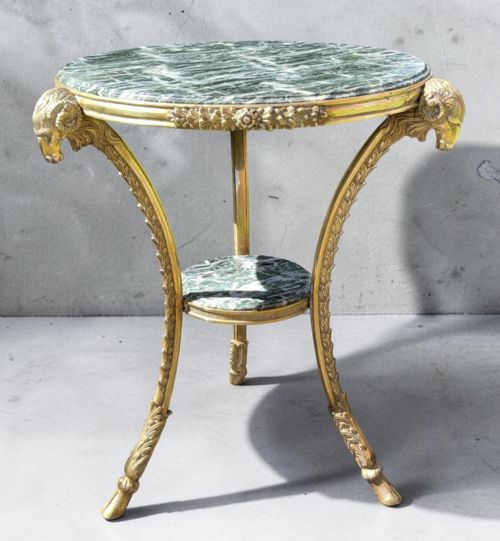
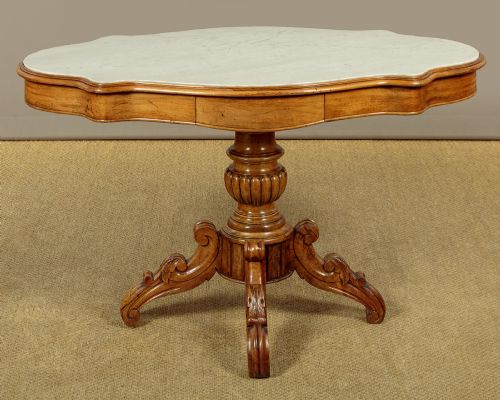
Cabinetmakers constructed the frames using mahogany, walnut, rosewood, hardwood, and giltwood, pairing the timber bases with heavy inset marble or onyx slabs. Brass mounts, bronze details, and gilt elements frequently accent the woodwork to frame the stone insert.
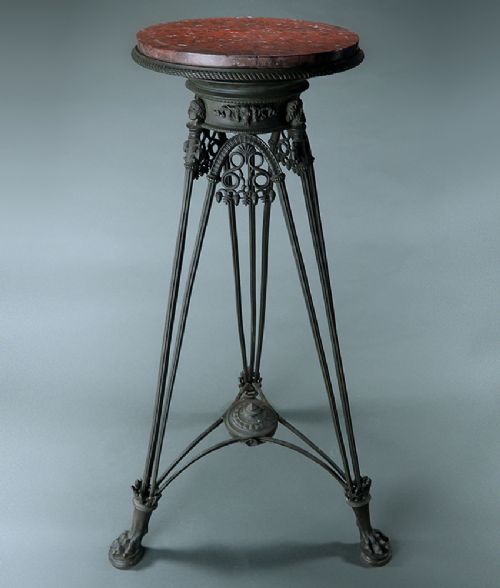
Foundries cast iron and bronze for utilitarian bases found on bistro tables and grander stands influenced by designers like Thomas Hope. Skilled hands shaped the stone tops, fitted them precisely into wooden rims or cast iron frames, and turned the three supporting legs.
Listings feature nineteen-century pieces including Victorian, Regency, and French Empire styles executed in mahogany, walnut, and cast iron with marble tops.
Distinctions in construction and finish
The quality of an antique marble top tripod table rests in the selection of materials and the crispness of the carving. Finely figured walnut or mahogany, rich giltwood, and substantial bronze or brass mounts separate ambitious workshop pieces from standard utility items.
The treatment of the stone also defines the piece, with complex specimen marbles, pietra dura work, and finely polished onyx representing higher standards of craftsmanship than plain white or simple grey stone slabs. The harmony between the tripod base and the stone top dictates the overall success of the design.
Thomas Hope
The Antique Marble Top Tripod Glossary
- Gueridon
- A small French round table, typically supported by a central column or three legs, designed for display or serving. These tables often feature inset marble tops and mahogany or walnut frames.
- Pietra dura
- An artistic technique using cut and fitted polished coloured stones to create geometric or pictorial designs. This painstaking inlay work appears on high-status nineteenth-century specimen tables.
- Specimen table
- A tabletop composed of numerous small geometric samples of different marbles and mineral stones. These pieces demonstrate geological knowledge and advanced stonemasonry.
- Tripod base
- A support structure resting on three feet or legs to maintain stability on uneven floors. This configuration appears frequently on small round tables and plant stands.
- Tripod
- A three-legged support structure used for stability on small tables and stands. The design allows the piece to rest firmly without rocking.
Antique Marble Top Tripod: Frequently Asked Questions
How do I use a marble top tripod table?
These tables function well beside seating as lamp or cocktail surfaces where moisture resistance is useful. The stone top handles drinks and small items without requiring protective coasters.
In larger spaces, a central gueridon holds plants, books, or decorative objects while adding architectural weight to the room. The three-legged design allows the piece to fit easily into corners or beside chairs.
Are marble top tripod tables stable?
The weight of the stone top anchors the three-legged base firmly to the floor. Properly balanced pedestals distribute the heavy load evenly across the feet.
While the heavy top provides gravity-assisted stability, care remains necessary around busy walkways. Placing the table on level flooring prevents any movement in the three-way joint.
How do I clean an antique marble top?
Wipe the stone surface using a soft, damp cloth with mild soap. Avoid acidic cleaners, vinegar, or citrus solutions that etch polished marble.
Dry the stone thoroughly after washing to prevent water spotting. Conditioning the surrounding timber base requires appropriate wax rather than liquid furniture polish.
What periods do these tables represent?
The available pieces primarily date from the nineteenth century, spanning Regency, William IV, Victorian, and French Empire styles. These eras favoured classical forms, rich mahogany or walnut timbers, and decorative stone work.
Later examples extend into the early twentieth century with cast iron cafe tables and occasional pieces. Each period brings distinct carving details and regional design preferences to the basic tripod form.