
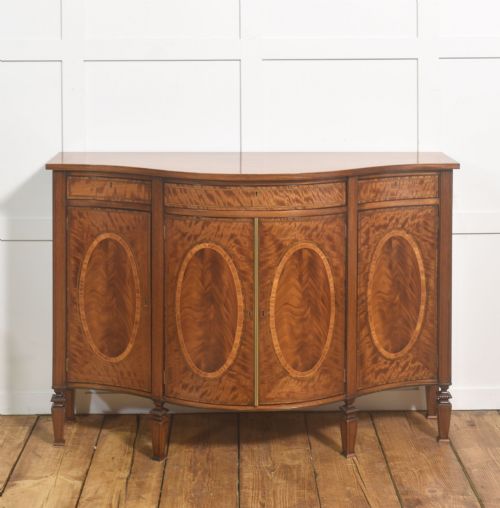
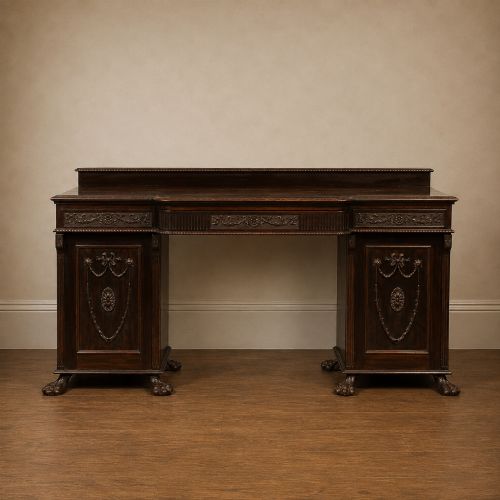
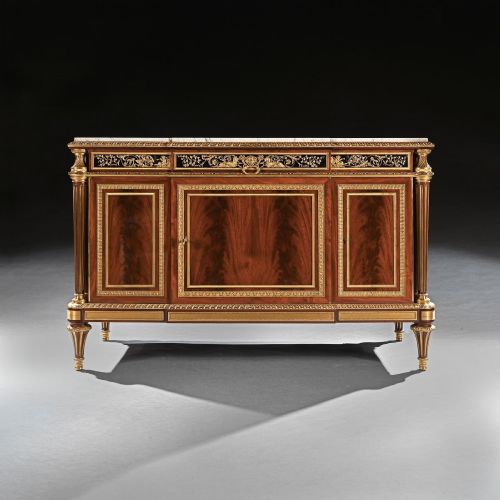
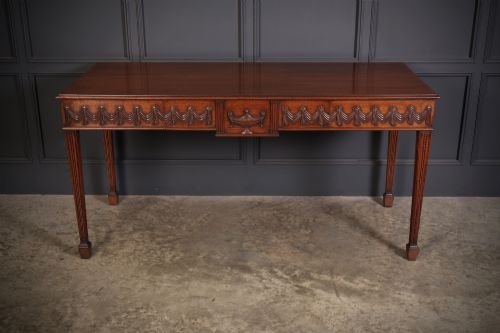
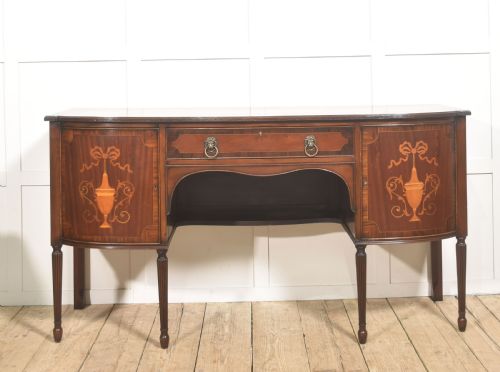
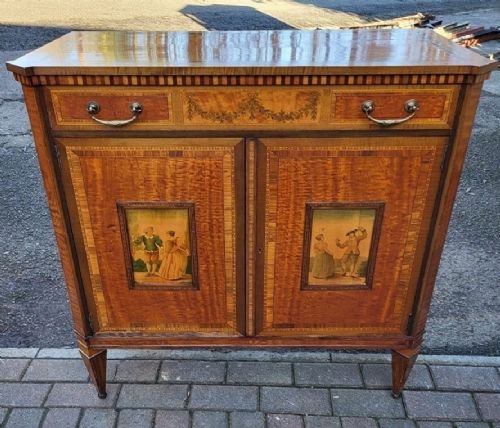


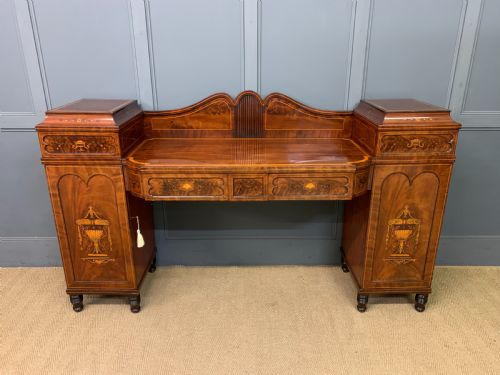


Neoclassical Mahogany Sideboard
A neoclassical mahogany sideboard brings architectural proportion and rich timber to a dining room or hall, grounding the space with classical dignity.
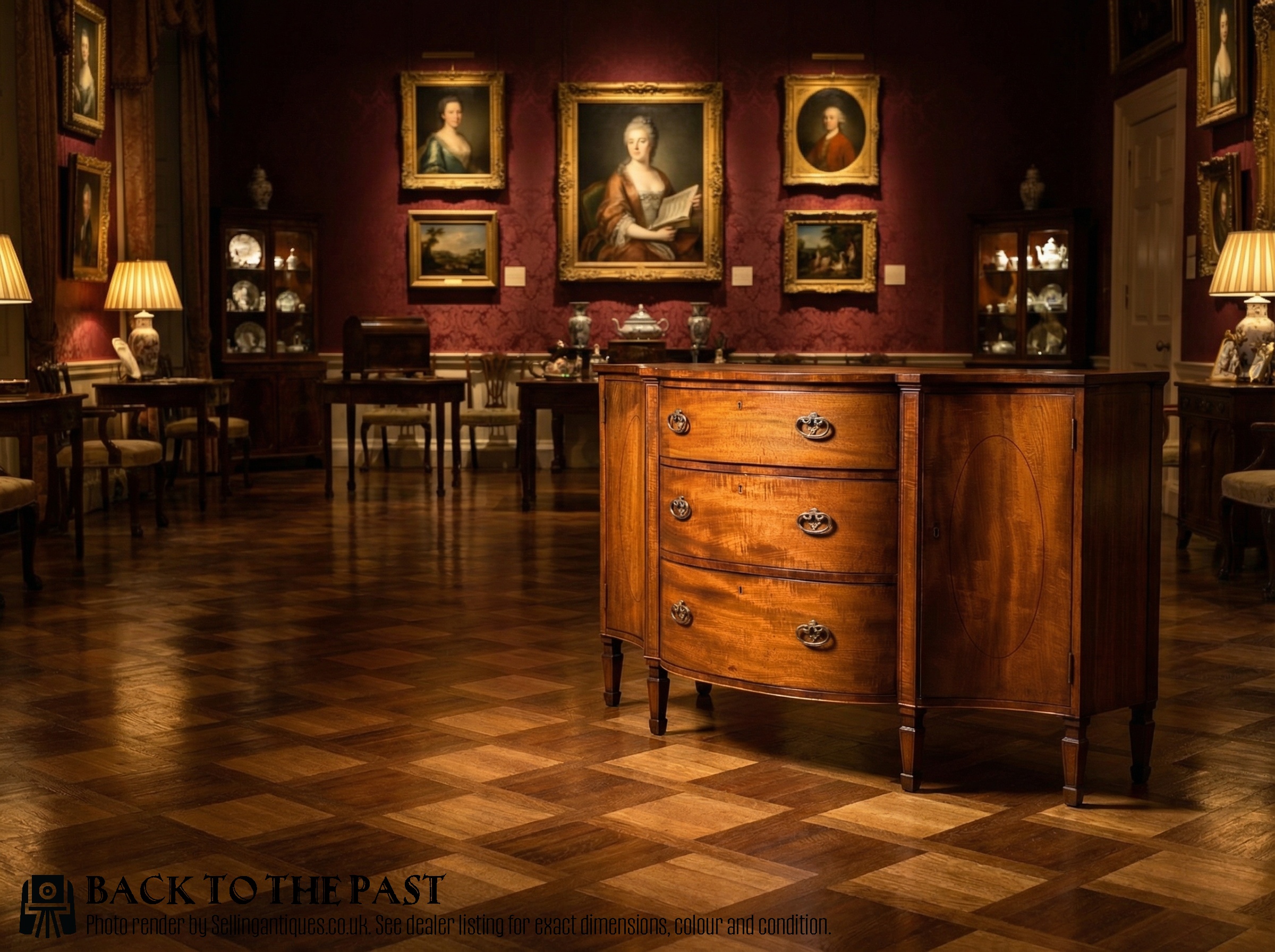
Neoclassical Mahogany Sideboard
A neoclassical mahogany sideboard serves as a commanding focal point for dining rooms and formal halls, combining functional storage with classical design vocabulary. When searching for a neoclassical mahogany sideboard, buyers encounter a diverse selection ranging from Georgian and Regency period originals to later revival interpretations.
The surviving pieces span several centuries of cabinetmaking, showing distinct regional tastes from British George III workshops to French Empire and continental commissions. Forms vary from traditional pedestals and breakfronts to bow-front commodes, serving tables, and demi-lune cabinets.
Revival pieces from the Victorian and Edwardian eras appear frequently alongside 18th-century originals, demonstrating a sustained appetite for classical restraint and symmetry. These servers and sideboards integrate substantial timber carcases with refined decorative planning suited to period and contemporary interiors alike.
How they were made
Makers built these pieces primarily using solid and veneered mahogany, selected for deep grain patterns and stability over large surface areas. Carcases frequently incorporate secondary timbers to support structural frames while external facades display figured mahogany surfaces.
Decorative detailing relies on precise contrasting veneers and metalwork, pairing satinwood and boxwood inlay with cast ormolu mounts and brass feet. Marble tops appear on continental commodes and console tables, providing a cool, durable surface that contrasts against the warm tones of polished mahogany.
Neoclassical Mahogany Sideboard Retail Price Guide 2026
Typical asking prices for neoclassical mahogany sideboard among the pieces listed under this phrase on Sellingantiques today, from the lower quarter to the upper quarter. They describe what is for sale here now, not the wider market.
Listings feature mahogany, satinwood, marble, and ormolu across George III, Regency, Victorian, and Edwardian periods.
What varies in quality
Quality rests upon the architectural integrity of the design and the precision with which decorative elements are integrated into the primary structure. Superior examples demonstrate harmonious proportions, crisp carving on mouldings and legs, and thoughtful placement of contrasting wood inlays.
The refinement of hardware, such as original brass handles, locks, and ormolu mounts, separates standard production from exceptional cabinetmaking. Interior construction, including dovetailed drawer boxes and well-fitted timber linings, further distinguishes high-grade workshop output.
Henry Dasson·Maple and Co.·Edwards and Roberts
The Neoclassical Mahogany Sideboard Glossary
- Breakfront
- A cabinet or sideboard whose central section projects forward from the flanking wings. This configuration creates visual depth and breaks up long expanses of timber.
- Demi-Lune
- A half-moon shape used for console tables, commodes, and sideboards designed to stand flush against a wall. The curved front often incorporates tambour doors or sweeping drawers.
- Ormolu
- Gilt bronze mounts applied to furniture for decorative accent, common in French neoclassical and Empire pieces. The technique involves firing a mixture of gold and mercury onto brass.
- Satinwood Inlay
- Contrasting light-toned wood inserted into the mahogany surface to form geometric patterns, husks, or classical urn motifs. This technique highlights the borders and central panels of drawers.
- Pedestal Sideboard
- A form comprising two separate pedestals connected by a central serving table or board, popular in formal dining rooms during the late 18th century.
Neoclassical Mahogany Sideboard: Frequently Asked Questions
How do I style a sideboard in a modern room?
A neoclassical mahogany sideboard works well as an anchor piece, contrasting cleanly against neutral walls and contemporary art. Keep the surface styling restrained with a single large mirror or a pair of classical lamps.
Allow the architectural timber grain and brass mounts to draw the eye without cluttering the top surface. The internal cupboards and drawers provide concealed storage for modern dining essentials.
What is the difference between a sideboard and a commode?
Sideboards are typically long, low serving pieces designed for dining rooms to hold cutlery, linen, and platters. Commodes originate as more decorative chests of drawers or cabinets, often topped with marble.
While English pieces lean towards functional serving tables and pedestals, continental commodes favour enclosed cabinet space and ornate ormolu mounts. Both share classical proportions within the neoclassical tradition.
How do I care for antique mahogany timber?
Protect the polished surface by keeping the piece away from direct sunlight and sudden temperature changes, which can dry out the wood. Dust regularly with a soft, dry cloth and avoid silicone-based sprays.
Feed the timber periodically with a traditional wax polish to maintain the warm lustre and protect the grain. Lift objects rather than dragging them across the top to prevent surface scratching.
How can I tell a Georgian original from a revival piece?
Examine the construction methods inside the drawers and at the back of the carcase for hand-cut dovetails and tool marks consistent with 18th-century practices. Revival pieces from the Victorian and Edwardian eras often use standardised fixings and machine-sawn secondary timbers.
Stylistic cues also help distinguish periods, as Sheraton and Adam revivals frequently exaggerate classical motifs with high-contrast satinwood marquetry. Comparing secondary woods and hardware styles provides a clearer picture of the manufacturing date.