

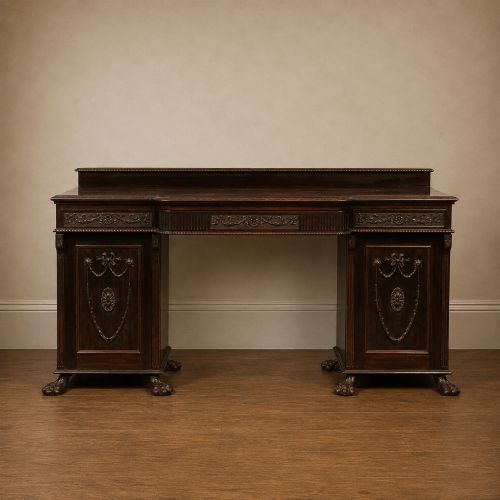


Adam Style Furniture
Adam style furniture brings neoclassical elegance to your rooms, offering refined symmetry and classical ornament for the interior.
Adam Style Furniture
Adam style furniture draws on neoclassical design principles, featuring classical motifs and balanced proportions that define the aesthetic. When you search for adam style furniture, you encounter pieces designed to bring architectural symmetry and lightness into domestic interiors.
The selections on this page span the nineteenth century, including Victorian and Edwardian examples alongside pieces dating from eighteen hundred. Common forms range from sideboards and display cabinets to console tables, bookcases, pedestals, and centre tables.
Most items you meet here belong to the revival periods, capturing the eighteenth-century neoclassical revival through precise ornamentation and classical detailing. These furnishings suit formal reception rooms and libraries where balanced composition matters.
How they were made
Cabinet makers utilised dense hardwoods such as mahogany and exotic timbers like satinwood to form the primary structures of these pieces. Marquetry and delicate inlays frequently adorn the surfaces, showing precise placement of contrasting woods.
Metal mounts in brass alongside glass panels appear on display cabinets and sideboards to complement the polished timber surfaces. Carved details incorporate classical motifs executed by hand before finishing.
Adam Style Furniture Retail Price Guide 2026
Typical asking prices for adam style furniture among the pieces listed under this phrase on Sellingantiques today, from the lower quarter to the upper quarter. They describe what is for sale here now, not the wider market.
Paw feet occasionally anchor a grand Edwardian sideboard, adding an unexpected touch of animal vigor to classical symmetry.
What varies in quality
The refinement of the carved ornament and the precision of the satinwood inlays dictate the distinction between standard and superior pieces. Finer examples display crisper execution in their neoclassical details and better timber selection.
Cabinet construction integrity and the retention of original brass hardware or glass elements influence the standing of an individual piece. Makers with established reputations contribute to the distinction of specific items.
Jewell of Holborn·Maple and Co
The Adam Style Furniture Glossary
- Neoclassical
- A style reviving classical Roman and Greek motifs. It emphasises straight lines, symmetry, and classical restraint.
- Breakfront
- A cabinet or sideboard whose central section projects forward from the flanking wings. This creates depth and visual rhythm across the facade.
- Inlay
- A technique where pieces of contrasting timber are inserted into depressions in the base wood. It creates decorative patterns across tabletops and cabinet doors.
- Torcherere
- A tall stand designed to support a candelabrum or bust. These elevated supports showcase classical carving and slender proportions.
- Commode
- A low decorative cabinet featuring doors or drawers. In this context, it often refers to ornate side cabinets with satinwood finishes.
Adam Style Furniture: Frequently Asked Questions
What periods do these pieces date from?
The pieces span the nineteenth and early twentieth centuries, including Victorian and Edwardian eras alongside items from around eighteen hundred. Most represent the revival movements popular during these later decades.
Craftsmen drew directly upon eighteenth-century neoclassical pattern books to produce these revival designs for contemporary homes.
How do I identify Adam revival furniture?
Look for classical motifs such as urns, husks, paterae, and fluted legs combined with symmetrical layouts. The overall impression relies on lightness and rectilinear geometry rather than heavy baroque curves.
Mahogany and satinwood predominate, often enhanced with fine inlay work and brass mounts.
Where should I place a console table?
Console tables suit entrance halls, living rooms, and dining areas where they sit flush against a wall beneath a mirror or painting. Their shallow depth allows them to occupy narrow spaces without obstructing movement.
Pairing a console with a matching mirror creates a traditional focal point in a reception room.
How do I care for satinwood surfaces?
Keep satinwood furniture away from direct sunlight and heat sources to prevent the timber from fading or drying out. Dust regularly with a soft, dry cloth and avoid silicone-based polishes.
Occasional application of a suitable wax preserves the lustre of the polished wood.