
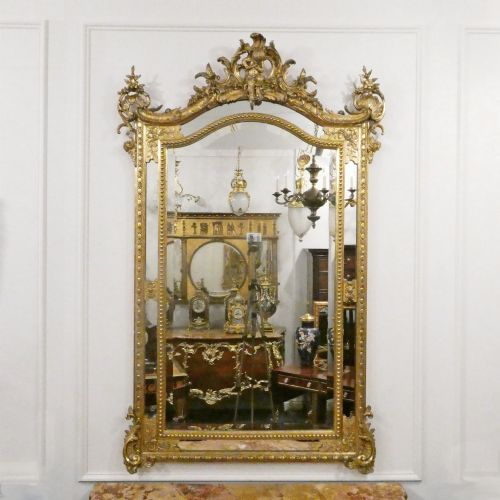
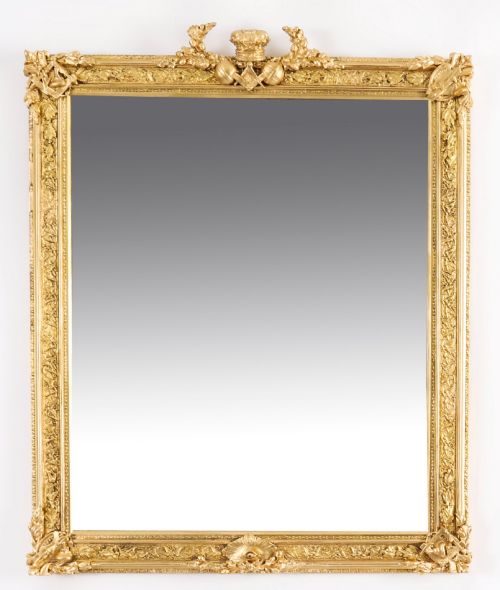
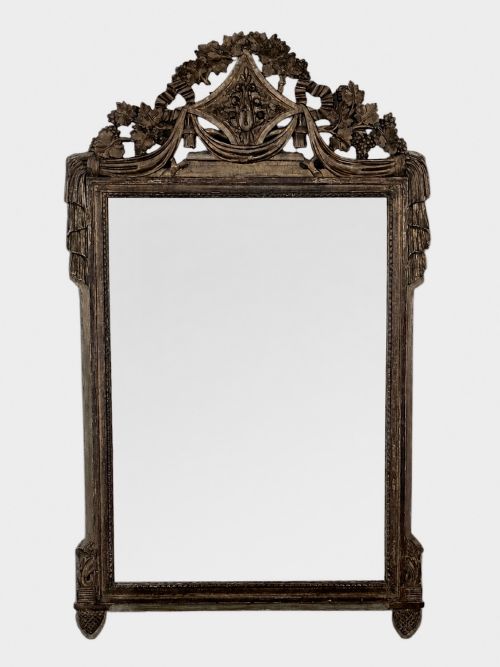
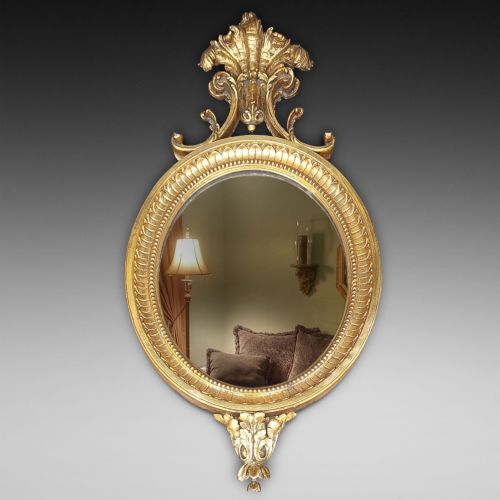
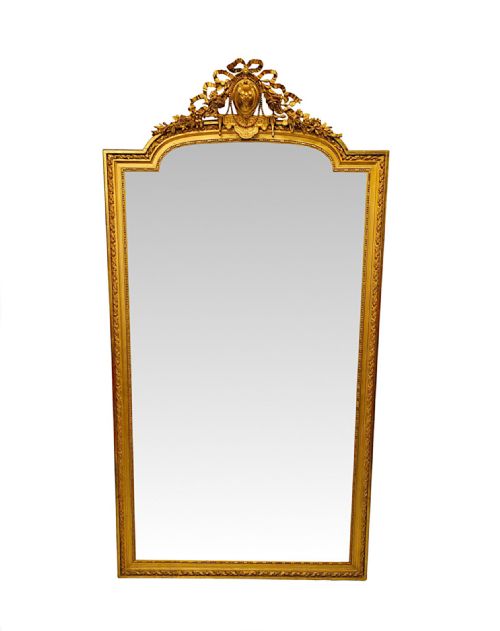


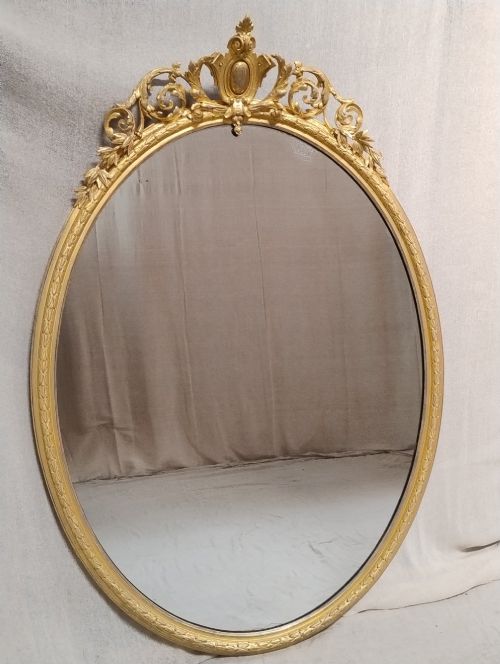
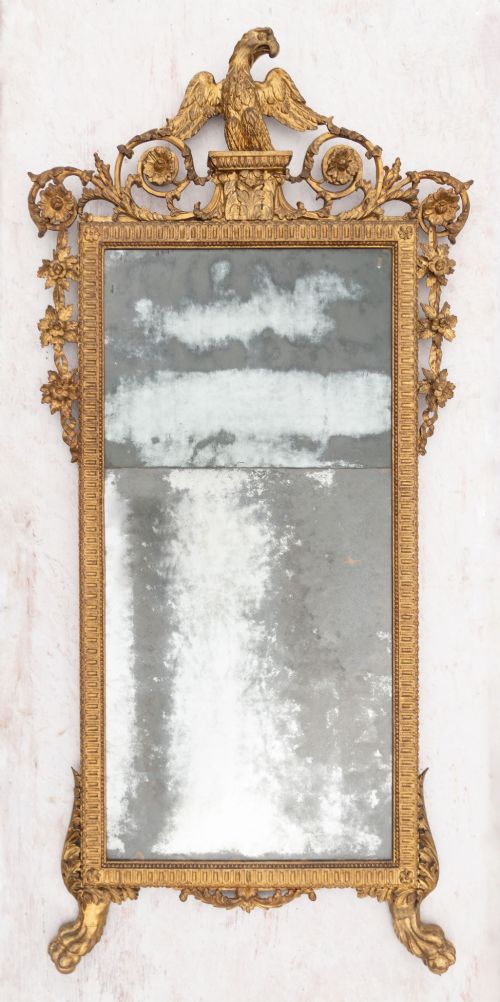
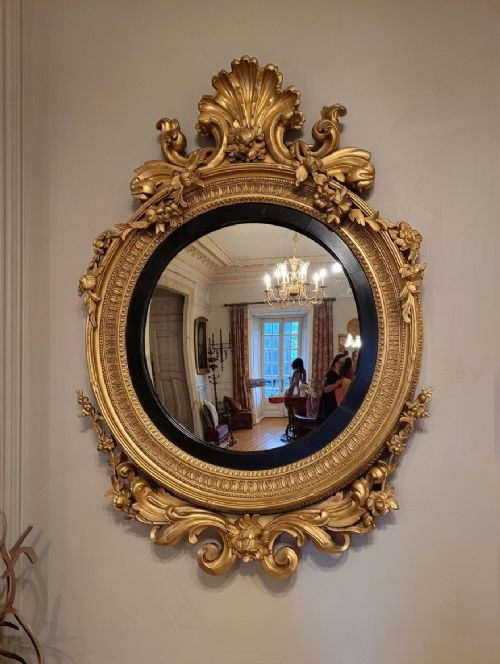
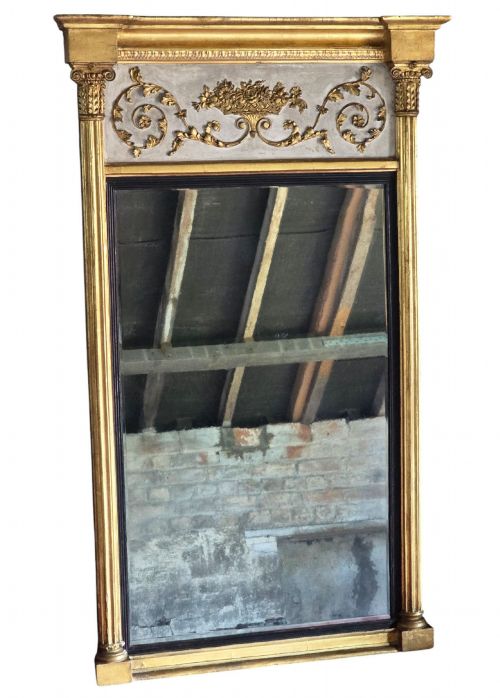
Neoclassical Giltwood Wall Mirror
A neoclassical giltwood wall mirror brings architectural proportion and gilded light to a room, drawing the eye with symmetrical urns, swags, and classical moulding.
Neoclassical Giltwood Wall Mirror
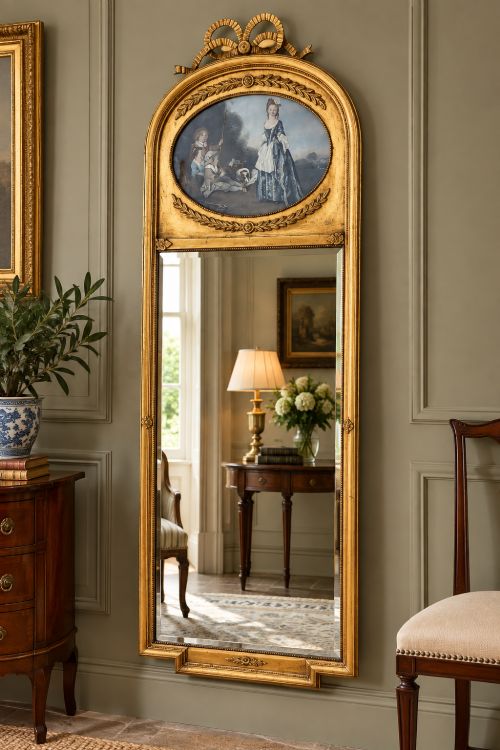
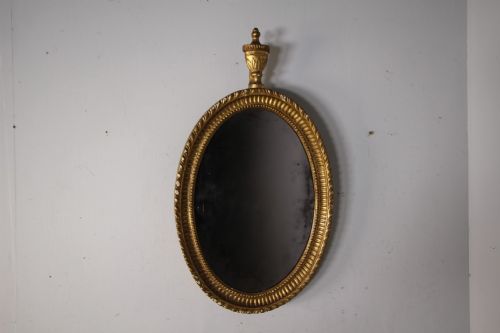
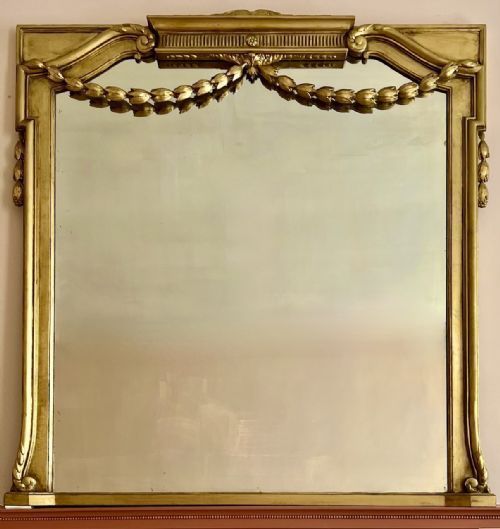
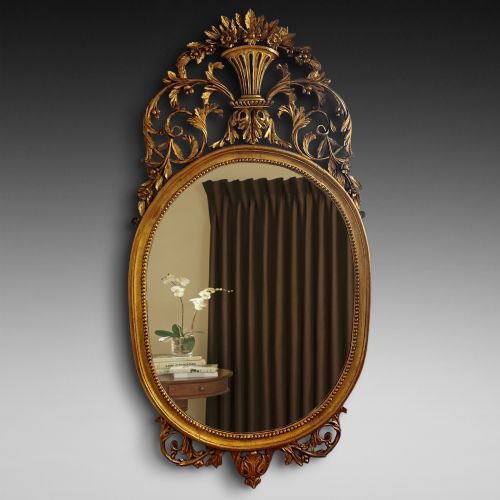
A neoclassical giltwood wall mirror is a framed looking glass rooted in classical design, drawing on 18th Century, Regency, and Victorian revivals. These pieces take the form of tall pier glasses, wide overmantels intended for mantlepieces, and oval wall mirrors.
The pieces on this page originate from English, French, and Italian workshops, reflecting stylistic lineages such as Louis XVI, Adam Revival, and Grand Regency. Buyers encounter oval formats, rectangular wall hanging units, and tripartite plate configurations.
Makers and artisans of these periods constructed frames to command a space, utilising giltwood and gesso to catch daylight. They serve equally well above a fireplace or suspended between tall windows as a pier mirror.
How they were made
Carved wood provides the structural framework for these mirrors, frequently layered with gesso to build up crisp relief details like bead-and-reel moulding, acanthus leaves, and classical urns. Artisans applied gold leaf directly onto these prepared surfaces to achieve a brilliant metallic sheen.
Composition ornament, often called compa, was pressed into moulds and applied over wooden foundations to accelerate the creation of repetitive classical motifs. Mercury glass plates and early bevelled mirror glass feature within many of these frames, showing the reflective standards of Georgian and 19th-century glazing.
Listings feature periods spanning the 18th century, Regency era, and Victorian revivals.
What varies in quality
The depth and sharpness of the hand-carved wooden elements separate exceptional pieces from those reliant on heavy moulded composition. Crisp undercut foliage and securely jointed frame corners indicate superior workshop execution during periods like the Georgian era or the Adam Revival.
The preservation of the original gold leaf and the character of the mirror plate itself determine the visual weight of the object. Plates retaining their original mercury silvering or early blemishes hold greater historical integrity than modern replacement glass.
The Neoclassical Giltwood Wall Mirror Glossary
- Giltwood
- Wood carved and coated with gold leaf. This finish defines the reflective warmth of classical frames.
- Gesso
- A mixture of plaster of Paris and glue binder. Artisans brushed this onto wood to create a smooth surface for gilding.
- Composition
- A mouldable paste of whiting, resin, and glue. Workshops used this material to cast repeating neoclassical ornaments quickly.
- Pier glass
- A tall mirror designed to hang on the wall space between windows. These pieces often sat above low console tables.
- Mercury plate
- A mirror glass backed with a tin and mercury amalgam. This technique produces a deep, mottled reflection seen in older pieces.
Neoclassical Giltwood Wall Mirror: Frequently Asked Questions
Where should I hang a wall mirror?
These mirrors suit placement above a fireplace mantel or positioned on a drawing room wall where they can reflect natural light.
Ensure the wall fixings match the substantial weight of carved timber and glass frames.
How do I identify a neoclassical style?
Look for symmetrical geometry, urns, floral swags, and architectural columns derived from ancient Greek and Roman design.
Revival periods from the nineteenth century often replicated these exact motifs with crisp composition ornaments.
What is an overmantel mirror?
An overmantel is a wide mirror constructed specifically to sit directly above a fireplace mantelpiece.
They often incorporate horizontal proportions and decorative crests designed to draw the eye upward.
How do I care for giltwood?
Dust the gilded frame gently with a dry, soft brush to protect the delicate gold leaf layer.
Avoid liquid cleaners and moisture, which can damage both the gesso base and the historic timber beneath.