
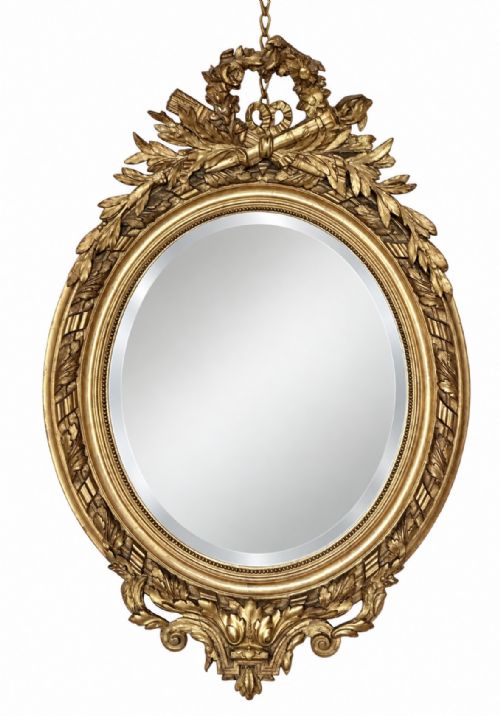
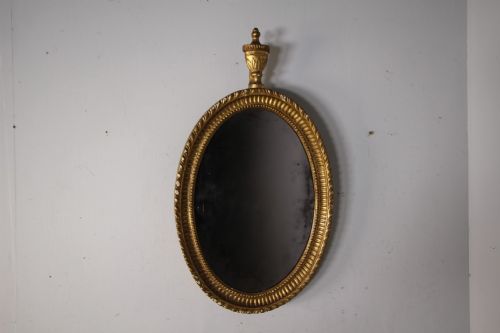
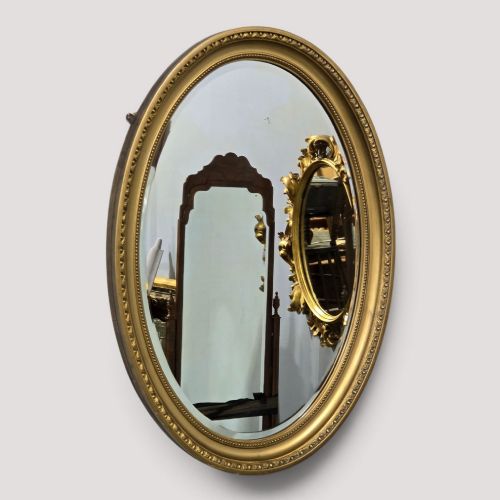
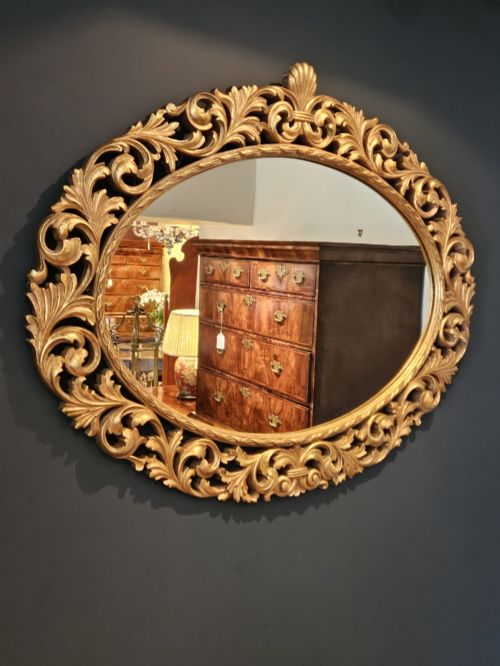
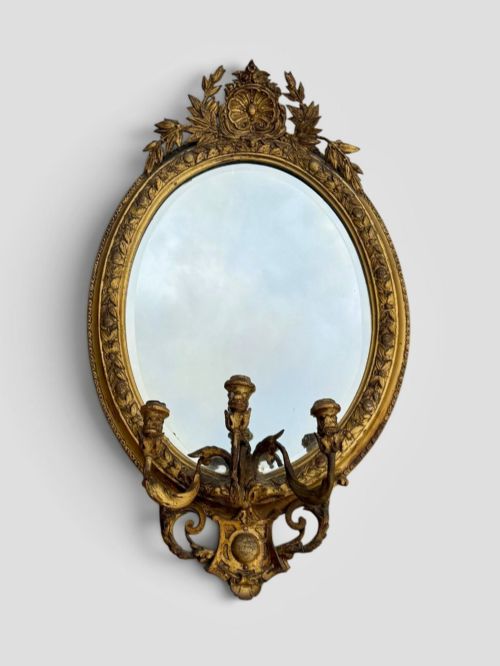
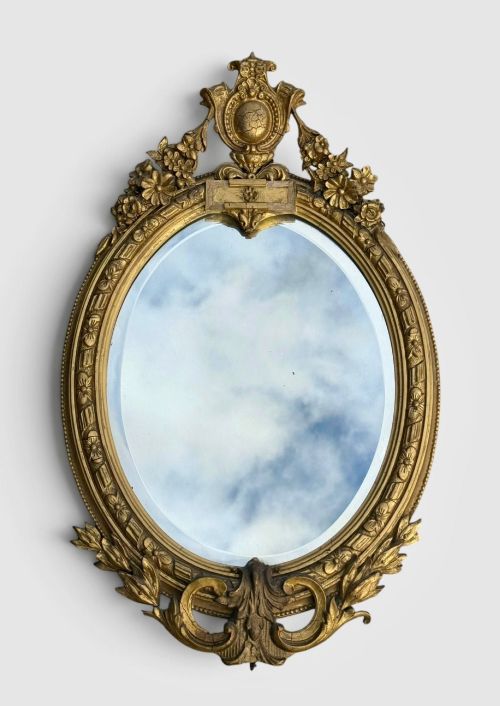
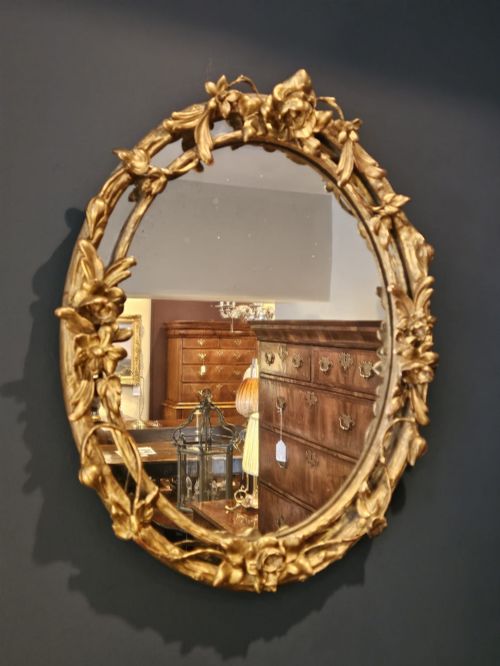
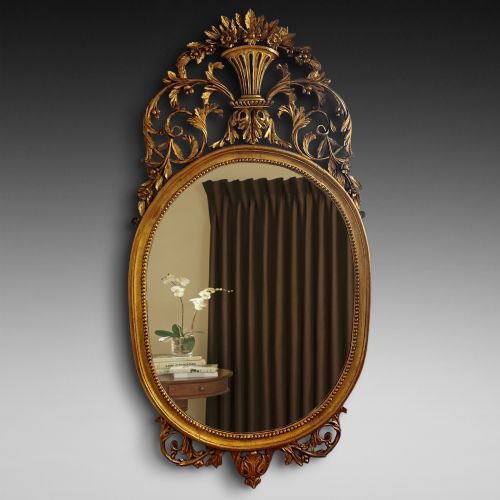
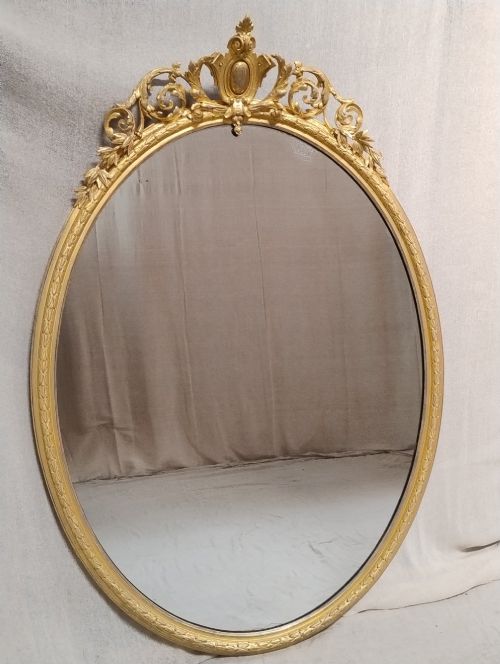
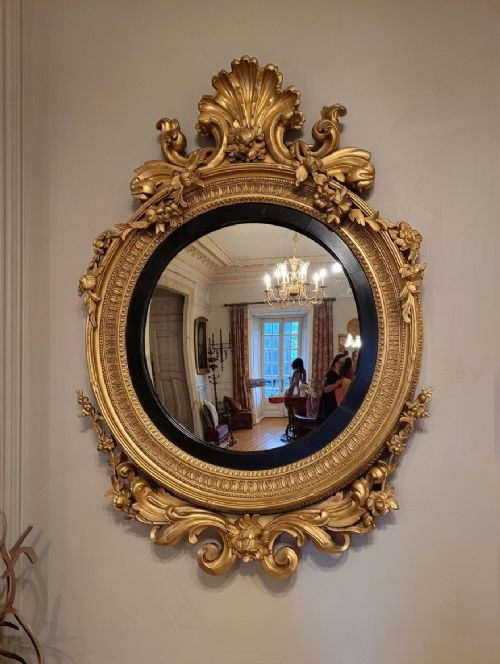
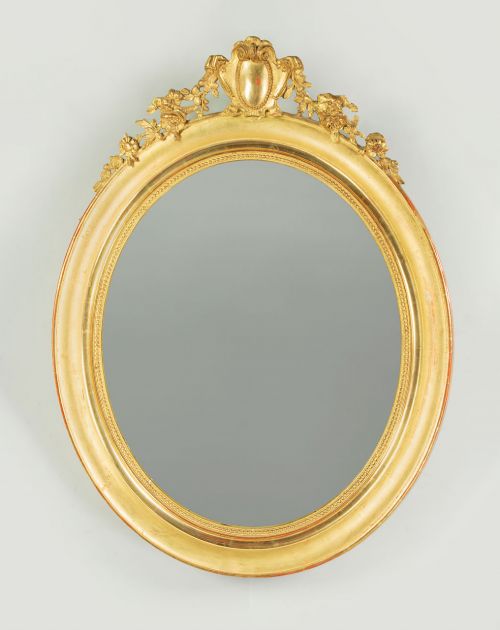
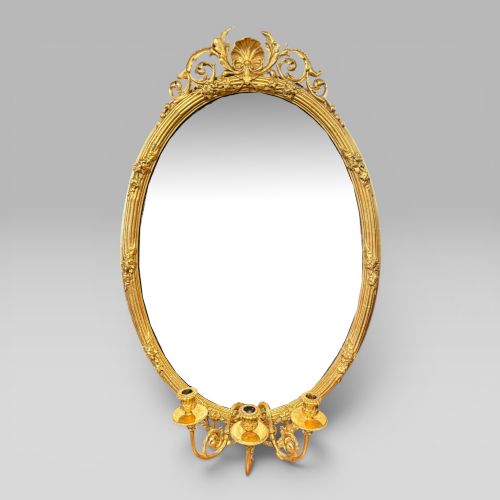
Carved Giltwood Oval Mirror
A carved giltwood oval mirror brings warmth and reflected light to a room through centuries-old craftsmanship.
Carved Giltwood Oval Mirror
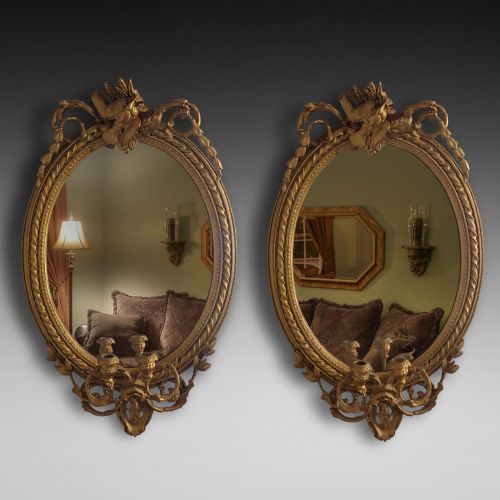
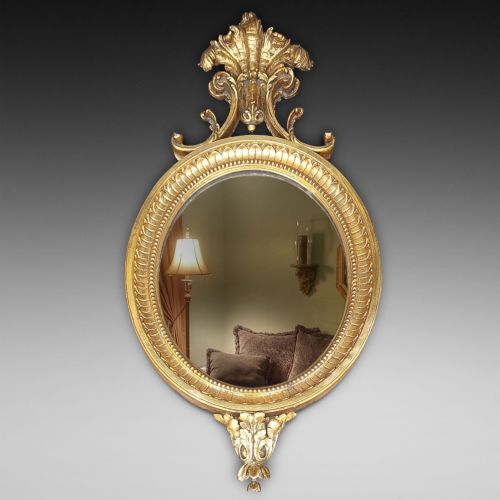
A carved giltwood oval mirror represents a traditional form spanning the eighteenth century, the Georgian era, and the Victorian period. These pieces function primarily as wall mirrors, pier mirrors, or girandoles designed to catch and amplify ambient light.
The inventory on this page ranges from early examples dating to seventeen hundred through to Edwardian interpretations. Pieces appear in various sizes, from compact toilet mirrors to large hall and overmantel installations.
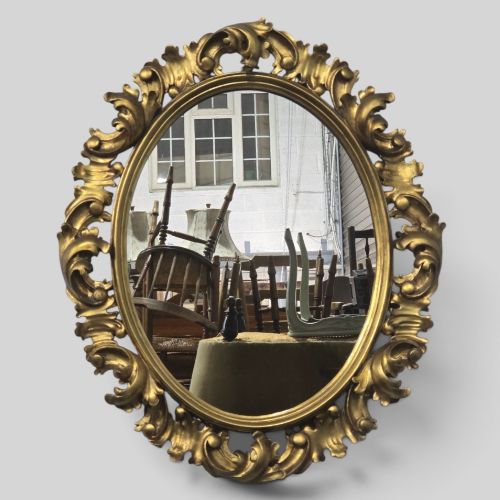
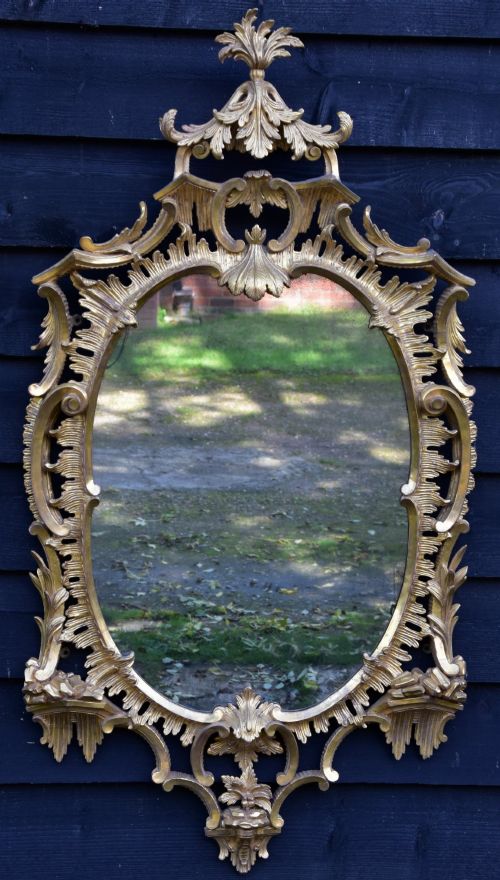
Stylistic influences include Rococo Revival, Neoclassical, Adam, and French French Chateau designs. Buyers encounter both English craftsmanship and continental origins, notably Italian and French workshops.
How they were made
Makers shaped timber and wood cores before applying layers of gesso to build up intricate relief decoration. Carvers then worked the surfaces by hand to create crisp foliage, scrolls, and frames.
Craftspeople applied gold leaf or gold paint over the prepared gesso base to achieve a brilliant metallic finish. Many period examples retain original mirror glass or mercury plate within the carved frame.
Carved Giltwood Oval Mirror Retail Price Guide 2026
Typical asking prices for carved giltwood oval mirror among the pieces listed under this phrase on Sellingantiques today, from the lower quarter to the upper quarter. They describe what is for sale here now, not the wider market.
Listings feature eighteenth-century, Georgian, and Victorian periods alongside Edwardian revivals.
What varies in quality
The depth and sharpness of the hand-carved detail separate standard production from superior examples. Crisp undercutting in the wood and gesso indicates a skilled hand during the manufacturing process.
The preservation of the original gold leaf and the condition of the underlying gesso influence the visual richness of the object. Age-related oxidation in early mirror glass and mercury plate adds character specific to individual pieces.
The Carved Giltwood Oval Mirror Glossary
- Giltwood
- Timber that has been decorated with gold leaf or gold paint. This finish creates a luminous metallic surface characteristic of formal decorative frames.
- Gesso
- A plaster-like mixture applied to wood frames and carved into relief ornament before gilding. It provides a smooth base for gold leaf application.
- Girandole
- A decorative wall mirror fitted with attached candle sconces. These fixtures multiplied candlelight within eighteenth and nineteenth-century rooms.
- Mercury plate
- An early type of mirror glass backed with a tin-mercury amalgam. It produces a characteristic mottled reflection distinct from modern silvered glass.
- Pier mirror
- A tall mirror designed to hang on the wall space between windows. These pieces maximised light in period reception rooms.
Carved Giltwood Oval Mirror: Frequently Asked Questions
How do I date a giltwood mirror?
Dating relies on examining the construction methods of the timber frame, the composition of the gesso, and the style of the carving. Georgian and eighteenth-century pieces often feature hand-cut pine or hardwood frames with distinct tool marks.
Later Victorian and Edwardian examples utilise more uniform machine preparation and distinct revival motifs. The backing boards and fixings also provide clues regarding the period of manufacture.
What is mercury glass?
Mercury glass refers to mirror plates produced using a tin and mercury backing technique common before the mid-nineteenth century. This process creates a slightly uneven, soft reflection with characteristic dark speckling.
Finding original mercury plate in an eighteenth or early nineteenth-century mirror preserves the authenticity and historical character of the piece.
Where should I hang an oval mirror?
Oval mirrors suit narrow wall spaces, hallways, and above mantelpieces where their curved frames soften rectangular architectural lines. Smaller girandoles work well in pairs flanking larger furniture or doorways.
Ensure the wall fixings match the weight of the timber and gesso frame to support the piece securely.
How do I clean giltwood frames?
Dust giltwood frames gently with a soft, dry brush to prevent damage to the delicate gold leaf surface. Avoid using liquid cleaners, moisture, or chemical solvents, which strip the historic gilding.
Professional restoration is recommended for significant cleaning or repairs to cracked gesso.