
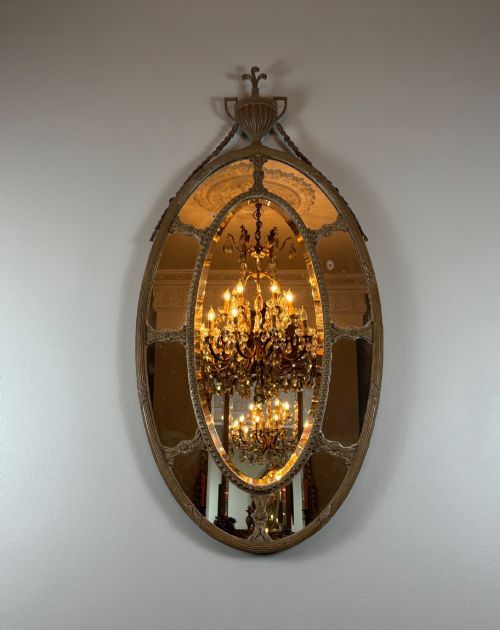

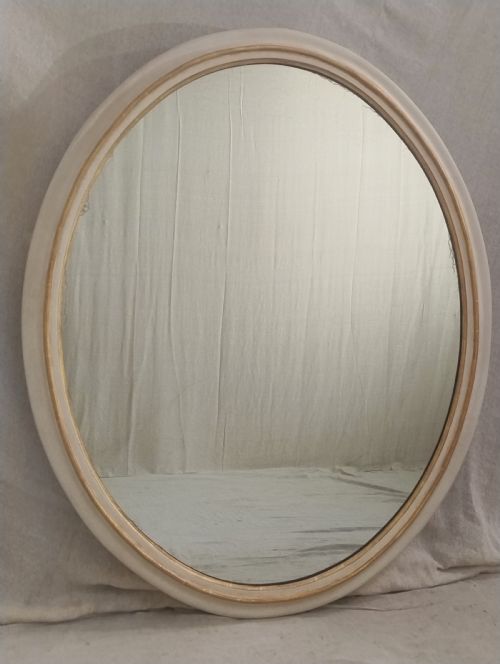
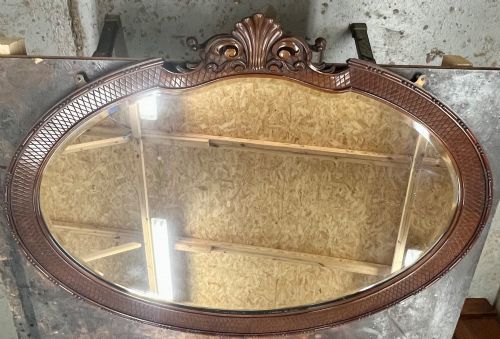
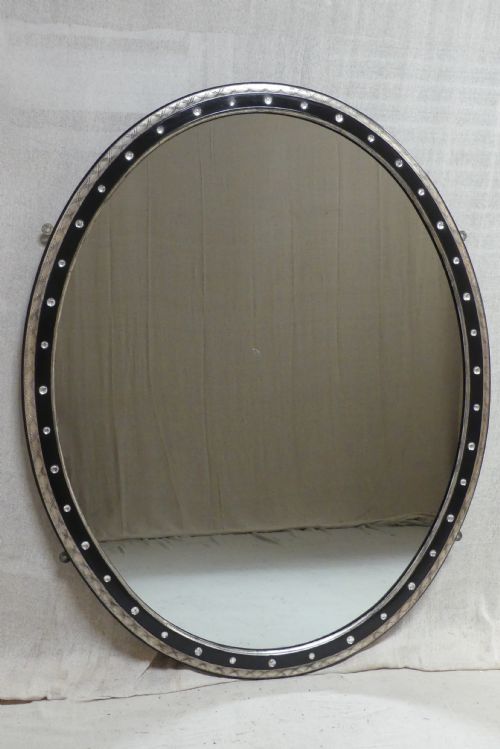
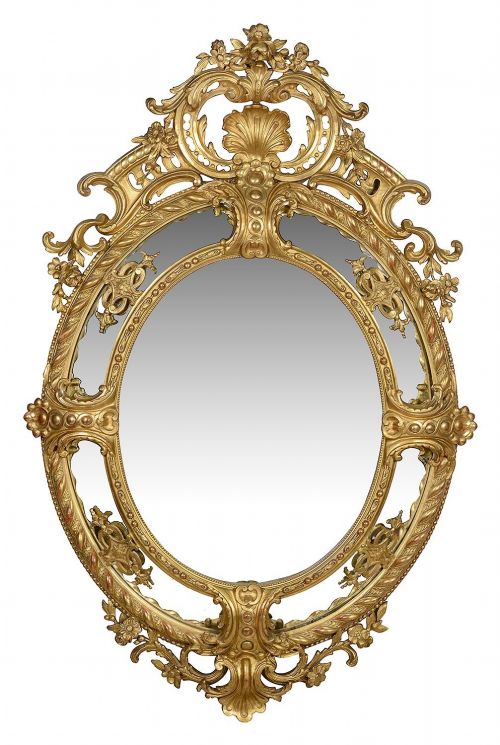


Large Oval Mirror
A large oval mirror brings presence and reflected light to a room, offering the classic forms found in nineteenth-century and Edwardian interiors.
Large Oval Mirror Types
A large oval mirror serves primarily as a wall or overmantel piece, drawing the eye with its curved frame and generous proportions. These pieces anchor a room above a fireplace or along a principal wall.
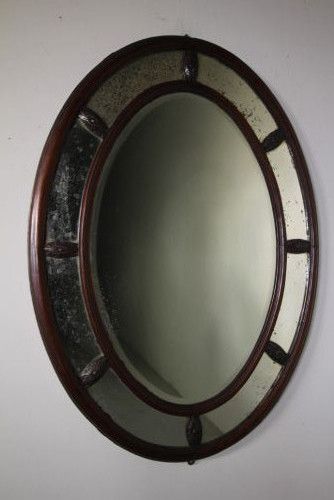
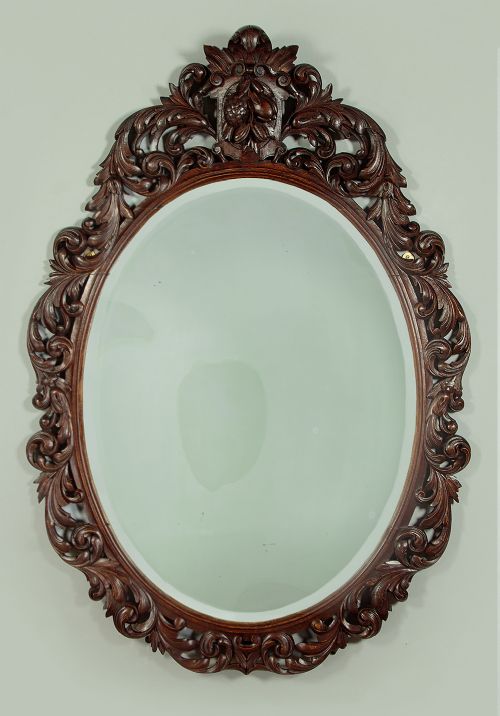
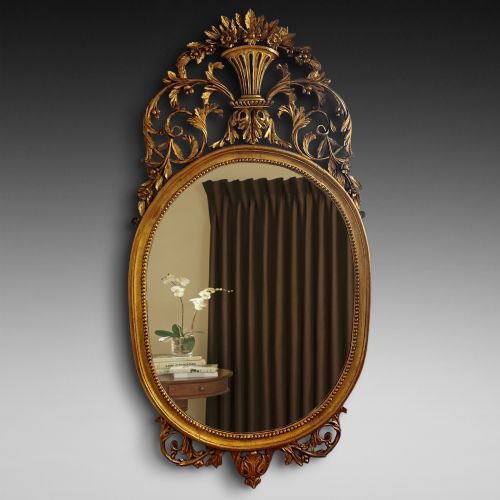
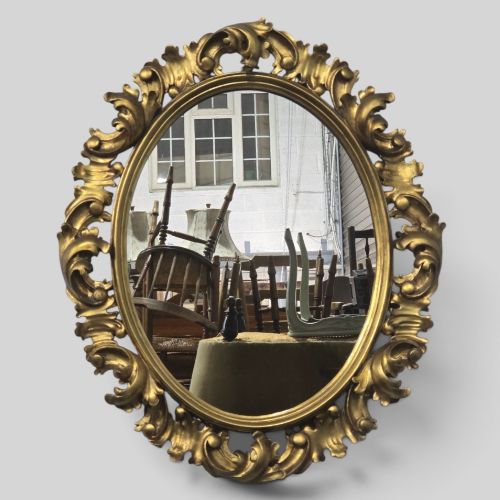
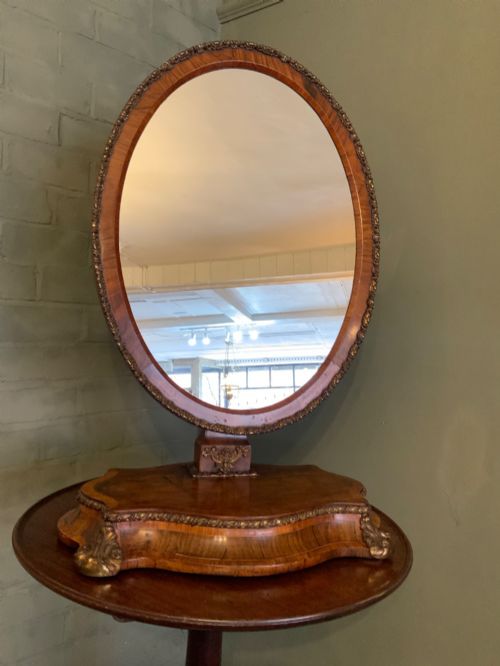
Victorian and Edwardian examples dominate the selection, appearing in heavy giltwood, carved timber, or polished mahogany. Makers of the period utilised the format to soften rectilinear rooms with sweeping, curved contours.
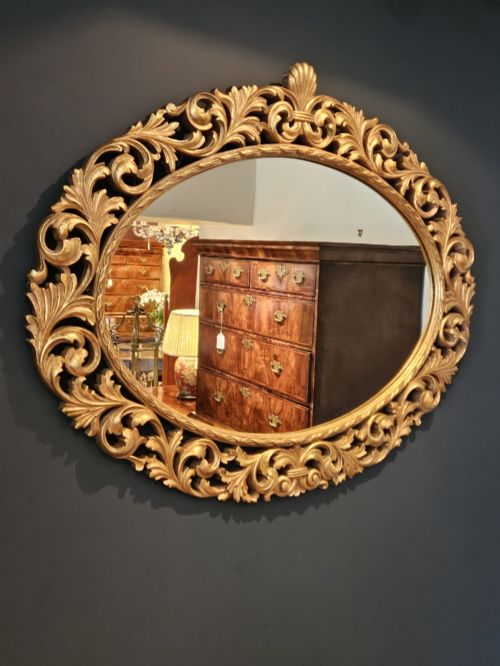
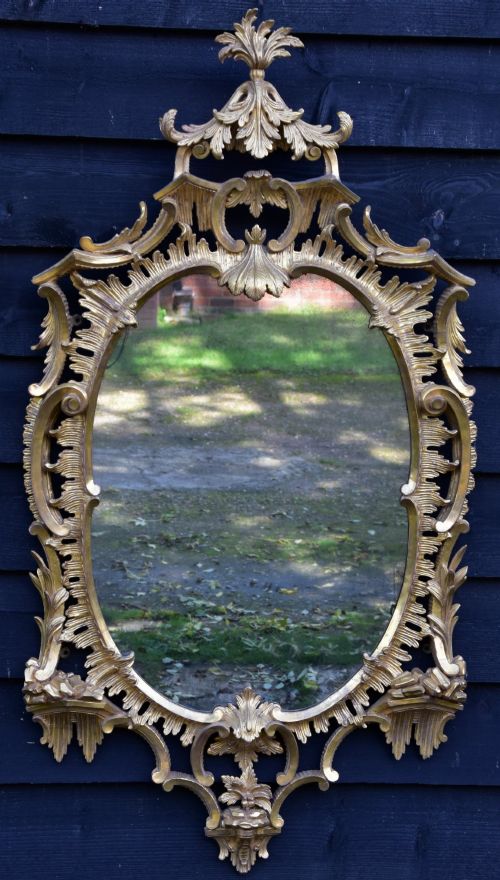
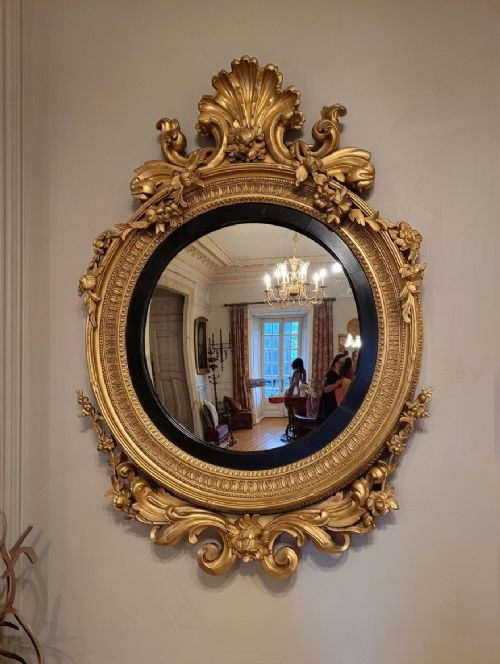
Regional variations span English, French, Irish, and Florentine workshops, introducing distinct carved details or segmented glass panels. Buyers encounter everything from restrained wooden frames to ornate Rococo Revival compositions.
Materials and Construction
Frames rely on carved wood, gesso, composition, and plaster, often finished with gold leaf or silver plating to achieve a luminous surface. Artisans built up intricate decorative relief using moulded composition applied over a timber substrate.
Mirror glass sits within rebated frames, sometimes featuring bevelled edges or segmented designs assembled from smaller plates. Timber frames utilise mahogany, oak, or walnut, occasionally enriched with inlaid details or painted finishes.
Retail Price Guide 2026
Typical UK retail prices for large oval mirror, calculated from the Sellingantiques database of over a million retail prices indexed since 2003. This retail price guide relies exclusively on Sellingantiques data; no external sources or auction records are used, so the figures do not describe the wider market.
The archive demonstrates forms ranging from simple wooden frames to elaborate Rococo Revival and Florentine gilt designs.
Judging Quality
The crispness of the carved ornament and the depth of the gilding set superior frames apart from standard production. Hand-carved wooden details and burnished gold leaf retain a sharpness that moulded composition cannot fully replicate.
The integrity of the original mirror plate dictates much of the character, with period glass showing authentic silvering oxidation rather than modern replacement. Frame stability and the retention of original backboards indicate how well a piece has survived.
The Large Oval Mirror Glossary
- Giltwood
- Wood that has been coated with gold leaf or gold paint. This finish creates a reflective, warm surface that defines many nineteenth-century frames.
- Gesso
- A plaster-like mixture applied to wood frames to create a smooth surface for gilding or to form relief decoration. Artisans carved directly into the dried layer.
- Overmantel
- A mirror specifically designed to hang above a fireplace mantelpiece. These pieces are typically wide and proportioned to sit above a hearth.
- Cheval mirror
- A freestanding full-length mirror mounted in a rotating frame. This form allows the glass to tilt for dressing purposes.
- Bevelled glass
- Mirror glass with an angled edge cut around the perimeter. This technique adds a refractive decorative border to the reflection.
Frequently Asked Questions
Where should I hang a large oval mirror?
These mirrors suit placement above a mantelpiece, sideboard, or console table where their curved silhouette breaks up straight architectural lines. They also function well on a principal hallway wall to reflect light into darker spaces.
Ensure the wall construction and fixings can support the substantial weight of a timber and plaster frame. Hanging height should generally centre the glass at eye level for balanced visual impact.
How do I identify a Victorian mirror?
Victorian examples often feature heavy giltwood, gesso, or composition frames with Rococo Revival scrolls and deep relief decoration. Construction methods typically include pegged joints and older backing boards secured with headless nails.
Examining the mirror plate can also reveal period characteristics, such as slight waviness in the glass or light foxing in the silvering. Maker labels or stamps on the reverse occasionally confirm the nineteenth-century origin.
Can I lean these mirrors instead of hanging them?
Large overmantel and cheval variants are frequently positioned resting against a wall rather than wall-mounted. This stance offers a relaxed, traditional presentation popular in period interiors.
When resting a heavy frame on the floor or a mantel, use discreet anchor fixings at the top to prevent tipping. This ensures safety while maintaining the intended aesthetic.
How do I care for antique mirror glass and frames?
Dust gilt and carved frames gently with a soft, dry brush to protect fragile gesso and gold leaf surfaces. Avoid using liquid polishes or chemical cleaners that can strip historic finishes.
Clean the glass sparingly with a soft cloth slightly dampened with water or mild glass cleaner, taking care not to let moisture seep behind the frame edge. Keeping the mirror away from direct dampness preserves both the wood and the silvered backing.