




Neoclassical Bronze Candelabra
Neoclassical bronze candelabra combine classical figures with structural metalwork to illuminate period interiors with striking sculptural presence.
Neoclassical Bronze Candelabra
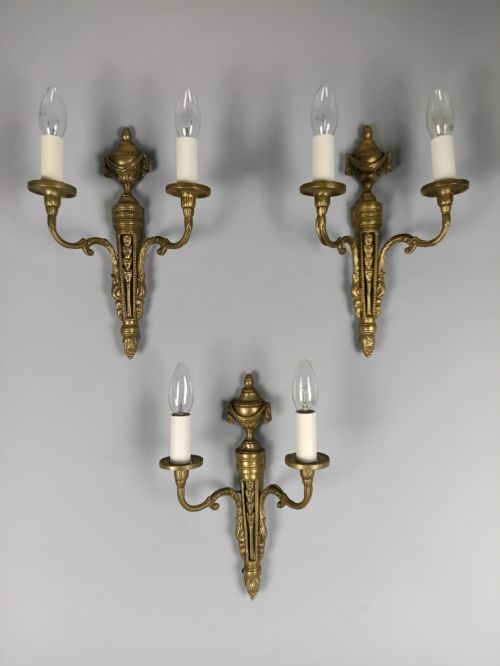
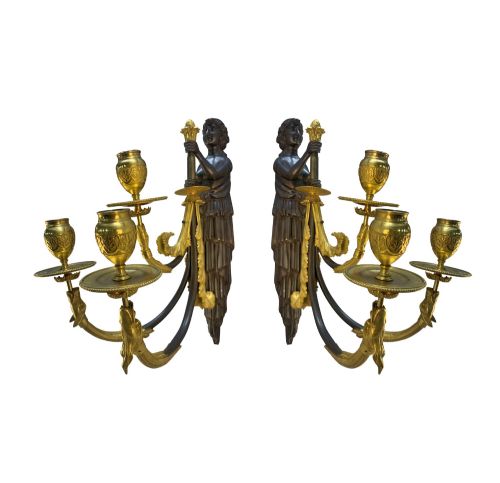
Neoclassical bronze candelabra combine patinated or gilt metal figures with multi-arm candle holders designed in formal classical styles. These lighting pieces emerge frequently in nineteenth-century French Empire, Regency, and Louis XVI revival designs.
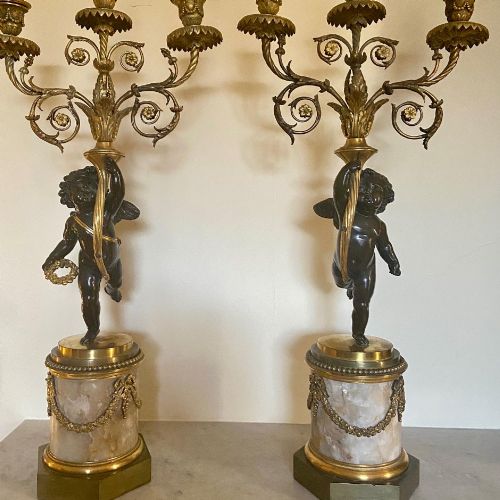
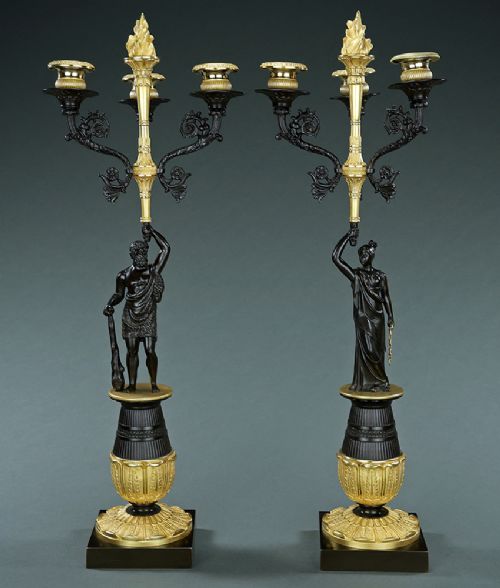
Buyers encounter pairs configured for mantelpieces, tables, and large floor settings featuring motifs drawn from Greek and Roman antiquity. Figures such as putti, cherubs, and mythological heroes frequently support the branching candle arms.
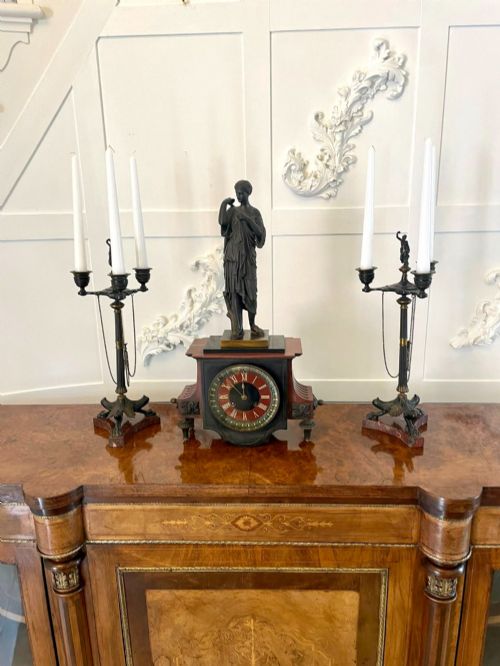
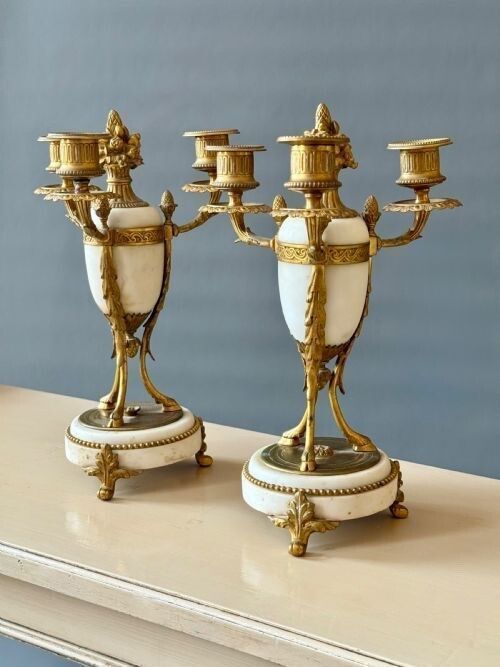
Many surviving examples form part of larger garniture sets alongside matching mantel clocks. The heavier architectural versions incorporate white marble, slate, or porcelain bases beneath the metalwork.
Materials and construction methods
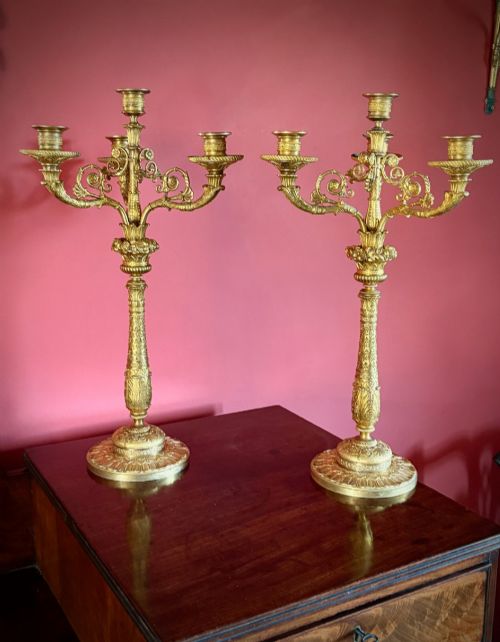
Foundries utilised cast bronze, brass, and spelter for the primary figural and structural components, applying patination or mercury gilding to achieve contrasting dark and bright finishes. Ormolu and gilt-bronze elements provide shining highlights against dark patinated bronze bodies.
White marble and slate form substantial plinths and bases that anchor the heavy metal sculptures. Enamel and fluorspar accents occasionally add colour detail to the metal mounts and candle sockets.
Neoclassical Bronze Candelabra Retail Price Guide 2026
Typical asking prices for neoclassical bronze candelabra among the pieces listed under this phrase on Sellingantiques today, from the lower quarter to the upper quarter. They describe what is for sale here now, not the wider market.
Plump winged putti regularly shoulder heavy metal branches, proving that classical mythology had a strong sense of interior design.
Assessing quality and finish
The structural integration of the marble bases and multi-arm branches distinguishes high-end foundry output from standard production. Heavier, tightly fitted components indicate superior workshop execution.
Francois Redmond·Humphrey Hopper·AD Mougin Paris·Claude Clodion·Rabiat·Thomas Hope
The Neoclassical Bronze Candelabra Glossary
- Ormolu
- Gilt bronze produced by applying a mercury and gold amalgam to a bronze base and heating it. This technique creates a durable golden finish seen on finer French candelabra.
- Patinated bronze
- Metal treated with chemical solutions to darken the surface into deep browns or blacks. The dark finish contrasts sharply with bright gilt highlights.
- Garniture
- A set of matching decorative objects, typically a mantel clock flanked by a pair of candelabra. These sets were designed to display symmetrically on fireplace mantels.
- Torchere
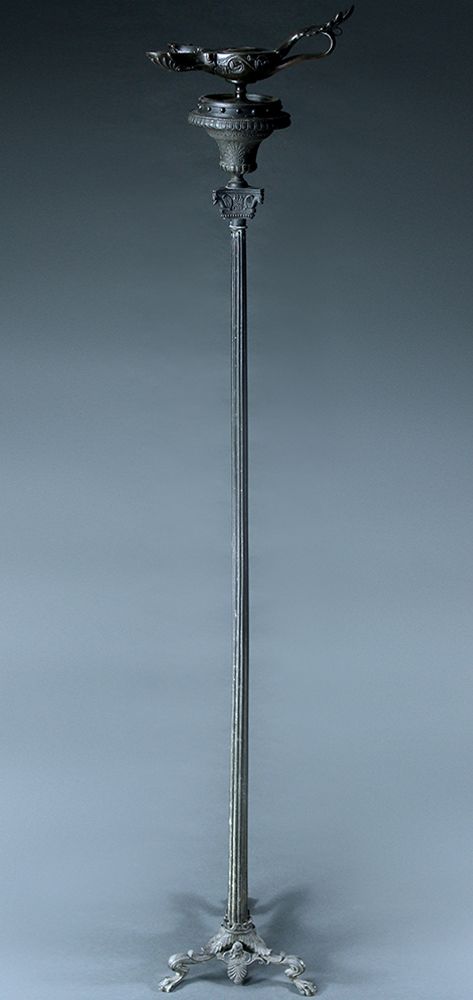
- A tall stand or floor-standing lamp designed to support lighting fixtures. Examples in this category often feature classical column forms.
- Putti
- Depictions of plump, winged toddler boys used frequently as figural supports in classical design. They appear holding branches or standing on marble plinths.
Neoclassical Bronze Candelabra: Frequently Asked Questions
Were these candelabra converted to electricity?
Many surviving examples underwent conversion to electric table lamps during the twentieth century. Original wiring is often replaced to meet modern safety standards.
Some pieces retain original candle sockets alongside later wiring adaptations. Buyers should inspect the base drillings to determine conversion history.
How do I distinguish French Empire from Regency style?
French Empire pieces display strict Napoleonic classical motifs inspired by direct archaeological finds in Egypt and Rome. They utilise intense gilt-bronze contrasts and severe architectural proportions.
Regency examples reflect British interpretations of classical design favoured during the early nineteenth century. These often incorporate lighter brass mounts and distinct regional material choices.
What is a clock garniture set?
A clock garniture consists of a central mantel clock accompanied by two matching side pieces, usually candelabra or vases. These sets were manufactured to create balanced decorative arrangements on large furniture.
The components share identical casting styles, materials, and thematic subjects. Surviving complete sets remain highly sought after by collectors.