



Mihrab Prayer Mat
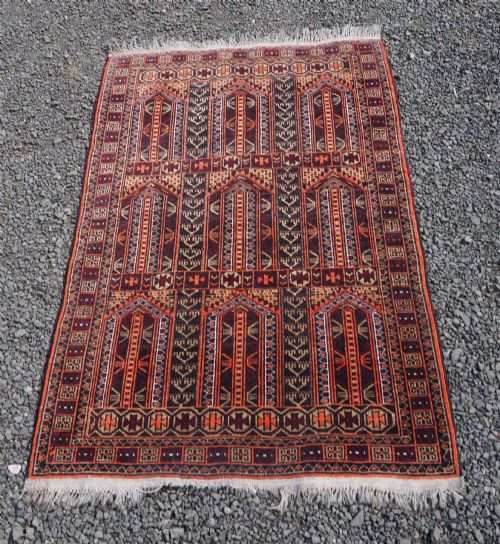
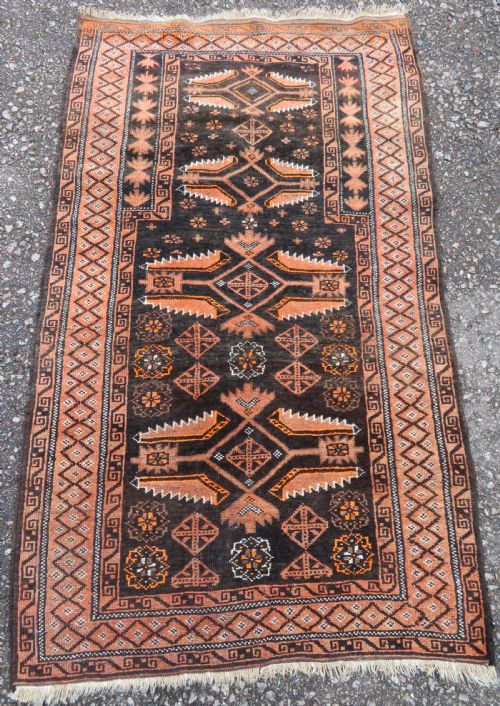
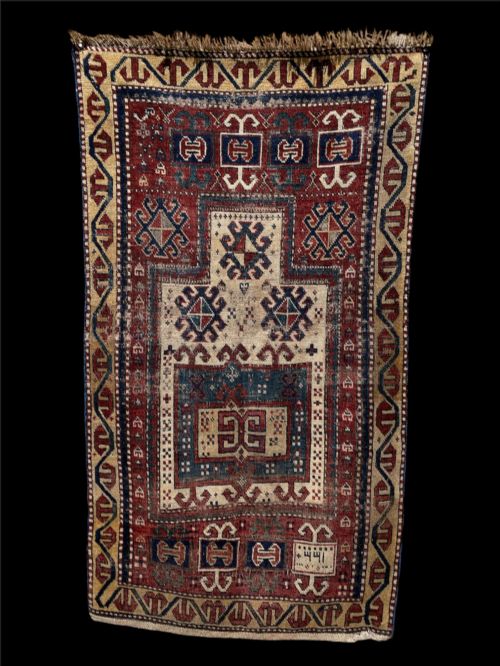
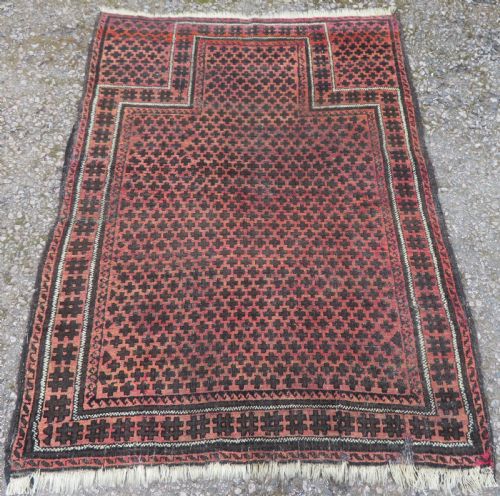
A mihrab prayer mat brings historic Anatolian, Caucasian, and Persian weaving traditions into a room through distinct arch designs.
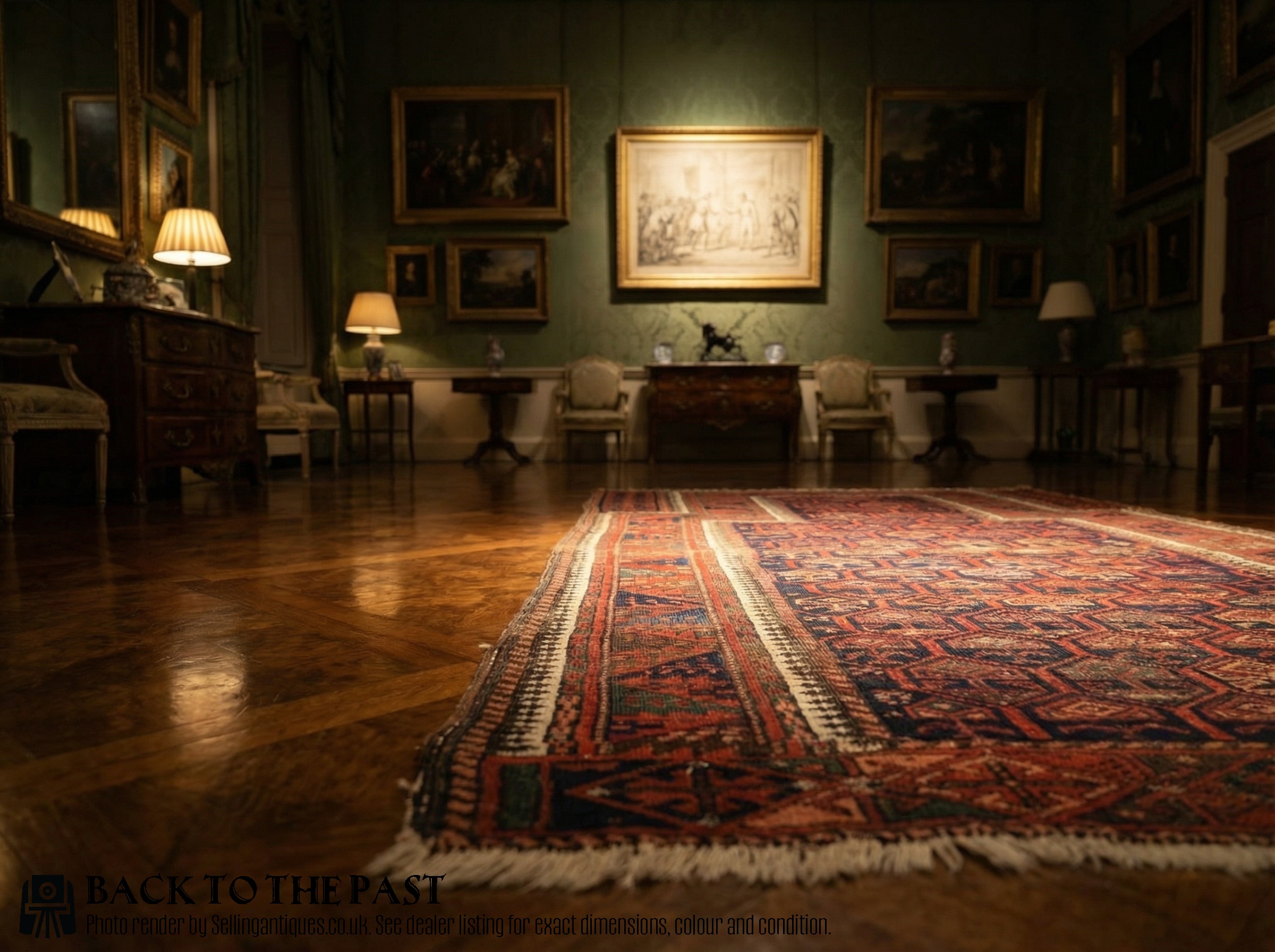
Mihrab Prayer Mat
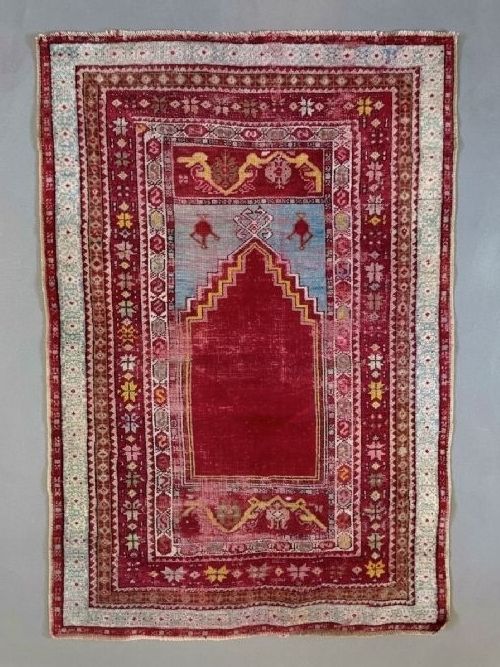
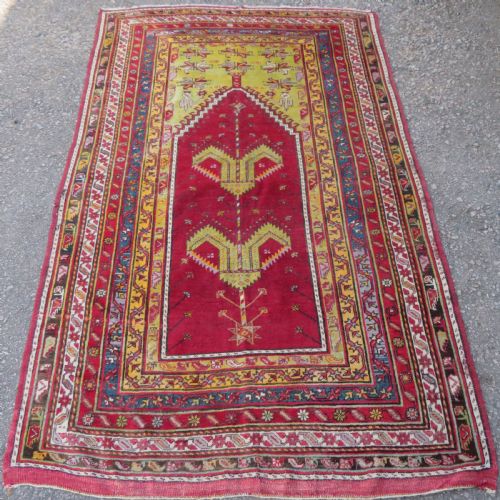
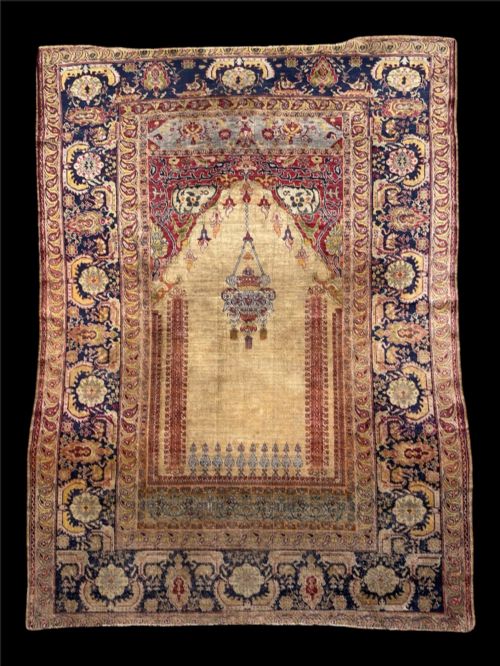
A mihrab prayer mat centres around an arched niche motif that traditionally points the user toward Mecca during daily devotions. These floor coverings emerge from nomadic, village, and town workshops across regions such as Anatolia, the Caucasus, and Persia.
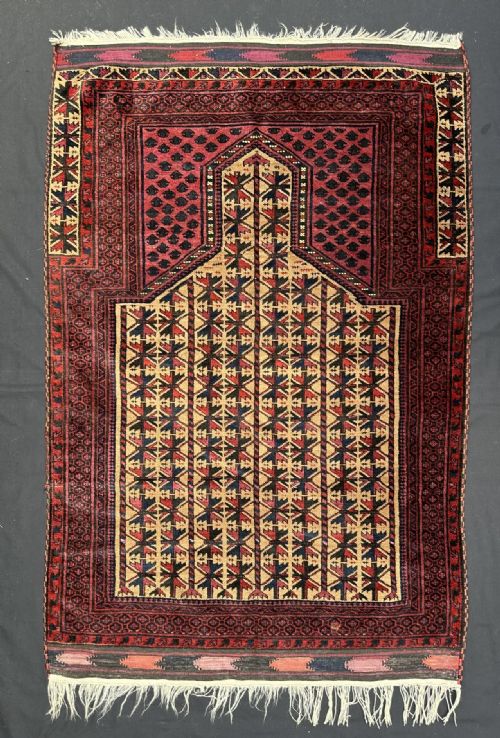
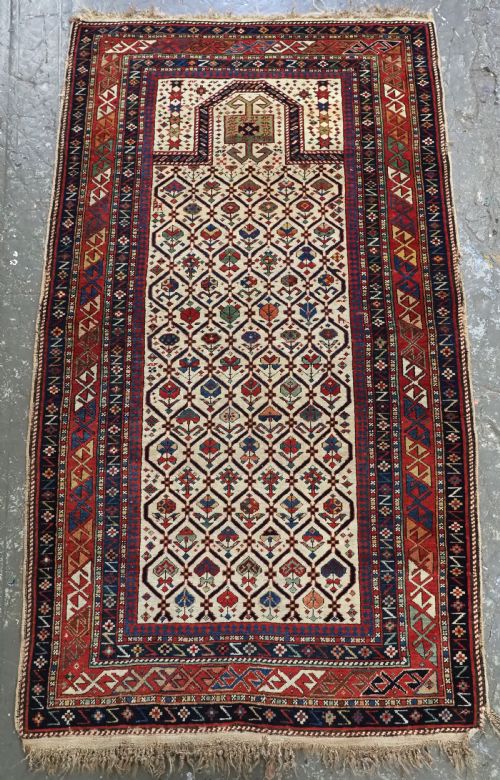
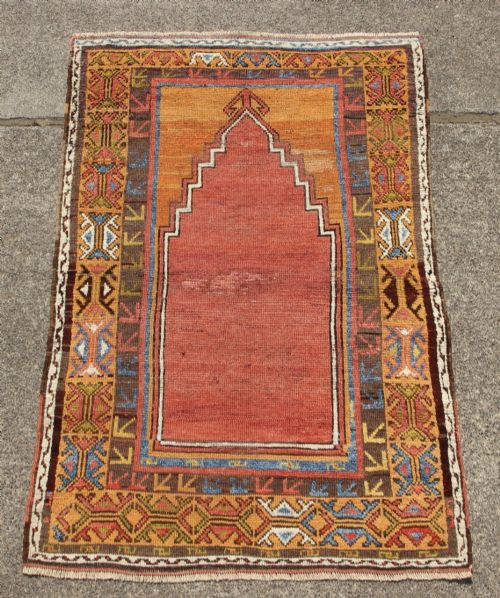
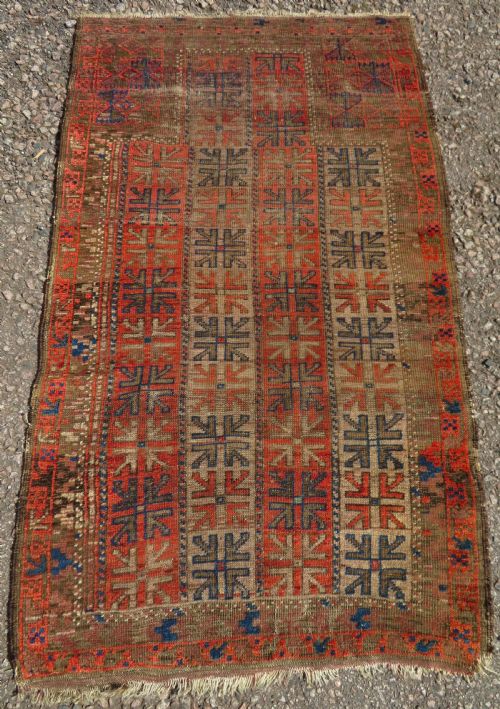
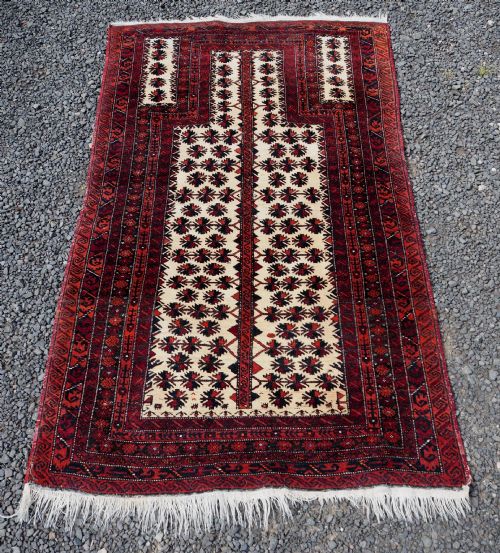
Buyers encounter examples spanning the nineteenth and early twentieth centuries, rendered in formats ranging from single arched fields to double mihrab and multi-tiered formats. The listings on this page include tribal Baluch pieces alongside regional Turkish and Caucasian formats.
The practical function of these textiles remains rooted in portable floor use, constructed with pile or flatweave structures suited to daily kneeling. Collectors appreciate them equally for their concentrated geometry and symbolic architectural references.
Materials and construction methods
Weavers utilised hand-spun wool, cotton, and occasionally silk, paired with natural dyes derived from plants and minerals to build durable foundations. Camel wool and goat hair also appear in specific tribal contexts, adding textural variation to the handle of the textile.
The knotting and weaving techniques vary by region, from dense pile structures found in Persian Kashan and Turkish Kirsehir pieces to mixed techniques involving kilim ends. Individual workshops employed localized methods for securing warps and wefts, resulting in sturdy borders and stable prayer fields.
Mihrab Prayer Mat Retail Price Guide 2026
Typical asking prices for mihrab prayer mat among the pieces listed under this phrase on Sellingantiques today, from the lower quarter to the upper quarter. They describe what is for sale here now, not the wider market.
Certain Baluch prayer mats include extra-long kilim ends, giving nomads plenty of fabric to tuck neatly beneath their bedding.
Factors of quality and execution
The distinction between ordinary and superior pieces rests on the precision of the drawing within the arch and the saturation of the natural dyes. Skilled execution shows in balanced proportions, crisp floral lattices, and harmonious colour shifts across the field.
Materials dictate longevity and handle, with finely spun wools and genuine silk elements yielding greater suppleness and structural integrity. The crispness of geometric motifs in Caucasian and Baluch examples indicates disciplined hand-knotting by experienced makers.
The Mihrab Prayer Mat Glossary
- Mihrab
- The architectural niche design derived from mosque architecture that defines the upper field of the prayer mat. This pointed arch element guides the orientation of the piece.
- Ghiordes
- A historic town in western Anatolia renowned for classic prayer rug designs featuring distinctive column and niche motifs. Pieces attributed to this tradition often display refined floral borders.
- Kirsehir
- A Central Anatolian weaving centre known for producing prayer rugs with vibrant colour palettes and stepped arch prayer niches. These rugs frequently incorporate stylized botanical elements.
- Baluch
- A nomadic and village weaving tradition spanning the borderlands of Persia and Afghanistan, characterised by dark wool foundations and geometric formats. Their prayer mats often feature compact fields and long flatweave ends.
- Dagestan
- A Caucasian region producing rugs with precise geometric lattice designs, hooked motifs, and crisp linear borders. Pieces from this area utilise durable wool and saturated primary hues.
Mihrab Prayer Mat: Frequently Asked Questions
How do I identify regional styles?
Regional styles appear through distinct colour palettes, border patterns, and structural details within the arch. Caucasian examples display crisp geometric lattices, while Turkish formats often incorporate floral columns and stepped niches.
Nomadic pieces from Afghan and Baluch traditions utilise darker wools and simpler tribal motifs. Examining the knotting style and end finishes provides further clues to geographic origin.
Where were these rugs made?
These prayer mats originate from diverse workshops and nomadic camps spanning Turkey, the Caucasus, Persia, and Afghanistan. Each region developed localized traditions using available regional wools and natural dyes.
Village centres such as Ghiordes and Kirsehir built distinct reputations for specific prayer formats. Nomadic groups like the Baluch and Taimani produced portable versions suited to travel.
How should I care for an antique rug?
Antique prayer mats require gentle maintenance, including regular vacuuming without a rotating brush bar and occasional professional cleaning. Keeping them out of direct sunlight preserves the natural dyes used in the wool.
Placing a breathable underlay beneath the textile prevents slipping and reduces wear against hard flooring. Prompt attention to spills ensures the natural fibres remain stable over time.