




Mid Century Maritime Painting
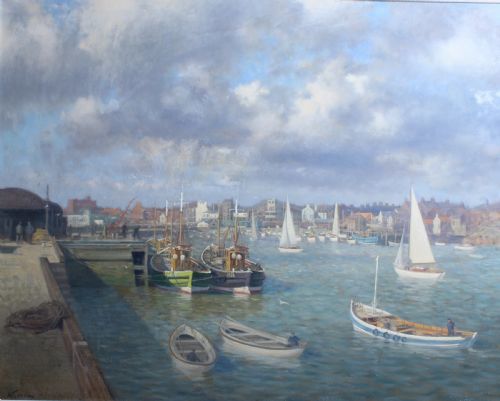
A mid century maritime painting brings the movement of coastal waters and harbour craft directly into an interior through mid-century brushwork.
Mid Century Maritime Painting
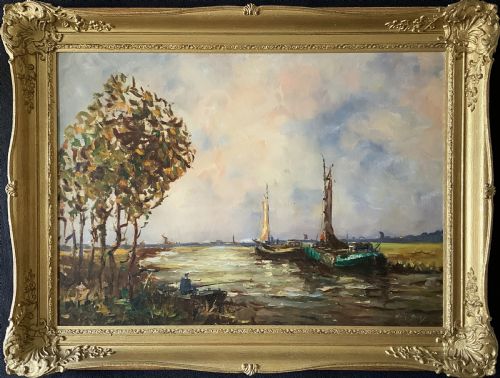
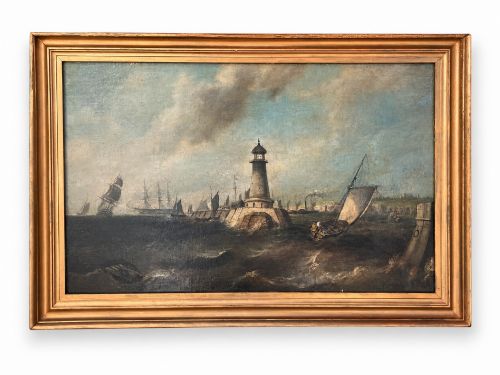
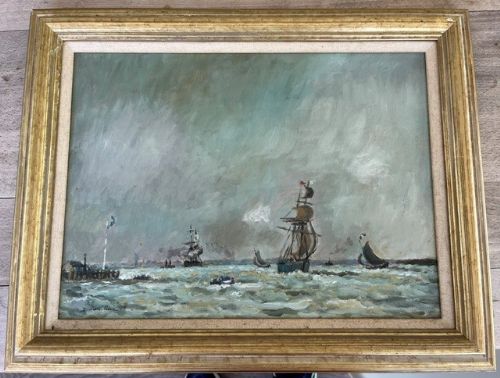
A mid century maritime painting captures coastal scenes, working vessels and harbours primarily from the nineteen-thirties to the nineteen-sixties. These works range from modernist interpretations to impressionist watercolours and oil paintings on canvas or board.
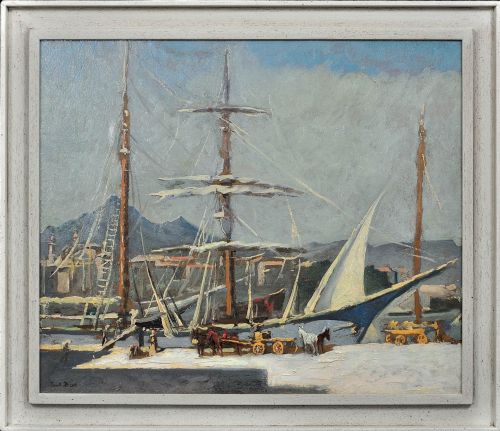
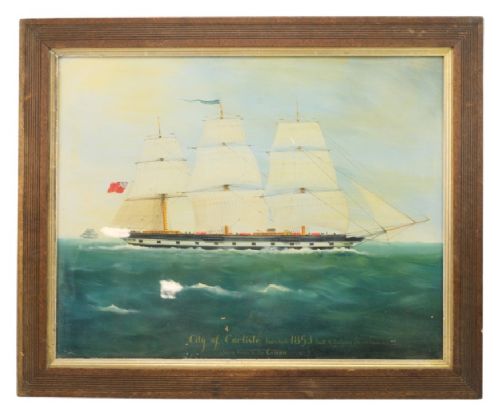
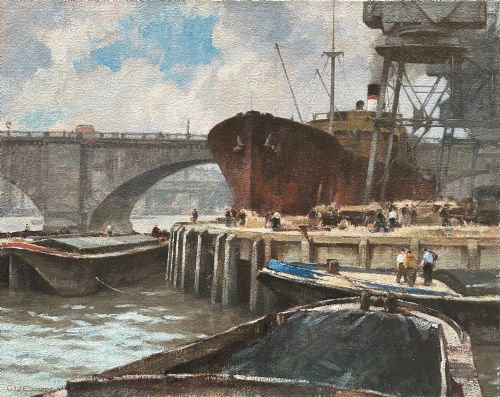
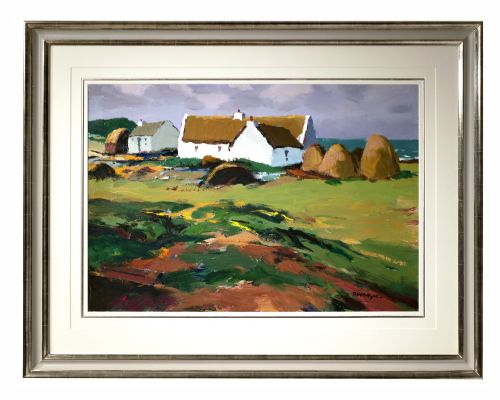
The pieces appearing on this page record British, French, Dutch and Italian shores, reflecting the international scope of mid-century coastal art. Domestic scenes sit alongside bustling commercial ports and quiet estuary views.
Makers include named twentieth-century artists alongside examples from the broader British and continental schools. Works extend from miniature panels to large framed canvas compositions.
Materials and Technique
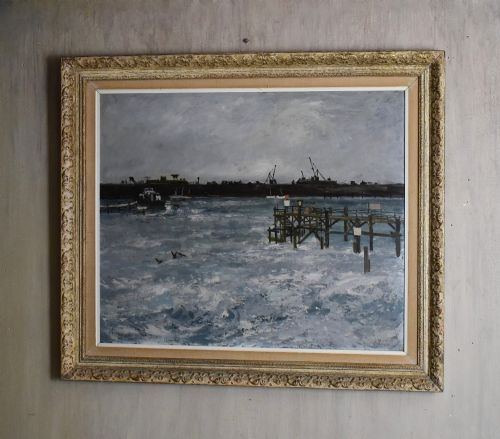
Artists utilised oil paint on canvas, wood panels and board to build texture, often applying thick impasto to convey the weight of water and the rugged surfaces of boats. Watercolour and pastel on paper offer a lighter alternative for atmospheric coastal watercolours.
Supports range from traditional stretched canvas to wooden panels and board, frequently housed within period wooden frames. Brushwork varies from precise academic detail to loose, expressive post-impressionist strokes.
Listings include oil paintings, watercolours and pastels across nineteenth and twentieth-century periods.
Assessing Quality in Marine Art
Quality rests upon the confidence of the brushwork and the artist's ability to render light, water movement and perspective convincingly. Stronger compositions demonstrate a clear command of tone and atmosphere rather than mere technical precision.
The integrity of the original surface, stability of the canvas or board, and the suitability of the period frame contribute significantly to the standing of an individual artwork.
Kenneth Cozens·Peter Brannan·Paul Bret·Cyril Walduck Edwards·Willem Bos·Donald McIntyre·Nicholas Condy·Walter Goodin·Eric Tufnell·Gyrth Russell·Raymond Picque·James Fry·Fred Pailhes·Edward Seago·Fernando Del Basso·William Tuck·George Shaw·Dion Pears·Stanley Orchart·Henry Barlow Carter·Sam Bough·Edward M. Elliott·Antonio Godoy·Charles Cameron Baillie
The Mid Century Maritime Painting Glossary
- Impasto
- Paint applied thickly to a canvas or board, leaving visible brush or palette knife marks that create physical texture on the surface. This technique helps convey the churning movement of waves or the rough timber of a quay.
- Estuary
- The tidal mouth of a large river, where the tide meets the stream. These sheltered waterways provided marine artists with varied subjects involving shipping and changing light.
- Grisaille
- A painting executed entirely in shades of grey or neutral greyish-monochrome. This method often served as an underpainting or as a finished technique mimicking sculpture.
- Post-Impressionism
- An art movement developing roughly from the late nineteenth century through to the mid-twentieth century that extended impressionism while rejecting its limitations. Artists prioritised symbolic content and expressive use of paint over naturalistic rendering.
Mid Century Maritime Painting: Frequently Asked Questions
What periods do these paintings cover?
The selection spans from the mid-nineteenth century through the nineteen-sixties, with a strong concentration of works produced during the mid-twentieth century.
Paintings from the nineteen-thirties, forties and fifties form the core of the mid-century material available.
How do oil and watercolour differ here?
Oil paintings on canvas or board provide rich texture and depth, frequently utilising thick impasto to render sea spray and vessel structures.
Watercolours on paper offer a transparent, luminous quality well suited to capturing subtle shifts in coastal skies and calm harbours.
Where were these maritime scenes painted?
Artists recorded coastal subjects across British ports, French harbours, Dutch canals and Mediterranean waters. Cornwall, Normandy and Sydney feature among the specific locations recorded.
Local fishing fleets, commercial docks and quiet estuaries provided continuous inspiration for these painters.
How should I frame mid century art?
Many works retain their original mid-century wooden frames, which complement the tonal palette and period aesthetic of the painting.
Ensuring proper ventilation behind the frame and avoiding direct sunlight protects both the canvas and the paper supports from environmental damage.