




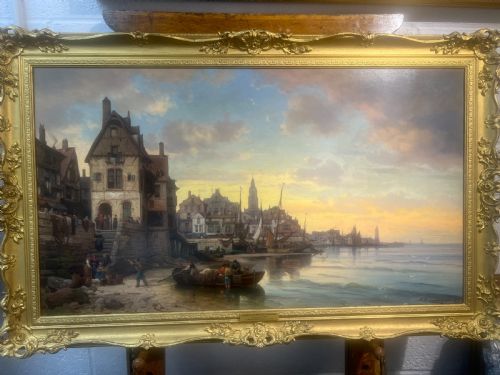
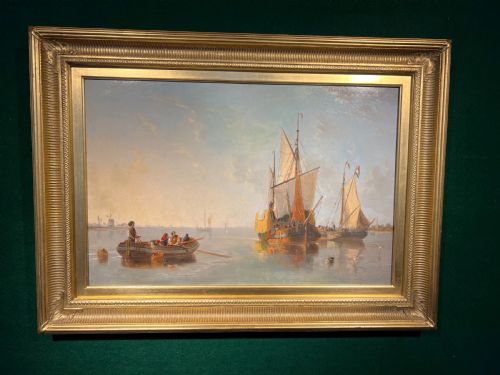
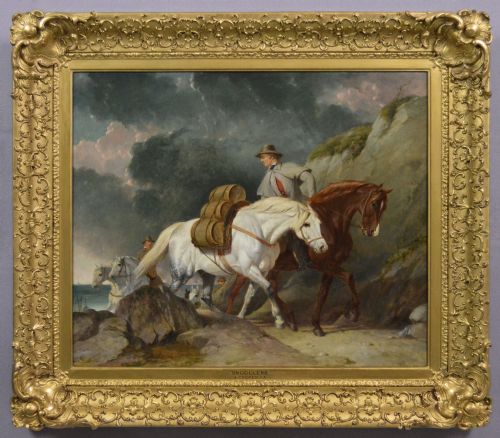
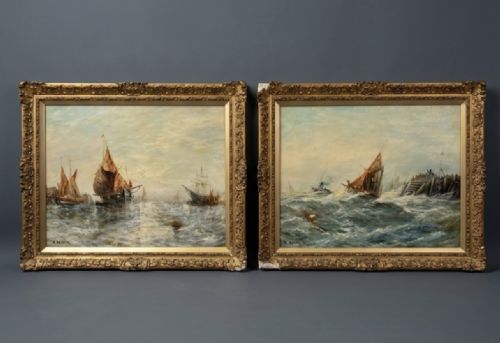
Gold Framed Coastal Art
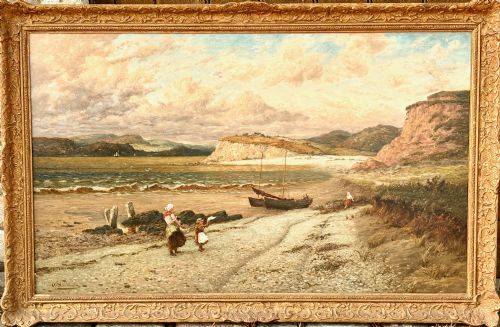
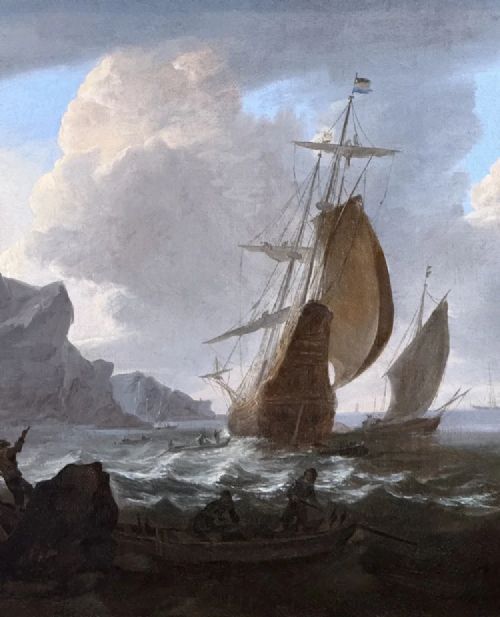
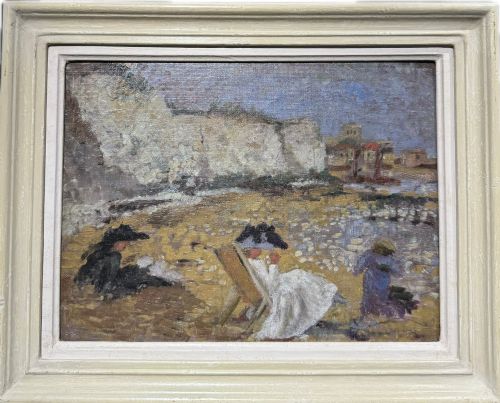
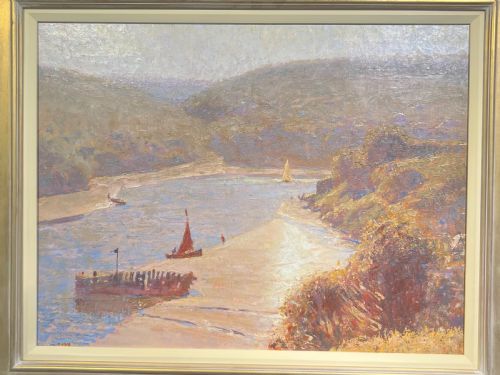
Gold framed coastal art captures shores and seas through the centuries, offering enduring views of marine life and seaside vistas.
Understanding gold framed coastal art
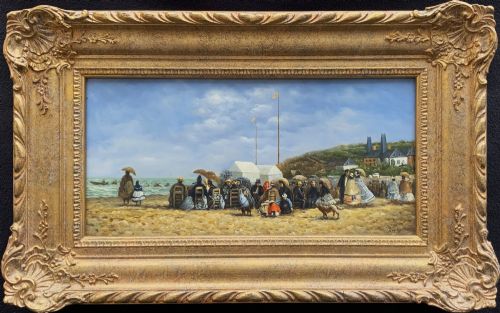
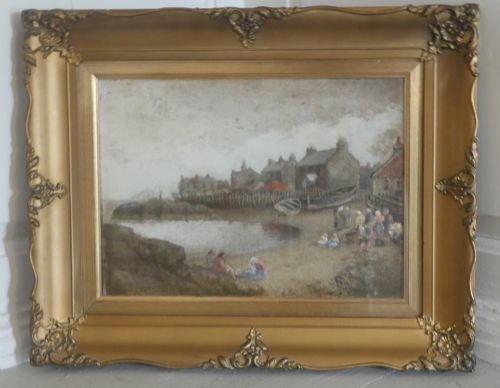
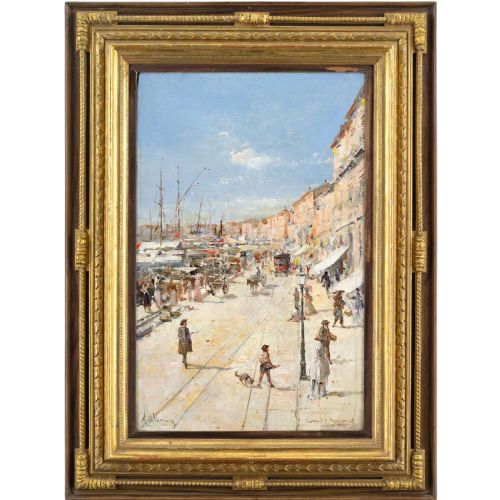
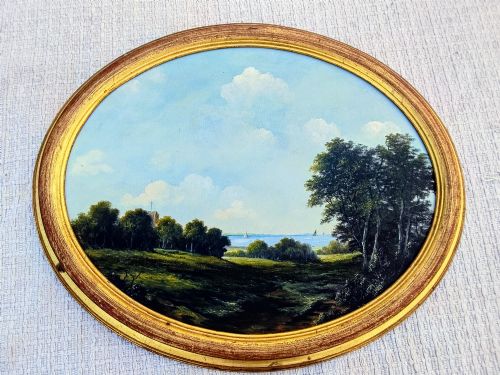
Gold framed coastal art encompasses paintings and prints depicting seascapes, beaches, and coastal landmarks housed within gilt wooden frames. The pieces on this page span the Victorian era, the late nineteenth century, and the mid-twentieth century.
Buyers encounter works ranging from detailed watercolour landscapes of Devon and Dorset to mid-century impressionist moonlight seascapes and textured painted prints on board. These depictions combine marine subjects with the traditional warmth of gilded surrounds.
Materials and construction
These works utilise traditional mediums including oil paint and watercolour applied to paper, canvas, and board. The physical supports reflect the standards of nineteenth and twentieth-century picture production.
The enclosing frames are constructed from wood and gesso, finished with gilt applications to create the characteristic gold appearance. These materials provide both structural support and the ornate aesthetic typical of period framing.
Retail Price Guide 2026
Typical UK retail prices for gold framed coastal art, calculated from the Sellingantiques database of over a million retail prices indexed since 2003. This retail price guide relies exclusively on Sellingantiques data; no external sources or auction records are used, so the figures do not describe the wider market.
Paintings occasionally arrive with stubborn nineteenth-century price chalk still hiding quietly on the stretcher bars.
Assessing quality
Quality in these works rests upon the precision of the brushwork and the fidelity of the coastal atmosphere captured by the artist. Masterful handling of light on water distinguishes sophisticated compositions from simpler decorative examples.
The construction and ornamentation of the framing element also dictate the overall standard of the piece. Hand-carved or deeply moulded gesso and gilt wood frames elevate the presentation compared to plain or later replacements.
Erich Mercker·John Bedloe Goddard·William Shayer·Samuel Edward Kelly
The Gold Framed Coastal Art Glossary
- Watercolour
- A painting method where fine pigment is suspended in water-based solution, typically applied to paper. This technique yields translucent washes that suit delicate atmospheric effects.
- Gesso
- A plaster-like mixture applied to wood frames before gilding. It provides a smooth surface for creating intricate moulded details.
- Gilt wood
- Timber treated with a thin layer of gold leaf or metallic paint. This finish adds brightness and protects the underlying wooden structure.
- Impressionism
- A style focusing on the general impression of a scene, particularly shifting light and colour. Works in this manner prioritise optical effects over fine detail.
Frequently Asked Questions
How do I date coastal art?
Dating relies on stylistic clues, framing techniques, and the materials used for the support. Victorian works often feature detailed brushwork and heavier gilt frames.
Mid-century pieces display looser impressionistic handling and different board or canvas preparations. Examining the reverse often reveals historical labels or signatures.
Where should I hang these paintings?
These works suit spaces with controlled natural light, away from direct sunlight to protect watercolours and oils. Placing them on neutral walls allows the gold frame and coastal subject to stand out.
Ensure the hanging wall is structurally sound to support the weight of wood and gesso frames.
How do I care for gilt frames?
Gilt wood frames require gentle dusting with a soft, dry brush to prevent the accumulation of dirt. Avoid using liquid cleaners or abrasive cloths that can damage the delicate gold surface.
Keep the pieces in stable room environments to prevent the wood and gesso from cracking.
What subjects appear in this art?
The selections depict specific coastal locations such as Kimmeridge Bay, Babbacombe Beach, and Monaco. Scenes range from quiet shores and moonlit seas to dramatic cliff landscapes.
Artists document both familiar British geography and international coastal views.