Benton Fine Art has dated this Antique Equestrian Oil Painting to the 1860s.
British, (1787-1868)
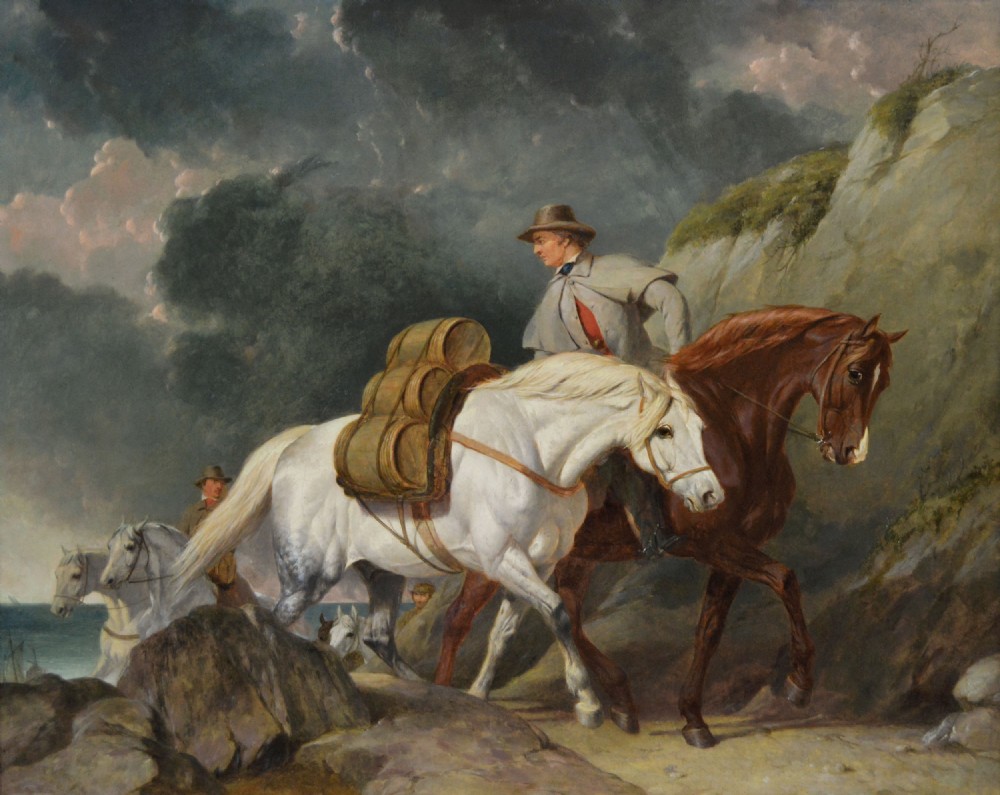
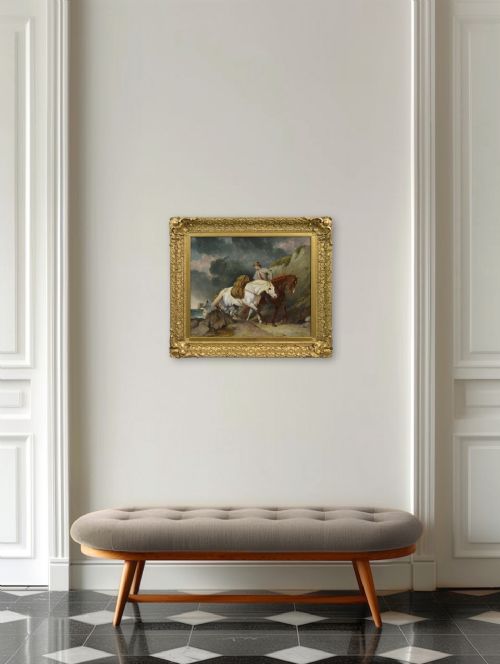
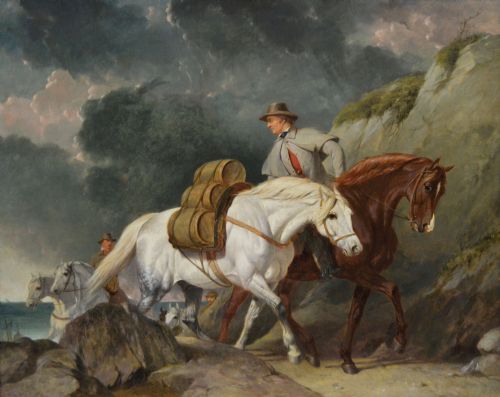
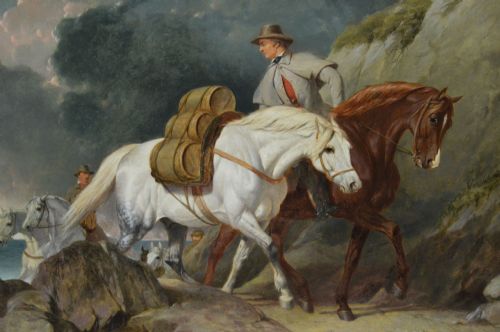
The Smugglers
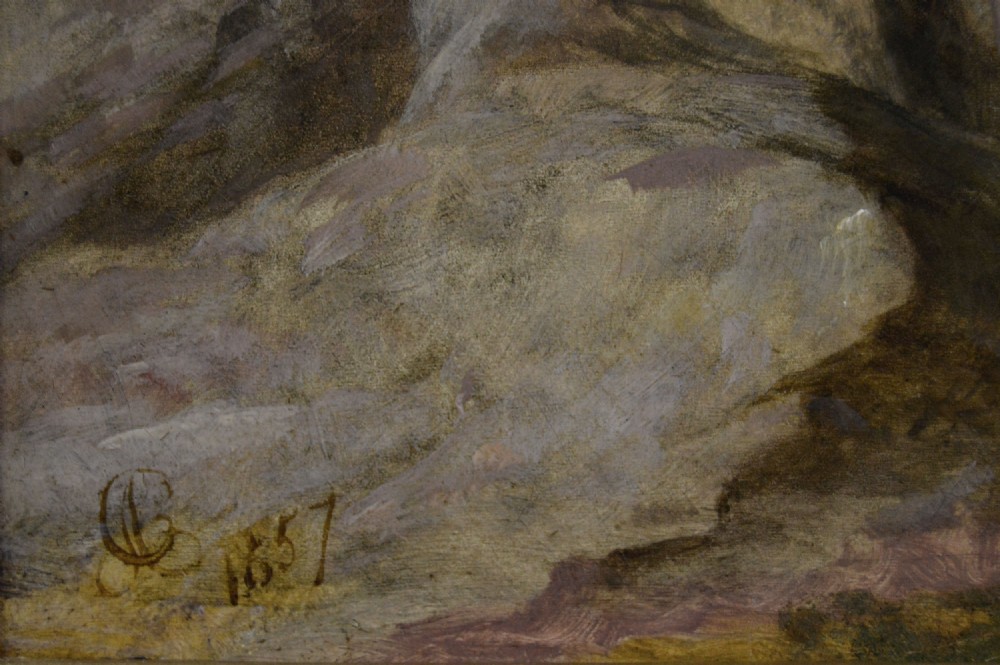
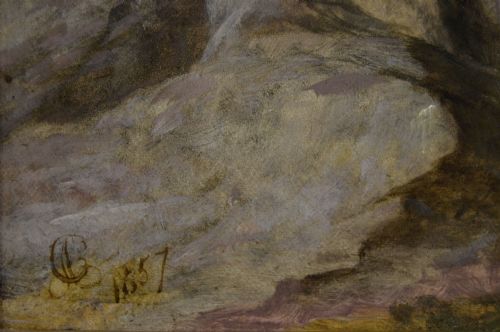
Oil on canvas, signed with monogram & dated 1857
Image size: 19.5 inches x 23.5 inches
Size including frame: 27.5 inches x 31.5 inches
Exhibited at the RA in 1857, no. 124
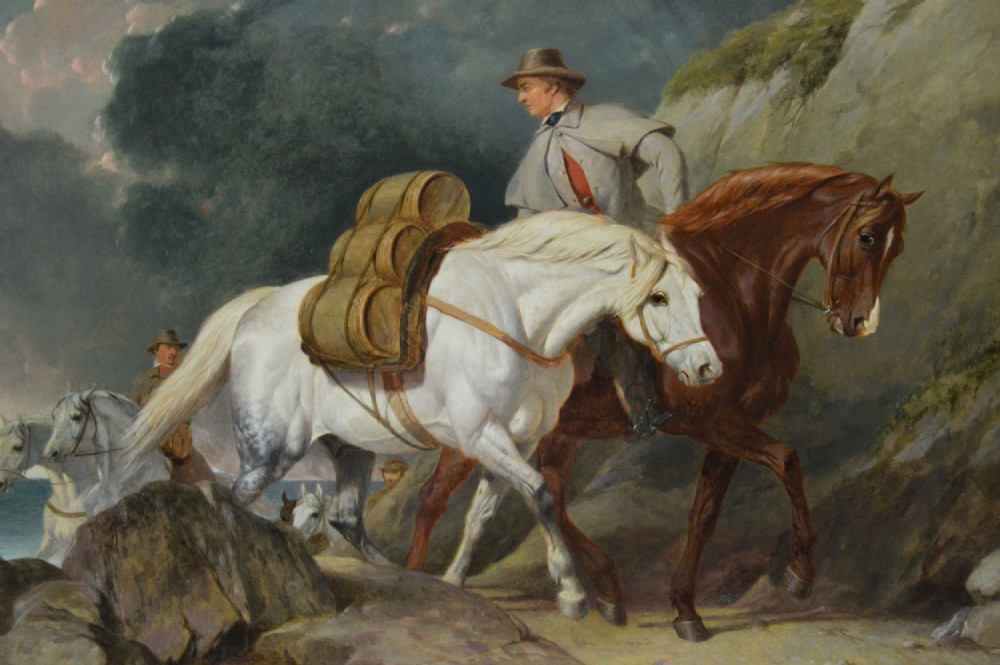
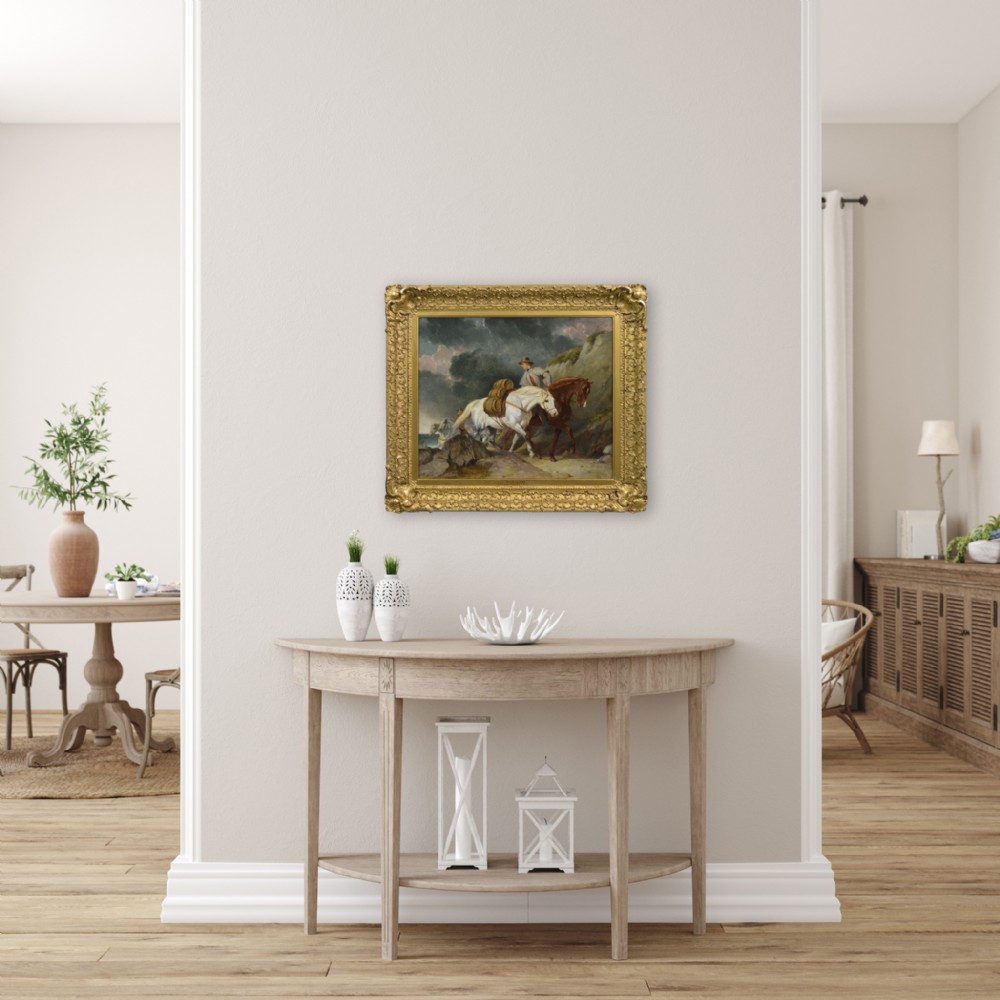
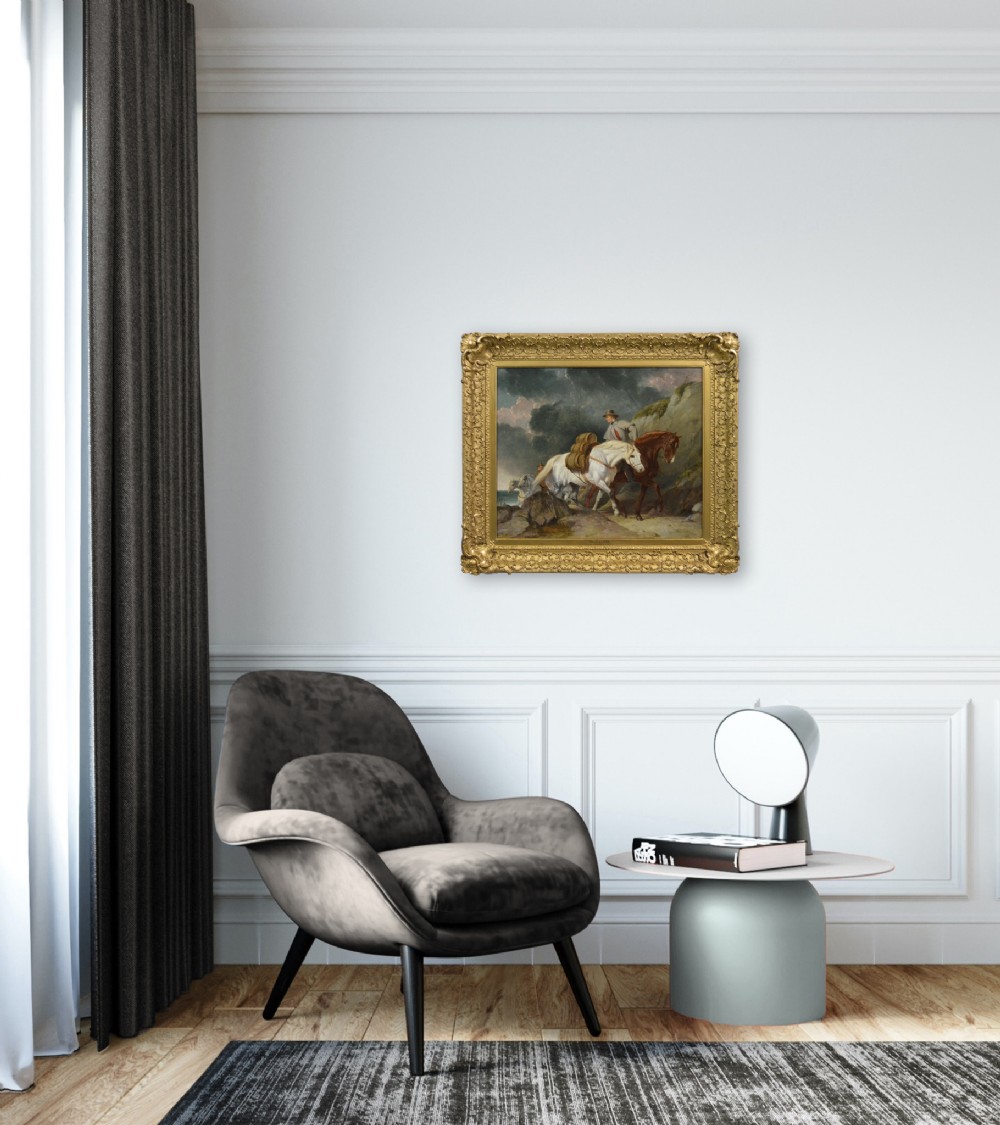
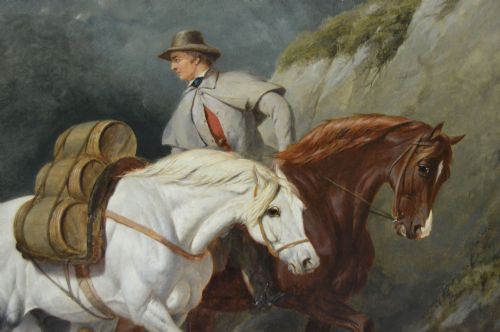
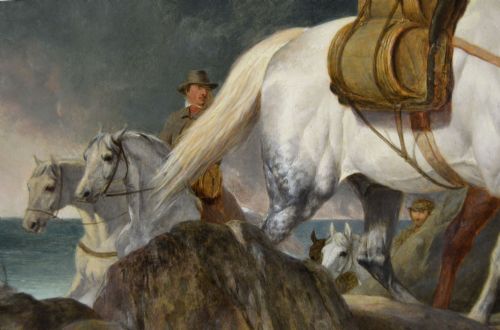
A dramatic painting of smugglers travelling along a coastal path at night by Abraham Cooper.
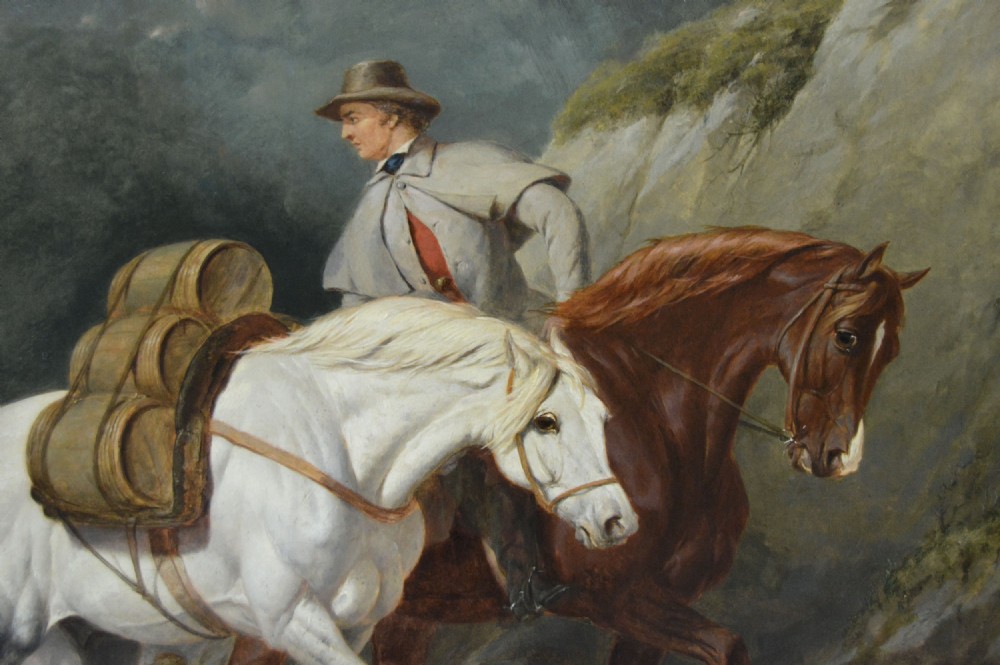
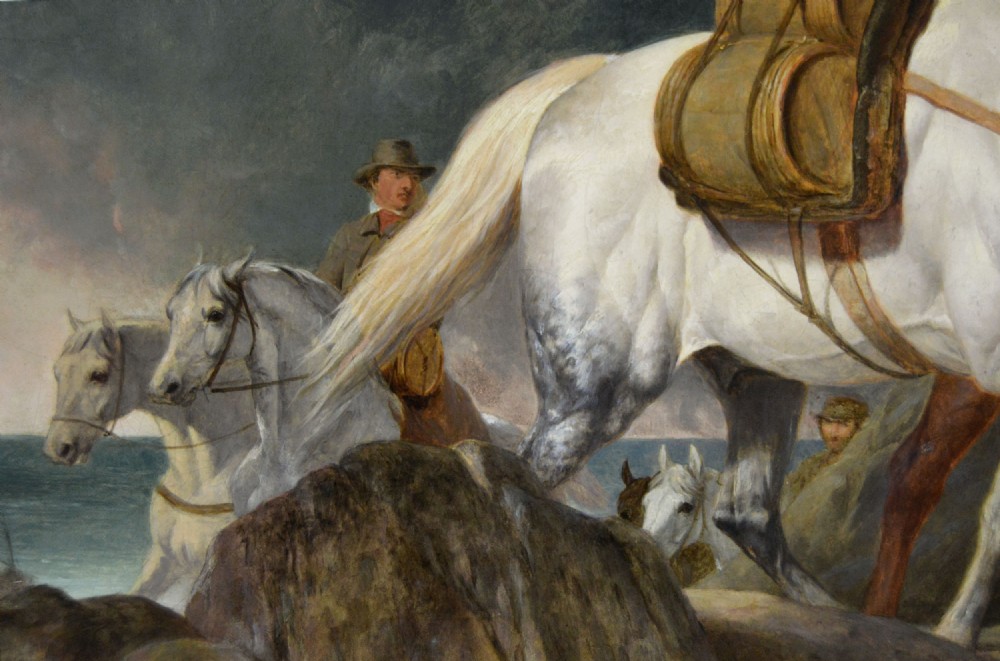
As he makes his way along, he turns to check on his companions following behind him, exchanging a silent look. In the distance, the sails of a boat can be seen on the shore as another ship makes its way along the horizon. The play of moonlight on the night sky adds to the tension of the unfolding scene. This painting was exhibited at the RA in 1857, no. 124 under the title ‘Smugglers on the Northumberland coast in the early part of the present century, as often seen by the artist when a boy’.
Abraham Cooper was born in Holborn, London on 8 September, 1787 to Alexander and Susanna Cooper. His father was an inn keeper and the family lived at Red Lion Street in Holborn. Although little is recorded about his early education, he is known to have started working at Astley’s Amphitheatre at the age of 13 before becoming a groom for the brewer Henry Meux. His close work with horses inspired him to learn how to paint and he began producing paintings of the horses in his care. Encouraged by Meux, he became a pupil of the animal painter Benjamin Marshall (1768-1835) who took him into his studio.
Under Marshall’s tutelage he flourished as an artist and developed a lifelong interest in historical scenes particularly of battles, which earned him the nickname ‘Battle Cooper’. In 1812, he made his debut at Royal Academy in 1812, becoming a prolific exhibitor there. In the same year he also began exhibiting at the British Institute.
He married Maria Goom on the 23 April, 1813. The couple lived in Robert Street, Holborn and went on to have 3 children together. Their son Alfred William Cooper (1829-1916) studied at the RA and became a well-known artist and illustrator. By 1817, he had moved to New Millman Street in Holborn where he remained for over 30 years. In 1817, he was made Associate of the Royal Academy and in 1820 was elected fully Academician.
In 1853, a few years after the death of his first wife, he married Francis McArthy D’Ebro a widow and the daughter of an artist. The couple continued living at Cooper’s home in Millman Street until sometime after 1861 when they moved to Woodbine Cottage, Woodland Street, Greenwich.
Cooper died aged 81 at his home in Woodland Street on 24 December, 1868. He was buried at Highgate Cemetery. Examples of his work can be found in many public collections including the Ashmolean Museum, Cromwell Museum, English Heritage, Government Art Collection, Harris Museum, National Trust, The Wilson, V&A and Yale Center for British Art.
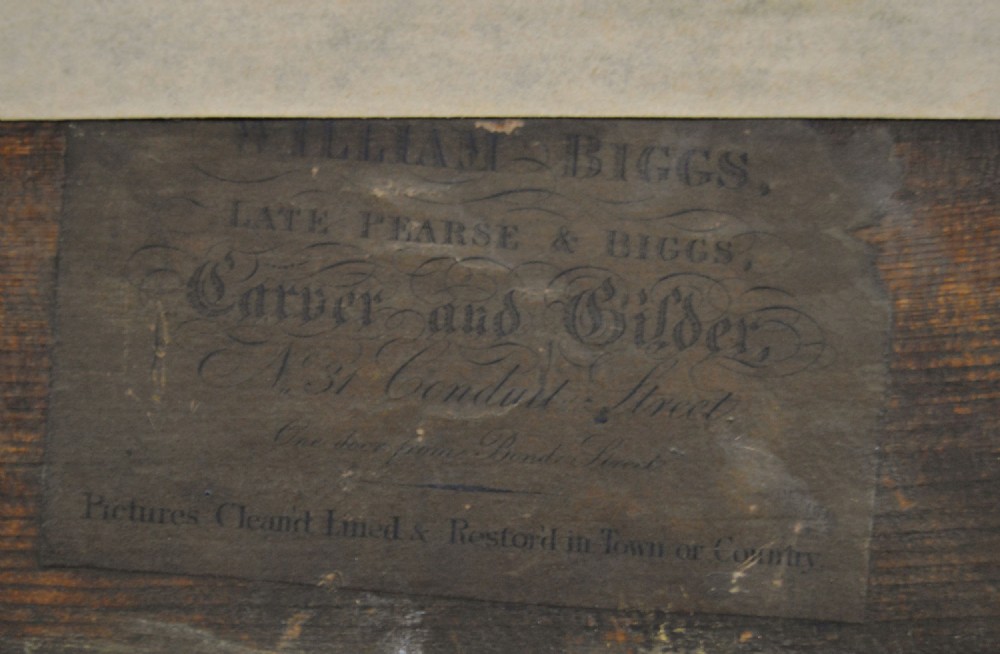
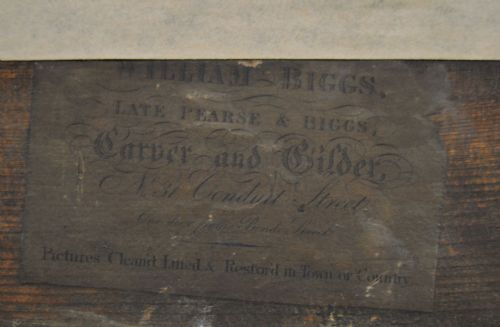
Presentation: The work is housed in its original gilt frame which is in excellent condition. The reverse of painting bears an old label for William Biggs a carver and gilder who became a partner at Harris & Pearce, the picture restorers, around 1834. The company was originally founded by John Harris in 1787 at 38 Dean Street, London moving to Conduit Street in 1805 and was continued by his partner Samuel Pearce after his death. When Biggs joined, the company became Pearce & Biggs and later William Biggs, Biggs & Son and W H Biggs & Co. During the 1850’s it also operated as a picture dealer. The business was located at 31 Conduit Street from 1810 to 1878 and at 7 Maddox St from 1879 until it’s closure around 1884.
Condition: As with all of our original antique oil paintings, this work is offered in ready to hang gallery condition, having been professionally cleaned, restored and revarnished.
© Benton Fine Art
Benton Fine Art has dated this Antique Equestrian Oil Painting to the 1860s.
Specialists in 19th & early 20th century original oil paintings by listed artists
You can view the stock and full dealer information on the Benton Fine Art Profile Page
Benton Fine Art is a registered member of LAPADA BADA CINOA
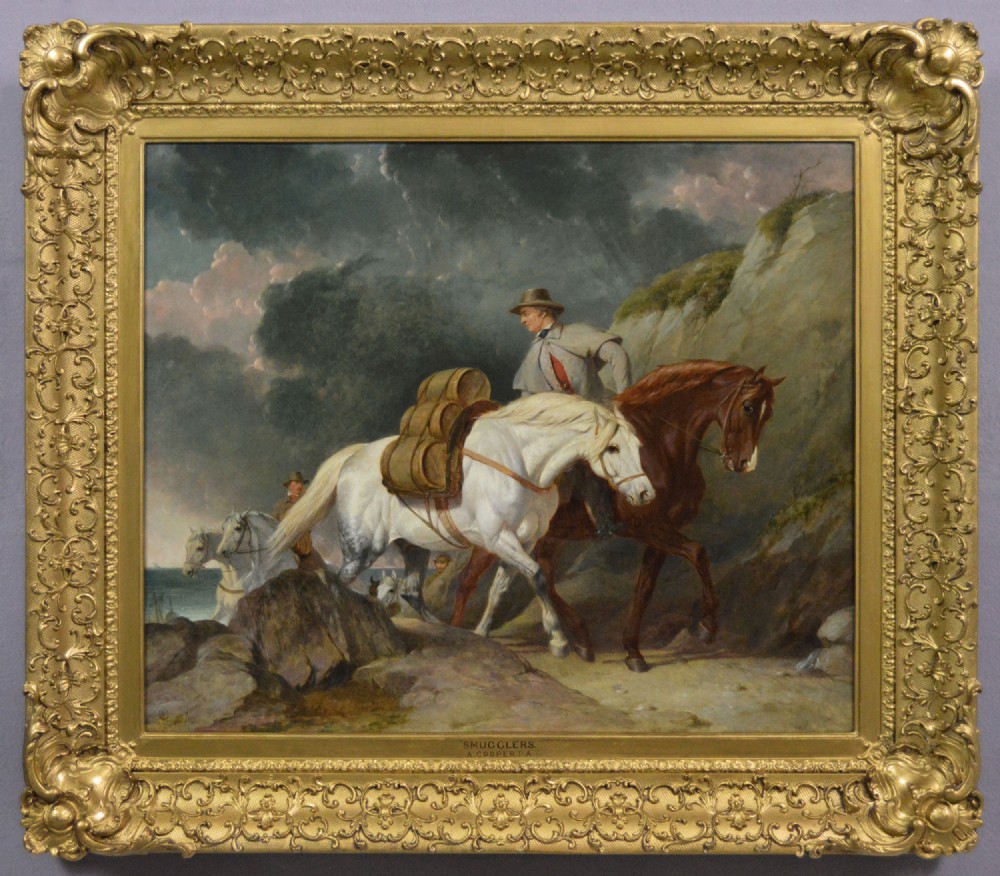
Oil Painting of Smugglers with Horses on a Coastal Path by Abraham Cooper Ra