


Mid Century Clock
A mid century clock brings functional design and mechanical engineering together in a piece that anchors a room.
Mid Century Clock
A mid century clock represents a period of functional design that ranges from industrial wall pieces to precise domestic timepieces. Buyers searching for a mid century clock encounter items produced during the 1940s, 1950s, and 1960s alongside earlier transitional pieces. These timepieces take many forms, including mantel clocks, desk models, and heavy railway or factory wall clocks.
The selections available span from minimalist Swiss desk movements to robust British railway issues and promotional advertising pieces. Many examples utilise mechanical 8-day movements, while others incorporate perpetual motion or specialist complications. The variety reflects an era when timekeeping hardware was both a utilitarian office necessity and a decorative domestic focal point.
Materials and construction methods
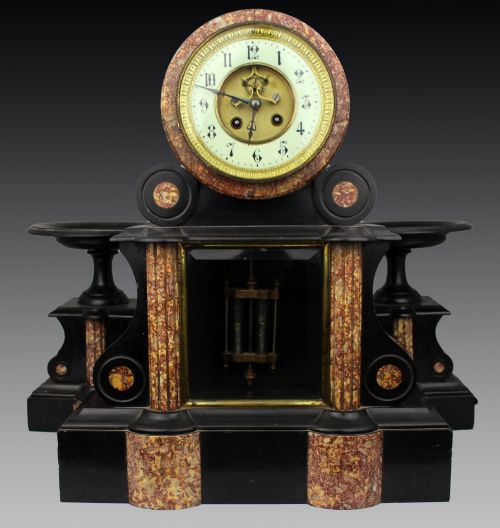
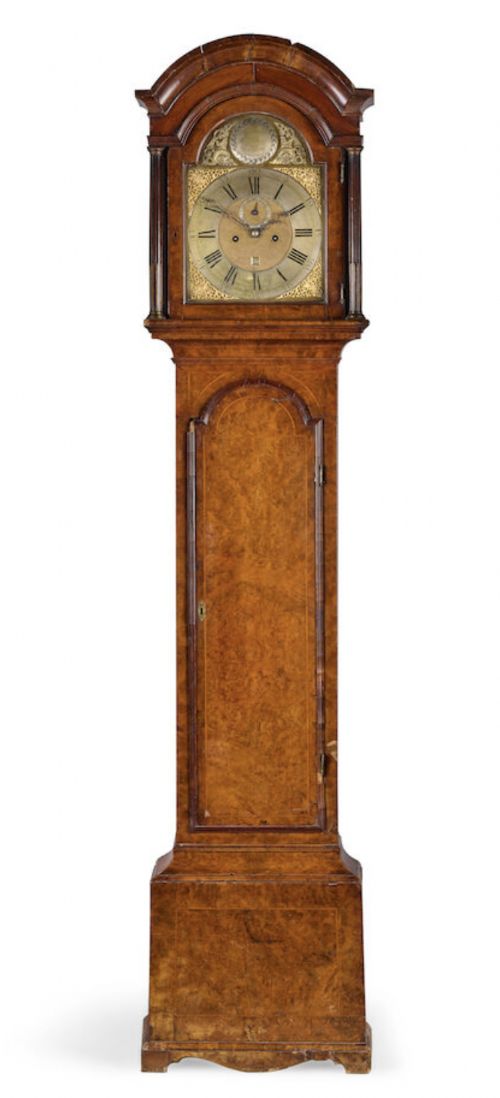
Makers utilised a combination of traditional metals and industrial substances, employing brass, gilt bronze, and rhodium plating alongside moulded bakelite and glass. Wall and desk iterations frequently paired robust metal casings with clear glass bezels to protect delicate painted dials. Heavy marble, slate, and polished hardwoods such as mahogany and burr walnut provided structural weight for mantel and longcase variations.
Movements relied on precise gear trains, jewelled escapements, and mechanical winding systems housed securely within the outer shell. Industrial models often featured durable bakelite or painted steel housings designed for high-traffic environments like railway stations and garages. Specialised domestic pieces integrated complex mechanisms such as perpetual motion barometers or atmospheric windings requiring minimal manual intervention.
Mid Century Clock Retail Price Guide 2026
Typical asking prices for mid century clock among the pieces listed under this phrase on Sellingantiques today, from the lower quarter to the upper quarter. They describe what is for sale here now, not the wider market.
The records show pieces spanning multiple decades from the 1850s through the 1960s, constructed in brass, bakelite, glass, and mahogany.
Assessing craftsmanship and execution
The presence of original manufacturer documentation, fitted boxes, or specialised complications like bell-jar housings and skeleton movements elevates a piece. Lesser examples display standard commercial mass production without the bespoke detailing or premium plating found on workshop-certified instruments. Originality of components and historical preservation remain central to distinguishing grade levels across the category.
Jaeger LeCoultre·Smiths·John Morley·L Epee·Imhof·Kienzle·Luxor
The Mid Century Clock Glossary
- Escapement
- The mechanism in a clock that controls the rotation of the wheel train by releasing the gear teeth at regular intervals. This assembly is critical for maintaining accurate timekeeping.
- Fusee
- A conical pulley used with a cord or chain to maintain an even pull on the movement as the mainspring unwinds. It compensates for the decreasing power of a relaxing spring.
- Carriage clock
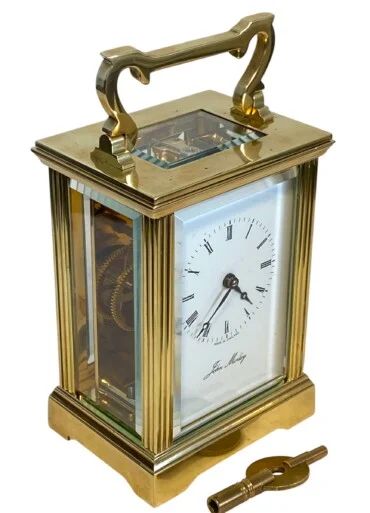
- A small, portable spring-driven clock designed for travel during the 19th and mid-20th centuries. These pieces typically feature a carrying handle and a glass-panelled brass case.
- Atmos clock
- A mechanical timepiece manufactured by Jaeger-LeCoultre that is driven by changes in atmospheric temperature and pressure. The hermetically sealed chamber winds the mainspring without human intervention.
Mid Century Clock: Frequently Asked Questions
How do perpetual motion clocks work?
These movements rely on a hermetically sealed capsule containing a gas and liquid mixture that expands and contracts with daily temperature fluctuations. This physical change continually winds the mainspring without batteries or manual intervention.
Such a system allows the timepiece to operate indefinitely under normal indoor conditions provided the delicate internal mechanism remains undisturbed.
What maintenance do mechanical desks clocks require?
Mechanical desk timepieces generally need professional cleaning and lubrication every few years to keep the gear trains running smoothly. Regular servicing prevents old oils from gumming up the jewelled escapements.
Wind-up models should be wound gently to the stop without forcing the spring, ensuring the tension remains even across the operating cycle.
Where were industrial wall clocks used?
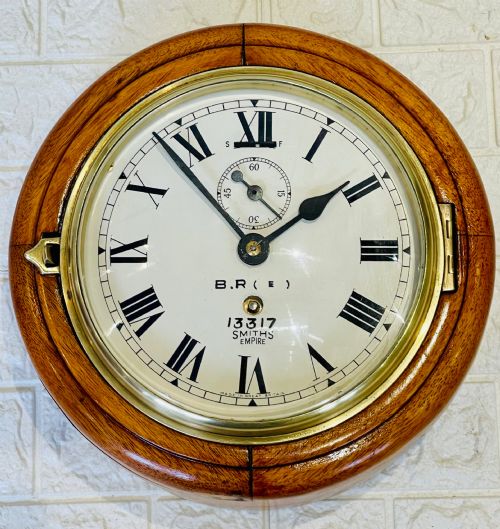
Industrial wall timepieces were deployed in railway stations, factories, and municipal buildings to keep staff synchronized throughout the working day. These sturdy units were built to withstand heavy daily use and vibrations.
Many featured double-sided dials or protective metal and bakelite bezels designed for high-visibility placement in large public spaces.
How do you date a mid century clock?
Dating relies on stylistic cues, manufacturer stamps, patent numbers, and materials such as early plastics or specific plating finishes. Comparing the dial typography and casing design against known production runs helps narrow the manufacturing window.
Original boxes, paperwork, and maker hallmarks provide definitive evidence for specific production years within the 1940s, 1950s, or 1960s.