




Mechanical Skeleton Clock
A mechanical skeleton clock strips away the dial to lay bare the brass and steel gear train inside, offering a mesmerizing view of kinetic art at work.
What mechanical skeleton clocks are
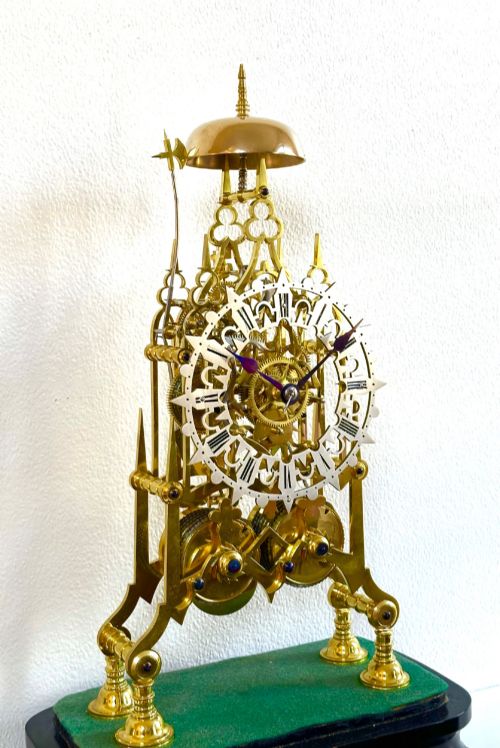
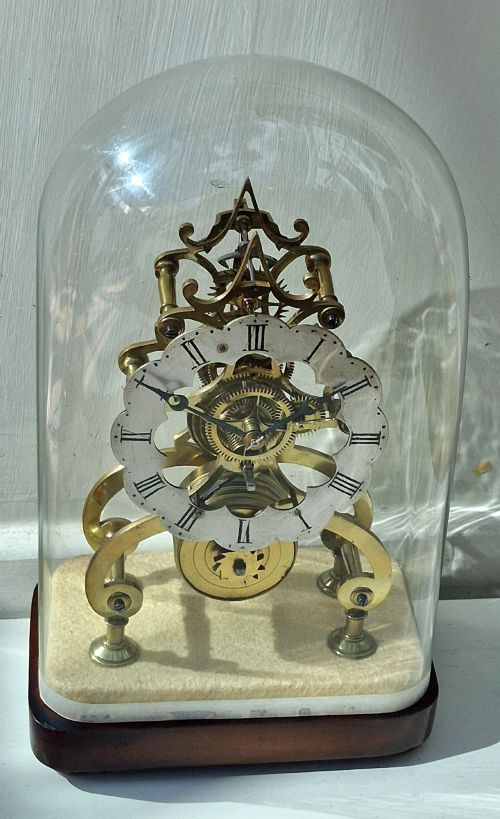
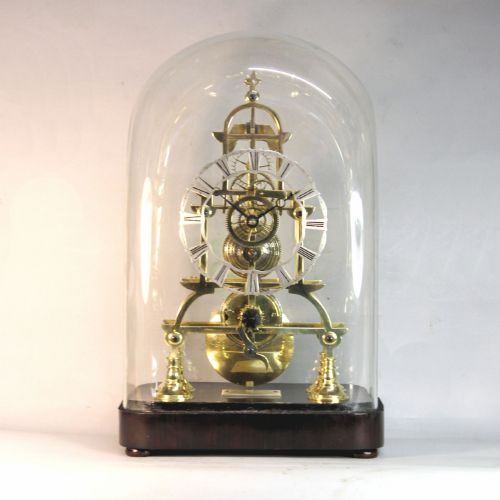
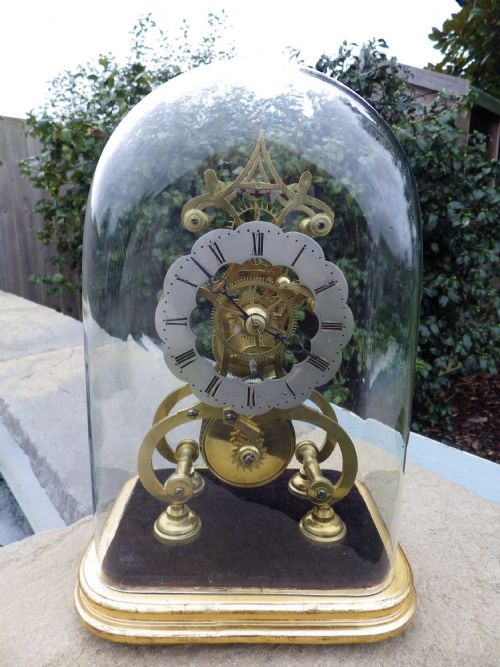
When you search for a mechanical skeleton clock, you are looking at timepieces that expose their internal mechanics to the eye rather than hiding them behind a solid dial. The examples on this page span from the Victorian era up to the mid-century period, taking the form of mantel clocks housed under glass domes or bell-jars.
The most traditional version you are likely to meet on this page is the English fusee skeleton clock from the eighteen-seventies, featuring six-spoke wheel work and standing beneath its original glass cover. Alongside these nineteenth-century pieces, the selection includes Swiss inline skeleton timepieces and rhodium-plated bell-jar models from the nineteen-fifties and sixties.
How they were made
These clocks combine brass and steel within their open frameworks, utilising exposed gear trains and wheel work to transmit power from the mainspring to the escapement. The metal components are polished and shaped by hand or machine to catch the light from every angle.
Protection and presentation are central to the design, with many models enclosed beneath glass domes, bell-jars, or set into wooden bases. Later mid-century variations incorporate rhodium-plated metal and glass housings to achieve a cleaner, more industrial aesthetic.
Some mid-century designers decided that hiding time inside a box was a crime, so they left all the cogs completely naked for your viewing pleasure.
What varies in quality
The distinction between the top and bottom of the range lies in the complexity of the wheel work and the finesse of the metal skeletonisation. Clocks featuring six-spoke wheel work and intricate English fusee movements represent a higher standard of horological engineering than simpler timepieces.
The preservation of original housing also dictates the hierarchy, with genuine period glass domes or bell-jars commanding greater interest than later replacements. The quality of the underlying wood bases and the finish applied to the brass and rhodium-plated metal further distinguish individual examples.
The Mechanical Skeleton Clock Glossary
- Fusee
- A conical pulley used in older clocks to maintain an even pull as the mainspring unwinds. This mechanism ensures consistent force is delivered to the gear train.
- Skeleton clock
- A timepiece designed with an open frame that exposes the internal movement and gear train. This style removes the traditional dial to celebrate the mechanics.
- Rhodium-plated metal
- A hard, corrosion-resistant metallic coating applied to base metals to give a bright, silver-like finish. It was frequently utilised in mid-century designs.
- Bell-jar
- A bell-shaped glass cover used to protect delicate mechanisms from dust and air currents. These covers sit flush on wooden or metal bases.
- Wheel work
- The system of cogged wheels and pinions that transmit power through a clock movement. The number of spokes in these wheels often indicates the grade of the piece.
Frequently Asked Questions
How do these clocks keep time?
A mechanical skeleton clock relies on a mainspring that drives a train of gears, regulated by an escapement and pendulum or balance wheel. The open design allows you to watch this entire transfer of energy in real time.
Because the movement is fully exposed, the precision depends on the clean interaction of the brass wheels and steel pinions working in unison.
Where should I place a glass dome clock?
These clocks require a stable, level surface away from direct sunlight and heavy vibrations to protect the delicate exposed mechanism and the glass cover. A mantelpiece or sturdy side table in a quiet room suits them best.
The glass dome or bell-jar must remain in place to shield the intricate brass and steel components from dust and accidental knocks.
What is the difference between a timepiece and a clock?
In horological terms, a timepiece is a clock that simply tells the time without a striking mechanism to chime the hours. Many skeleton designs are built as pure timepieces to keep the visual focus entirely on the moving gears.
Models that include strike trains require additional wheel work and hammers, adding complexity to the exposed metal skeleton.